
Nepal contains eight of the world’s ten highest peaks, including Everest, and that geographic reality shapes everything — the landscape, the culture, the reason people come. But this Nepal travel guide covers far more than trekking. Kathmandu’s UNESCO-listed temples, Pokhara’s lakeside calm with direct Himalayan views, Chitwan’s one-horned rhinos, and a local hospitality tradition that feels genuinely different from transactional tourism make Nepal one of the most rewarding destinations in Asia at any level of physical ambition. Whether you’re planning a serious Everest Base Camp expedition or a cultural city circuit, this Nepal travel guide has everything you need for 2026.
At a Glance
| Country | Nepal |
| Currency | Nepalese Rupee (NPR) — ~133 NPR per $1 USD |
| Language | Nepali; English widely spoken in tourist areas |
| Best trekking season | October–November (clear skies), March–May (pre-monsoon) |
| Avoid trekking | June–September (monsoon — muddy trails, obscured views) |
| Daily budget (frugal) | $25–$40/day |
| Daily budget (comfortable) | $50–$90/day |
| Visa | On-arrival or e-Visa: $30 (15 days), $50 (30 days), $125 (90 days) |
| Airport | Tribhuvan International (KTM), Kathmandu |
Why This Nepal Travel Guide Starts With More Than Everest
The Nepal travel guide that focuses only on trekking misses a significant portion of what makes the country extraordinary. Kathmandu Valley alone contains seven UNESCO World Heritage Sites within a 20 km radius — three royal palace squares (Durbar Squares), two major Buddhist stupas (Boudhanath and Swayambhunath), and two Hindu temples (Pashupatinath and Changu Narayan) that rival anything in South or Southeast Asia.
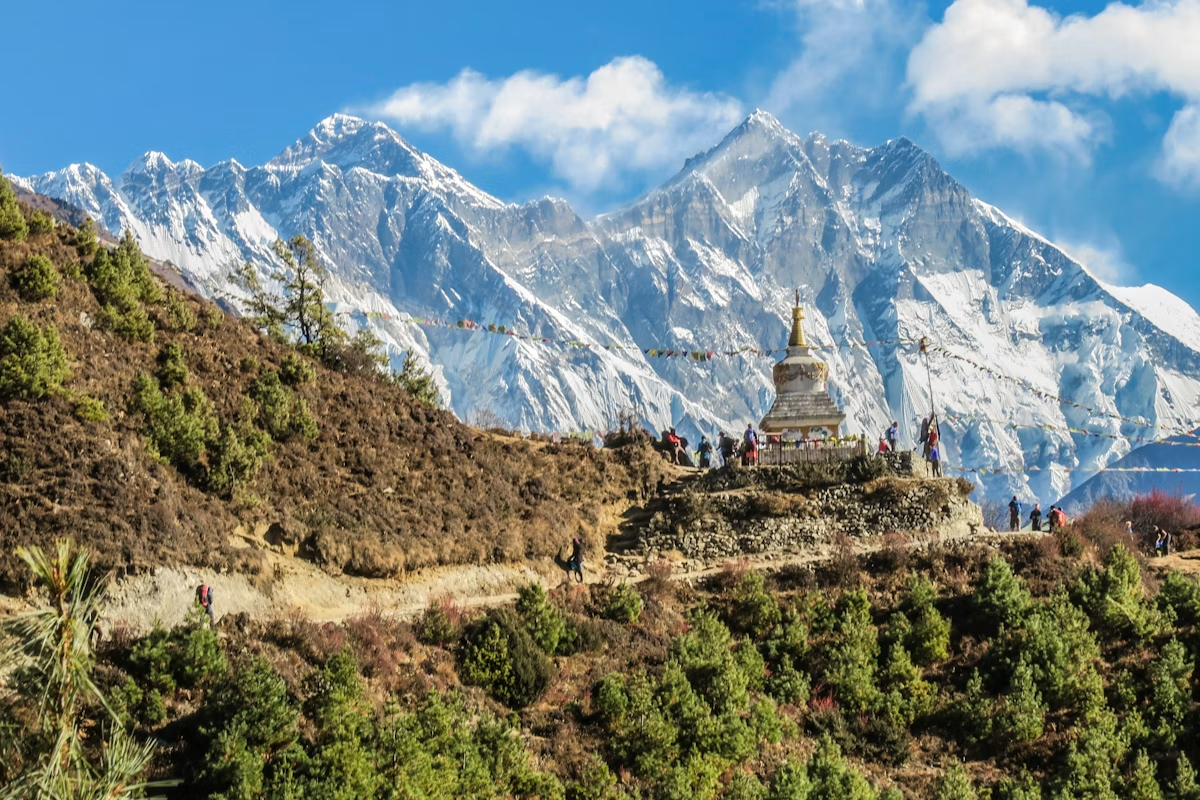
Photo by Stéphane Mingot on Unsplash
Nepal is also among the most affordable countries in Asia for high-quality experiences. A teahouse room on the Everest Base Camp trek costs $5–$10/night. A domestic flight from Kathmandu to Lukla (the EBC trail starting point) runs $180–$220 return — expensive until you consider the week of walking it replaces. This Nepal travel guide is organized around the three main circuits most visitors combine: Kathmandu’s cultural sites, the trekking gateway of Pokhara, and the wildlife of Chitwan.
Kathmandu — The Cultural Gateway
Pashupatinath Temple
One of the holiest Hindu temples in the world, Pashupatinath is a working cremation site on the Bagmati River where Hindu funeral rites are performed openly on riverside ghats. Non-Hindus cannot enter the main temple but can observe respectfully from the opposite bank. Entry: NPR 1,000 ($7.52). Go at dawn for the most atmospheric hour. The combination of monks, pilgrims, sadhus (holy men in orange robes), and the ritual fires makes Pashupatinath one of the most visceral travel experiences in Asia.
Boudhanath Stupa
A 14th-century Buddhist stupa — one of the largest in the world — surrounded by Tibetan Buddhist monasteries, prayer wheel corridors, and a community of monks and nuns who circumambulate (walk the kora) at dawn and dusk. Entry: NPR 400 ($3.01). Walking the kora clockwise at sunset with prayer beads in hand, surrounded by chanting and incense, is one of the defining moments of any Nepal travel guide itinerary.
Swayambhunath (Monkey Temple)
A hilltop stupa complex with 360-degree views of Kathmandu Valley, resident macaques, and a mixture of Buddhist and Hindu iconography accumulated over 2,500 years. Entry: NPR 200 ($1.50). 365 stone steps to the top. Go early morning to see the prayer flags lit against the peaks on clear days.
Patan Durbar Square
The best-preserved of Kathmandu Valley’s three Durbar Squares — 17th-century Newari wood carving of extraordinary detail on temple facades, bronze statues of deities, and a courtyard atmosphere that feels remarkably intact given Nepal’s 2015 earthquake damage (significant restoration has been completed). Entry: NPR 1,000 ($7.52).
Pokhara — The Trekker’s Base and Lakeside Town
Pokhara is where this Nepal travel guide shifts pace. The city sits on the shore of Phewa Lake with direct, unobstructed views of the Annapurna massif — one of the most impressive Himalayan panoramas accessible without setting foot on a trail. The lakeside (Lakeside/Baidam area) has the best guesthouses, restaurants, and cafés in Nepal’s tourist infrastructure, and serves as the launching point for the Annapurna Circuit, Poon Hill, and Annapurna Base Camp treks.
Getting to Pokhara: Tourist bus from Kathmandu: 6–7 hours, NPR 600–800 ($4.51–$6.02). Domestic flight: 25 minutes, NPR 6,000–9,000 ($45.11–$67.67). The mountain flight is worth considering if the weather is clear — the Himalayan views from the small propeller plane are extraordinary.
Pokhara activities beyond trekking: The International Mountain Museum (NPR 300) covers Himalayan expedition history with equipment from historic climbs. The World Peace Pagoda is a 30-minute hike above the lake with panoramic views (free entry). Paragliding from Sarangkot (NPR 7,000–10,000 / $52.63–$75.19) is one of the world’s great paragliding experiences.
Trekking in Nepal — This Nepal Travel Guide’s Core Section
Everest Base Camp (EBC) Trek
Duration: 12–14 days return from Lukla Highest point: Kala Patthar (5,545m) or Base Camp (5,364m) Difficulty: Moderate — altitude is the challenge, not technical skill All-in cost: $800–$1,500 (flights, permits, teahouse accommodation, meals, guide) Best months: October–November, March–May
The EBC trek passes through Sherpa villages, Buddhist monasteries at Namche Bazaar and Tengboche, glacial moraines, and yak pastures before reaching the foot of the Khumbu Icefall. Physical fitness matters less than patience — rushing causes altitude sickness, which ends treks. This Nepal travel guide strongly recommends taking all scheduled acclimatization days.
Required permits: Sagarmatha National Park Permit (NPR 3,000 / $22.56) + Khumbu Pasang Lhamu Rural Municipality fee (NPR 2,000 / $15.04). Both purchased in Kathmandu or Lukla.
Annapurna Circuit
Duration: 12–21 days Highest point: Thorong La Pass (5,416m) Difficulty: Moderate All-in cost: $600–$1,200 Why many prefer it over EBC: More diverse landscape, better teahouse food, significantly fewer crowds on upper sections
The Annapurna Circuit transitions from subtropical lowland forest through temperate forest, alpine meadows, and high-altitude Tibetan plateau — the most ecologically diverse major trek in Nepal. The Thorong La Pass crossing requires a 4 AM start on summit day to beat afternoon winds and weather.
Required permits: ACAP permit (NPR 3,000 / $22.56) + TIMS card (NPR 2,000 / $15.04).
Poon Hill (Ghorepani) — Best Short Trek in This Nepal Travel Guide
Duration: 3–4 days Highest point: 3,210m (Poon Hill viewpoint) Difficulty: Easy to moderate — suitable for first-time trekkers All-in cost: $150–$300 Why it belongs in any Nepal travel guide: Starts from Nayapul (1 hour from Pokhara), delivers Annapurna and Dhaulagiri sunrise views that equal the longer treks in pure visual impact, and fits within a one-week Nepal itinerary
Poon Hill is the correct starting trek for anyone new to altitude hiking. The teahouse network is excellent, the views are genuinely spectacular, and the physical demands are manageable.
Chitwan National Park
Nepal’s first national park and UNESCO-listed, Chitwan provides a complete change of register from the mountains — flat subtropical forest, grassland, and river habitat home to over 600 one-horned rhinoceros, 100+ Bengal tigers, marsh mugger crocodiles, and 500+ bird species.
Entry: $30 USD/day. Jeep safari: NPR 3,000–5,000/person ($22.56–$37.59). Canoe + jungle walk: NPR 1,500–2,500 ($11.28–$18.80). Chitwan is 5 hours from Pokhara by tourist bus (NPR 800 / $6.02) or 3.5 hours from Kathmandu.
Nepal Food — What to Eat
Dal Bhat: Nepal’s national dish — rice, lentil soup, seasonal vegetables, pickles, and often meat. Unlimited refills standard. NPR 300–600 ($2.26–$4.51) at any teahouse or local restaurant. Dal Bhat twice a day is how most trekkers and most Nepalis eat.
Momos: Tibetan-origin steamed or fried dumplings, filled with vegetables or buffalo meat. NPR 200–400 ($1.50–$3.01) for a plate of 8–10. Found everywhere from Kathmandu street stalls to Everest trail teahouses.
Thukpa: Tibetan noodle soup — essential at altitude when appetite diminishes. NPR 200–400 ($1.50–$3.01).
Practical Tips for This Nepal Travel Guide
Visa
Apply online at Nepal e-Visa portal (evisa.gov.lk) before departure to skip queues, or buy on-arrival at Tribhuvan Airport. 30-day visa: $50 USD cash or card.
Altitude Sickness
Non-negotiable rule for any Nepal travel guide: sleep no more than 300–500m higher than the previous night above 3,000m. Descend immediately if symptoms worsen — headache, nausea, confusion are early signs. Carry Diamox (acetazolamide) if recommended by your doctor pre-departure.
Guides and Porters
A licensed guide is mandatory for EBC and Annapurna treks as of 2023 (solo trekking in restricted areas is no longer permitted). Guide cost: $25–$35/day. Porter: $15–$20/day. Tipping is expected and important — tip at least $5–$10/day for a guide, $3–$5/day for a porter.
Daily Budget Breakdown
| Category | Kathmandu/Pokhara | On Trek |
|---|---|---|
| Accommodation | $12–$25 | $5–$12 (teahouse) |
| Food | $8–$18 | $15–$25 |
| Transport | $3–$8 | $0 (walking) |
| Attractions/permits | $8–$15 | $2–$5 |
| Daily Total | $31–$66 | $22–$42 |
Final Verdict: Nepal Travel Guide 2026
No Nepal travel guide can fully prepare you for the scale of what you’ll see — the mountains are simply larger than photographs suggest, and the cultural density of Kathmandu Valley takes days to properly absorb. What this Nepal travel guide can do is give you the framework: start in Kathmandu for 2–3 days, travel to Pokhara, choose your trek, add Chitwan if wildlife interests you. The mountains themselves will finish the argument for why Nepal belongs on every serious traveler’s list.