
Deciding where to stay in Seoul is one of the most important decisions you’ll make before your trip. With over 25 administrative districts sprawling across both sides of the Han River, Seoul is far larger than most first-time visitors expect. The good news: Seoul’s subway system is fast, affordable, and easy to navigate. The catch: staying in the wrong neighborhood still means spending 30–40 minutes each way just to reach the places you came to see.
This guide covers the four best areas to stay in Seoul for international travelers — breaking down each neighborhood by location, price range, transit access, practical tips, and who it suits best.
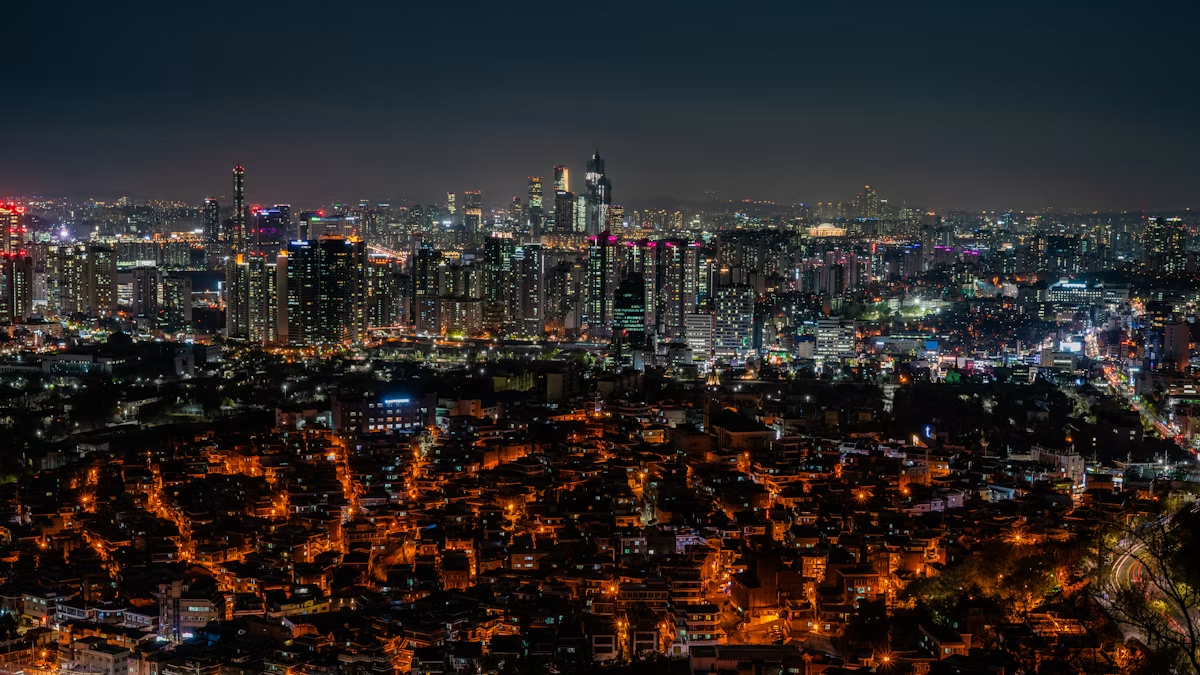
Seoul’s central districts at night. Photo by Ethan Brooke on Unsplash
At a Glance: Seoul Neighborhood Comparison
| Area | Best For | Budget (per night) | Airport Time |
|---|---|---|---|
| Myeongdong | First-timers, sightseeing | ₩60,000–₩200,000 | ~60 min |
| Hongdae | Budget, nightlife, nomads | ₩30,000–₩120,000 | ~43 min (direct) |
| Insadong / Bukchon | Culture, history, photos | ₩70,000–₩250,000 | ~60 min |
| Gangnam | Luxury, business travel | ₩150,000–₩600,000+ | ~70 min |
Currency: South Korean Won (KRW). As of 2025, roughly ₩1,350 = $1 USD. Transport card: Buy a T-money card at any convenience store (₩3,000) and top it up with cash. Works on all subways, buses, and most taxis. Airport: Incheon International Airport (ICN) is the main international gateway — all times above are from ICN.
1. Myeongdong — Best Overall for First-Time Visitors
Myeongdong sits at the geographic and cultural center of Seoul, making it the most practical base for travelers who want to see as much of the city as possible in a short time. The neighborhood runs along a pedestrian shopping street filled with Korean cosmetic brands, street food vendors, and international chains — busy by day, buzzing by night.
Accommodation here ranges from business hotels and boutique guesthouses to well-known international brands like Lotte and Ibis. It’s not the cheapest area, but the value-to-location ratio is strong for first-time visitors with a packed itinerary.
How to Get Here from Incheon Airport
Take the AREX Express Train from Incheon Airport to Seoul Station (43 minutes, ₩9,500), then transfer to Line 4 one stop to Myeongdong Station. Total travel time: approximately 55–60 minutes. This is the most reliable option regardless of traffic or time of day.
Alternatively, KAL Limousine Bus routes 6001 and 6015 stop near major Myeongdong hotels. Journey time is 60–90 minutes depending on traffic, and costs ₩18,000.
What You Can Reach on Foot or Within 20 Minutes
- N Seoul Tower & Namsan Park — 15-minute walk uphill or cable car ride
- Gyeongbokgung Palace — 20 minutes by subway (Line 5, one transfer)
- Dongdaemun Design Plaza (DDP) — 10 minutes by subway
- Namdaemun Market — 10-minute walk
Pros and Cons
Pros:
- Central location cuts down on transit time throughout your trip
- Dense concentration of restaurants with English menus
- 24-hour convenience stores, pharmacies, and ATMs on every block
- City Air Terminal nearby allows early baggage check-in before airport departure
Cons:
- Among the most touristy areas in Seoul — heavy foot traffic, especially on weekends
- Accommodation prices are inflated compared to equally central alternatives
- Noisy on Friday and Saturday evenings; request a higher-floor or back-facing room
Who Should Stay Here
Myeongdong is the right call for travelers visiting Seoul for the first time with a limited number of days and a long list of must-see attractions. The central positioning saves time — and in Seoul, time is the most valuable resource you have.
2. Hongdae — Best for Budget Travelers, Nightlife, and Digital Nomads
Hongdae (short for Hongik University area) is Seoul’s most energetic youth district. Built around one of Korea’s top art universities, the neighborhood is defined by live street performances, independent design shops, themed cafes, and a nightlife scene that runs until dawn. It’s also home to the highest concentration of budget-friendly accommodation in central Seoul, including well-rated hostels, guesthouses, and capsule hotels.
For international travelers arriving or departing by plane, Hongdae offers a logistical advantage that no other neighborhood can match: a direct AREX train connection to Incheon Airport with no transfers, in approximately 43 minutes.
How to Get Here from Incheon Airport
The AREX Express Train stops directly at Hongdae (Hongik University) Station — no transfers required. This is the fastest and most affordable airport connection of any central Seoul neighborhood, at ₩9,500 and 43 minutes. Night arrivals are covered too, as AREX runs until just before 1:00 AM.
What You Can Reach on Foot or Within 20 Minutes
- Sinchon — adjacent neighborhood with additional cheap eats and student nightlife
- Ewha Womans University area — 10-minute walk, popular shopping and cafe strip
- Han River (Yanghwa Bridge access) — 15-minute walk; popular for picnics and cycling
- Gyeongbokgung Palace — 25 minutes by subway (Line 2 to Line 3 transfer)
Pros and Cons
Pros:
- Most affordable area for accommodation in central Seoul
- Enormous variety of cafes with fast, reliable Wi-Fi (genuinely useful for remote workers)
- Vibrant street food scene operating late into the night
- Easy to meet other international travelers through hostel common areas
Cons:
- Very loud on Friday and Saturday nights — earplugs or a white noise app are recommended
- Further from historic palaces and traditional cultural sites than other areas
- Peak-hour streets near the main club zone can feel chaotic
Who Should Stay Here
Hongdae is the best base for solo budget travelers, anyone arriving on a late-night flight, digital nomads planning extended stays, and travelers whose priority is nightlife and cafe culture over sightseeing proximity.

3. Insadong & Bukchon Hanok Village — Best for Culture and History
North of the Han River, between Gyeongbokgung Palace and the Cheonggyecheon Stream, lies Seoul’s most historically layered neighborhood. Insadong is a pedestrian-friendly street lined with traditional teahouses, Korean craft shops, and independent galleries. Just uphill, Bukchon Hanok Village is a living neighborhood of preserved hanok (traditional Korean wooden houses), where narrow stone-paved alleys lead to boutique guesthouses and quiet courtyard gardens.
Staying in this area places you within walking distance of more UNESCO World Heritage Sites and royal palaces than anywhere else in the city.
How to Get Here from Incheon Airport
Take the AREX Express Train to Seoul Station (43 min), then transfer to Line 1 and ride to Jonggak Station, or continue one more stop on Line 3 to Anguk Station — the closest station to both Insadong and Bukchon. Total journey time from Incheon is approximately 65–70 minutes.
What You Can Reach on Foot or Within 15 Minutes
- Gyeongbokgung Palace — 10-minute walk from Anguk Station
- Changdeokgung Palace & Secret Garden (UNESCO) — 15-minute walk
- Changgyeonggung Palace — 20-minute walk
- National Folk Museum of Korea — inside Gyeongbokgung grounds
- Cheong Wa Dae (Blue House) — 15-minute walk
Accommodation: Hanok Guesthouses
Several guesthouses in Bukchon offer stays inside authentic hanok buildings. These properties feature ondol floor heating (traditional Korean radiant floor warmth), wooden latticed windows, and inner courtyard gardens. Most are small — 4 to 10 rooms — and book out months in advance during peak seasons (spring cherry blossom in April, autumn foliage in October/November).
Note: some traditional guesthouses have shared bathroom facilities. Always confirm before booking if a private bathroom is required.
Pros and Cons
Pros:
- Walking distance to the highest concentration of historical sites in Seoul
- Quieter and more residential than Myeongdong or Hongdae
- Unique hanok accommodation experience unavailable in other neighborhoods
- Excellent traditional Korean restaurants, makgeolli bars, and tea houses
Cons:
- Hillier terrain — not ideal for travelers with mobility difficulties
- Limited late-night dining and convenience options after 10 PM
- Some accommodation options are small and fill quickly; early booking essential
Who Should Stay Here
Insadong and Bukchon are ideal for culture-focused travelers, photographers, couples, and anyone visiting Seoul specifically to experience traditional Korean history and architecture.
4. Gangnam — Best for Luxury Stays and Business Travel
South of the Han River, Gangnam is Seoul’s wealthiest and most modern district. The name gained global recognition in 2012, but the neighborhood’s reputation for upscale living long predates that. The area around Apgujeong, Cheongdam-dong, and Teheran-ro houses Seoul’s densest collection of five-star international hotels, Michelin-starred restaurants, luxury department stores, and corporate headquarters.
For business travelers attending conferences at COEX Convention Center, or leisure travelers whose priority is premium accommodation and high-end dining, Gangnam is the clear choice.
How to Get Here from Incheon Airport
The most direct option is the AREX Express Train to Seoul Station (43 min), followed by a transfer to Line 2 toward Gangnam Station (approximately 30 more minutes). Total time: 75–80 minutes. Alternatively, direct airport limousine buses (routes 6006, 6020) run directly to Gangnam-gu hotels and take 70–100 minutes depending on traffic.
What You Can Reach on Foot or Within 20 Minutes
- COEX Mall and Aquarium — 10-minute walk from Samseong Station
- Bongeunsa Temple (Buddhist temple in the middle of Gangnam) — 5-minute walk from COEX
- Apgujeong Rodeo Street — Seoul’s luxury shopping and K-beauty flagship zone
- Lotte World Tower Observatory — 15 minutes by subway (Line 2)
Pros and Cons
Pros:
- Highest concentration of internationally recognized 5-star hotel brands in Seoul
- Best upscale dining scene in the city — Korean BBQ omakase, French tasting menus, premium sushi
- Quieter and more organized street environment compared to northern Seoul
- World-class shopping at Hyundai Department Store, Shinsegae, and COEX
Cons:
- Significantly more expensive across every category — accommodation, food, transport
- Far from historic palaces and traditional cultural sites (30–40 min by subway)
- Less local character; the neighborhood feels more international than distinctly Korean
Who Should Stay Here (best areas to stay in seoul)
Gangnam is the right base for business travelers, luxury-focused visitors, and travelers on return trips to Seoul who have already covered the main cultural sites and want a different experience of the city.
Practical Information for International Travelers in Seoul
Getting Around the City
Seoul’s subway is the backbone of city transport — fast, affordable, clean, and fully bilingual. A single journey costs ₩1,400–₩1,800 depending on distance. Buy a T-money card (₩3,000 deposit) at any CU, GS25, or 7-Eleven convenience store on arrival and load it with cash. The card works on all subway lines, buses, and most taxis, and saves you the hassle of buying individual tickets.
Naver Maps is significantly more accurate than Google Maps for Seoul transit routing. It’s available in English and provides real-time subway and bus schedules.
Subway operating hours: approximately 05:30 to 00:30 daily. Night buses cover major corridors after the subway closes.
Language and Navigation
Most major hotel staff, tourist information centers, and airport personnel speak English. Smaller guesthouses and local restaurants vary. Download Papago (Naver’s translation app) for real-time Korean-to-English translation of menus, signs, and street labels — it works offline with a downloaded language pack.
All subway stations and most bus stops display names in both Korean and English (with some Chinese and Japanese). Getting lost on the subway is very unlikely for English-speaking visitors.
Cash vs. Card
Credit and debit cards (Visa, Mastercard) are accepted at hotels, department stores, chain restaurants, and most mid-range eateries. However, traditional markets (Namdaemun, Gwangjang), street food stalls, and smaller local restaurants frequently operate cash-only.
Carry ₩30,000–₩50,000 in cash for daily incidentals. ATMs inside convenience stores marked “Global ATM” or “Woori Global” accept most foreign-issued cards with a modest transaction fee.