
Phuket is Thailand’s largest island and its most visited — a destination that manages to be all things simultaneously: luxury beach resort, budget backpacker hub, family holiday destination, and gateway to some of Southeast Asia’s most beautiful island hopping. This Phuket travel guide cuts through the noise to tell you where to actually stay, which beaches are worth the trip, which are overcrowded and overrated, and how to navigate the island’s confusing geography. Whether this is your first Phuket travel guide read or you’re returning after years away, the island has changed enough in 2026 to warrant a fresh look.
At a Glance
| Country | Thailand |
| Currency | Thai Baht (THB) — ~35 THB per $1 USD |
| Language | Thai; English widely spoken in tourist areas |
| Best time to visit | November–April (dry season, Andaman coast) |
| Avoid | May–October (monsoon — rough seas, many businesses close) |
| Daily budget (frugal) | $30–$50/day |
| Daily budget (comfortable) | $60–$120/day |
| Visa | 60-day visa exemption for most Western nationalities |
| Airport | Phuket International (HKT) — 30 min from Patong, 45 min from south beaches |
| Getting around | Grab, rented scooter, or private taxi |
Understanding Phuket’s Geography
The first thing every Phuket travel guide needs to address is geography — the island is much larger than most visitors expect, and “Phuket” covers dramatically different experiences depending on where you stay. The west coast (Andaman Sea) has the best beaches — Patong, Kata, Karon, Kamala, Surin, Bang Tao — but each has a completely different character. The east coast faces Phang Nga Bay and is calmer, less scenic, and primarily used for boat departures. The south has Promthep Cape viewpoint and quieter beaches. Choosing the right base according to this Phuket travel guide makes the difference between the trip you expected and the trip you got.
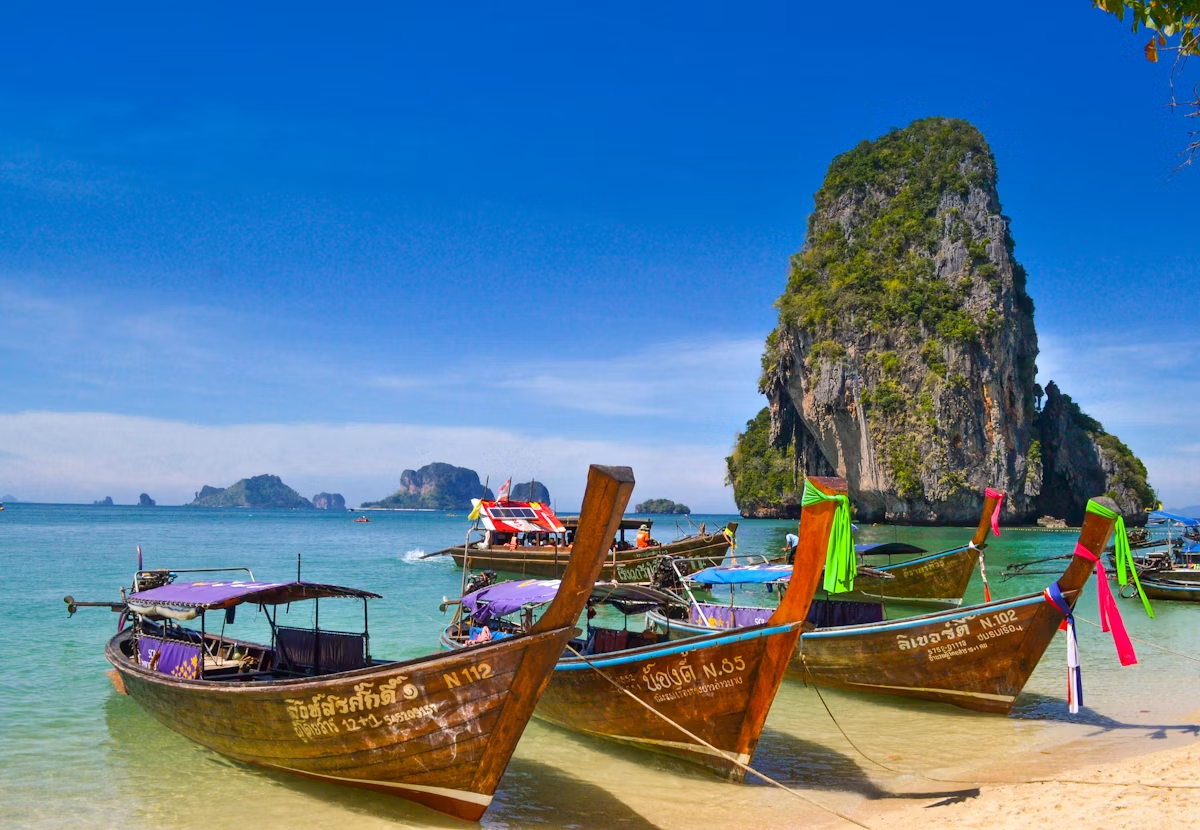
Photo by Evgeny Matveev on Unsplash
Best Beaches in Phuket
Patong — Most Famous, Most Crowded
Patong is Phuket’s busiest beach — the main tourist center, with the highest concentration of hotels, restaurants, bars, and the famous Bangla Road nightlife strip. The beach itself is long (3 km) and wide, with clean sand and reasonable swimming. It is also crowded from 9 AM to 6 PM with sun loungers (฿200–฿300/pair) covering most of the sand.
Who should stay in Patong: Travelers who want nightlife, maximum services, and don’t mind crowds. First-timers who want everything convenient and don’t plan to use the beach as a peaceful retreat.
Who should avoid Patong: Couples seeking a quiet romantic beach experience, anyone with beach solitude as a priority.
Kata and Karon — Best for Families
South of Patong, Kata and Karon beaches offer the best balance of facilities and relative calm. Kata (1.5 km beach) is particularly well-regarded — cleaner than Patong, better for swimming, with a good mix of budget and mid-range accommodation in the surrounding village. Karon (3 km beach) is similar but slightly less developed.
Best for: Families, couples wanting a quieter alternative to Patong, snorkelers (the southern end of Kata has decent reef).
Kamala — Best Mid-Range Beach
10 km north of Patong, Kamala is quieter, cleaner, and increasingly popular with the longer-stay expat and nomad community. The beach is 2.5 km long with fewer vendors and a more relaxed atmosphere. Accommodation ranges from budget guesthouses to mid-range boutique hotels at prices 20–30% below Patong equivalents.
Surin and Bang Tao — Best for Upscale Stays
The northwestern coast is where Phuket’s luxury hotel scene concentrates. Surin (the “Millionaire’s Mile”) and Bang Tao’s Laguna resort complex house the island’s flagship international hotels — Anantara, Banyan Tree, Cassia. The beaches are genuinely beautiful, the crowds are manageable, and the dining options are the island’s best. Not budget territory — mid-range starts at $150/night — but the quality justifies it.
Best for: Honeymoons, luxury travelers, anyone wanting the “real Phuket” beach experience without Patong’s chaos.
Best Areas to Stay in Phuket
Every Phuket travel guide should map accommodation to travel style:
| Area | Best For | Budget/Night | Beach Quality |
|---|---|---|---|
| Patong | Nightlife, maximum services | $25–$80 | Good, very crowded |
| Kata/Karon | Families, balance | $30–$100 | Good, moderate crowds |
| Kamala | Couples, quiet beach | $35–$120 | Very good, low crowds |
| Surin/Bang Tao | Luxury, romance | $120–$500+ | Excellent, quiet |
| Phuket Town | Culture, budget, food | $20–$60 | No beach |
Phuket Town deserves special mention in this Phuket travel guide — the island’s historic Sino-Portuguese capital has one of Thailand’s best preserved old town districts, the most authentic local food scene on the island, and accommodation at prices below all beach areas. No beach access but excellent for day trips and a genuinely interesting base for cultural exploration.
Top Things to Do in Phuket
Phi Phi Islands Day Trip
The most popular day trip from Phuket — the Phi Phi archipelago (1.5 hours by speedboat) includes Phi Phi Leh’s Maya Bay (made famous by “The Beach”), snorkeling in turquoise bays, and the dramatic Viking Cave. Speedboat day tours: ฿1,200–฿1,800/person ($34–$51). The bay and islands are genuinely spectacular; the crowds in peak season are genuinely intense. Early departure (7 AM) makes a significant difference.
Phang Nga Bay Tour
The limestone karst formations rising from the Andaman Sea in Phang Nga Bay — including the famous “James Bond Island” (Khao Phing Kan from The Man with the Golden Gun) — are one of southern Thailand’s most distinctive landscapes. Full-day tours from Phuket: ฿1,500–฿2,500/person ($43–$71). Sea kayaking through the bay’s sea caves and mangroves is available as a premium add-on.
Big Buddha
A 45-metre white marble Buddha statue on Nakkerd Hill, visible from most of the island. Free entry; donation requested. The surrounding terrace offers panoramic views across southern Phuket and, on clear days, the Phi Phi Islands. 30-minute drive from Patong.
Phuket Town Old Quarter
The Sino-Portuguese shop houses of Phuket Town’s old quarter — painted in pastels, decorated with Chinese lanterns, housing traditional businesses alongside specialty coffee shops and art galleries — represent Phuket’s most interesting non-beach experience. The Sunday Night Market (Lard Yai) is the best local market on the island. Free to explore; budget ฿200–฿400 ($5.71–$11.43) for street food.
Cooking Classes
Thai cooking classes running from market visit to full meal preparation: ฿1,200–฿2,000/person ($34–$57). Most classes last 4–5 hours and include 4–6 dishes. A genuinely rewarding activity that produces skills transferable well beyond the trip.
Phuket Food Guide
Phuket has stronger local food traditions than most Thai beach resort destinations — the Hokkien Chinese community that settled here in the 19th century left a culinary imprint that makes Phuket Town food distinctive even by Thai standards.
Essential dishes specific to this Phuket travel guide:
- Moo Hong: Phuket’s signature dish — slow-braised pork belly in soy and spices, served with rice. ฿80–฿150 ($2.29–$4.29) at local restaurants in Phuket Town
- Pad Cha Talay: Stir-fried fresh seafood with herbs and Thai basil — available at beachside restaurants for ฿200–฿400 ($5.71–$11.43)
- Oyster omelette (Hoi Tod): Crispy fried oyster pancake — ฿120–฿180 ($3.43–$5.14) at night market stalls
- Dim sum breakfast: Phuket Town’s Chinese heritage makes morning dim sum a local tradition — ฿80–฿150 ($2.29–$4.29) for a full breakfast at traditional shops
Best budget eating: Phuket Town Sunday Market, Or Tor Kor covered market in Phuket Town, and the local restaurants surrounding Kata Beach village consistently beat Patong beach restaurants on quality and price.
Getting To and Around Phuket
Getting to Phuket
By air: Phuket International Airport (HKT) has direct connections from Bangkok (1.5 hours, ฿800–฿2,500 on AirAsia, Thai Lion Air, Bangkok Airways), as well as direct international flights from Singapore, Kuala Lumpur, Hong Kong, and many European cities.
By bus: Overnight VIP buses from Bangkok’s Southern Bus Terminal: 13–14 hours, ฿800–฿1,200 ($22.86–$34.29). Less comfortable than flying but significantly cheaper from Bangkok.
Getting Around Phuket
Grab: Available island-wide — the most reliable and transparent option. Most journeys within the tourist areas: ฿80–฿200 ($2.29–$5.71).
Scooter rental: ฿200–฿350/day ($5.71–$10) from local rental shops. Gives complete freedom but the roads — especially on the west coast — have significant accident rates. Wear a helmet; insurance is rarely available.
Songthaew (local buses): Fixed routes connecting Phuket Town to the beaches — ฿50–฿80 ($1.43–$2.29) per journey. Slow but cheap.
SIM Cards
Buy at the airport arrivals hall. AIS and DTAC tourist SIMs with 30-day unlimited data: ฿299–฿399 ($8.54–$11.40).
Final Verdict: Phuket Travel Guide 2026
Phuket rewards visitors who treat it as a base rather than a single destination — the Phi Phi Islands, Phang Nga Bay, and the Similan Islands (if diving is on the agenda) elevate a Phuket trip far beyond the beach hotel experience. Stay in Kamala or Kata rather than Patong for a calmer base, rent a scooter for at least one day to explore the headlands and the old town, and use this Phuket travel guide to build an itinerary that goes beyond the sun lounger. The island has more to offer than its reputation suggests.