
Chiang Rai is what Chiang Mai used to be — a manageable northern Thai city with excellent food, extraordinary temples, and easy access to the Golden Triangle border region, but without the traffic, the expat density, or the accommodation prices that Chiang Mai now carries. For travelers who have already done Chiang Mai (or who want to skip it entirely), this Chiang Rai travel guide covers the temples that define the city, the day trips that define the region, the food scene that has matured considerably over the past decade, and the practical logistics for getting in, getting around, and making the most of 2–4 days in northern Thailand. Chiang Rai in 2026 remains one of the most accessible and rewarding smaller cities in Southeast Asia — this Chiang Rai travel guide tells you exactly why.
At a Glance
| Country | Thailand |
| Currency | Thai Baht (THB) — ~35 THB per $1 USD |
| Language | Thai; English spoken at temples and tourist areas |
| Best time to visit | November–February (cool, dry; 15–25°C in the hills) |
| Avoid | March–April (smoky season from agricultural burning); May–October (rainy season) |
| Daily budget (frugal) | $25–$40/day |
| Daily budget (comfortable) | $55–$100/day |
| Visa | 30-day visa exemption on arrival for US, EU, UK, and most Western nationalities |
| Getting there | Flight from Bangkok (1.5 hrs, ~$30–$60); bus from Chiang Mai (3–4 hrs, ~$7) |
| Airport | Mae Fah Luang – Chiang Rai International (CEI) — 8 km north of city center |
What Makes This Chiang Rai Travel Guide Different from Chiang Mai Coverage
The reflex for many Thailand visitors is to go directly from Bangkok to Chiang Mai and skip Chiang Rai entirely. This Chiang Rai travel guide argues that’s a mistake — not because Chiang Rai is better than Chiang Mai, but because it offers a genuinely different experience. The city is one-quarter the size; the temples are more extraordinary than Chiang Mai’s most famous sites; the Golden Triangle region provides a unique geographical and historical context; and the absence of mass tourism means restaurants, guesthouses, and tuk-tuks operate at more locally calibrated prices. A combined Chiang Mai + Chiang Rai itinerary — 3 days in each — provides the most complete picture of northern Thailand.
Top Temples: The Core of Any Chiang Rai Travel Guide
Wat Rong Khun — The White Temple
The White Temple is Chiang Rai’s defining image and one of the most visually extraordinary buildings in all of Southeast Asia. It is not an ancient temple — construction began in 1997 by Thai artist and architect Chalermchai Kositpipat and continues today — but its contemporary Buddhist iconography, rendered entirely in white ceramic tile studded with mirror glass (symbolizing Buddha’s purity and the dharma’s reflection throughout the universe), produces an effect unlike any religious building visitors are likely to have encountered.
- Entry: THB 100 ($2.86) — free for Thai nationals
- Hours: 8 AM–5 PM (Monday–Friday); 8 AM–5:30 PM (weekends)
- Location: 13 km south of Chiang Rai city — THB 200–300 ($5.71–$8.57) by tuk-tuk or songthaew from city center
- Photography: Exterior photography freely permitted; interior photography strictly prohibited
The interior murals — where Kositpipat has incorporated contemporary imagery including Batman, Neo from The Matrix, and Doraemon alongside traditional Buddhist imagery — are among the most discussed elements of the White Temple. Photography inside is prohibited specifically because Kositpipat considers the murals sacred, not because of copyright.
Practical tip for this Chiang Rai travel guide: Arrive when the gates open (8 AM) — the mirrored exterior in early morning light produces the best photography and crowds are minimal. By 10 AM, tour buses from Chiang Mai have usually arrived.
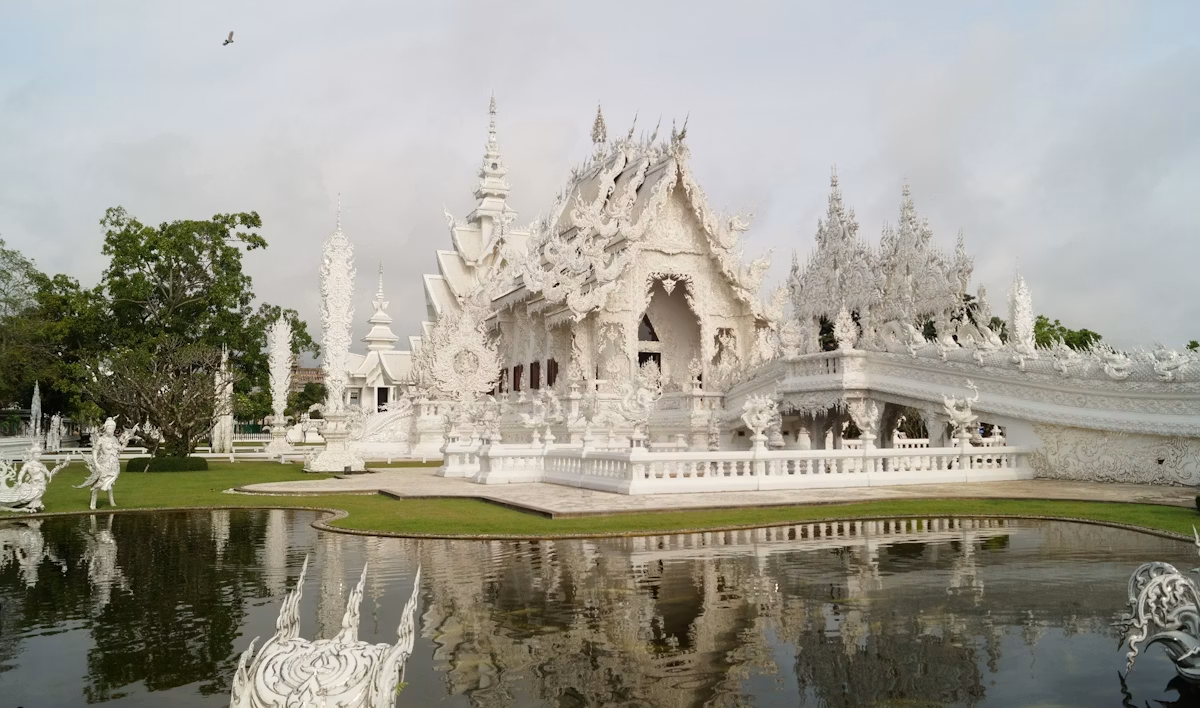
Photo by MARCIN CZERNIAWSKI on Unsplash
Wat Rong Suea Ten — The Blue Temple
Completed in 2016, the Blue Temple is Chiang Rai’s second extraordinary contemporary temple — a deep indigo and gold structure with a white Buddha interior. Less visited than the White Temple and therefore easier to appreciate without crowds. Located 3 km east of the city center (THB 60–80 by songthaew from the clock tower).
- Entry: Free
- Hours: 7 AM–8 PM
- Photography: Both interior and exterior photography permitted — the Blue Temple is more generous than the White Temple with access
The Blue Temple’s interior Buddha statue — massive, golden-white, flanked by blue lotus motifs — is genuinely striking and often more memorable than the exterior for visitors who have seen extensive White Temple coverage before arriving.
Wat Phra Kaew — The Old Spiritual Center
Chiang Rai’s most historically significant temple — the original home of the Emerald Buddha (now in Bangkok’s Wat Phra Kaew inside the Grand Palace). The current jade replica at the Chiang Rai site was crafted in 1991 to mark the city’s 750th anniversary. Entry: free. Located in the city center, walkable from most accommodation. Quieter and more genuinely contemplative than the two contemporary temples above.
Baan Dam — The Black House
Not a temple, but an essential Chiang Rai travel guide site: artist Thawan Duchanee’s compound of 36 black teakwood structures filled with animal pelts, bones, antlers, and dark-themed artwork — a philosophical counterpoint to the White Temple’s purity that the two artists explicitly intended as complementary. Entry: THB 80 ($2.29). Located 13 km north of the city center.
Golden Triangle Day Trip
The Golden Triangle — the point where Thailand, Laos, and Myanmar converge at the Mekong River — is 60 km north of Chiang Rai. Chiang Saen, the base town (45 km from Chiang Rai), has Mekong riverfront access and ruins of the 13th-century Chiang Saen kingdom.
Getting there: Buses run from Chiang Rai bus terminal to Chiang Saen (1 hour, THB 40 / $1.14) and onward to the Golden Triangle viewpoint. Alternatively, book a full-day Golden Triangle tour from Chiang Rai (THB 600–1,200 / $17.14–$34.29 per person).
At the Golden Triangle: The viewpoint itself is free — a statue of a seated Buddha marks the confluence. The Hall of Opium Museum (THB 200 / $5.71) provides exceptional historical context on the opium trade that made this region internationally significant. Day trips typically include boat trips on the Mekong to Laos (THB 300–400 / $8.57–$11.43 return).
Doi Mae Salong — Tea Plantation Village
A mountain village 60 km northwest of Chiang Rai, settled by Yunnanese Chinese (KMT soldiers and their families who fled China in 1949) and now a thriving tea culture center at 1,200 m elevation. The cooler climate produces Oolong and green teas comparable to Taiwanese highland varieties. Teahouses serve fresh pots for THB 50–100 ($1.43–$2.86) in settings with mountain panoramas.
Getting there: Songthaews from Chiang Rai’s bus terminal to Mae Salong: ~2 hours, THB 90 ($2.57). Or book a guided day tour from Chiang Rai: THB 700–1,200 ($20–$34.29) per person.
Chiang Rai Food Scene
Chiang Rai’s food scene reflects northern Thai traditions alongside Yunnanese Chinese influence from the Golden Triangle settlements — a combination that produces some of the most distinctive eating in Thailand.
Essential dishes for this Chiang Rai travel guide:
- Khao Soi: The signature northern Thai dish — egg noodles in a creamy coconut curry broth with crispy noodles on top, served with pickled cabbage, shallots, and lime. THB 60–90 ($1.71–$2.57) at any good noodle shop. Every visitor to Chiang Rai should eat khao soi at least once
- Larb: Minced meat salad with herbs, toasted rice, and fish sauce — the northern Thai version uses raw or lightly cooked minced pork (larb moo). THB 60–80 ($1.71–$2.29)
- Sai Oua: Northern Thai herb sausage packed with lemongrass, kaffir lime, galangal, and shrimp paste. THB 30–50 ($0.86–$1.43) per link from market vendors
- Yunnanese noodles and dim sum: In Doi Mae Salong and the city’s Chinese-influenced restaurants — hand-pulled noodles in clear broth, THB 50–80 ($1.43–$2.29)
Best eating: Night Bazaar (main city market, open evenings) for variety and price; the morning market behind the Night Bazaar for local vendors selling northern specialties before 8 AM.
Where to Stay in Chiang Rai
Budget (THB 200–600 / $5.71–$17.14/night)
Chiang Rai has excellent budget guesthouses in the city center — Baan Bua Guest House and Moon & Sun are consistently well-reviewed. Guesthouse culture here is more community-oriented than the party hostel circuit — better for solo travelers and couples wanting to connect with other slow travelers.
Mid-Range (THB 800–2,000 / $22.86–$57.14/night)
The Chiang Rai area has some of the best mid-range hotel value in northern Thailand — multiple boutique properties with rice-paddy or mountain views at prices that would buy you a plain city room in Chiang Mai. Wangcome Hotel (city center, pool, full service) represents excellent mid-range Chiang Rai travel guide value.
Getting Around Chiang Rai
Songthaews (shared red trucks): The standard local transport — fixed routes with flexible stops. THB 20–40 ($0.57–$1.14) within city; THB 60–120 ($1.71–$3.43) to temples.
Tuk-tuks: Negotiable rates for short trips. City center to White Temple: THB 200–300 ($5.71–$8.57) one-way.
Bicycle or motorbike rental: The most practical option for independent temple-hopping. Bicycle: THB 60–100 ($1.71–$2.86)/day. Motorbike: THB 200–300 ($5.71–$8.57)/day. Several guesthouses rent both.
From the airport: 8 km from city center — taxi THB 150–200 ($4.29–$5.71), or songthaew to town THB 60–80 ($1.71–$2.29).
Daily Budget Breakdown
| Category | Budget | Comfortable |
|---|---|---|
| Accommodation | $10 (guesthouse dorm) | $45 (mid-range hotel) |
| Food (3 meals) | $8 | $25 |
| Transport | $5 (songthaew/bike rental) | $15 |
| Attractions | $6 | $15 |
| Daily Total | ~$29 | ~$100 |
Final Verdict: Chiang Rai Travel Guide 2026
Chiang Rai earns its place in any northern Thailand itinerary on the strength of three things: the White Temple, which is genuinely unlike anything else in Southeast Asian religious architecture; the Golden Triangle, which provides historical and geographical context that few border regions in the world can match; and the food scene, where khao soi and sai oua at any good night market represent northern Thai cooking at its most authentic. This Chiang Rai travel guide’s core recommendation is 2–3 days minimum — enough time to see the temples without rushing, do one significant day trip, and eat well enough to understand what makes northern Thai cuisine distinct. For travelers who have exhausted Chiang Mai or want to skip it, Chiang Rai delivers a quieter, cheaper, and in some respects more rewarding version of northern Thailand.