
Vientiane remains the most overlooked capital in mainland Southeast Asia’s nomad circuit, a relaxed riverside city on the Mekong that offers genuinely low costs and a slower pace than Bangkok or Hanoi without sacrificing reliable internet or a growing café-and-coworking scene. Laos’s gradual tourism and infrastructure development means Vientiane today feels roughly where Chiang Mai stood a decade ago — affordable, uncrowded, and increasingly equipped for remote work, but without the established nomad infrastructure of its more famous regional neighbors. This Vientiane digital nomad guide covers coworking spaces, neighborhoods, cost of living, visa rules, SIM cards, and a full monthly budget breakdown for 2026.
At a Glance
| Country | Laos |
| Currency | Lao Kip (LAK) — ~21,000 LAK per $1 USD (USD and Thai Baht also widely accepted) |
| Language | Lao; French and English common in tourist and expat areas |
| Best time | November–February (cool, dry season) |
| Avoid | March–April (hot season, regional agricultural-burning haze) |
| Monthly budget (frugal) | $700–$1,100/month |
| Monthly budget (comfortable) | $1,500–$2,400/month |
| Visa | Visa-on-arrival for most nationalities, 30-day validity, extendable at local immigration offices |
| Getting there | Wattay International Airport (VTE), 4 km from the city center |
| Internet | Fiber widely available in newer buildings, 50–200 Mbps typical |
Why Vientiane for Remote Work
Vientiane’s cost of living undercuts nearly every other Southeast Asian capital, with rent, food, and transport all running noticeably below Chiang Mai or Bangkok despite a comparable level of day-to-day convenience for anyone not requiring a high-intensity nightlife or nomad-meetup scene. Fiber internet has expanded steadily through the city center and along the Mekong riverside in the past several years, making a stable home connection realistic for most newer apartments.
The trade-off any Vientiane digital nomad guide should flag honestly: the formal coworking and structured nomad-community scene is years behind Chiang Mai’s or Bali’s, meaning remote workers here are more likely to build their own routine around cafés and informal connections than to plug into a ready-made expat infrastructure.
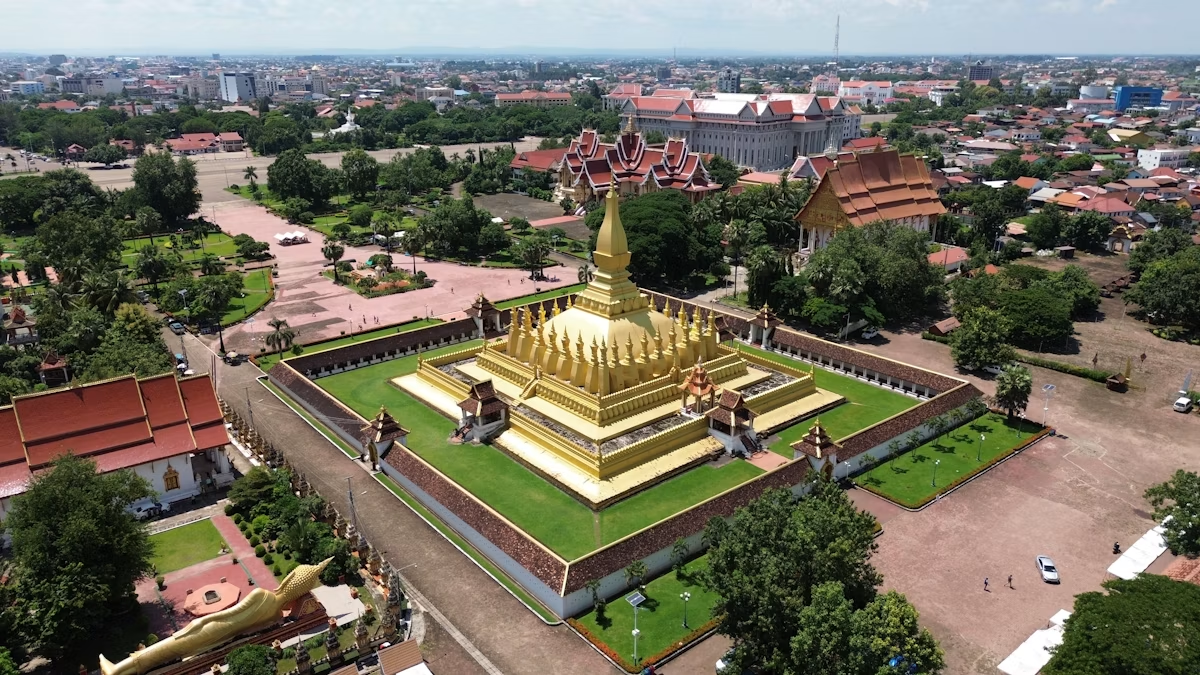
Photo by Meklay YOTKHAMSAY on Unsplash
Coworking Spaces and Cafés
Vientiane’s dedicated coworking scene is small but growing, concentrated mainly along Fa Ngum Road by the Mekong riverside and in the central area near Patuxai monument.
- Dedicated coworking spaces: A handful of hot-desk operators have opened in the city center, typically running $80–$150/month for a dedicated desk — among the cheapest coworking rates anywhere in mainland Southeast Asia
- Riverside café culture: The Mekong riverside strip is lined with cafés that tolerate laptop work well past a single coffee purchase, particularly in the slower midday hours
- Reliable Wi-Fi corridors: The city center and riverside areas have the most consistent café and home Wi-Fi, given newer fiber installations concentrated in those districts
Best Neighborhoods for Nomads
Riverside (Fa Ngum Road area)
The most popular base for remote workers and longer-term visitors, walkable to the Mekong promenade’s evening market and the highest concentration of cafés suitable for daytime work.
City Center (near Patuxai)
Central and well-connected, with easy access to the main commercial streets, markets, and most of the city’s coworking spots — a practical middle-ground choice for any Vientiane digital nomad guide reader.
That Luang area
Quieter and more residential, near Laos’s most important national monument, offering noticeably cheaper rent for nomads willing to take a short tuk-tuk into the center for work and errands.
Visa Rules
Most Western passport holders receive a 30-day visa on arrival at Wattay International Airport for $30–$42 depending on nationality, payable in USD. Extensions are possible at the Vientiane immigration office for roughly $2/day beyond the initial 30 days, though long-term remote workers planning multi-month stays should budget time for periodic visa runs or extension paperwork, since Laos does not currently offer a dedicated long-stay remote-work visa.
SIM Cards and Connectivity
Laos’s main carriers — Unitel, Lao Telecom, and ETL — all sell prepaid tourist SIMs at the airport or city shops for roughly 50,000–100,000 LAK ($2.40–$4.80) with several GB of data, activated on the spot with a passport. Home fiber connections in newer apartments commonly deliver 50–200 Mbps for $20–$35/month, sufficient for video calls and most remote-work needs, though backup mobile data is worth keeping given occasional outages outside the city center.
Food and Cost of Living
Lao cuisine is distinct from its better-known neighbors — heavier on bitter and herbal flavors, with sticky rice as the staple starch.
- Laap (Larb): Minced meat or fish salad with lime, herbs, and toasted rice powder — Laos’s national dish, available everywhere from street stalls to sit-down restaurants. 25,000–40,000 LAK ($1.20–$1.90)
- Khao Piak Sen: A thick rice-noodle soup, a common and filling breakfast or lunch option
- Riverside night market food stalls: Cheap, made-to-order Lao dishes and grilled skewers along the Mekong promenade — among the best-value evening meals in the city. 10,000–20,000 LAK ($0.50–$0.95)
- French-influenced bakeries: A legacy of French colonial rule, with genuinely good baguettes and pastries available at bakeries throughout the city center
- Local markets: Fresh produce and ingredients from Talat Sao and other central markets keep a frugal grocery budget low for nomads cooking at home
Getting Around Vientiane
Walking: The riverside and central areas are walkable, though Vientiane is more spread out than compact old-town cities like Luang Prabang.
Tuk-tuks and ride apps: Cheap and the default way to cover longer distances within the city — a cross-town ride typically runs 20,000–40,000 LAK ($1–$2).
Motorbike rental: Widely available for $5–$10/day and a popular option for longer-term residents wanting independence from tuk-tuk fares.
Monthly Budget Breakdown
| Category | Frugal | Comfortable |
|---|---|---|
| Accommodation (studio/1BR) | $280 | $650 |
| Food | $200 | $400 |
| Coworking / café work | $40 | $130 |
| Transport | $25 | $70 |
| Entertainment / misc | $155 | $350 |
| Monthly Total | ~$700 | ~$1,600 |
Final Verdict: Vientiane Digital Nomad Guide 2026
Vientiane suits nomads who want genuinely low costs and a slower pace over a built-out nomad community — it works best as a deliberate choice rather than a default Southeast Asia stop. The ideal approach for any Vientiane digital nomad guide reader is to base near the riverside for the first month to get oriented around the city’s café and coworking options, then decide whether to stay central or shift toward the quieter That Luang area for lower rent once daily routines are established. The 30-day visa-on-arrival is straightforward to extend, but nomads planning a long-term base should expect more manual visa management than in countries with dedicated remote-work visa programs.