
Salta travel guide readers planning Argentina’s northwest usually discover that Salta has none of Buenos Aires’ European polish and all of the raw, high-desert scenery that draws travelers north in the first place. Tucked into the Andean foothills at roughly 1,200 meters, Salta combines a genuinely well-preserved colonial center with some of South America’s most dramatic red-rock canyon country just hours away, plus a high-altitude wine region that rivals Mendoza for quality without the crowds. This Salta travel guide covers the colonial center, day trips through canyon country, wine, food, and a full budget breakdown for 2026.
At a Glance
| Country | Argentina |
| Currency | Argentine Peso (ARS) |
| Language | Spanish; English limited outside tourist services |
| Best time | April–June and September–November (dry season, mild temperatures) |
| Avoid | December–February (rainy season, occasional road closures to canyon towns) |
| Daily budget (frugal) | $25–$40/day |
| Daily budget (comfortable) | $50–$110/day |
| Visa | Visa-free for 90 days for US, UK, Canadian, EU, and most other passport holders |
| Getting there | Martín Miguel de Güemes Airport (SLA), 15 minutes from the city center |
| Getting around | Walking, taxis, rental car for canyon day trips |
The Colonial Center
Salta’s colonial center is built around Plaza 9 de Julio, ringed by whitewashed colonnades, the pink-and-white Salta Cathedral, and the Cabildo, a former colonial governing house now housing a regional history museum. The Museum of High Altitude Archaeology (MAAM), a few blocks off the plaza, holds the preserved Inca child mummies recovered from the nearby Llullaillaco volcano — one of the more striking and sobering museum experiences in northern Argentina.
San Bernardo Hill, reachable by cable car or a steep walking trail from the city center, gives a full panoramic view over Salta’s red-tiled rooftops against the surrounding mountains.
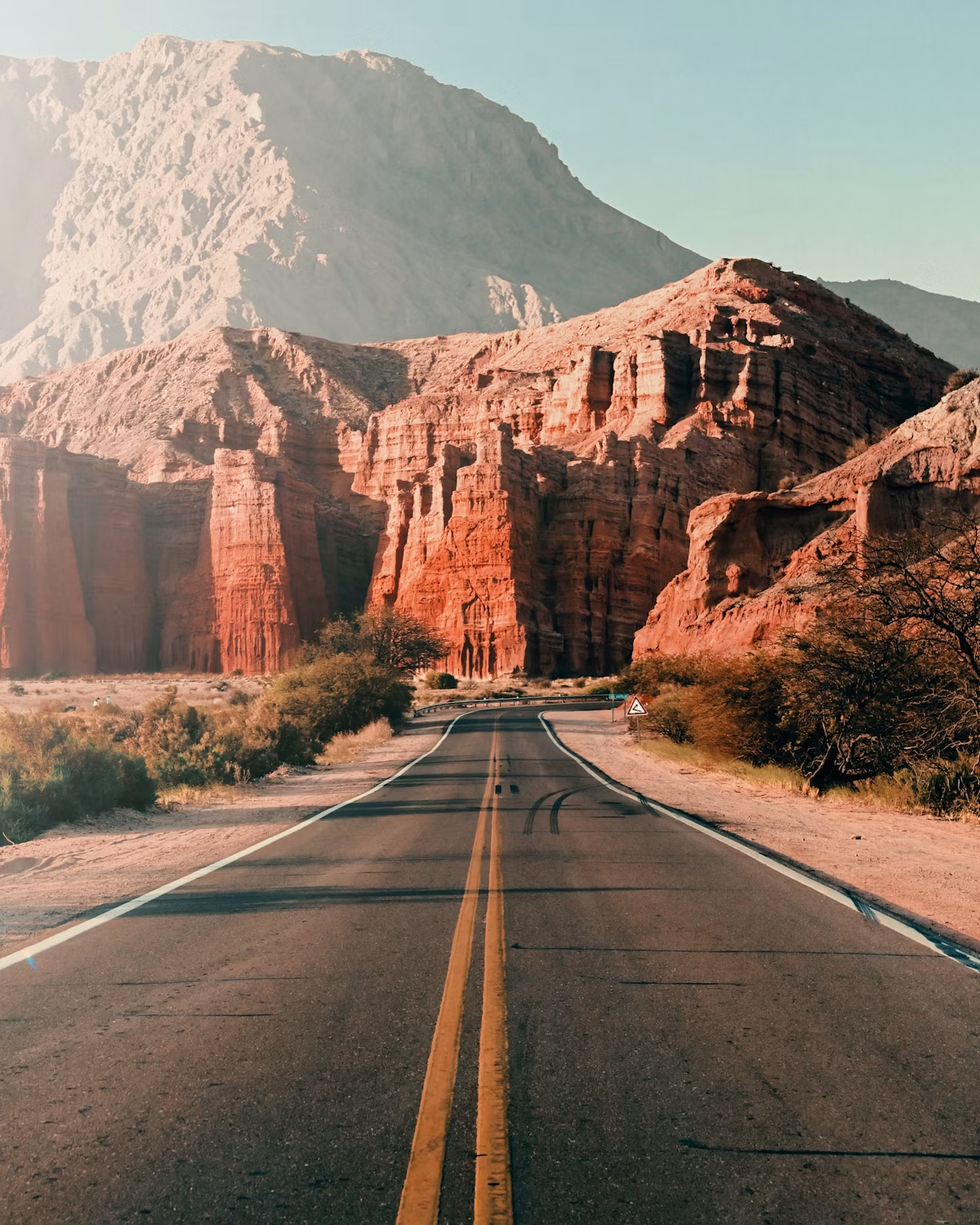
Photo by Ignacio Aguilar on Unsplash
Canyon Country and the Train to the Clouds
The drive south from Salta through the Quebrada de las Conchas (Cafayate Canyon) passes wind-carved red sandstone formations with names like “The Amphitheater” and “The Devil’s Throat,” easily covered as a long day trip by rental car or guided tour. North of the city, the Quebrada de Humahuaca — a separate, equally dramatic canyon corridor — and the famous Train to the Clouds (Tren a las Nubes), one of the world’s highest rail lines, both extend a Salta trip by another day or two if time allows.
Food and Wine in Salta
Northwestern Argentine cuisine draws more heavily on Andean and indigenous traditions than the beef-and-Italian-leaning food of Buenos Aires, and the surrounding Calchaquí Valleys produce some of the country’s most distinctive high-altitude wine.
- Empanadas salteñas: Salta’s regional empanada style, hand-pinched and baked, widely considered among Argentina’s best. 800–1,200 ARS each
- Locro: A thick stew of corn, beans, and meat, traditionally eaten on national holidays but available year-round in Salta’s restaurants
- High-altitude Torrontés wine: Cafayate’s vineyards, some of the highest in the world, produce a fragrant white wine rarely found outside Argentina
- Tamales and humitas: Corn-based dishes wrapped in husks, sold at markets and casual eateries throughout the colonial center
- Peña folklórica venues: Restaurants combining live folk music with traditional northern Argentine dishes, concentrated along Balcarce street
Where to Stay
Budget ($18–$32/night)
Hostels and budget guesthouses near the colonial center, an easy walk from Plaza 9 de Julio.
Mid-Range ($40–$75/night)
Boutique hotels in restored colonial buildings — the standard Salta travel guide accommodation tier.
Upscale ($90–$180+/night)
Wine-estate lodges in Cafayate or upscale hotels near San Bernardo Hill with mountain views.
Getting Around Salta
Walking: The colonial center is compact and walkable, with most sights reachable within a 15-minute walk of Plaza 9 de Julio.
Taxis and remises: Inexpensive and useful for reaching the bus terminal, airport, or outlying neighborhoods.
Rental car or guided tour: Essential for canyon day trips to Cafayate or Humahuaca, since public transport options are limited and slow.
Daily Budget Breakdown
| Category | Frugal | Comfortable |
|---|---|---|
| Accommodation | 11,000 ARS | 55,000 ARS |
| Food | 9,000 ARS | 28,000 ARS |
| Transport | 3,000 ARS | 12,000 ARS |
| Activities (museums, tours, wine tastings) | 5,000 ARS | 25,000 ARS |
| Daily Total | ~28,000 ARS / $25 | ~120,000 ARS / $108 |
Final Verdict: Salta Travel Guide 2026
Salta works best as a four-to-five-day base rather than a quick stop, since its real highlights — the Cafayate wine region and the canyon corridors north and south of the city — require full-day trips to do properly. The ideal Salta travel guide itinerary spends one day on the colonial center and San Bernardo Hill, a full day in Cafayate’s canyons and vineyards, and a third day on either the Train to the Clouds or the Humahuaca canyon route. Travelers renting a car for the canyon roads should fuel up in Salta itself, since gas stations thin out considerably once outside the city.