
Samarkand travel guide readers usually expect a dusty footnote on the old Silk Road and instead find one of Central Asia’s most visually stunning cities, where turquoise-domed madrasas and mausoleums covered in intricate mosaic tilework still ring a square built more than 600 years ago. Samarkand, Uzbekistan’s second-largest city, served as the capital of Timur’s 14th-century empire and remains the best-preserved showcase of Islamic architecture along the entire Silk Road route. This Samarkand travel guide covers Registan Square, the city’s mosques and mausoleums, day trips, food, and a full budget breakdown for 2026.
At a Glance
| Country | Uzbekistan |
| Currency | Uzbekistani Som (UZS) |
| Language | Uzbek and Russian; English limited outside tourist sites |
| Best time | April–May and September–October (mild weather, avoids summer heat) |
| Avoid | July–August (extreme desert heat, often above 40°C) |
| Daily budget (frugal) | $20–$30/day |
| Daily budget (comfortable) | $40–$100/day |
| Visa | Visa-free for 30–60 days for most Western nationalities |
| Getting there | Samarkand International Airport has domestic flights from Tashkent (1 hour); high-speed Afrosiyob train also runs from Tashkent (2 hours) |
| Getting around | Taxis, ride-hailing apps, walking within the historic center |
Registan Square
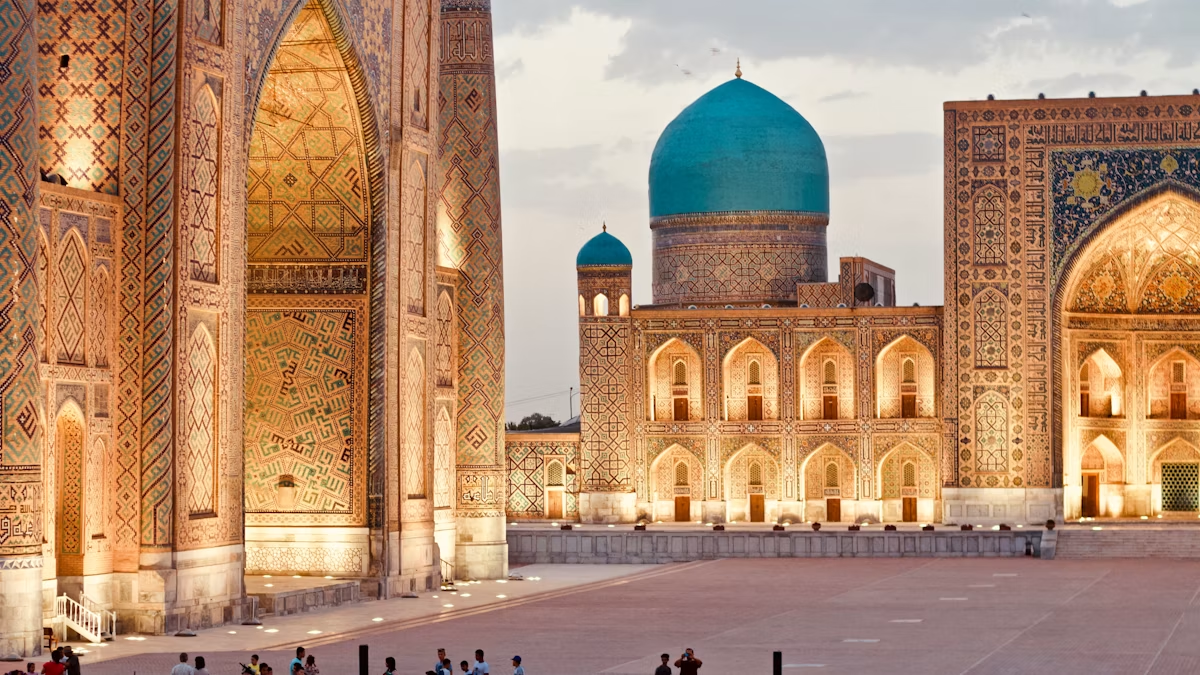
Registan Square forms the heart of any Samarkand travel guide, a vast plaza framed on three sides by monumental madrasas — Islamic schools — each covered floor to dome in geometric and floral mosaic tilework in shades of turquoise, cobalt, and gold. The Ulugh Beg Madrasah, the oldest of the three, dates to 1420 and once functioned as one of the era’s leading centers for astronomy and mathematics.
Evening illumination shows lights up the entire square after dark, turning the tilework into one of the most photographed scenes in Central Asia, while daytime visits allow access inside the madrasas’ courtyards and former classrooms, many now housing small craft workshops and souvenir stalls.
Mosques and Mausoleums Beyond Registan
The Shah-i-Zinda necropolis, a corridor of mausoleums built up over centuries along a hillside, holds some of Samarkand’s finest tilework outside Registan Square, with each tomb competing in colour and pattern with its neighbors. The Bibi-Khanym Mosque, once among the largest mosques in the Islamic world, still towers over its surrounding market despite centuries of earthquake damage and partial restoration.
Gur-e-Amir, the mausoleum built for Timur himself, holds the conqueror’s tomb beneath a fluted turquoise dome and set the architectural template later echoed by the Taj Mahal in India.
Day Trips and Side Excursions
Siab Bazaar (10 minutes on foot from Registan)
A sprawling, centuries-old market selling dried fruits, spices, bread, and melons, offering an unfiltered look at daily Samarkand life.
Ulugh Beg Observatory (20 minutes by taxi)
The remains of a 15th-century astronomical observatory built by the scholar-ruler Ulugh Beg, once used to chart the stars with remarkable precision for its time.
Konigil Paper Mill (30 minutes by taxi)
A working demonstration of traditional Samarkand silk-paper production using a centuries-old process, with a small shop selling handmade paper goods.
Food in Samarkand
Samarkand’s food scene centers on hearty Uzbek staples, many tied directly to the city’s identity as a historic Silk Road trading hub.
- Samarkand plov: A rice pilaf with lamb, carrots, and onions, prepared in a style locals insist differs from Tashkent’s version. 15,000–25,000 UZS
- Samarkand non: A distinctive round bread stamped with decorative patterns, considered among the best bread in Uzbekistan
- Shashlik: Skewered grilled meat, widely available at restaurants and street stalls throughout the old city
- Laghman: Hand-pulled noodles served in a spiced broth or stir-fried with vegetables and meat
- Dried fruits and nuts: Sold throughout Siab Bazaar, a holdover from the city’s centuries as a Silk Road trading post
Where to Stay
Budget ($10–$20/night)
Guesthouses and hostels in the old city, often family-run with courtyard breakfast service.
Mid-Range ($30–$55/night)
Boutique hotels within walking distance of Registan Square — the standard Samarkand travel guide accommodation tier.
Upscale ($70–$160+/night)
International-standard hotels near the historic center with modern amenities.
Getting Around Samarkand
Walking: The historic center, including Registan Square, Shah-i-Zinda, and Gur-e-Amir, is compact enough to cover mostly on foot.
Taxis and ride-hailing apps: Useful for reaching the observatory, paper mill, or train station, with apps like Yandex Go widely used.
Trains: The high-speed Afrosiyob connects Samarkand to Tashkent and Bukhara, making it easy to combine with other Silk Road stops.
Daily Budget Breakdown
| Category | Frugal | Comfortable |
|---|---|---|
| Accommodation | 150,000 UZS | 550,000 UZS |
| Food | 80,000 UZS | 220,000 UZS |
| Sights and entry fees | 40,000 UZS | 150,000 UZS |
| Transport | 30,000 UZS | 100,000 UZS |
| Daily Total | ~300,000 UZS / $24 | ~1,020,000 UZS / $82 |
Final Verdict: Samarkand Travel Guide 2026
Samarkand rewards two to three days, since Registan Square alone deserves both a daytime and an evening visit and the Shah-i-Zinda necropolis and Gur-e-Amir mausoleum each merit unhurried time. The ideal Samarkand travel guide itinerary spends a day at Registan Square and Siab Bazaar, a second day visiting Shah-i-Zinda, Gur-e-Amir, and the Ulugh Beg Observatory, and a final half-day at the paper mill before continuing on to Bukhara or Tashkent by train. Travelers visiting in midsummer should plan sightseeing for early morning or evening, since daytime temperatures regularly climb well above comfortable walking conditions.