
Azores travel guide readers usually expect a small Portuguese island stopover and instead find nine volcanic islands scattered across the mid-Atlantic, each ringed by crater lakes, hot springs, and hiking trails through landscapes that shift from lush green pastures to black lava fields within a few kilometers. The Azores, an autonomous region of Portugal roughly 1,400 kilometers off the mainland coast, remain one of Europe’s least crowded year-round destinations despite direct flights from both Europe and North America. This Azores travel guide covers the volcanic crater lakes, hot springs, hiking trails, food, and a full budget breakdown for 2026.
At a Glance
| Country | Portugal (Azores autonomous region) |
| Currency | Euro (EUR) |
| Language | Portuguese; English common in tourist areas |
| Best time | June–September (warmest, driest weather for hiking and outdoor activities) |
| Avoid | November–February (frequent storms and rough inter-island ferry conditions) |
| Daily budget (frugal) | $60–$85/day |
| Daily budget (comfortable) | $100–$240/day |
| Visa | Visa-free for most Western nationalities for up to 90 days under Schengen rules |
| Getting there | Direct flights from Lisbon, several European cities, and Boston to São Miguel’s Ponta Delgada Airport |
| Getting around | Rental car on each island, inter-island flights and ferries |
Volcanic Crater Lakes
Sete Cidades, a pair of crater lakes on São Miguel set inside a single massive caldera, ranks as the most photographed view in the Azores, with a road circling the rim offering viewpoints over both the green and blue-tinted lakes at once. Lagoa do Fogo, a higher-altitude crater lake often wrapped in cloud, rewards hikers who time a clear-weather visit with one of the archipelago’s most dramatic panoramas.
On the island of Flores, a cluster of smaller crater lakes set among waterfalls and steep green hillsides offers a quieter, less-visited alternative to São Miguel’s better-known sights.
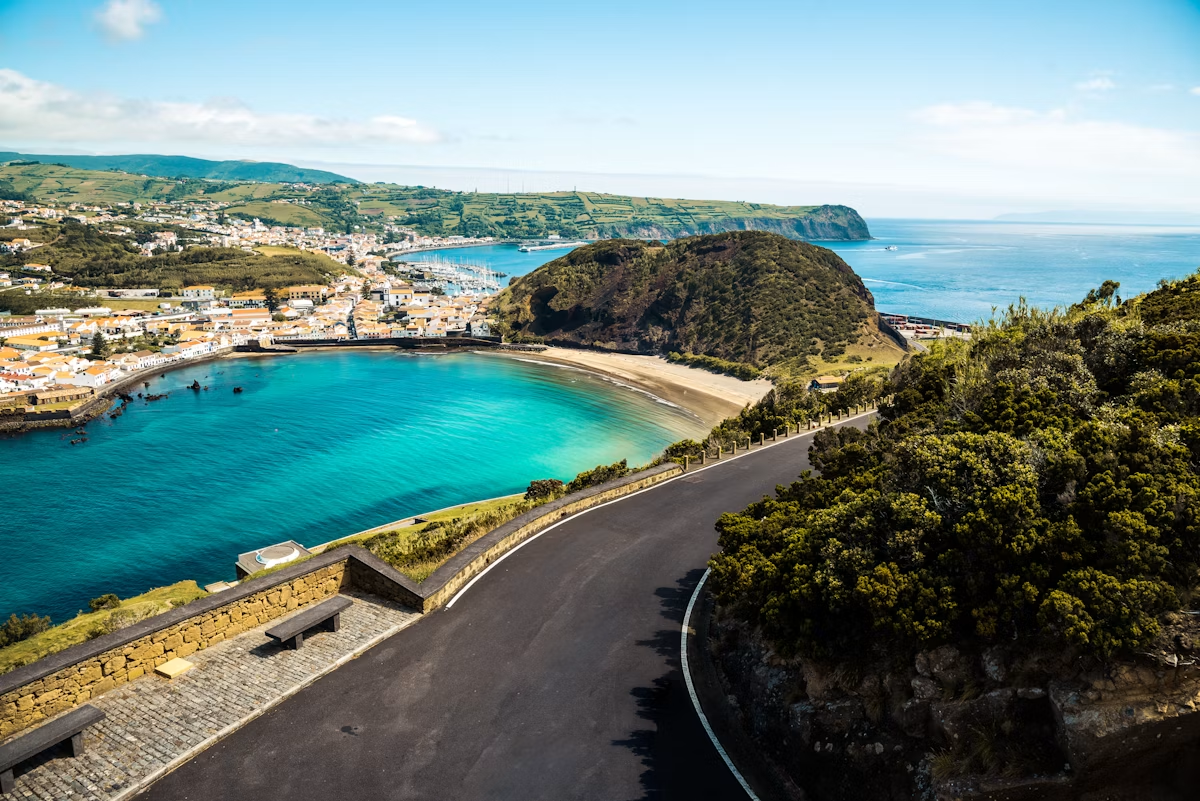
Hot Springs and Hiking Trails
Furnas, a volcanic valley on São Miguel, holds natural hot springs and steaming fumaroles used both for bathing and for cozido, a stew traditionally cooked underground using geothermal heat. The Terra Nostra Park hot spring pool, tinted orange-brown by iron-rich water, sits within a botanical garden and remains one of the most distinctive bathing experiences in the islands.
Hiking trails crisscross every Azorean island, from the climb up Pico, Portugal’s highest peak and a dormant volcano on the island of the same name, to coastal routes along Flores and São Jorge lined with waterfalls and pastureland.
Day Trips and Side Excursions
Sete Cidades (40 minutes by car from Ponta Delgada)
A volcanic caldera with twin crater lakes and a rim-road drive offering multiple viewpoints.
Furnas Valley and Terra Nostra Park (1 hour by car from Ponta Delgada)
Hot springs, fumaroles, and a botanical garden centered on an iron-rich thermal pool.
Pico Volcano Climb (full day, on Pico Island via inter-island flight or ferry)
A demanding but non-technical climb to Portugal’s highest point, best attempted with an early start for clear summit views.
Food in the Azores
Azorean food blends Portuguese tradition with the islands’ volcanic geography and Atlantic location.
- Cozido das Furnas: A meat and vegetable stew cooked slowly underground using geothermal heat, a signature Azorean dish. €15–€25
- Fresh tuna and limpets: Caught locally and served grilled or in stews at restaurants across the islands
- Azorean cheese: Cow’s-milk cheese produced on São Jorge and other islands, sold at markets and served as an appetizer
- Pineapple from São Miguel: Grown in greenhouses on the island, used in desserts and liqueurs
- Local wine: Volcanic-soil vineyards on Pico produce distinctive wines, some grown in stone-walled plots near the coast
Where to Stay
Budget (€35–€60/night)
Guesthouses and small hostels, concentrated in Ponta Delgada and other island capitals.
Mid-Range (€80–€150/night)
Hotels and rural guesthouses across the main islands — the standard Azores travel guide accommodation tier.
Upscale (€180–€400+/night)
Boutique hotels and resorts on São Miguel and Terceira with spa or thermal-pool access.
Getting Around the Azores
Rental car: The most practical way to reach crater lakes, hot springs, and trailheads on each island.
Inter-island flights: SATA Air Açores connects the main islands, the fastest way to combine several islands in one trip.
Ferries: Slower but scenic inter-island boats run between several islands during the summer season.
Daily Budget Breakdown
| Category | Frugal | Comfortable |
|---|---|---|
| Accommodation | €45 | €120 |
| Food | €25 | €55 |
| Rental car and fuel | €25 | €45 |
| Activities and hot springs | €10 | €40 |
| Daily Total | ~€105 / $113 | ~€260 / $280 |
Final Verdict: Azores Travel Guide 2026
The Azores reward seven to ten days, since combining even two or three islands by inter-island flight or ferry takes meaningfully longer than a single-island trip, and São Miguel alone holds enough crater lakes and hot springs to fill four or five days. The ideal Azores travel guide itinerary spends four to five days on São Miguel covering Sete Cidades, Furnas, and Lagoa do Fogo, followed by three to five days split between Pico and Faial or São Jorge for hiking and quieter island scenery. Travelers should book inter-island flights well in advance during summer, since limited capacity on smaller turboprop planes sells out faster than expected.