
Sicily travel guide readers usually expect a beach-focused side trip from mainland Italy and instead find the Mediterranean’s largest island, dense with Greek temples, baroque hill towns, and an active volcano that dominates the eastern skyline. Sicily, separated from mainland Italy by the narrow Strait of Messina, spent centuries under Greek, Roman, Arab, and Norman rule, leaving a layered architectural and culinary history found nowhere else in Italy. This Sicily travel guide covers the ancient ruins, coastal towns, Mount Etna, food, and a full budget breakdown for 2026.
At a Glance
| Country | Italy |
| Currency | Euro (EUR) |
| Language | Italian; Sicilian dialect widely spoken; English common in tourist areas |
| Best time | April–June and September–October (warm weather without peak summer crowds and heat) |
| Avoid | July–August for inland sightseeing, since temperatures regularly exceed 35°C |
| Daily budget (frugal) | $55–$80/day |
| Daily budget (comfortable) | $95–$230/day |
| Visa | Visa-free for most Western nationalities for up to 90 days under Schengen rules |
| Getting there | Catania or Palermo Airport, both with direct flights from major European cities |
| Getting around | Rental car recommended; trains and buses connect main cities but rarely reach smaller hill towns |
Ancient Ruins and Greek Temples
The Valley of the Temples near Agrigento holds one of the best-preserved collections of Greek temples outside Greece itself, with the Temple of Concordia standing almost fully intact since its construction over two thousand years ago. Syracuse’s Neapolis Archaeological Park, including a Greek theater still used for performances each summer, anchors a city that once rivaled Athens in size and influence.
Taormina’s Greek theater, perched on a cliff with Mount Etna visible in the background, ranks among the most scenic ancient sites anywhere in the Mediterranean.
Coastal Towns and Mount Etna
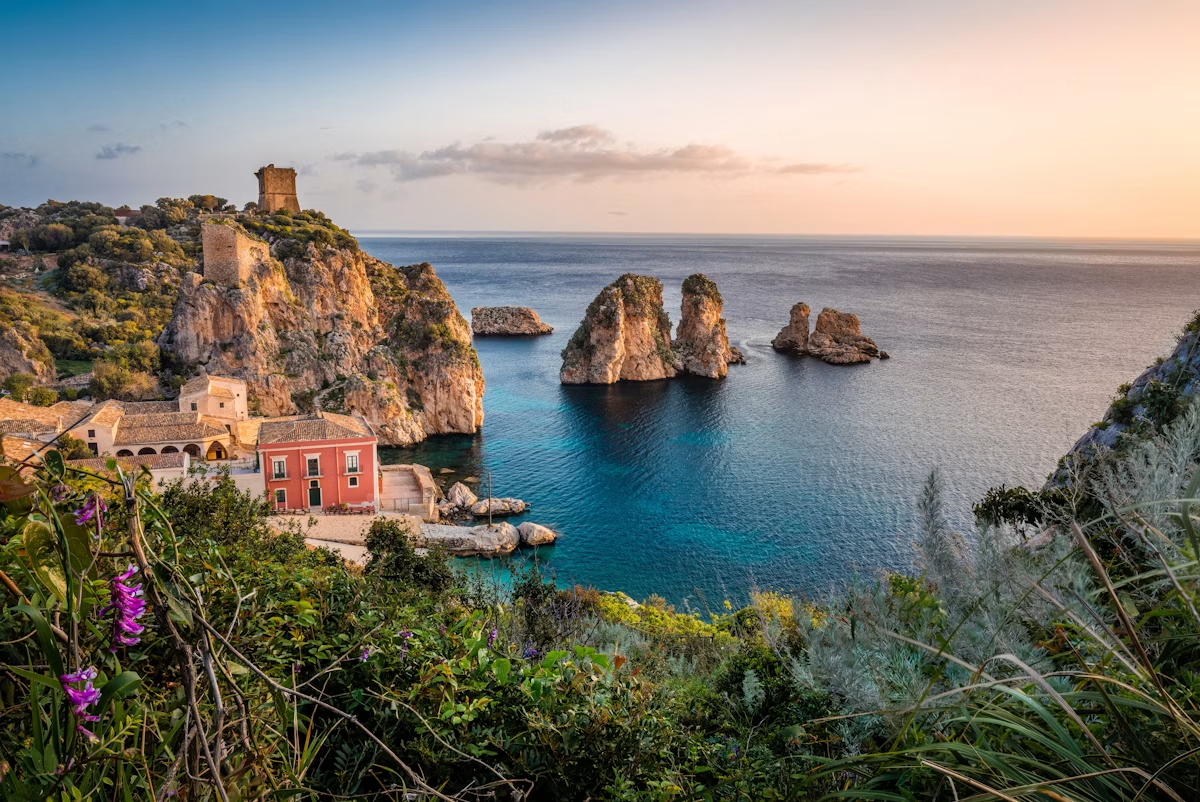
Cefalù’s medieval old town, framed by a Norman cathedral and a long sandy beach beneath a rocky headland, draws day-trippers from Palermo while keeping a relaxed small-town feel outside peak afternoon hours. Taormina, set high above the Ionian coast, pairs upscale shopping streets with sweeping sea views and serves as one of Sicily’s most popular bases for exploring the northeast coast.
Mount Etna, Europe’s tallest active volcano, looms over much of eastern Sicily and offers guided hikes, a cable car, and jeep tours up toward its craters, with the surrounding vineyards producing wine grown in distinctly volcanic soil.
Day Trips and Side Excursions
Mount Etna (1–1.5 hours by car from Catania or Taormina)
Guided hikes and cable car rides up Europe’s tallest active volcano, with jeep tours available to higher craters.
Valley of the Temples, Agrigento (2.5 hours by car from Palermo)
A sprawling archaeological park holding some of the best-preserved Greek temples outside Greece.
Cefalù (1 hour by car or train from Palermo)
A medieval coastal town with a Norman cathedral, a sandy beach, and a cliffside fortress walk.
Food in Sicily
Sicilian food blends Italian tradition with centuries of Arab, Greek, and Spanish influence, producing a cuisine distinct from mainland Italy.
- Arancini: Fried rice balls stuffed with ragù, cheese, or peas, a staple Sicilian street food. €2–€4 each
- Cannoli: Fried pastry tubes filled with sweetened ricotta, Sicily’s best-known dessert export
- Pasta alla Norma: A pasta dish with eggplant, tomato, and ricotta salata, named for a Sicilian opera
- Fresh seafood and swordfish: Caught locally and served grilled or in pasta dishes along the coast
- Granita and brioche: A semi-frozen dessert served with a sweet bread roll, a traditional Sicilian breakfast
Where to Stay
Budget (€30–€55/night)
Hostels and budget B&Bs in Palermo, Catania, and Syracuse.
Mid-Range (€80–€150/night)
Hotels in coastal towns and historic centers — the standard Sicily travel guide accommodation tier.
Upscale (€200–€450+/night)
Cliffside resorts in Taormina and converted historic palazzi in Palermo and Syracuse.
Getting Around Sicily
Rental car: The most practical way to reach hill towns, Mount Etna, and the Valley of the Temples, though parking in historic centers can be limited.
Trains: Connect Palermo, Catania, Syracuse, and other major cities, though service to smaller towns is limited.
Buses: Fill gaps in train coverage, particularly useful for reaching Agrigento and inland towns.
Daily Budget Breakdown
| Category | Frugal | Comfortable |
|---|---|---|
| Accommodation | €40 | €110 |
| Food | €25 | €55 |
| Rental car and fuel | €20 | €40 |
| Activities and entry fees | €10 | €35 |
| Daily Total | ~€95 / $102 | ~€240 / $258 |
Final Verdict: Sicily Travel Guide 2026
Sicily rewards seven to ten days, since the island’s size and the distance between Palermo, Catania, and Agrigento make it difficult to cover the major ruins, coastal towns, and Mount Etna in less time without constant driving. The ideal Sicily travel guide itinerary spends two to three days around Palermo and Cefalù, two days near Agrigento for the Valley of the Temples, and three to four days based in Taormina or Catania for Mount Etna, Syracuse, and the northeast coast. Travelers should rent a car for at least part of the trip, since Sicily’s best hill towns and archaeological sites are poorly served by public transport.