
Tbilisi travel guide readers usually expect a minor Eastern European city and instead find one of the most distinctive urban destinations in the world, a capital that sits at the cultural crossroads of Europe, the Middle East, and Central Asia, where ancient Orthodox churches, a Zoroastrian fire temple, Persian-style bath houses, and Soviet Modernist cable cars coexist within a walkable old town that has been rebuilt, destroyed, and rebuilt again seventeen times throughout its seventeen centuries of history. Tbilisi, the capital of Georgia (the country, not the state), has emerged in the past decade as one of the most talked-about travel destinations in Europe, with a natural wine revolution, a thriving music and nightlife scene, and some of the cheapest flight and accommodation prices of any European capital. This Tbilisi travel guide covers the Old Town, sulphur baths, wine culture, Narikala Fortress, food, and a full budget breakdown for 2026.
At a Glance
| Country | Georgia |
| Currency | Georgian Lari (GEL); $1 ≈ 2.7 GEL |
| Language | Georgian; Russian widely understood; English common among younger residents and in tourism |
| Best time | April–June and September–October (warm, dry, excellent for Old Town walking and wine harvest) |
| Avoid | July–August peak heat (35°C+); January–February for cold and limited daylight |
| Daily budget (frugal) | $30–$50/day |
| Daily budget (comfortable) | $60–$130/day |
| Visa | Visa-free for up to 365 days for most Western nationalities — one of the most generous visa policies in the world |
| Getting there | Tbilisi International Airport (TBS), served from Istanbul, Dubai, Riga, Vienna, and many European cities |
| Getting around | Metro, marshrutka (shared minibuses), app-based taxis (Bolt is cheap and reliable) |
Old Town and Narikala Fortress
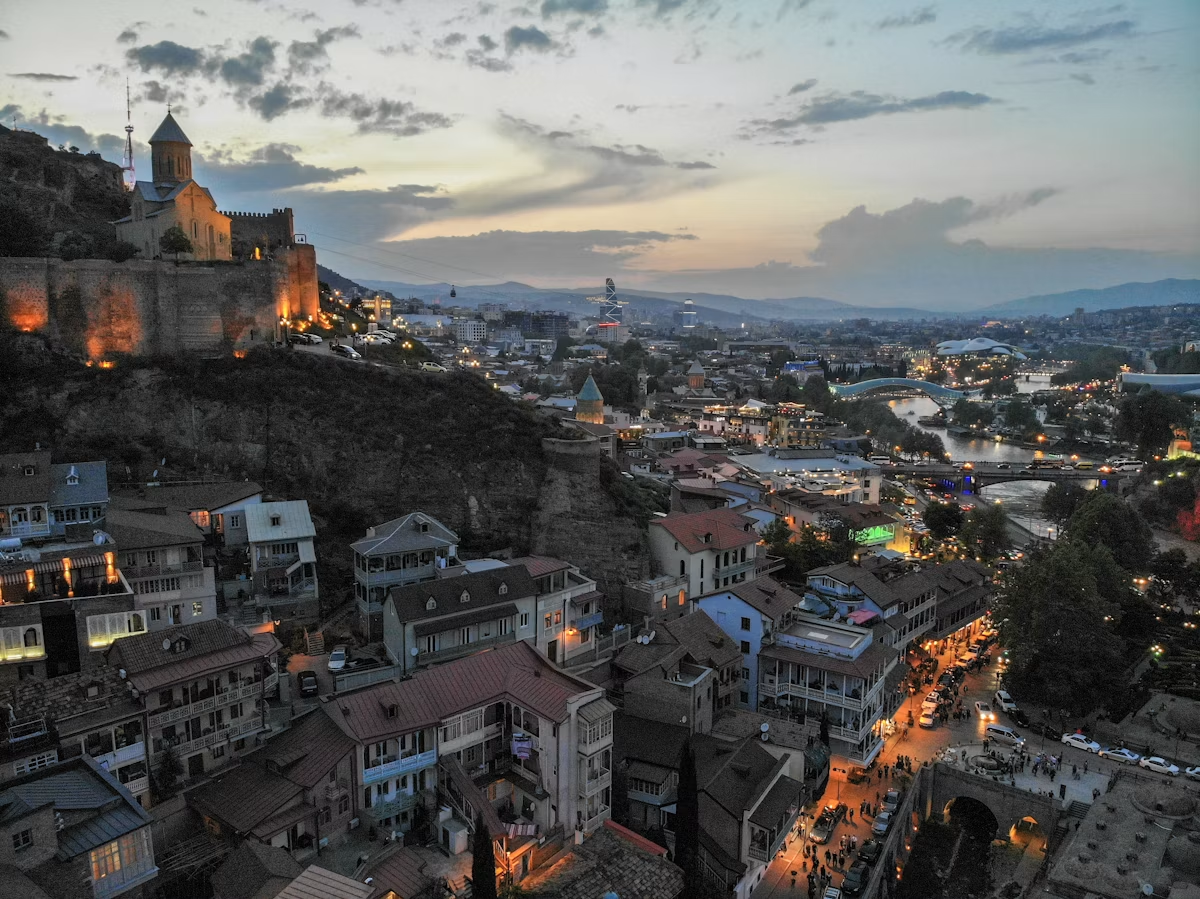
Tbilisi travel guide itineraries almost always begin in the Old Town (Kala district), a tightly packed neighborhood of carved wooden balconies overhanging narrow cobblestone lanes, where Metekhi Church clings to a cliff above the Mtkvari River and the restored Narikala Fortress above it provides the broadest panoramic view of the city. The cable car from Rike Park, a Soviet-era renovation that now connects the riverbank to Narikala, saves the steep walk and takes three minutes.
The Abanotubani sulphur bath district, immediately below Narikala, is the oldest functioning part of the city. The dome-topped brick bath houses, with their egg-shaped vents and changing their sulphur-scented steam, have operated continuously since the fifth century and remain one of the most authentically Georgian experiences in the city.
Wine Culture and the Rustaveli Avenue
Georgia is one of the oldest wine-producing regions on earth, with an 8,000-year tradition of fermenting grape juice in clay qvevri pots buried underground, a method now UNESCO-recognized as an intangible cultural heritage. The natural wine movement has driven a new generation of Georgian winemakers to export qvevri wines internationally, and Tbilisi holds a concentration of wine bars along Aghmashenebeli Avenue and around the Fabrika complex where orange wines, amber wines, and skin-contact whites from Kakheti are poured by the glass for 5–12 GEL.
Rustaveli Avenue, the main boulevard connecting the Opera House, Parliament, and National Museum, serves as Tbilisi’s central promenade. The Georgian National Museum on Rustaveli holds the country’s gold and silver treasury, with artifacts spanning the Bronze Age through the medieval Georgian kingdom.
Day Trips and Side Excursions
Mtskheta (30 minutes by marshrutka from Tbilisi)
The ancient capital of Georgia, with the UNESCO-listed Svetitskhoveli Cathedral and the Jvari Monastery perched above the river confluence.
Kazbegi and Mount Kazbek (3 hours by shared taxi)
The Gergeti Trinity Church at 2,170 meters altitude, with Mount Kazbek (5,047m) as a backdrop, is one of the most dramatic mountain scenes in the Caucasus.
Kakheti Wine Region (2–3 hours by shared taxi or day tour)
Georgia’s main wine-producing region, with qvevri wineries, vineyard stays, and the fortified town of Sighnaghi overlooking the Alazani Valley.
Food in Tbilisi
Georgian food is one of the most celebrated regional cuisines in the former Soviet space, centered on cheese-filled breads, walnut sauces, and slow-cooked meats.
- Khachapuri: Georgia’s national dish — a boat-shaped bread filled with molten cheese and topped with a runny egg and butter. Adjaran-style (the boat version) is the most famous
- Khinkali: Large soup dumplings filled with spiced pork and beef, eaten by twisting the top and biting through the bottom to drink the broth first. 3–5 GEL for four
- Mtsvadi: Chunks of pork or lamb skewered and grilled over wood coals, served with raw onion and pomegranate seeds
- Badrijani nigvzit: Thin slices of fried eggplant rolled around a walnut, garlic, and herb paste — one of the most common Georgian appetizers
- Churchkhela: A walnut-and-grape-juice candy string made by dipping walnuts into thickened grape juice and drying them, sold at every market
Where to Stay
Budget ($20–$45/night)
Hostels and family guesthouses in the Old Town, many with shared-kitchen access and rooftop terraces.
Mid-Range ($55–$110/night)
Boutique hotels in converted Old Town houses with carved wooden balconies — the standard Tbilisi travel guide accommodation tier.
Upscale ($150–$350+/night)
The Rooms Hotel Tbilisi, Stamba Hotel (in a former Soviet printing house), and luxury properties along the Mtkvari riverfront.
Getting Around Tbilisi
Metro: Two metro lines cover the main city corridors; a single journey costs 1 GEL with a Metromoney card.
Bolt taxi: Extremely cheap app-based taxi — most Old Town to anywhere trips cost 3–8 GEL, making Bolt the most practical transport for short hops.
Walking: The Old Town, Abanotubani, Rustaveli Avenue, and Fabrika area are all connected on foot in under 30 minutes.
Daily Budget Breakdown
| Category | Frugal | Comfortable |
|---|---|---|
| Accommodation | $25 | $80 |
| Food and wine | $15 | $40 |
| Transport (metro and Bolt) | $5 | $10 |
| Activities and entry fees | $5 | $15 |
| Daily Total | ~$50 | ~$145 |
Final Verdict: Tbilisi Travel Guide 2026
Tbilisi rewards three to five days, since the city’s neighborhoods reward slow walking and the wine bar and restaurant scene tends to pull visitors into longer evenings than planned. The ideal Tbilisi travel guide itinerary spends a first day in the Old Town and Abanotubani sulphur baths, a second day on Rustaveli Avenue and the National Museum with an evening in Fabrika, a third day on the Mtskheta day trip, and a fourth or fifth day on the Kazbegi mountain drive or a Kakheti wine-region excursion. Travelers should note that Georgia’s extraordinarily generous visa-free policy (up to a full year) and low cost of living make Tbilisi a practical base for extended Caucasus travel rather than just a short stop.