
Zanzibar travel guide readers usually expect a simple beach destination and instead find one of the Indian Ocean’s most layered archipelagos — a semi-autonomous Tanzanian island group where a UNESCO-listed Arab merchant city sits at the edge of powder-white beaches, where clove and nutmeg still grow on spice farms worked for centuries, and where coral reef systems host some of the best snorkeling and diving in East Africa. Zanzibar, formally known as Unguja island, lies about 35 kilometers off the coast of mainland Tanzania and draws visitors who combine it with a Serengeti or Kilimanjaro safari. This Zanzibar travel guide covers Stone Town, Nungwi beach, spice tours, diving, food, and a full budget breakdown for 2026.
At a Glance
| Country | Tanzania (Zanzibar is a semi-autonomous archipelago) |
| Currency | Tanzanian Shilling (TZS); US dollars widely accepted |
| Language | Swahili (Kiswahili); English widely spoken in tourism |
| Best time | June–October (dry season, calmer seas, best diving visibility) and January–February (short dry spell) |
| Avoid | March–May (long rains; heavy downpours, choppy seas, many closures) |
| Daily budget (budget) | $60–$100/day (guesthouse, local food, shared transport) |
| Daily budget (mid-range) | $150–$300/day (boutique hotel, tours, restaurant meals) |
| Visa | Tanzania e-visa required in advance; single-entry $50 USD for most nationalities |
| Getting there | Abeid Amani Karume International Airport (ZNZ); direct flights from Nairobi, Dar es Salaam, Addis Ababa. Alternatively, 2-hour ferry from Dar es Salaam |
| Getting around | Dala-dala (minibus) for budget; private taxis and scooter rental; tour operators for spice tours and diving |
Stone Town and Swahili Architecture
Zanzibar travel guide itineraries almost always begin in Stone Town, the historic heart of Zanzibar City and the archipelago’s UNESCO World Heritage site. Stone Town’s labyrinthine streets are lined with carved wooden doors — the ornate brass-studded doors were historically a mark of merchant wealth and remain among the most photographed architectural details in East Africa — along with coral-stone buildings, mosques, and former sultanate palaces built during Zanzibar’s era as the commercial hub of the East African slave trade and spice economy.
The major landmarks within walking distance of the waterfront include the House of Wonders (Beit el-Ajaib), the Old Fort (Arab Fort), Forodhani Gardens night market along the sea wall, and the Slave Trade Museum, which provides essential context for the island’s history as the center of the 19th-century East African slave trade.
Nungwi, Kendwa, and the Northern Beaches
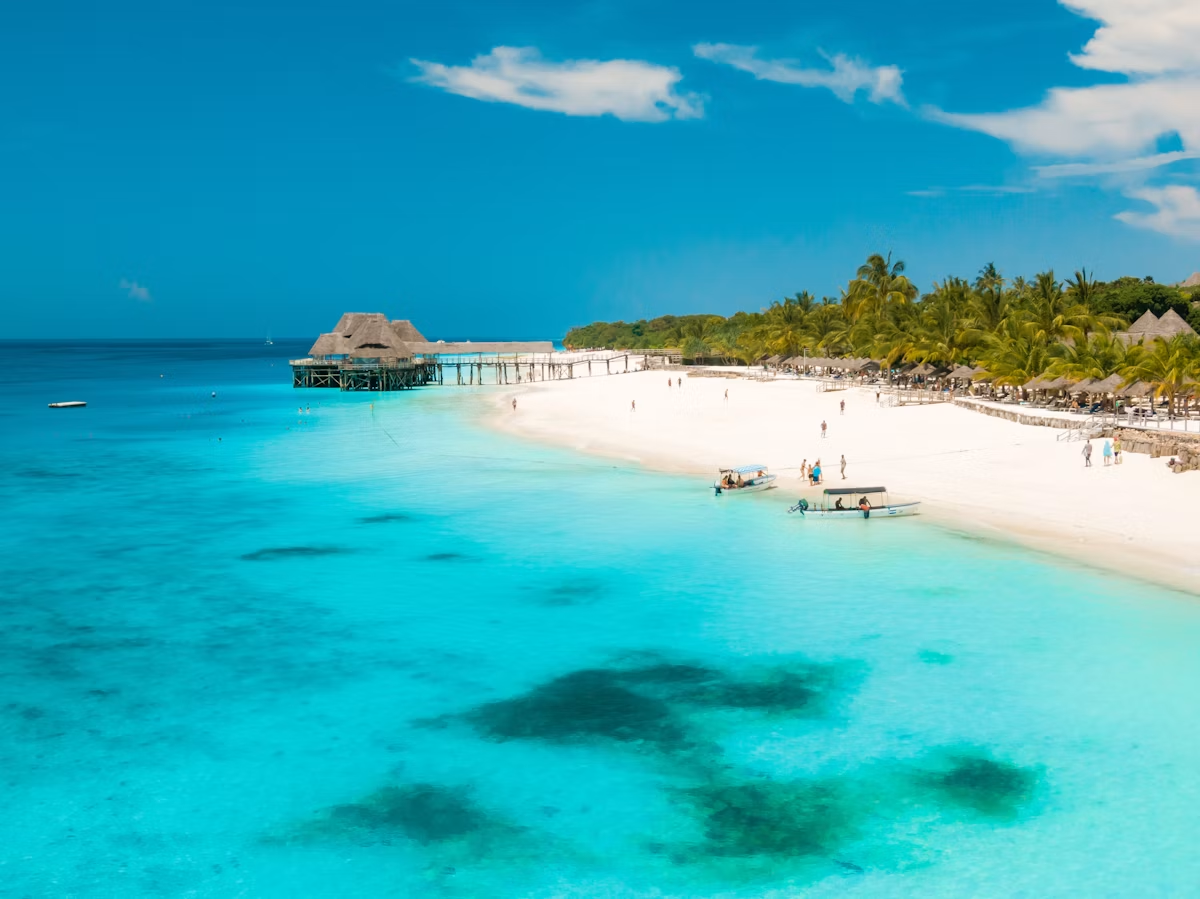
Zanzibar’s northern tip holds its most celebrated beaches, with Nungwi and Kendwa offering the whitest sand, clearest water, and the longest stretches of beachfront accommodation on the island. Unlike the tidal flats of the east coast beaches — which expose hundreds of meters of sandy seafloor at low tide — the northern beaches maintain swimmable water throughout the tidal cycle, making them the preferred base for beach-focused travelers.
Nungwi village retains a working fishing community and traditional dhow-building yard alongside its beach bars and guesthouses, giving travelers a sense of local life that more resort-heavy destinations on the island lack. The most direct sunset views on Zanzibar are also from the northern coast, where the sun drops into the Indian Ocean rather than behind the island.
Day Trips and Side Excursions
Spice Farm Tour (30–45 minutes from Stone Town)
Zanzibar earned the nickname “Spice Island” through centuries of clove, nutmeg, cinnamon, cardamom, and vanilla cultivation. Half-day spice farm tours depart Stone Town daily and include walking through active farms with guide demonstrations of each spice plant, cooking samples, and a fresh coconut. Cost: $20–$35 per person.
Prison Island (Changuu Island, 20 minutes by boat from Stone Town)
A small island with a 19th-century building originally constructed as a slave holding facility and later used as a prison. Now home to a colony of Aldabra giant tortoises, some over 100 years old.
Mnemba Atoll (day trip from Nungwi or Kendwa)
A small private atoll off Zanzibar’s northeast coast with the island’s best snorkeling and diving, including reef fish, sea turtles, and spinner dolphins.
Jozani Forest (1 hour south of Stone Town)
Home to the endemic Zanzibar red colobus monkey, found only on this island. A guided walk costs around $10 and takes under two hours.
Food in Zanzibar
Zanzibar’s food culture blends Swahili, Arab, Indian, and Portuguese influences, with fresh seafood forming the backbone of the local diet.
- Zanzibar pizza: A street food specialty sold at Forodhani Gardens night market — thin pastry dough filled with minced meat, egg, cheese, and vegetables, folded and griddled; the most famous Zanzibar street food
- Urojo (Zanzibar mix): A tangy yellow mango soup base topped with bhajia (vegetable fritters), cassava chips, boiled egg, coconut chutney, and tamarind sauce — the definitive local street food bowl
- Grilled seafood: Fresh octopus, squid, kingfish, and prawns grilled over coconut charcoal at Forodhani Gardens and beachfront restaurants along the northern coast
- Pilau rice: Fragrant rice cooked with whole spices including cardamom, cloves, cinnamon, and black pepper — a Swahili staple served with meat or fish curries
- Mkate wa kumimina (rice bread): A soft, slightly sweet coconut rice bread cooked in a clay pot, served at breakfast with tea
Where to Stay
Budget (from $25–$60/night)
Guesthouses in Stone Town’s old city, including several family-run coral-stone buildings with shared terraces. Basic beach bungalows in Nungwi from $40/night.
Mid-Range ($80–$200/night)
Boutique hotels in Stone Town with rooftop terraces, or beachfront guesthouses in Nungwi and Kendwa — the standard Zanzibar travel guide accommodation tier.
Upscale ($250–$1,200+/night)
Private beach resorts on the east coast (Paje, Matemwe), the exclusive Mnemba Island Lodge, and several luxury tented camps. The north and northeast coasts hold the island’s highest-end properties.
Getting Around Zanzibar
Dala-dala: Shared minibuses covering major routes from Stone Town to Nungwi, Paje, and Jozani for 1,000–3,000 TZS per leg; slow but the cheapest option.
Private taxi: Stone Town to Nungwi costs around $30–$40 negotiated; most hotels can arrange transfers.
Scooter or motorbike rental: Available in Stone Town and Nungwi for $15–$25/day with a valid license; the most flexible way to explore the island independently.
Boat transfers: For east coast resorts, speedboats are sometimes faster than road travel around the island. Most luxury properties offer direct boat pickup.
Daily Budget Breakdown
| Category | Budget | Mid-Range | Luxury |
|---|---|---|---|
| Accommodation | $35 | $130 | $450 |
| Meals | $15 | $40 | $80 |
| Transport (taxi/scooter) | $10 | $25 | $40 |
| Activities (tours, diving) | $25 | $60 | $120 |
| Daily Total | ~$85 | ~$255 | ~$690+ |
Final Verdict: Zanzibar Travel Guide 2026
Zanzibar rewards five to seven days, enough time to spend two days in Stone Town, two to three nights at a northern beach, and a day trip to the spice farms and Prison Island without rushing. The ideal Zanzibar travel guide itinerary arrives into Stone Town, spends two full days exploring the old city on foot, transfers north to Nungwi or Kendwa for beach and water activities, and adds a half-day spice farm tour before departure. Travelers combining Zanzibar with a mainland Tanzania safari should allow at least four nights on the island to avoid spending most of the trip in transit. Book accommodation two to three months in advance for June through September and December through January, when the island operates at near-capacity.