
Queenstown travel guide readers usually expect a ski resort and instead find the world’s undisputed adventure capital — a lakeside town of around 15,000 people in New Zealand’s South Island that invented commercial bungee jumping, offers the world’s most concentrated menu of adrenaline activities, and sits beside a glacier-carved lake ringed by the jagged Remarkables mountain range. Queenstown functions year-round: in winter (June–September) as a premier ski destination, and in summer (December–March) as a hiking, biking, and paragliding hub. This Queenstown travel guide covers the Remarkables, bungee jumping, Milford Sound day trips, Wanaka, food, and a full budget breakdown for 2026.
At a Glance
| Country | New Zealand |
| Currency | New Zealand Dollar (NZD); $1 USD ≈ 1.63 NZD |
| Language | English; Māori (te reo Māori) |
| Best time | June–September (skiing and snowfields); December–March (hiking, lake activities, festivals) |
| Avoid | Mid-winter crowds (July school holidays); peak summer weekends (February) for over-tourism at Milford Sound |
| Daily budget (budget) | NZD $100–$160/day ($60–$100 USD) |
| Daily budget (mid-range) | NZD $250–$450/day ($155–$275 USD) |
| Visa | New Zealand ETA required for most nationalities (NZD $9 online); valid 2 years |
| Getting there | Queenstown Airport (ZQN); direct flights from Auckland, Christchurch, Sydney, Melbourne, and Singapore |
| Getting around | Local bus network (Orbus); taxis and rideshares; rental car highly recommended for Milford Sound and Wanaka |
Lake Wakatipu and the Remarkables
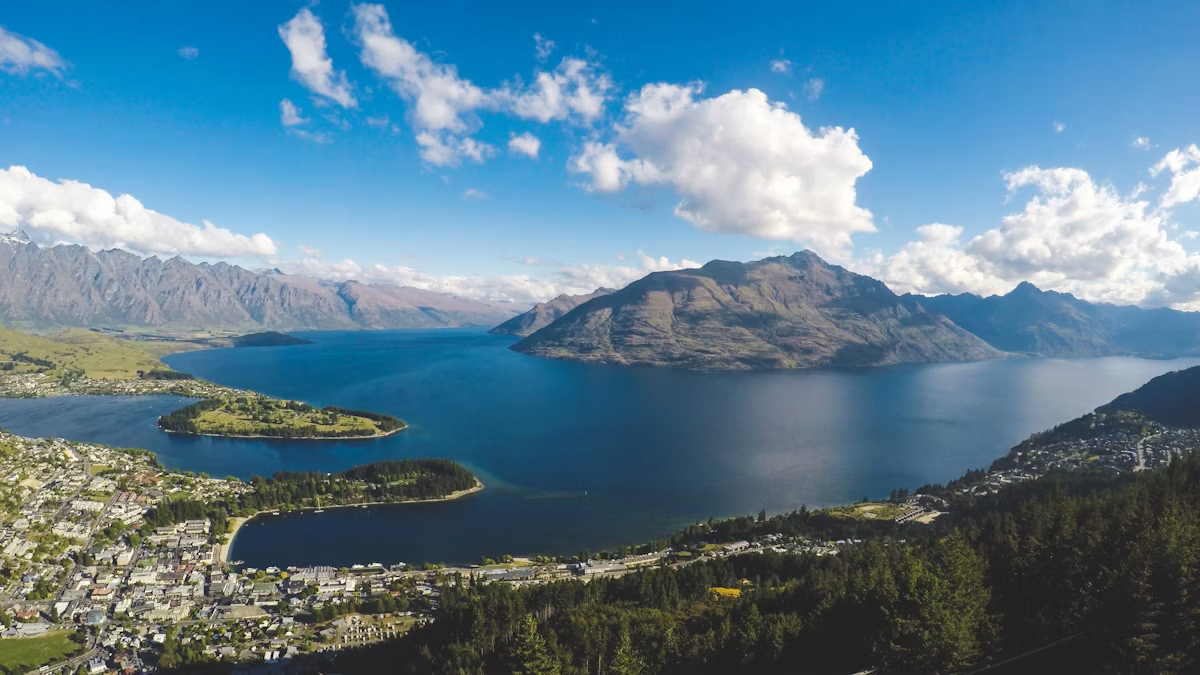
Queenstown travel guide itineraries are shaped around Lake Wakatipu, the 84-kilometer glacially formed lake that wraps around the base of the town and whose eastern shoreline frames the Remarkables — one of the most recognizable mountain silhouettes in the Southern Hemisphere, a jagged ridge of peaks rising to over 2,300 meters that glows a deep burnt-orange at sunset in summer and holds reliable snowpack from June through October.
The Skyline Gondola rises from the edge of town to Bob’s Peak at 450 meters, where the panoramic view of the lake, the Remarkables, and Cecil Peak across the water is the defining Queenstown vista. The gondola complex includes a luge track, zip lines, and the Stratosfare restaurant, and remains open year-round as one of the most visited attractions in New Zealand.
Adventure Activities and Bungee Jumping
Queenstown’s identity as the world’s adventure capital was cemented in 1988 when A.J. Hackett and Henry van Asch launched the world’s first commercial bungee jump from the Kawarau Gorge Suspension Bridge, 43 meters above the Kawarau River. The Kawarau jump remains the most iconic, though the Nevis Highwire Bungee at 134 meters above the Nevis River is now the highest jump in Australasia and draws thrill-seekers specifically for that distinction. Prices: Kawarau NZD $205 ($125 USD); Nevis NZD $275 ($168 USD).
Beyond bungee, the activity menu includes skydiving (15,000-foot tandem jump over Lake Wakatipu, NZD $429+), jet boating through Shotover Canyon (NZD $159), white-water rafting on the Shotover and Kawarau rivers, paragliding from Coronet Peak, and canyon swinging at Nevis. Most activities can be booked as a bundle through operators offering multi-activity day packages.
Day Trips and Side Excursions
Milford Sound (5 hours each way by coach or self-drive)
New Zealand’s most visited natural attraction, a fiord in Fiordland National Park where sheer cliffs drop over 1,200 meters directly into deep blue water and Stirling and Bowen Falls cascade beside boat cruise routes. Most travelers do a coach-and-cruise day trip from Queenstown (12–14 hours round trip); the journey through the Homer Tunnel and along Lake Te Anau is itself scenically extraordinary. Book 4–6 weeks in advance in summer.
Wanaka (1 hour by car)
A quieter lake town with access to Mount Aspiring National Park, excellent hiking, and the famous “that Wanaka tree” willow growing alone in the lake shallows — one of New Zealand’s most photographed spots.
Arrowtown (25 minutes by car)
A historic gold-rush town with well-preserved 1860s stone buildings, boutique shops, and the Chinese settlement heritage site. Pleasant half-day stop between Queenstown and Wanaka.
Coronet Peak and The Remarkables Ski Fields (30–45 minutes)
Two ski fields serving Queenstown; Coronet Peak offers night skiing on Fridays and Saturdays in season. Day lift passes from NZD $159.
Food in Queenstown
Queenstown’s food scene punches well above its size, with a dense concentration of restaurants along the Steamer Wharf waterfront and Gorge Road.
- Central Otago Pinot Noir: The nearby Central Otago wine region produces some of the Southern Hemisphere’s most celebrated Pinot Noir; the climate and volcanic schist soils create a distinctive cool-climate style. Cellar doors within 45 minutes of Queenstown
- Fergburger: Queenstown’s most iconic food stop, a burger institution operating almost continuously with lines often running out the door; the classic “Big Al” beef burger is the standard order
- Roaring Meg salmon: Wild Fiordland salmon from the Roaring Meg river, served pan-fried or smoked across most mid-range restaurants in town
- Manuka honey: Locally produced and widely available for purchase; used in desserts and drinks throughout the South Island
- Hokey pokey ice cream: New Zealand’s signature ice cream flavor — vanilla with crunchy toffee pieces — served at most cafes in the region
Where to Stay
Budget (from NZD $35–$80/night)
Hostels in the CBD and around the Shotover Street area, with dorm beds starting at NZD $35. Several options include hot tubs and mountain views as standard.
Mid-Range (NZD $180–$400/night)
Boutique hotels and apartments with lake or mountain views, particularly on the Remarkables side of town — the standard Queenstown travel guide accommodation tier.
Upscale (NZD $500–$1,800+/night)
The Eichardt’s Private Hotel, Matakauri Lodge, and Azur Lodge represent the top tier, with lake views, private terraces, and spa facilities.
Getting Around Queenstown
Orbus: The local public bus network covers the town center, Frankton, and Arrowtown; NZD $2.50 flat fare.
Rental car: Essential for Milford Sound self-drive and Wanaka. Most international licenses are valid in New Zealand. Book well in advance for winter and summer peaks.
Taxi and rideshare: Uber and local taxis operate in Queenstown; NZD $15–$30 within town.
Ski shuttles: Dedicated shuttle buses to Coronet Peak and the Remarkables operate from the town center during ski season, typically NZD $45–$55 return.
Daily Budget Breakdown
| Category | Budget | Mid-Range | Luxury |
|---|---|---|---|
| Accommodation | NZD $65 | NZD $250 | NZD $700 |
| Meals | NZD $35 | NZD $80 | NZD $150 |
| Transport | NZD $15 | NZD $60 | NZD $100 |
| Activities | NZD $80 | NZD $200 | NZD $400 |
| Daily Total | ~NZD $195 | ~NZD $590 | ~NZD $1,350+ |
Final Verdict: Queenstown Travel Guide 2026
Queenstown rewards four to six days — two days for in-town activities and the Skyline Gondola, one full day for Milford Sound, and a day each for Wanaka and a ski field or second adventure activity. The ideal Queenstown travel guide itinerary front-loads the Milford Sound trip early (weather is most reliable in the morning) and saves the high-adrenaline activities like bungee and skydiving for days with confirmed clear skies, since both are weather-dependent. Travelers should pre-book Milford Sound cruises, bungee jumps, and ski lessons four to six weeks ahead in peak season (July and January through February), when Queenstown operates well above comfortable capacity and last-minute slots disappear quickly.