
Cinque Terre travel guide readers usually expect a postcard scene and instead find one of Italy’s most dramatic and logistically surprising destinations — five medieval fishing villages perched on vertical cliff faces above the Ligurian Sea, connected by a UNESCO World Heritage protected national park of hiking trails and a local train line that makes village-hopping possible in under 10 minutes per hop. Cinque Terre (“Five Lands”) comprises Riomaggiore, Manarola, Corniglia, Vernazza, and Monterosso al Mare, strung along 12 kilometers of coastline in the Liguria region, and is far more demanding on foot than photographs suggest. This Cinque Terre travel guide covers the Sentiero Azzurro trail, the best village to base in, swimming, food, and a full budget breakdown for 2026.
At a Glance
| Country | Italy |
| Currency | Euro (EUR); $1 USD ≈ €0.92 |
| Language | Italian; English spoken in most tourist facilities |
| Best time | April–June and September–October (comfortable temperatures, trails open, manageable crowds) |
| Avoid | July–August (extreme heat, severe overcrowding, limited trail access, highest prices) |
| Daily budget (budget) | €80–€120/day ($87–$130 USD) |
| Daily budget (mid-range) | €180–€300/day ($196–$326 USD) |
| Visa | Schengen visa for non-EU nationals; 90 days visa-free for US, UK, and most other passports |
| Getting there | Nearest major airport: Genoa Cristoforo Colombo (GOA, 1 hour); Pisa Galileo Galilei (PSA, 1.5 hours). Train from La Spezia Centrale is the main gateway to the Cinque Terre villages |
| Getting around | Cinque Terre Express local train (€5–€18 per day with Cinque Terre Card); hiking trail network; ferries in summer |
The Sentiero Azzurro and the Village Trail Network
Cinque Terre travel guide itineraries revolve around the trail network, and specifically the Sentiero Azzurro (Blue Trail / Trail 2) — the famous coastal path connecting all five villages that follows the cliff face between the sea and the terraced vineyard slopes. The path has been subject to partial closures and access limitations for years due to landslide damage and erosion, and as of 2026 most sections require a paid Cinque Terre Card (€7.50/day for trail access alone; €18.50 for trail plus unlimited train travel) available at La Spezia Centrale or the park information offices in each village.
The most reliably open and most scenic sections run between Riomaggiore and Manarola (the Via dell’Amore, a 1.2 km romantic promenade reopened after years of closure) and between Vernazza and Monterosso (the most demanding segment, 1.5–2 hours with significant elevation). Corniglia sits 100 meters above sea level and requires climbing 382 steps from the train station, making it the most visited-least-photographed village — and the quietest.
Vernazza and the Fishing Village Harbors
Of the five villages, Vernazza is most consistently cited as the most beautiful, with a small natural harbor, a medieval watchtower (Doria Castle) rising above the colorful stacked houses, and a piazza that sits directly at the waterline where locals and visitors mix in a way that has become rare in the more heavily tourism-managed villages along the coast.
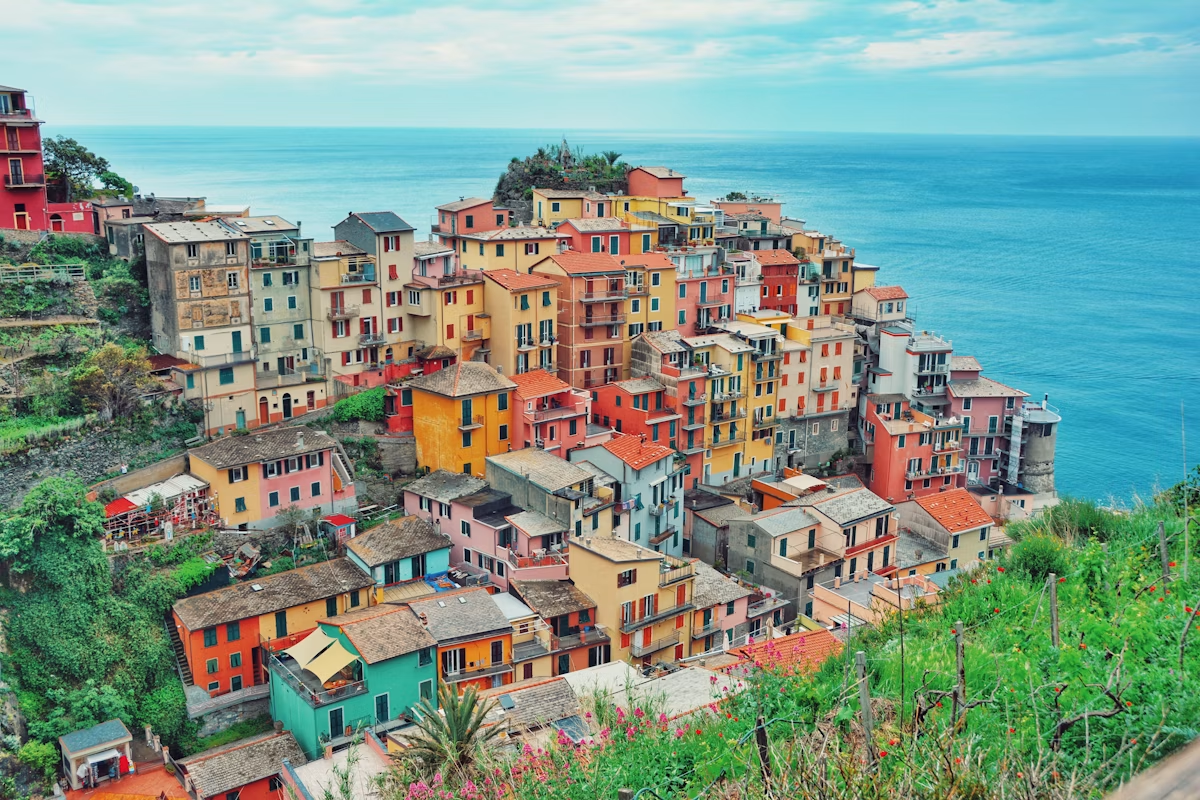
Manarola, the most photographed village due to its cliff-stacked buildings visible from a promontory viewpoint ten minutes’ walk from the village center, functions as the image most associated with Cinque Terre globally. Riomaggiore, the southernmost village, is the most convenient arrival point from La Spezia and has the most accommodation relative to its size, making it a practical base for multi-day visits.
Day Trips and Side Excursions
Portovenere (15 minutes by ferry or 30 minutes by train + walk from La Spezia)
A fortified medieval town at the southern end of the Gulf of Poets, with a 13th-century church perched on a rocky promontory and views back toward the Cinque Terre coastline. Far less crowded than the five main villages.
La Spezia (10 minutes by train)
The regional capital and main transport hub, with an underrated seafront market, a naval museum, and the practical infrastructure (car parks, supermarkets, larger accommodation options) that the villages themselves lack.
Levanto (10 minutes north of Monterosso by train)
A larger Ligurian beach town north of Cinque Terre with a long sandy beach, good surfing in autumn and winter, and a base many long-stay visitors prefer for its lower prices and less extreme crowds.
Boat Tours of the Coast (depart Monterosso, Vernazza, and Manarola)
Summer ferry services connect the five villages and also offer private boat tours for swimming stops in sea caves and cliff-face coves inaccessible by foot.
Food in Cinque Terre
Ligurian cuisine is the most distinct of all Italian regional cooking traditions, driven by basil, olive oil, anchovies, and seafood.
- Pesto alla genovese: Liguria is the birthplace of basil pesto, and Cinque Terre restaurants take the sauce seriously; served on trofie pasta (short twisted pasta), linguine, or as a condiment for focaccia
- Focaccia: The Ligurian version is thicker and more oily than other Italian flatbreads, baked in large trays and sold by weight at bakeries in every village from early morning
- Acciughe (local anchovies): The Ligurian Sea anchovies are some of the most prized in Italy — eaten fresh, salt-cured, or marinated in lemon juice and served on bruschetta
- Sciacchetrà: A rare, sweet amber passito wine made from partially dried grapes grown on the steep terraced vineyards directly above the villages; available at wine bars in every village for €8–€15 a glass
- Fritto misto di mare: A mixed fry of squid, anchovies, prawns, and local small fish served in paper cones at the harbor-front restaurants in Vernazza and Monterosso
Where to Stay
Budget (from €60–€90/night)
Small guesthouses and affittacamere (private room rentals) in Riomaggiore and Manarola. Staying in La Spezia or Levanto cuts costs by 30–40% with a short train commute to the villages.
Mid-Range (€130–€250/night)
Boutique hotels and converted fisherman’s houses in Vernazza and Monterosso — the standard Cinque Terre travel guide accommodation tier. Book 3–4 months ahead for May, June, and September.
Upscale (€280–€500+/night)
Sea-view rooms and suites in Monterosso al Mare (the only village with a proper sandy beach) and a handful of cliff-side properties in Manarola with terraces facing the open Ligurian Sea.
Getting Around Cinque Terre
Cinque Terre Express train: The fastest and most practical way to move between villages; trains run every 15–30 minutes connecting all five villages with La Spezia. Day passes (€18.50 including trail access) are nearly always worth it for multi-village days.
Hiking trails: The Sentiero Azzurro Blue Trail is the backbone, but higher mountain trails (Trail 1, the ridge path) offer solitude and panoramic views above the tourist traffic.
Ferry (summer only): Seasonal passenger ferries between Monterosso, Vernazza, Manarola, and Riomaggiore; more scenic than the train, and practical for one direction of a village-to-village journey.
No cars in the villages: Private vehicles cannot enter the historic village centers. Parking is available at the edges of Riomaggiore and Monterosso, but most visitors arrive by train from La Spezia or Levanto.
Daily Budget Breakdown
| Category | Budget | Mid-Range | Luxury |
|---|---|---|---|
| Accommodation | €75 | €180 | €380 |
| Meals | €25 | €55 | €100 |
| Cinque Terre Card (train + trails) | €18.50 | €18.50 | €18.50 |
| Activities / extras | €10 | €30 | €80 |
| Daily Total | ~€128 | ~€283 | ~€578+ |
Final Verdict: Cinque Terre Travel Guide 2026
Cinque Terre rewards two to three days — one full day on the coastal trails and ferry between villages, one day based in Vernazza or Manarola exploring the village centers and harbor swimming, and an optional third day for Portovenere or the upper ridge trails. The ideal Cinque Terre travel guide itinerary arrives the evening before from Genoa, Pisa, or Florence, bases in Riomaggiore for convenience, and works north village by village over two days before departing from Monterosso. Travelers should avoid July and August entirely if possible — the villages’ narrow streets become genuinely difficult to navigate at peak hour, heat is oppressive on the trails, and accommodation prices double relative to spring and autumn. April through June is the optimal window: wildflowers on the terraced slopes, cooler hiking temperatures, and all five villages operating normally.