
Kyoto travel guide readers usually expect a generic Japan itinerary and instead find the country’s most concentrated collection of UNESCO World Heritage sites — a city of 17 Buddhist temples, 3 Shinto shrines, and a 1,000-year imperial history packed into a valley ringed by forested mountains in the Kansai region. Kyoto served as Japan’s imperial capital for over a millennium until 1868, and its preservation through World War II — the United States removed it from the atomic bomb target list — left an urban core with a living heritage that Tokyo and Osaka cannot match. This Kyoto travel guide covers Fushimi Inari, Arashiyama, Gion, the Philosopher’s Path, food, and a full budget breakdown for 2026.
At a Glance
| Country | Japan |
| Currency | Japanese Yen (JPY); $1 USD ≈ ¥155 |
| Language | Japanese; English signage in tourist areas |
| Best time | March–April (cherry blossoms, sakura season); October–November (autumn foliage, koyo) |
| Avoid | Golden Week (late April–early May) and Obon (August) — extreme crowds and accommodation price spikes |
| Daily budget (budget) | ¥8,000–¥14,000/day ($52–$90 USD) |
| Daily budget (mid-range) | ¥20,000–¥40,000/day ($130–$260 USD) |
| Visa | Visa-free for 90 days for US, EU, UK, Australian, and most nationalities |
| Getting there | Nearest major airport: Kansai International (KIX, 75 min by Haruka Express) or Osaka Itami (ITM, 55 min by bus). Shinkansen from Tokyo (2 hrs 15 min) |
| Getting around | City buses (¥230 flat fare) and subway; 1-day bus pass (¥700) for tourists; walking in central areas |
Fushimi Inari and the Temple Circuit
Kyoto travel guide itineraries almost always open with Fushimi Inari-taisha, the iconic Shinto shrine at the south of the city whose forest trail winds 4 kilometers up a mountain through more than 10,000 vermilion torii gates donated by businesses and individuals over centuries. The full hike to the summit and back takes 2–3 hours; most visitors turn back at the Yotsutsuji intersection at the halfway point, which offers the most photographed view over the city.
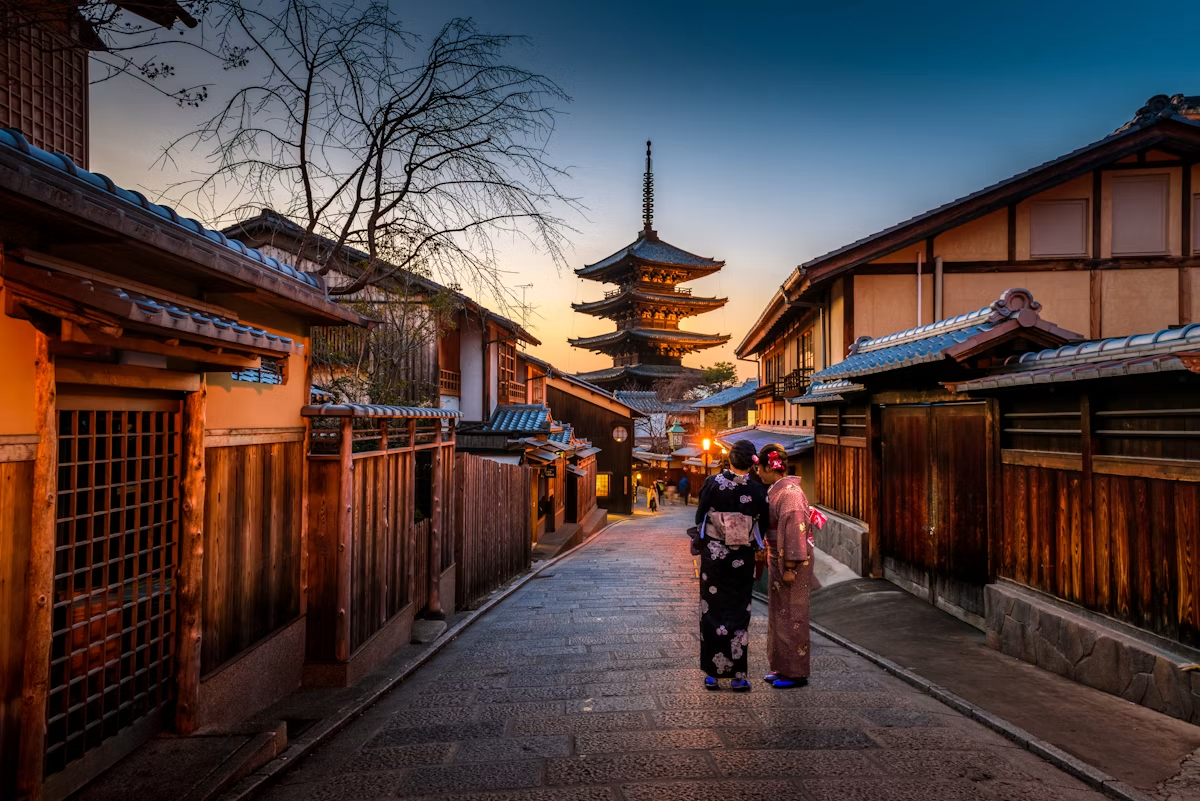
The eastern Higashiyama district forms the densest temple corridor in Japan, connecting Sanjusangendo (a hall of 1,001 gilded Kannon statues), Kiyomizudera (a wooden stage temple clinging to a cliff face above the city), and Kodaiji through preserved stone-paved lanes lined with machiya townhouses converted to tea shops and craft stores.
Arashiyama and the Bamboo Grove
The Arashiyama district on Kyoto’s western edge is anchored by the Sagano Bamboo Grove, a narrow corridor of giant moso bamboo stalks so dense they block daylight and create a sound unique in Japan — a deep rustling designated by the Japanese government as one of the hundred “soundscapes of Japan” worth preserving. The grove is a five-minute walk from Arashiyama station and free to walk through, though the path is at its most peaceful at dawn before the tourist buses arrive.
The surrounding district includes Tenryu-ji, the most important Zen temple in Arashiyama with a UNESCO-listed garden designed in 1339, Jojakko-ji for autumn maple foliage, and the Oi River banks where traditional cormorant fishing (ukai) operates in summer evenings.
Day Trips and Side Excursions
Nara (45 minutes by train)
Japan’s first permanent capital, home to 1,200 free-roaming deer in Nara Park and the world’s largest bronze Buddha (15 meters) inside Todai-ji temple. One of the most rewarding half-day trips from Kyoto.
Osaka (15 minutes by shinkansen or 30 minutes by local Hankyu/Keihan train)
Japan’s kitchen and nightlife capital, with Dotonbori street food, Osaka Castle, and Shinsekai district. Many travelers base in one city and day-trip to the other.
Uji (20 minutes south by train)
A tea-growing town with the 11th-century Byodo-in temple (featured on the ¥10 coin) and Japan’s finest matcha tea houses and production facilities.
Kurama and Kibune (30 minutes north by Eizan Railway)
Mountain villages with onsen, a cedar forest, and Kurama-dera temple reached by a steep forested hiking trail.
Food in Kyoto
Kyoto developed its own regional cuisine (kyo-ryori) over centuries of imperial court dining, with an emphasis on elegance, seasonal ingredients, and vegetarian Buddhist cooking.
- Kaiseki: Kyoto’s multi-course haute cuisine, the most refined expression of Japanese cooking, with each dish built around seasonal ingredients and presentation; price range ¥8,000–¥50,000 per person
- Yudofu: Tofu simmered in kombu broth, the quintessential Kyoto temple food; served at restaurants near Nanzen-ji for ¥2,000–¥4,000
- Matcha: Kyoto’s tea ceremony tradition produces the finest matcha in Japan, served as hot tea, lattes, parfaits, and mochi at tea houses throughout Gion and Uji
- Obanzai: Small side dishes — pickled vegetables, simmered tofu, marinated fish — arranged buffet-style at traditional Kyoto izakayas
- Yatsuhashi: Kyoto’s most famous souvenir confection, a thin wafer of cinnamon-flavored rice flour, sold in both baked and soft unbaked (nama) versions throughout the Higashiyama district
Where to Stay
Budget (¥4,000–¥8,000/night)
Hostels and guesthouses concentrated around Kyoto Station and Shijo-Kawaramachi. Several hostels in converted machiya townhouses offer a more atmospheric budget experience.
Mid-Range (¥12,000–¥30,000/night)
Business hotels near Kyoto Station and boutique ryokan (traditional inns) in Higashiyama — the standard Kyoto travel guide accommodation tier.
Upscale (¥50,000–¥250,000+/night)
Luxury ryokan in Higashiyama, Fushimi, and the Nishiki area, including Tawaraya (Japan’s most famous ryokan, open since 1716), Hiiragiya, and Aman Kyoto. Full-board with private kaiseki meals and communal onsen.
Getting Around Kyoto
City bus: The most practical option for most tourist sights; the flat ¥230 fare and ¥700 day pass make it cost-effective. Lines 100 and 101 cover the major east and west temple corridors.
Subway: Two lines (Karasuma north-south, Tozai east-west) connect the main transit hubs efficiently; essential for reaching Nishiki Market and Nijo Castle.
Bicycle: Kyoto is famously flat and cycle-friendly; rental bikes available from ¥1,000/day near Kyoto Station and Shijo bridge.
Taxi: Metered taxis are plentiful but expensive by Japanese standards; a useful option for reaching Kurama or evening Gion walking with luggage.
Daily Budget Breakdown
| Category | Budget | Mid-Range | Luxury |
|---|---|---|---|
| Accommodation | ¥5,000 | ¥20,000 | ¥80,000 |
| Meals | ¥2,500 | ¥6,000 | ¥20,000 |
| Transport (bus/subway) | ¥700 | ¥1,500 | ¥3,000 |
| Entry fees | ¥2,000 | ¥3,000 | ¥5,000 |
| Daily Total | ~¥10,200 | ~¥30,500 | ~¥108,000+ |
Final Verdict: Kyoto Travel Guide 2026
Kyoto rewards four to six days — two days for the eastern temples and Fushimi Inari, one day for Arashiyama, one day for Nijo Castle and the Philosopher’s Path in bloom or color, and a day trip each to Nara and Osaka. The ideal Kyoto travel guide itinerary arrives by shinkansen from Tokyo, uses Kyoto Station as a transit hub, and organizes the city’s sights by district rather than trying to cross the city multiple times daily. Travelers visiting during cherry blossom season (late March to mid-April) or autumn foliage (mid-November) should book accommodation three to six months in advance, as Kyoto operates at capacity during these peak weeks and prices triple relative to the summer low season.