
Mexico City is where ambition meets accessibility. The world’s largest Spanish-speaking city offers a cultural richness that takes months to fully unpack — 150+ museums, a restaurant scene that Michelin now covers seriously, neighborhood after neighborhood of distinct character, and a quality of daily life that remote workers arriving from New York or London describe as genuinely disorienting in its value. The Mexico City digital nomad scene has grown dramatically since 2021, driven by the combination of fast internet, low rent (by global standards), a favorable exchange rate, and a 180-day tourist visa that requires no registration. This guide covers everything you need to plan a Mexico City remote work base in 2026.
At a Glance
| Country | Mexico |
| Currency | Mexican Peso (MXN) — ~17 MXN per $1 USD |
| Language | Spanish; English spoken in Roma, Condesa, and Polanco |
| Climate | Altitude 2,240m — mild year-round (15–25°C), rainy June–October |
| Monthly budget (comfortable) | $1,000–$1,800/month |
| Monthly budget (frugal) | $700–$1,000/month |
| Visa | 180-day tourist permit on arrival for US, EU, UK, Canada, and most nationalities |
| Airport | Benito Juárez International (MEX) — 30 min from Roma Norte |
| Co-working cost | $80–$150/month |
Why Mexico City Leads Latin America for Digital Nomads
The Mexico City digital nomad appeal is built on three pillars: proximity, cost, and quality. For North American remote workers, CDMX is in the same time zone as Chicago (Central Time) — no awkward hour adjustments for calls. For European nomads, the time difference is manageable (6–7 hours). The cost structure makes $1,000/month genuinely comfortable. And the quality of daily life — the tacos, the museums, the parks, the architecture — competes with cities that cost three times as much.
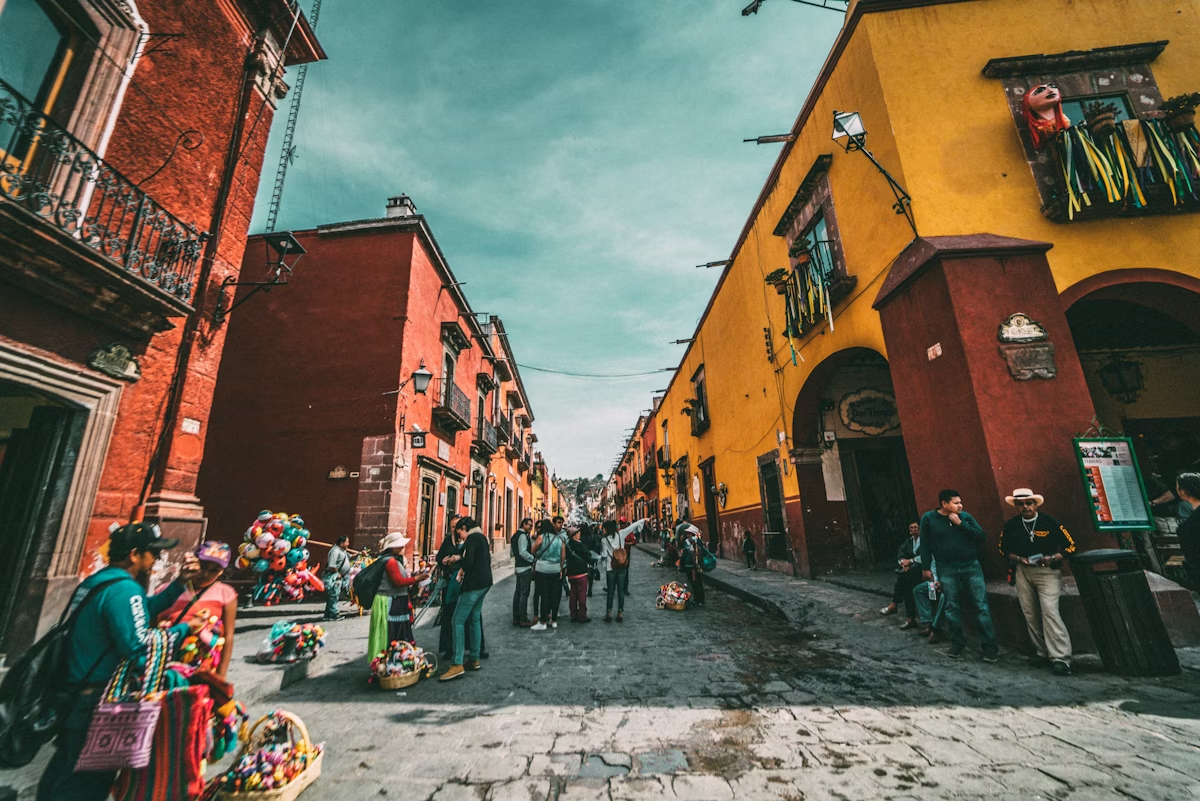
Photo by Jezael Melgoza on Unsplash
The 180-day tourist permit is the other decisive factor. Most nationalities are granted 180 days on arrival — no application, no fee, no check-ins. For remote workers earning from abroad, there are no legal restrictions on working remotely for foreign clients while in Mexico. The combination makes CDMX the most legally uncomplicated long-term nomad base in Latin America.
What’s Changed in 2026
- Internet infrastructure in Roma Norte, Condesa, and Polanco has significantly improved — average apartment fiber speeds now exceed 100 Mbps
- Co-working space density has increased: 50+ spaces now operate across the nomad-popular neighborhoods
- Airbnb medium-term rental restrictions tightened in Condesa; the furnished apartment market has responded with more professional listings
Best Neighborhoods for Mexico City Digital Nomads
Roma Norte — Best Overall for Nomads
Roma Norte is the neighborhood that defines the Mexico City digital nomad experience in 2026. A grid of tree-lined streets, Art Nouveau buildings, independent cafés, specialty restaurants, corner tiendas, and parks makes it the most walkable and liveable neighborhood in the city. Álvaro Obregón and Orizaba Streets form the social spine.
Monthly furnished apartment rentals in Roma Norte: MXN 14,000–22,000 ($823–$1,294). Expect smaller spaces than equivalent prices in Latin American cities — Mexico City apartments prioritize location and design over square meters.
- Best for: First-time CDMX nomads, café culture, food scene access, walkability
- Co-working density: Highest in the city
Condesa — Best for Parks and Premium Living
Adjacent to Roma Norte, Condesa is Roma’s more upscale twin — curving Art Deco streets around Parque México and Parque España, the best-designed apartment buildings in the city, and slightly higher prices. The park running and cycling circuits make it the fitness hub of the CDMX nomad community.
- Rent (1BR furnished): MXN 16,000–28,000 ($941–$1,647)
- Best for: Longer stays, those prioritizing park access and premium architecture
Polanco — Best for Business and Luxury
Mexico City’s wealthiest neighborhood, Polanco houses international luxury brands, Michelin-starred restaurants, five-star hotels, and the highest concentration of corporate headquarters. The Mexico City digital nomad who works primarily in corporate or finance roles gravitates here for the professional network.
- Rent (1BR furnished): MXN 20,000–40,000 ($1,176–$2,353)
- Best for: High-earning nomads, business entertainment, luxury lifestyle
Juárez — Best Budget Alternative
Directly adjacent to Roma Norte but significantly cheaper, Juárez is the underdog neighborhood of the Mexico City nomad scene — quieter streets, more local character, lower rents, and rapid gentrification that has added cafés and co-working spaces without yet raising rents to Roma Norte levels.
- Rent (1BR furnished): MXN 10,000–16,000 ($588–$941)
- Best for: Budget Mexico City digital nomad stays, stays of 3+ months
Best Co-Working Spaces in Mexico City
WeWork (Multiple Locations)
WeWork has a strong CDMX presence with locations in Polanco, Santa Fe, and the Reforma corridor. The most professional environment available, strong fiber, 24/7 access, and a members network that spans the international business and startup community.
- Price: MXN 3,500–5,000/month ($205–$294) hot desk
- Best for: Corporate remote workers, professional networking, visa letter support
Garage Roma
A popular independent co-working space in Roma Norte — well-located, strong community of creative and tech workers, regular events, and good coffee. One of the spaces most associated with the Mexico City digital nomad community.
- Price: MXN 2,800/month ($165) hot desk, day passes available
- Best for: First-time CDMX nomads, social co-working atmosphere
Público (Roma Norte and Condesa)
A café-co-working hybrid model with locations in both Roma Norte and Condesa. Excellent coffee, strong Wi-Fi, and a quiet work atmosphere — neither formal co-working space nor standard café. Very popular with the Mexico City digital nomad community.
- Price: Pay per coffee (MXN 50–80 / $2.94–$4.71)
- Best for: Day workers, those who prefer café atmosphere
Monthly Cost of Living in Mexico City (2026)
| Category | Budget | Mid-Range | Comfortable |
|---|---|---|---|
| Rent (1BR furnished) | MXN 10,000 ($588) | MXN 16,000 ($941) | MXN 24,000 ($1,412) |
| Co-working | MXN 0 (cafés) | MXN 2,500 ($147) | MXN 4,000 ($235) |
| Food | MXN 4,000 ($235) | MXN 7,000 ($412) | MXN 12,000 ($706) |
| Transport (Metro + Uber) | MXN 800 ($47) | MXN 1,500 ($88) | MXN 2,500 ($147) |
| Health insurance | MXN 1,000 ($59) | MXN 1,800 ($106) | MXN 3,000 ($176) |
| Activities / misc | MXN 1,500 ($88) | MXN 2,500 ($147) | MXN 4,000 ($235) |
| Total (USD) | ~$1,017 | ~$1,841 | ~$2,911 |
Mexico City Food — The Real Draw
Mexico City’s food scene has always been extraordinary at street level. What’s changed recently is the upper end — the city now has multiple World’s 50 Best Restaurant entries and a Michelin Guide, with prices that still feel accessible relative to equivalent restaurants in New York or London.
Street food and affordable eating:
- Tacos de canasta (steamed basket tacos): MXN 15–20 ($0.88–$1.18) each from basket vendors
- Tacos al pastor (spit-roasted pork): MXN 20–30 ($1.18–$1.76) at any taquería
- Tamales (masa filled with chicken, cheese, or beans): MXN 25–40 ($1.47–$2.35) from street vendors
- Tortas (Mexican sandwiches on telera rolls): MXN 60–100 ($3.53–$5.88) at local shops
- Chilaquiles (breakfast dish — tortilla chips in salsa with eggs, crema, cheese): MXN 100–150 ($5.88–$8.82) at local cafés
A full sit-down lunch at a comida corrida (set menu lunch) restaurant in Roma or Condesa runs MXN 120–200 ($7.06–$11.76) with soup, main, and agua fresca.
Practical Tips for Arriving Nomads
Getting from the Airport
Benito Juárez Airport (MEX) is close to the city center — 30 minutes to Roma Norte in light traffic, 60 minutes in rush hour. Authorized taxi at fixed rate: MXN 350–450 ($20.59–$26.47) from the official booth inside arrivals (always use this, never street taxis). Uber operates from the airport but requires walking to the Uber pickup zone. The Metro Line 5 reaches the airport from the Terminal Aérea station — MXN 5 ($0.29) to the city center but impractical with large luggage.
Getting Around Mexico City
The Metro is one of the world’s cheapest public transit systems: MXN 5 ($0.29) per journey for 12 lines covering all major neighborhoods. Packed during rush hour but fast and reliable at other times. Uber and DiDi (Uber equivalent) are safe, cheap ($3–$8 for most Roma/Condesa journeys), and the standard mode of transport at night or with luggage.
Internet and SIM Cards
Telcel has the best coverage across all CDMX neighborhoods. A tourist SIM with 20GB data costs MXN 300–400 ($17.65–$23.53) for 30 days. Fixed fiber in apartments: MXN 400–800/month ($23.53–$47.06) from Telmex Infinitum — often included in furnished apartment pricing.
Final Verdict: Mexico City Digital Nomad Life in 2026
Mexico City offers the best-value premium urban experience available to remote workers anywhere in the Americas. The 180-day visa, the time zone alignment with North American clients, the quality of the food scene, and the neighborhood character of Roma Norte and Condesa make it a compelling base for months at a time. The Mexico City digital nomad community is large, well-established, and genuinely welcoming to new arrivals. For remote workers ready to engage with a genuinely complex and rewarding city, CDMX 2026 is one of the best decisions on the list.