
Kyoto served as Japan’s imperial capital for over a thousand years, and the city carries that weight with remarkable grace. Where Tokyo races forward, Kyoto holds still — 1,600 Buddhist temples, 400 Shinto shrines, 17 UNESCO World Heritage Sites, and a geisha district that has operated continuously since the 1600s. This Kyoto travel guide cuts through the immense volume of things to see and do, identifying what genuinely warrants your time and how to experience the city without spending it in tour group queues.
At a Glance
| Country | Japan |
| Currency | Japanese Yen (JPY) — ~150 JPY per $1 USD |
| Language | Japanese; English signage in major tourist areas |
| Best time to visit | March–May (cherry blossom), Oct–Nov (autumn foliage) |
| Avoid | Golden Week (late April–early May) — extreme crowds |
| Daily budget (frugal) | ¥7,000–¥10,000 ($47–$67) |
| Daily budget (comfortable) | ¥15,000–¥25,000 ($100–$167) |
| Nearest airport | Kansai International (KIX) — 75 min by Haruka Express |
| From Tokyo | Shinkansen Nozomi: 2 hours 15 min, ¥13,080 ($87) |
| Visa | Visa-free for US, EU, UK, and most Western nationalities |
Kyoto vs Tokyo: Why Both Belong on Every Japan Itinerary
Tokyo and Kyoto are not interchangeable — they are complementary opposites. Tokyo is contemporary, overwhelming, and inexhaustible. Kyoto is historical, considered, and more immediately comprehensible for first-time visitors to Japan. A Japan itinerary that skips either is incomplete. This Kyoto travel guide focuses on making the most of 3–5 days in the city before or after Tokyo, which is the standard international visitor pattern.
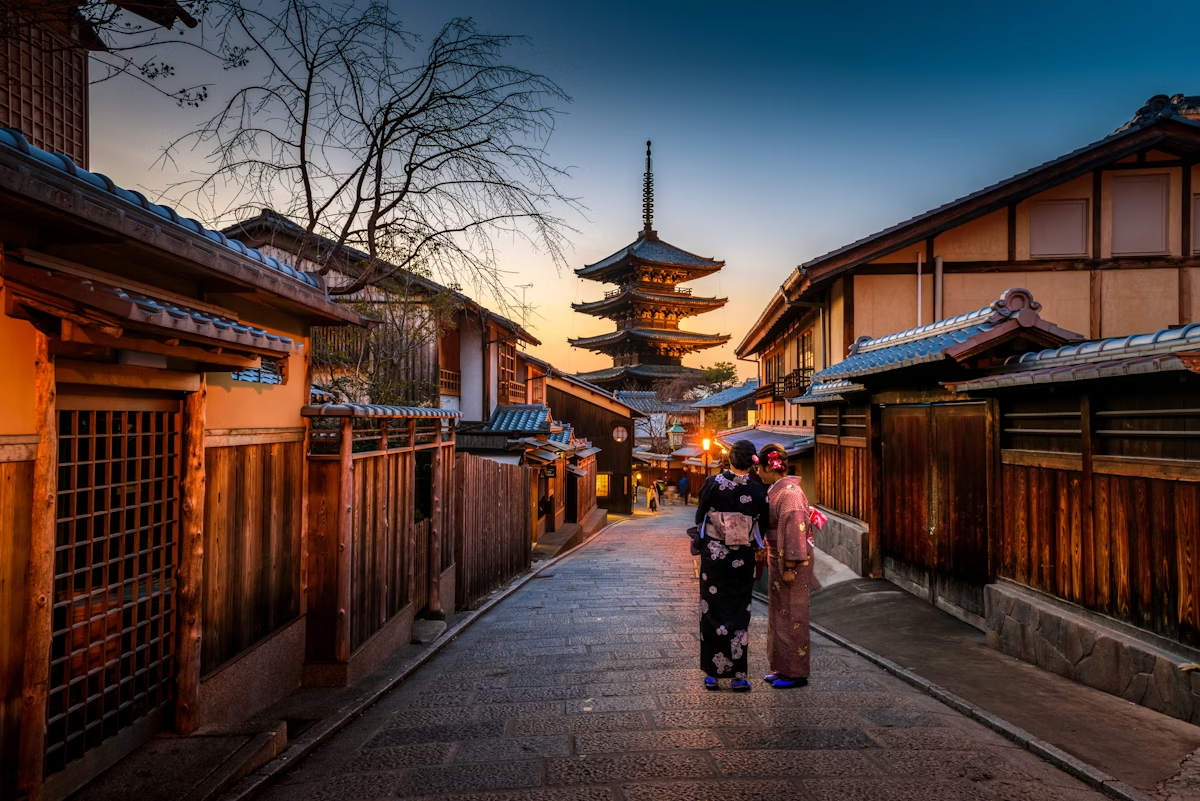
Photo by Louie Martinez on Unsplash
Top Things to Do in Kyoto
Fushimi Inari Taisha
Thousands of vermillion torii gates winding up a forested mountain behind a 8th-century Shinto shrine — Fushimi Inari is one of Japan’s most photographed sites. Entry is free. The full hike to the summit and back takes 2–3 hours. The critical practical tip: go before 7 AM or after 6 PM. The main lower path is genuinely crowded from 9 AM to 5 PM. The upper portions of the mountain (above the Yotsutsuji intersection) clear out significantly and are worth the effort.
The shrine is 5 minutes walk from Inari Station on the JR Nara Line. ¥150 from Kyoto Station.
Arashiyama Bamboo Grove
The bamboo grove is genuinely spectacular — tall bamboo pressing together overhead, light filtering through in shifting patterns, wind creating a sound that doesn’t exist anywhere else. It is also approximately 100 metres long, which surprises most visitors expecting a forest walk rather than a corridor.
Go before 7 AM for the best experience. After 9 AM, the path is wall-to-wall tourist groups. The surrounding Arashiyama neighborhood — Tenryuji temple garden (¥500), the Oi River monkey park, Okochi Sanso villa garden — extends the visit into a genuinely satisfying half-day.
Gion District — Geisha Quarter
Gion is Kyoto’s most historically intact neighborhood — wooden machiya townhouses, stone-paved lanes, and ochaya (teahouses) where geiko (Kyoto geisha) and maiko (apprentice geisha) still entertain clients. The Hanamikoji street is the most preserved.
Geisha and maiko can occasionally be spotted walking between appointments in the early evening (5–7 PM). Respectful observation from a distance is expected; touching or blocking their path is not acceptable.
The annual Gion Matsuri festival (July) is Japan’s most famous festival — spectacular but extremely crowded.
Kinkakuji (Golden Pavilion)
A 14th-century Zen Buddhist temple with the top two floors covered in gold leaf, reflected in a mirror pond. Entry: ¥500. One of Japan’s most iconic images — and one of its most crowded sites. Go at opening time (9 AM) for the best experience. Allow 1 hour.
Nishiki Market
A 400-metre covered shopping street running through central Kyoto, nicknamed “Kyoto’s Kitchen.” 130+ stalls and shops selling tsukemono (pickles), tofu, fresh sushi, Japanese sweets, kitchen knives, and prepared foods. Open from approximately 9 AM–6 PM (varies by stall). Lunch costs here run ¥500–¥1,500 ($3.33–$10) for excellent quality.
Philosopher’s Path (Tetsugaku-no-Michi)
A 2-km stone-paved path running along a cherry-tree-lined canal between Nanzenji and Ginkakuji temples. Named after philosopher Nishida Kitaro, who is said to have walked it daily. Outside cherry blossom and autumn foliage seasons it is peaceful and largely tourist-free — one of Kyoto’s best walks year-round.
Kiyomizudera
A 778 AD wooden temple complex built into a forested hillside east of central Kyoto. The main hall’s wooden stage (built without a single nail) extends 13 metres over a valley. Entry: ¥500. The surrounding Higashiyama district — Sannen-zaka and Ninen-zaka stone-paved lanes with traditional shops — is the most atmospheric part of Kyoto. Go at opening time (6 AM) or after 5 PM when tour groups have left.
Getting Around Kyoto
Kyoto has a subway (2 lines) and an extensive bus network. Most major temples and shrines are along the bus routes. A Kyoto City Bus day pass (¥700 for 1 day, ¥1,200 for 2 days) covers unlimited rides and pays off with 5+ bus journeys. Buy at the bus information center adjacent to Kyoto Station.
The Kintetsu Line and JR Nara Line connect to southern temples (Fushimi Inari, Tofukuji). The Eizan Electric Railway runs north to Kurama and Kibune.
Kyoto is well-suited to cycling — the city is relatively flat (the eastern hills aside) and several rental shops cluster around the station (¥1,200–¥1,500/day for a basic bicycle).
Getting to Kyoto from Tokyo
The Shinkansen Nozomi from Tokyo Station to Kyoto Station takes 2 hours 15 minutes. Cost: ¥13,080 ($87) one-way, or covered by the Japan Rail Pass (the 7-day pass at ¥50,000 / $333 is worth purchasing if visiting Tokyo + Kyoto + Osaka + Hiroshima). Book reserved seats especially during peak seasons.
Getting to Kyoto from Kansai Airport (KIX)
The Haruka Express from KIX to Kyoto Station takes 75 minutes. Cost: ¥3,870 ($25.80) standard fare. With an IC card (Suica/Icoca) you can use the Kansai Airport rapid service to Osaka Tennoji and connect — slower but cheaper.
Where to Stay in Kyoto
Downtown (Kawaramachi / Shijo)
The most practical base for most visitors — central, walkable to Nishiki Market and Gion, well-connected by bus and subway. Mid-range hotels: ¥10,000–¥20,000/night ($66.67–$133.33). Business hotels (APA, Dormy Inn) offer excellent value in this area.
Arashiyama
Staying in Arashiyama means the bamboo grove and Tenryuji are your backyard — before 7 AM when they’re empty. Premium traditional ryokan (Japanese inn) options run ¥25,000–¥80,000/night ($166.67–$533.33) including a multi-course kaiseki dinner.
Ryokan Experience
A ryokan — traditional Japanese inn with tatami floors, futon bedding, yukata robes, communal hot spring bath, and a multi-course kaiseki meal — is the defining Kyoto accommodation experience. Budget options from ¥12,000/night ($80); premium from ¥40,000+ ($266.67). Book 2–3 months in advance for peak seasons.
Kyoto Food Guide
Kyoto’s cuisine (Kyoto-ryori) is defined by restraint, seasonal ingredients, and precision — the antithesis of Tokyo’s density and volume.
Essential Kyoto food experiences:
- Kaiseki ryori: Japan’s most refined cuisine — a multi-course meal showcasing seasonal ingredients. Restaurant lunches: ¥3,000–¥8,000 ($20–$53); full dinner: ¥15,000–¥40,000+
- Shojin ryori: Buddhist temple vegetarian cuisine — served in several temples including Tenryuji (¥3,000–¥5,000 per person)
- Tofu cuisine: Kyoto produces some of Japan’s finest tofu — yudofu (simmered tofu hot pot) is the signature dish. ¥1,500–¥3,000 at specialist restaurants in Nanzenji area
- Matcha everything: Kyoto’s Uji district produces Japan’s finest matcha. Matcha ice cream (¥400–¥600), matcha parfaits (¥1,500–¥2,500), and full tea ceremony experiences (¥2,000–¥4,000) are everywhere
Budget eating options:
- Nishiki Market food stalls: ¥300–¥800 per item
- Ramen shops near Kyoto Station: ¥800–¥1,200 per bowl
- Convenience store (7-Eleven, Lawson) onigiri and bento: ¥200–¥600