
Santorini is one of the most photographed places on earth — the white cubic houses, the blue-domed churches, the caldera drop into a volcanic sea. Every travel magazine has featured it; every bucket list includes it. What this Santorini travel guide delivers is something different: the honest picture of what it’s like to actually be there, the practical information that separates a memorable trip from a frustrating one, and the specific guidance on timing, neighborhoods, and logistics that determine whether Santorini lives up to its reputation or drowns in its own crowds. Done right, a Santorini travel guide trip is genuinely extraordinary. Done wrong, it’s expensive and disappointing.
At a Glance
| Country | Greece |
| Currency | Euro (€) — ~€0.92 per $1 USD |
| Language | Greek; English widely spoken in all tourist areas |
| Best time to visit | May–June, September–October |
| Avoid | July–August (extreme crowds, 40°C heat, prices peak) |
| Daily budget (frugal) | €80–€120/day |
| Daily budget (comfortable) | €150–€300/day |
| Visa | Schengen visa-free for US, UK, and most Western nationalities (90 days) |
| Airport | Santorini (JTR) — 6 km from Fira; direct flights from Athens (45 min) and many European cities |
| Ferry | High-speed ferry from Athens Piraeus: 5 hours |
Why This Santorini Travel Guide Starts With a Warning
Santorini is genuinely spectacular — but it has also become one of the most over-touristed islands in the Mediterranean. Oia in peak season (July–August) is not a quiet Greek village experience; it’s a gridlocked alleyway with thousands of people competing for the same sunset photograph. This Santorini travel guide’s first recommendation is timing: visit in May, June, September, or early October. Prices drop 20–40%, crowd density falls dramatically, the heat is manageable, and the island reveals the character that made it famous in the first place. This applies to every recommendation in this Santorini travel guide — the earlier or later you go, the better the experience.
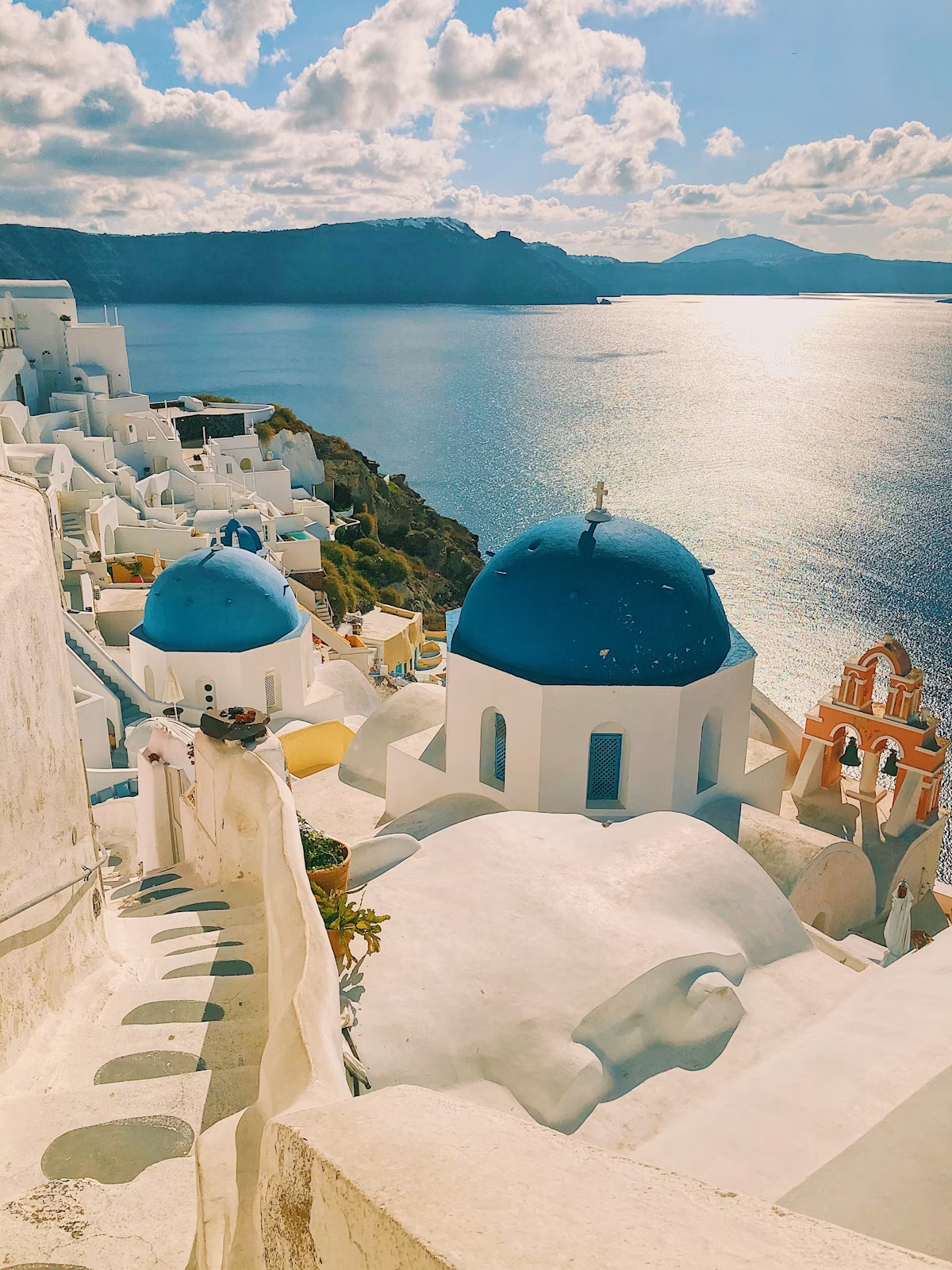
Photo by Tânia Mousinho on Unsplash
Best Villages to Stay in Santorini
Oia — The Most Iconic, Most Crowded
Oia (pronounced “EE-ah”) is the village at the northern tip of the caldera that appears in every Santorini travel guide photograph — the cascading white houses, the blue domes, the windmills, and the sunset that draws 3,000 people simultaneously to the castle ruins every evening in summer. The sunset is genuinely beautiful. The experience of watching it surrounded by thousands of tourists is genuinely chaotic.
Staying in Oia puts you in the heart of the caldera drama — the views from even a modestly priced guesthouse are extraordinary. Cave houses (traditional dwellings carved into the volcanic cliff) offer private plunge pools with caldera views. Prices reflect the demand: budget cave rooms start at €200–€300/night in shoulder season, €400–€800+ in peak season.
Best approach: Stay in Oia for 2 nights maximum in shoulder season. Wake early (5:30 AM) for the alleyways before the tour groups arrive — the village in the morning before 8 AM is genuinely magical.
Fira — Best Base for Most Visitors
The island’s capital sits at the caldera’s midpoint — more practical than Oia, with better transport connections (the main bus hub), more restaurant variety, and lower accommodation prices. The caldera views from Fira’s clifftop promenade are nearly as dramatic as Oia’s. Budget hotels and apartments: €80–€160/night in shoulder season.
Imerovigli — Best Balance of Views and Quiet
The highest point on the caldera rim, Imerovigli offers the best views of both Oia to the north and Fira to the south without either town’s crowd density. A 30-minute walk north along the caldera path to Oia through Firostefani and Imerovigli is one of this Santorini travel guide’s strongest recommendations — early morning, no crowds, extraordinary light. Mid-range accommodation: €120–€220/night in shoulder season.
Perissa / Perivolos — Best for Budget Travelers
The black sand beach villages on the island’s southeastern coast are the budget alternative — accommodation runs €50–€100/night, beach clubs are cheaper, and the volcanic black sand beaches are genuinely striking. Less dramatic than the caldera villages, but a legitimate base for travelers prioritizing value without sacrificing Santorini.
Top Things to Do in Santorini
Watch the Oia Sunset — Done Properly
The Oia castle ruins viewpoint is the famous spot — arrive 2 hours early in high season to secure a position. However, this Santorini travel guide recommends a better alternative: the Imerovigli viewpoint or any caldera-view restaurant terrace in Oia itself. Restaurant sunset dinners offer a reserved table with wine for roughly the same cost as standing in a crowd, and the view is identical.
Caldera Boat Tour
A half-day boat tour of the caldera (€35–€80/person) typically includes the active volcano island (Nea Kameni), the hot springs at Palea Kameni, and a stop at the small island of Thirassia. The view of Santorini’s caldera cliffs from the water — rising 300 metres from the sea — is the one angle no photograph from the clifftop can capture, and it’s the single experience every Santorini travel guide should list as essential.
Akrotiri Archaeological Site
A Bronze Age Minoan settlement buried by the same volcanic eruption (circa 1600 BC) that created the caldera was excavated beginning in 1967 and is now considered one of the most significant archaeological discoveries of the 20th century. Preserved frescoes, multi-story buildings, and advanced plumbing systems dating to 3,600 years ago are displayed under a protective shelter. Entry: €12. One of Greece’s most extraordinary archaeological sites and systematically undervisited compared to the clifftop villages.
Black Sand Beaches
Perissa and Perivolos beaches on the southeast coast have striking black volcanic sand and clear blue water — visually spectacular but note that the black sand retains heat in summer and can be painfully hot underfoot. Kamari beach on the east coast has black pebbles rather than sand. Both are free; sun lounger rentals run €10–€15/pair.
Wine Tasting
Santorini produces some of Greece’s most distinctive wines on volcanic soil — the Assyrtiko grape (dry, mineral, high-acid white) is the island’s signature variety. The volcanic terroir produces character impossible to replicate elsewhere. Santo Wines and Domaine Sigalas are the most acclaimed producers; tastings run €15–€25 per person with caldera views.
Santorini Food Guide
Santorini’s food scene is strong relative to Greek island standards — the combination of tourist money and genuine local culinary tradition produces good results.
Essential Santorini dishes:
- Fava: Yellow split pea purée drizzled with olive oil and capers — Santorini’s signature dish, grown on the volcanic soil. €8–€12 at any taverna
- Tomatokeftedes: Fried tomato fritters made from Santorini’s small, intensely flavored cherry tomatoes (a protected variety unique to the island). €8–€12
- Grilled octopus: Dried in the sun outside tavernas throughout the island, then grilled — €16–€22
- Fresh fish: Priced by weight at harborside tavernas in Ammoudi Bay (below Oia); more expensive than mainland Greece but exceptional quality
Budget eating tip: Avoid caldera-view restaurants for every meal — a €30 meal with a view becomes a €15 meal 2 streets back with identical quality. Use caldera views for one special meal; eat locally otherwise.
Getting To and Around Santorini
Getting to Santorini
By air: Santorini Airport (JTR) has direct connections from Athens (45 min, €50–€120) and direct flights from London, Paris, Amsterdam, and other European cities in summer. Book flights early — Santorini summer flights sell out months ahead.
By ferry: High-speed catamaran from Athens Piraeus: 5 hours, €55–€75. Slower ferry: 8–9 hours, €35–€45. Ferry is the scenic option and allows transport of a car if needed. Book via Ferryhopper or directly with Blue Star Ferries and SeaJets.
Getting Around the Island
Bus (KTEL): The island’s main bus line connects Fira to Oia, Perissa, Kamari, Akrotiri, and the airport. Frequency varies — every 20–30 minutes to Oia in peak season. Fare: €1.80–€2.50 per journey.
ATV/Quad rental: The standard tourist transport on the island — €25–€40/day. Roads are narrow and drivers can be aggressive; use caution.
Taxi: Limited availability and fixed fares — Fira to Oia: €20–€25. Book via the Fira taxi stand rather than street hailing.
Cable car: Connects Fira to the old port (Ammoudi-style alternative is the donkey path — 588 steps). Cable car: €6 one-way. Avoid during cruise ship tender times (10 AM–3 PM).
Practical Tips for This Santorini Travel Guide
Book accommodation early: Santorini’s best caldera-view properties sell out 6–12 months in advance for peak season. For shoulder season visits, 2–3 months is sufficient.
Cruise ship crowds: Santorini receives 1–2 cruise ships daily in high season, disgorging 3,000–6,000 passengers into Fira between 9 AM and 5 PM. The caldera path and Oia are most affected. Plan major sightseeing before 9 AM or after 5 PM.
Water: Tap water in Santorini is not potable — buy bottled water or bring a filter bottle. Hotel rooms include bottled water; restaurants charge for it.
Daily Budget Breakdown
| Category | Budget | Comfortable |
|---|---|---|
| Accommodation | €80 (Perissa/Fira budget hotel) | €250 (caldera cave hotel) |
| Food (3 meals) | €35 | €80 |
| Transport | €10 (bus) | €25 (ATV/taxi) |
| Activities | €15 | €50 |
| Daily Total | ~€140 | ~€405 |
Final Verdict: Santorini Travel Guide 2026
Santorini delivers on its reputation — but only if you approach it correctly. Come in May or September, wake up early, spend time in Imerovigli as well as Oia, take the caldera boat tour, and eat at the tavernas one street back from the view. The Santorini travel guide version of the island that Instagram shows is real; it just requires better timing than most people use to find it.