
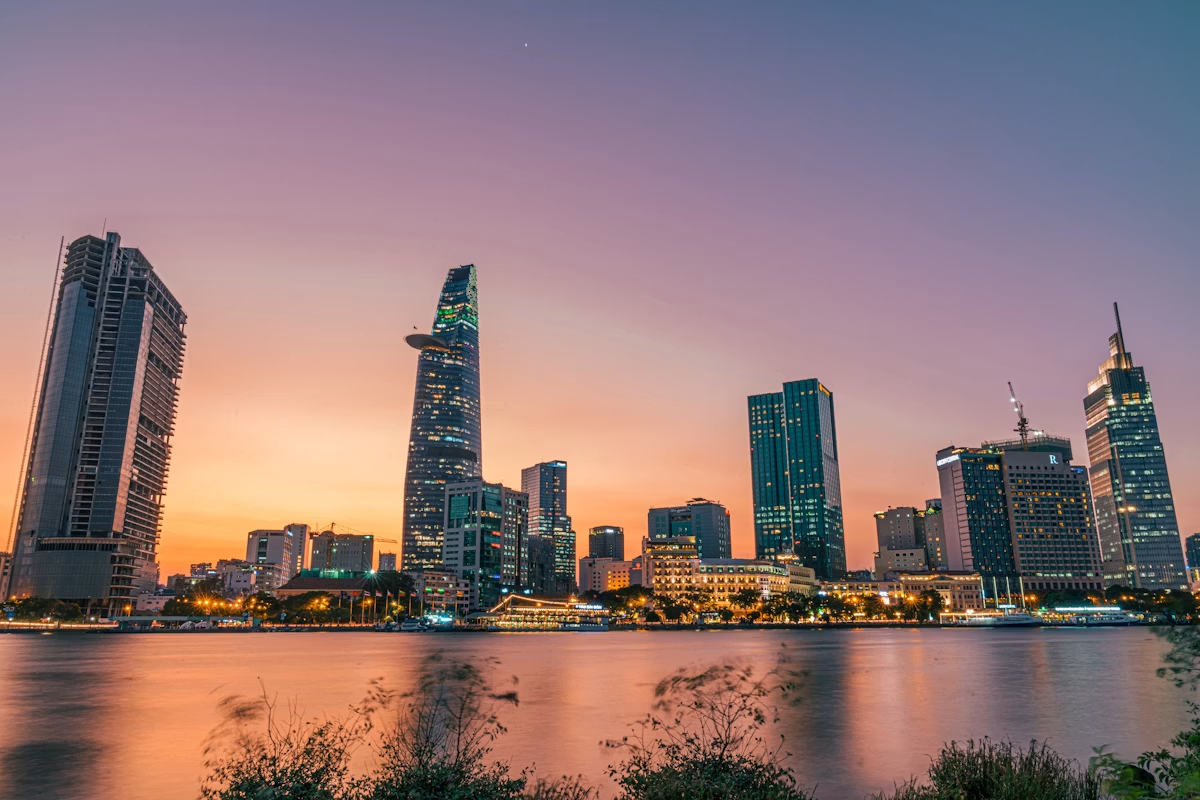
Ho Chi Minh City travel is defined by energy — the roar of 8 million motorbikes, neon-lit street food stalls operating at 2 AM, French colonial architecture standing next to gleaming glass towers, and a population that moves at a pace that makes Bangkok feel calm. Formerly Saigon, Vietnam’s economic capital is the country’s most international, most chaotic, and most addictive city. First-time visitors either love it immediately or need a day to adjust — and almost everyone extends their stay. This Ho Chi Minh City travel guide covers everything from the essential historical sites to the best food streets, day trips, and practical logistics for 2026.
At a Glance
| Country | Vietnam |
| Local name | Thành phố Hồ Chí Minh (HCMC) or Sài Gòn |
| Currency | Vietnamese Dong (VND) — ~25,000 VND per $1 USD |
| Language | Vietnamese; English spoken in tourist areas and hotels |
| Best time to visit | December–April (dry season) |
| Avoid | May–November (rainy season — heavy afternoon downpours) |
| Daily budget (frugal) | $20–$30/day |
| Daily budget (comfortable) | $40–$70/day |
| Visa | E-visa required: $25 USD, 90-day single entry, apply at evisa.xuatnhapcanh.gov.vn |
| Airport | Tan Son Nhat International (SGN) — 7 km from city center |
Why Ho Chi Minh City Travel Rewards the Curious
Ho Chi Minh City travel rewards travelers who engage with the city on two levels simultaneously: the historical and the visceral. The War Remnants Museum and the Cu Chi Tunnels provide the historical context — the American War from a Vietnamese perspective, in full documentation. The streets of District 1 and Bui Vien Walking Street provide the visceral: chaotic, affordable, and genuinely alive at every hour.
The city’s food scene is one of the strongest arguments for Ho Chi Minh City travel over other Southeast Asian capitals. Bun bo Hue, banh mi, fresh spring rolls (goi cuon), and com tam (broken rice) are the specialties — available from street carts for $1–$3 and from sit-down restaurants for $5–$10. The gap between street food quality and restaurant quality in HCMC is smaller than almost anywhere else in the region.
Top Things to Do in Ho Chi Minh City
War Remnants Museum (Bảo tàng Chứng tích Chiến tranh)
Non-negotiable for any Ho Chi Minh City travel itinerary. The War Remnants Museum presents the American War (1955–1975) from the Vietnamese perspective with extraordinary documentary photography, military equipment in the courtyard, and exhibits covering Agent Orange effects and international anti-war protests. Entry: 40,000 VND ($1.60). Allow 2–3 hours. Emotionally heavy — go in the morning with space in the afternoon to decompress.
Reunification Palace (Dinh Độc Lập)
The former Presidential Palace of South Vietnam, frozen in time since April 30, 1975 — the day North Vietnamese tanks crashed through the gates ending the war. The building is preserved exactly as it was: the basement war rooms, the rooftop helicopter pad, the 1970s decor. Entry: 40,000 VND ($1.60). One of the most extraordinary preserved historical sites in Southeast Asia.
Ben Thanh Market
The central covered market of HCMC — a chaotic, aromatic grid of fabric stalls, dried goods, fresh produce, and tourist merchandise. The surrounding streets (especially the night market that assembles at 7 PM on the market perimeter) have the best casual street food concentration in District 1. Prices inside the market require negotiation; the street food outside is fixed-price and excellent.
Notre-Dame Cathedral and Central Post Office
Two of Ho Chi Minh City’s most photographed French colonial landmarks, facing each other on Công xã Paris Square. The Cathedral (1880) has been under renovation since 2017 — the exterior is partially covered but the surroundings are worth a photograph. The Central Post Office (1886), designed with Eiffel influences, is fully operational and architecturally extraordinary — walk inside regardless of whether you need to mail anything. Free entry.
Bui Vien Walking Street
The backpacker epicenter of Ho Chi Minh City travel — neon signs, rooftop bars, live music venues, and beer for 20,000 VND ($0.80) per glass. The street is pedestrian from approximately 7 PM to 2 AM on weekends. Touristy by definition, but genuinely lively in a way that’s hard to replicate elsewhere. Keep valuables secured — bag snatching is the primary concern on busy nights.
Jade Emperor Pagoda (Chùa Ngọc Hoàng)
A beautifully preserved early 20th-century Chinese-Vietnamese Taoist temple in District 3, famous for its extraordinary wood-carved deities, incense smoke, and a pond full of turtles. Entry is free. One of the most atmospheric temples in Vietnam and consistently overlooked in standard Ho Chi Minh City travel itineraries.
Best Day Trips from Ho Chi Minh City
Cu Chi Tunnels (40 km northwest, 1.5 hours by bus)
The Cu Chi tunnel network — 250 km of underground passages used by Viet Cong guerrillas during the war — is one of Vietnam’s most visited historical sites. Visitors can crawl through sections of the tunnels (widened for tourists), see booby trap demonstrations, and fire AK-47s at the shooting range. Entry: 110,000–150,000 VND ($4.40–$6). Half-day organized tours from District 1: $10–$15 all-inclusive.
Mekong Delta (Can Tho, 3 hours by bus)
The Mekong River delta — where the river fans into dozens of channels before reaching the sea — is one of Vietnam’s most distinctive landscapes. Floating markets, rice paddies, coconut candy factories, and boat trips through water hyacinth-choked canals make a full day or overnight trip. The Can Tho floating market (Cai Rang) is the most famous. Bus from HCMC: 80,000–120,000 VND ($3.20–$4.80) each way. Organized tours from HCMC: $20–$35/person.
Vung Tau (125 km southeast, 2 hours by ferry or bus)
The nearest beach to Ho Chi Minh City — a peninsula with several decent beaches, a giant Christ the Redeemer statue on a hilltop (399 steps, panoramic bay views), and a seafood restaurant scene built around fresh catches. The high-speed ferry from Bach Dang Wharf is the most scenic option (2 hours, 260,000–320,000 VND / $10.40–$12.80). Popular with HCMC residents on weekends — go on a weekday for quieter beaches.
Ho Chi Minh City Food Guide
Ho Chi Minh City travel is incomplete without systematic street food exploration. The city’s culinary culture draws on both northern and southern Vietnamese traditions, and the French colonial period left a baguette-based sandwich culture that resulted in banh mi — one of the world’s great street foods.
Essential dishes and where to find them:
- Bún bò Huế: Spicy lemongrass beef noodle soup — richer and more complex than phở. 50,000–80,000 VND ($2–$3.20) at any local restaurant. District 3 has the best concentration.
- Cơm tấm (Broken Rice): The signature HCMC dish — broken rice topped with grilled pork, pickled vegetables, fried egg, and fish sauce. 40,000–70,000 VND ($1.60–$2.80) at street stalls throughout Districts 1 and 3
- Bánh mì: A Vietnamese baguette sandwich with pâté, cold cuts, pickled daikon, cucumber, chili, and cilantro. 25,000–45,000 VND ($1–$1.80). Bánh Mì Phương and Bánh Mì Huynh Hoa are the most famous vendors
- Gỏi cuốn (Fresh Spring Rolls): Rice paper rolls with shrimp, pork, vermicelli, and herbs — served with hoisin-peanut dipping sauce. 15,000–25,000 VND ($0.60–$1) each
- Phở: Less dominant in HCMC than in Hanoi — the southern version is sweeter and served with more herbs and condiments. 60,000–100,000 VND ($2.40–$4)
Best food streets:
- Vĩnh Khánh Street (District 4): The best street food concentration in HCMC — grilled seafood, hot pot, and beer from 5 PM onward
- Hoàng Sa / Trường Sa canal streets: Banh mi vendors and local restaurants along the canal in Bình Thạnh District
- Hẻm (alley) restaurants throughout Districts 3 and 10: The best non-tourist Vietnamese food in the city
Where to Stay in Ho Chi Minh City
District 1 — Best for First-Timers
The tourist center of HCMC — walking distance to Ben Thanh Market, the War Remnants Museum, Reunification Palace, and Bui Vien. The highest concentration of budget guesthouses (from $12–$20/night), mid-range hotels ($35–$70), and international chains. Ben Thanh area, Pham Ngu Lao Street (backpacker enclave), and the Dong Khoi luxury strip all within a 1 km radius.
District 3 — Best Local Atmosphere
Adjacent to District 1 but immediately more local in character — residential streets, excellent local restaurants, the Jade Emperor Pagoda, and a growing boutique hotel scene. Slightly cheaper than equivalent District 1 accommodation. The best balance of access and authentic neighborhood feel for Ho Chi Minh City travel.
Thu Duc (Former District 2 / Thao Dien) — Best for Expats and Longer Stays
The expat residential district east of the Saigon River, accessible by Uber or the Thu Thiem Bridge. International schools, Western-style supermarkets, co-working spaces, and a density of international restaurants make it the default for longer-stay visitors. Quieter and significantly less hectic than District 1.
Getting Around Ho Chi Minh City
Grab and Be
Grab is the essential transport app for Ho Chi Minh City travel. Grab Bike (motorbike taxi) is the fastest option for short distances — 15,000–35,000 VND ($0.60–$1.40) for most District 1 trips. Grab Car is available for longer journeys or when carrying luggage. Be (local Grab competitor) sometimes offers lower prices.
Motorbike Rental
Renting a motorbike ($5–$7/day) gives complete freedom but requires confidence navigating HCMC’s chaotic traffic and the reality that most intersections operate without signal priority. Not recommended for first-time Vietnam visitors; better for those with at least some Southeast Asian motorbike experience.
Getting from Tan Son Nhat Airport
Grab Bike from the airport: 60,000–90,000 VND ($2.40–$3.60) to District 1 (30 min in light traffic). Grab Car: 100,000–150,000 VND ($4–$6). The Airport Bus 109 runs to Ben Thanh Market for 20,000 VND ($0.80) — cheapest but slower (45–60 min with traffic). Metered taxis are available but agree on the meter before departing.
Practical Tips
SIM Cards: Buy at the airport arrivals hall. Viettel or Vinaphone tourist SIMs with 30GB data: 200,000–300,000 VND ($8–$12) for 30 days.
Cash: HCMC is predominantly cash-based at street level. Vietcombank and Techcombank ATMs accept foreign cards most reliably. Carry 200,000–500,000 VND ($8–$20) in small bills for street food and tuk-tuks.
Traffic: The motorbike traffic in HCMC requires a specific crossing technique — walk slowly and steadily, make eye contact with drivers, and let the traffic flow around you. Don’t stop suddenly. Drivers are skilled at navigating pedestrians; erratic movement causes accidents.
Daily Budget Breakdown
| Category | Budget | Comfortable |
|---|---|---|
| Accommodation | $15 (guesthouse) | $50 (boutique hotel) |
| Food (3 meals) | $7 | $20 |
| Transport (Grab) | $5 | $10 |
| Attractions | $5 | $10 |
| Daily Total | ~$32 | ~$90 |
Final Verdict: Ho Chi Minh City Travel in 2026
Ho Chi Minh City travel delivers on every category: history, food, energy, and value. The War Remnants Museum and Cu Chi Tunnels provide the context that makes the city make sense. The street food makes the daily experience extraordinary. The pace can be overwhelming, but it’s the city’s defining quality — nowhere else in Southeast Asia operates at this intensity. Start in District 1, eat everything, take a day trip to Cu Chi, and let the city adjust your expectations for the rest of your Vietnam itinerary.