
Hanoi operates at a different frequency from the rest of Vietnam. Where Ho Chi Minh City moves at breakneck speed, Hanoi has a layered, considered quality — centuries of Chinese, French, and Vietnamese history compressed into a city of tree-lined boulevards, ancient temples, and lanes barely wide enough for two motorbikes to pass. This Hanoi travel guide covers the capital that most Vietnam first-timers underestimate: the food is arguably the country’s finest, the Old Quarter is genuinely atmospheric at any hour, and the day trips to Ha Long Bay and Ninh Binh make Hanoi the best base in northern Vietnam. This Hanoi travel guide gives you everything you need to make the most of it.
At a Glance
| Country | Vietnam |
| Currency | Vietnamese Dong (VND) — ~25,000 VND per $1 USD |
| Language | Vietnamese; English spoken in tourist areas |
| Best time to visit | October–April (cool and dry) |
| Avoid | May–September (hot, humid, heavy rain) |
| Daily budget (frugal) | $20–$30/day |
| Daily budget (comfortable) | $40–$70/day |
| Visa | E-visa: $25 USD, 90 days, apply at evisa.xuatnhapcanh.gov.vn |
| Airport | Noi Bai International (HAN) — 35 km from Old Quarter |
Why Hanoi Belongs at the Top of Every Hanoi Travel Guide
Hanoi is Vietnam at its most culturally dense. The Old Quarter (Phố Cổ) — 36 ancient trade streets, each named for the goods once sold there — is not a reconstructed tourist district but a living neighborhood where lacquerware shops, silk tailors, and pho stalls operate on streets that have functioned the same way for 500 years. Any Hanoi travel guide worth reading starts here. But the city extends well beyond the Old Quarter: the French Quarter’s colonial architecture, the Ho Chi Minh Mausoleum complex, the West Lake shore cafés, and the infamous Train Street all reward the traveler who looks past the first layer.
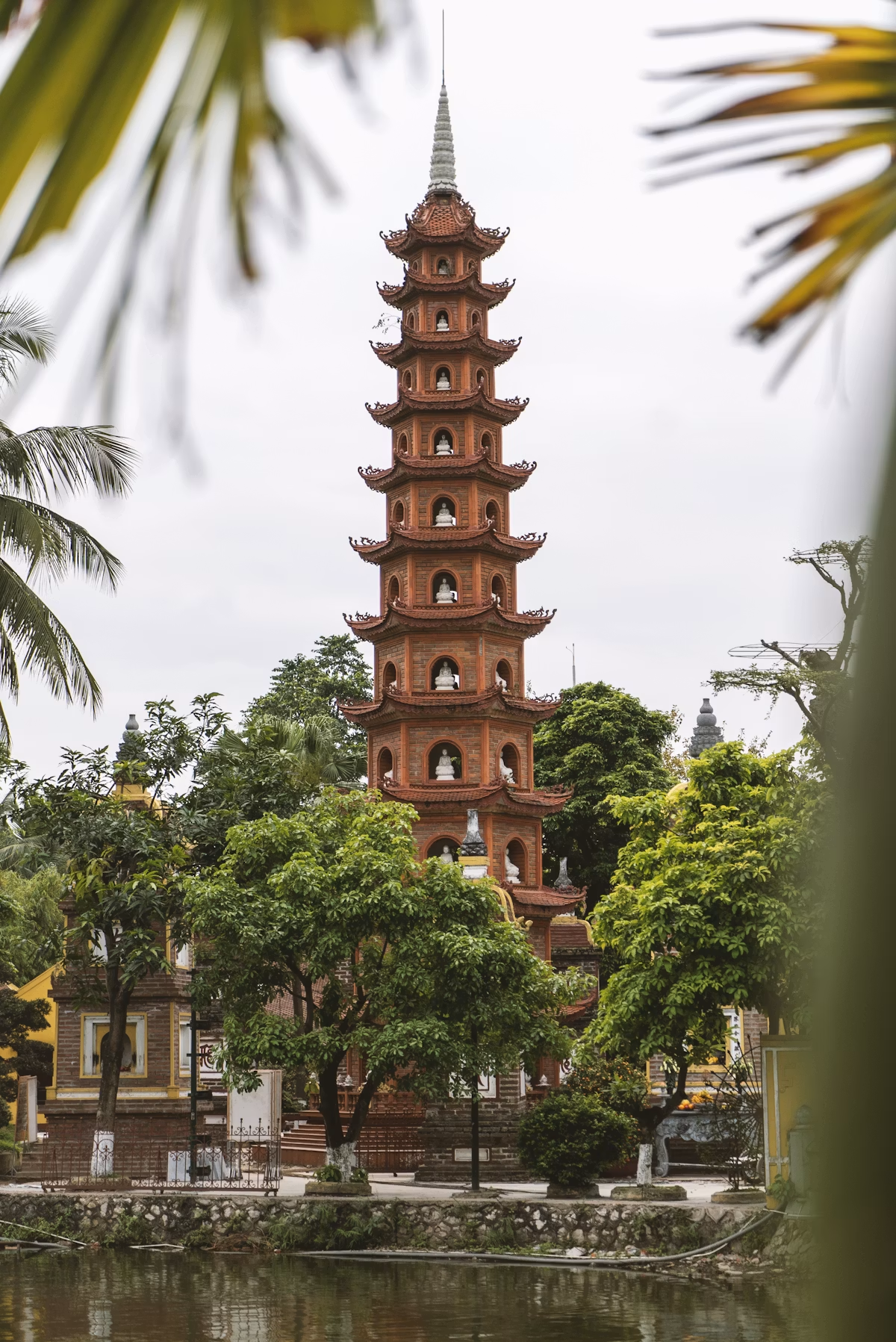
Photo by David Emrich on Unsplash
Top Things to Do in Hanoi
Hoan Kiem Lake and Ngoc Son Temple
The geographic and spiritual heart of Hanoi — a lake in the center of the city with a small island connected by a red lacquered bridge to the Ngoc Son Temple (Temple of the Jade Mountain). Thousands of residents walk the lake perimeter each morning for exercise; the Turtle Tower in the middle of the lake is one of the city’s most recognizable images. Entry to Ngoc Son Temple: 30,000 VND ($1.20). Walk the full perimeter (1.8 km) at dusk when the city lights reflect on the water.
The Old Quarter (Phố Cổ)
The 36 streets of the Old Quarter are the essential Hanoi experience — each lane specializing in a different trade (Hang Bac for silver, Hang Gai for silk, Hang Ma for paper goods). Walking without a specific destination, following the noise and smell, is the correct approach. The Dong Xuan covered market at the northern end sells wholesale goods, fresh produce, and street food on the ground floor. Free to explore; budget ฿200,000–฿400,000 VND ($8–$16) for street food and browsing.
Train Street (Phố Đường Tàu)
A residential lane in the Old Quarter where an active train line passes at arm’s length from the houses, cafés, and residents’ daily lives. Trains pass twice daily (approximately 7:20 AM and 5:50 PM southbound; 9:00 AM and 7:10 PM northbound — check current times locally). The cafés lining the track fill with tourists for every passing. Atmospheric but heavily touristy — worth 30 minutes, not a half-day.
Ho Chi Minh Mausoleum Complex
Vietnam’s most politically significant site: the preserved body of Ho Chi Minh in a granite mausoleum modeled on Lenin’s tomb in Moscow. The complex also includes the Presidential Palace (visible but not enterable), the Ho Chi Minh Museum, the One Pillar Pagoda (a unique 1,000-year-old lotus-shaped Buddhist shrine on a single stone column), and the traditional stilt house where Ho Chi Minh worked. Mausoleum entry: free but requires modest dress (no shorts or sleeveless). Closed for maintenance several months annually (check before visiting).
Hoan Kiem District Food Streets
The area surrounding Hoan Kiem Lake — particularly Hang Be, Bat Dan, and Ly Quoc Su streets — concentrates some of Hanoi’s best-known food vendors. This is where any complete Hanoi travel guide sends visitors for the city’s signature dishes (see food section below). Walk here in the morning (6–9 AM) for the peak breakfast culture.
Vietnam Museum of Ethnology
One of Southeast Asia’s finest ethnographic museums, the Ethnology Museum documents the 54 recognized ethnic groups of Vietnam through artifacts, reconstructed houses, and documentary photography. Entry: 40,000 VND ($1.60). Requires a taxi or ride-hailing app (15–20 min from Old Quarter) but consistently rewarding. Outdoor section includes full-size reconstructed traditional houses from different ethnic groups.
Best Day Trips from Hanoi
Ha Long Bay (3.5 hours by bus/boat)
The UNESCO World Heritage bay — 1,600 limestone karst islands rising from emerald water — is Vietnam’s most iconic landscape and one of the world’s most extraordinary natural environments. Overnight cruises from Hanoi: 2D/1N from $80–$120, 3D/2N from $150–$220. Budget operators depart from Ha Long City; premium operators from Tuan Chau Island. Book in advance — peak season (October–April) fills up quickly. This is the single most important day trip in any Hanoi travel guide.
Ninh Binh (2 hours by bus)
Often called “Ha Long Bay on land” — limestone karsts rising from rice paddies and rivers rather than sea. The Tam Coc boat trip (3 km through caves by rowboat, 150,000 VND / $6) and the Trang An scenic area (UNESCO-listed, 250,000 VND / $10 by boat) are the primary draws. The ancient capital of Hoa Lu adds historical context. Far fewer crowds than Ha Long Bay. Budget 1,500–2,000 VND return by bus from Hanoi’s Giap Bat station.
Sapa (Overnight Train or Bus)
Vietnam’s mountain trekking destination — rice terraces carved into the Hoang Lien Son mountains, hill tribe villages, and the highest peak in Indochina (Fansipan, 3,147m). Overnight train from Hanoi: 6–7 hours, $20–$35 for a private cabin. A 2-night Sapa stay fits within a wider Vietnam itinerary from Hanoi.
Hanoi Food Guide
Hanoi food culture is built around specificity — each dish has a neighborhood, sometimes a single street, associated with its best expression. Any genuine Hanoi travel guide must cover this.
Essential dishes:
- Phở Hà Nội: Northern-style phở — clearer broth, fewer condiments, more refined than southern versions. The benchmark bowl is at Phở Gia Truyền (49 Bat Dan Street). 70,000–120,000 VND ($2.80–$4.80). Queue before 7 AM or expect to wait
- Bún chả: Grilled pork patties and sliced pork belly over vermicelli noodles in dipping broth — Barack Obama ordered this at Bún Chả Hương Liên (24 Le Van Huu) in 2016, and it remains excellent. 60,000–80,000 VND ($2.40–$3.20)
- Cà phê trứng (Egg coffee): Hanoi’s unique contribution to global coffee culture — a thick whipped egg yolk and condensed milk foam over strong Vietnamese coffee. Invented at Cafe Giang (39 Nguyen Huu Huan). 35,000–55,000 VND ($1.40–$2.20). Non-negotiable stop on any Hanoi travel guide
- Bánh cuốn: Steamed rice rolls filled with minced pork and mushrooms, served with dipping sauce and fried shallots. 30,000–50,000 VND ($1.20–$2)
- Bún bò Nam Bộ: Cold vermicelli with grilled beef, peanuts, herbs, and dressing — a lighter alternative to hot noodle soups. 60,000–90,000 VND ($2.40–$3.60)
Where to Stay in Hanoi
Old Quarter — Best for First-Timers
Maximum atmosphere, walking distance to everything in this Hanoi travel guide, and the highest concentration of budget and mid-range accommodation on the continent. Budget guesthouses: $12–$20/night. Mid-range boutique hotels: $35–$70/night. The lanes around Hang Bong, Ma May, and Luong Ngoc Quyen are the best streets for accommodation.
Hoan Kiem District (South of Lake) — Best Mid-Range Base
Slightly quieter than the Old Quarter while remaining central — the French Quarter, Ho Hoan Kiem lake, and Hanoi Opera House are all within walking distance. Better-quality hotels at similar prices to Old Quarter equivalents.
West Lake (Tay Ho) — Best for Longer Stays
The expat residential neighborhood north of the Old Quarter — quieter, greener, with the best international restaurants and cafés in Hanoi. Good value furnished apartments for longer stays. 20-minute ride from the Old Quarter.
Getting Around Hanoi
Grab Bike/Car: The essential app for Hanoi travel. Grab Bike: 15,000–30,000 VND ($0.60–$1.20) for most Old Quarter journeys. Grab Car: 50,000–100,000 VND ($2–$4) for longer distances.
Walking: The Old Quarter is best explored entirely on foot — the streets are too narrow and interesting to rush through in a vehicle.
From Noi Bai Airport: Grab Car: 250,000–350,000 VND ($10–$14). Airport bus 86 to Old Quarter: 35,000 VND ($1.40), 45–60 minutes. Metered taxis available but agree on the meter first.
SIM Cards: Buy at the airport. Viettel 30-day unlimited data: 200,000–250,000 VND ($8–$10).
Daily Budget Breakdown
| Category | Budget | Comfortable |
|---|---|---|
| Accommodation | $15 | $50 |
| Food (3 meals) | $7 | $20 |
| Transport | $4 | $8 |
| Attractions | $3 | $8 |
| Daily Total | ~$29 | ~$86 |
Final Verdict: Hanoi Travel Guide 2026
Hanoi rewards slow travel more than almost any other Asian capital. The city’s best experiences — morning phở before the crowds, the egg coffee ritual, getting lost in the Old Quarter after dark — all require time rather than planning. The day trips to Ha Long Bay and Ninh Binh are among the best in Vietnam. Start here, stay longer than you planned, and let this Hanoi travel guide show you why it’s the right place to begin a Vietnam itinerary.