
Dubai exists outside normal travel logic. A city that was desert 50 years ago now has the world’s tallest building, the world’s largest mall, indoor ski slopes, and an artificial archipelago shaped like a palm tree — all built in a generation. This Dubai travel guide cuts through the superlatives to tell you what’s actually worth your time, what it really costs, and how to navigate a city that rewards preparation significantly more than spontaneous exploration. Whether you’re transiting for 24 hours or planning a full week, this Dubai travel guide gives you a clear framework for making decisions.
At a Glance
| Country | United Arab Emirates (UAE) |
| Currency | UAE Dirham (AED) — ~3.67 AED per $1 USD (pegged rate) |
| Language | Arabic (official); English used everywhere in business and tourism |
| Best time to visit | November–March (25–30°C, outdoor activities viable) |
| Avoid | June–September (40–48°C, humidity, most outdoor activities impossible) |
| Daily budget (frugal) | $80–$120/day |
| Daily budget (comfortable) | $150–$300/day |
| Visa | Visa on arrival (30 days free) for US, EU, UK, Australia, and most Western nationalities |
| Airport | Dubai International (DXB) — 15 min from Downtown |
| Currency note | Always pay in AED; USD is accepted widely but at a slight disadvantage |
Why Dubai Belongs in Every Dubai Travel Guide Discussion
Dubai is a polarizing destination — critics cite artificiality, heat, and high costs; advocates cite efficiency, safety, ambition, and the genuine spectacle of a city that rebuilt itself from scratch within living memory. Both are right. What this Dubai travel guide argues is that Dubai works best as a 3–5 day experience rather than a long stay — enough time to absorb the superlatives, sample the food scene (genuinely excellent and diverse), take a desert safari, and understand the contrast between old Dubai (Al Fahidi) and new Dubai (Downtown) without overstaying a format that works better in short doses.
Top Things to Do in Dubai
Burj Khalifa
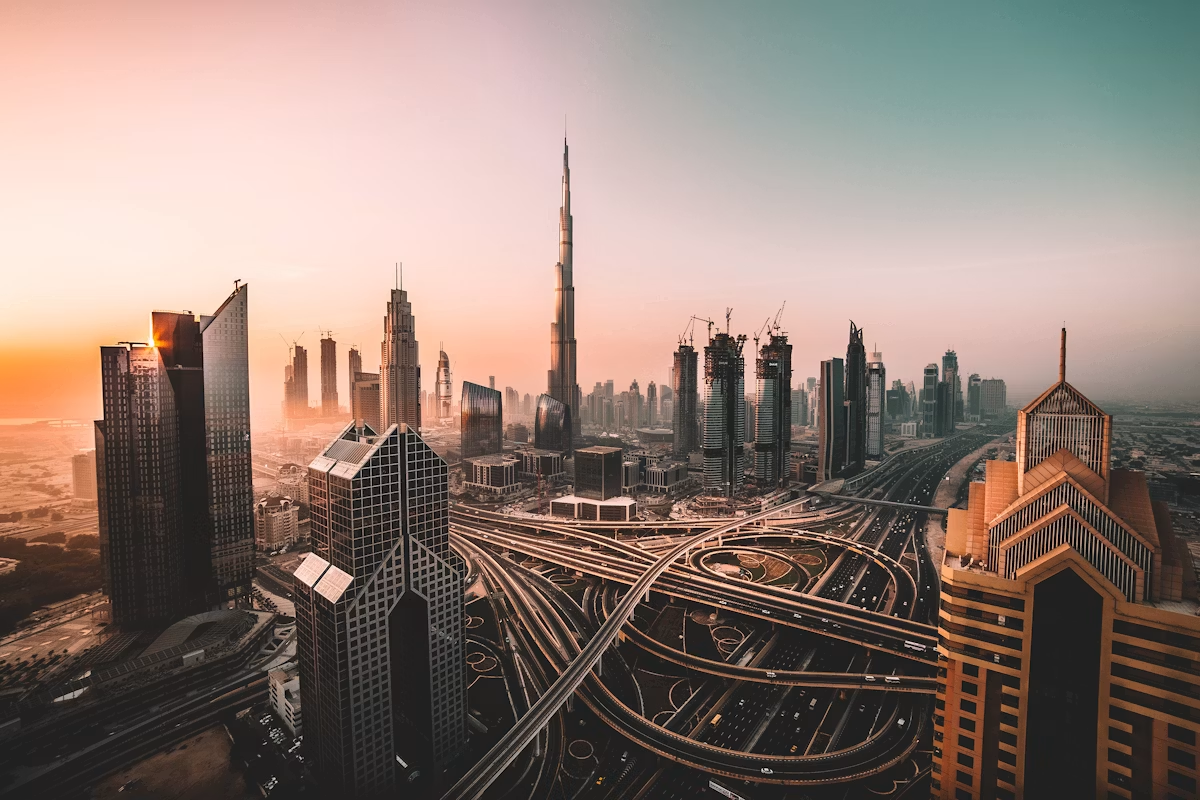
The world’s tallest building at 828m — the observation decks (levels 124, 125, and 148) provide views across the Dubai skyline, Palm Jumeirah, and on clear days to the coast of Iran. Level 124/125 entry: AED 149–199 ($40.60–$54.20) booked in advance. The Top SKY level (148): AED 379–499 ($103.30–$135.90). The Dubai Fountain show at the base runs every 30 minutes from 6 PM (free to watch from the Boardwalk). Book Burj Khalifa tickets online — on-site prices are significantly higher.
Dubai Mall and Dubai Fountain
The world’s largest mall by total area — 1,200+ shops, an aquarium, an ice rink, a dinosaur skeleton, and the Dubai Fountain (the world’s largest choreographed fountain) at its feet. Entry is free; individual attractions charge separately. The Dubai Aquarium and Underwater Zoo: AED 99 ($26.97). The ice rink: AED 75–95 ($20.44–$25.89). Even non-shoppers find 2–3 hours passes quickly.
Dubai Creek and Al Fahidi
The original Dubai: a narrow creek lined with traditional dhows still loading cargo, gold and spice souks operating as they have for centuries, and the Al Fahidi Historical Neighbourhood — restored wind-tower houses from the 1800s now housing galleries, cafés, and the Dubai Museum (AED 3 / $0.82 entry — one of the world’s best-value history museums). The creek abra (wooden water taxi) crossing: AED 1 ($0.27). This is the essential counterpoint to the glittering new Dubai of every Dubai travel guide.
Desert Safari
A half-day or full-day desert safari is the most popular activity in any Dubai travel guide — dune bashing by 4WD, sandboarding, camel riding, and a Bedouin camp dinner under the stars. Half-day (afternoon): AED 200–350 ($54.50–$95.40). Full-day with overnight camping: AED 600–1,200 ($163.50–$326.90). Book through reputable operators — Arabian Adventures and Platinum Heritage are the most consistently well-reviewed.
Palm Jumeirah and Atlantis
Dubai’s artificial palm-shaped island is visible from the Burj Khalifa and provides the dramatic aerial photograph that appears in every Dubai travel guide. At ground level it’s primarily a residential and hotel zone. The Atlantis resort at the palm’s tip has a water park (AED 350–450 / $95.40–$122.60) and a private beach. The Palm Jumeirah Monorail connects from the mainland to the Atlantis end (AED 25 return / $6.81).
Dubai Marina and JBR Beach
The modern marina district — a 3 km canal lined with skyscrapers, restaurants, and a yacht promenade — is Dubai’s most walkable area. The adjacent Jumeirah Beach Residence (JBR) has a free public beach with consistent sand quality, lifeguards, and water sports rental. This is where Dubai residents actually spend weekends. A Dubai travel guide that skips JBR misses the most genuinely relaxed part of the city.
Dubai Food Guide
Dubai’s food scene is shaped by its demographics — 85% of the population is expatriate, bringing cuisines from across South Asia, the Middle East, East Africa, and Europe that have developed local institutions over decades.
Essential eating:
- Al Ustad Special Kabab (Deira): One of the oldest Iranian restaurants in Dubai, open since 1978. Kebabs, stews, and flatbread. AED 40–80 ($10.90–$21.80) for a full meal
- Ravi Restaurant (Satwa): Dubai’s most famous Pakistani restaurant, beloved since 1978. Curry, karahi, nihari, and fresh roti. AED 25–50 ($6.81–$13.62) for a full meal — exceptional value
- Old Dhow Restaurant (Dubai Creek): Fresh seafood and Emirati food on a traditional dhow. AED 120–200 ($32.70–$54.50) per person
- Gold Souk and Spice Souk area: Cheap Iranian, Pakistani, and Indian restaurants surrounding the souks charge $3–$8 for full meals. The best-value food in Dubai
- Dubai Marina Walk: Premium cafés and international restaurants with marina views. AED 80–200 ($21.80–$54.50) per person
Food delivery: Talabat (UAE’s dominant food delivery app) makes high-quality delivery from across the city practical — a useful option for the midday heat of summer visits.
Where to Stay in Dubai
Downtown Dubai — Best Overall
The Burj Khalifa, Dubai Mall, Dubai Fountain, and the best concentration of mid-range to luxury hotels are all here. Walking distance to the metro (Dubai Mall/Burj Khalifa station, Red Line). Mid-range hotels: $120–$250/night. Luxury (Armani Hotel, Address Downtown): $400–$800/night.
Dubai Marina — Best for Beach and Nightlife
A 30-minute metro ride from Downtown but with the best walking atmosphere in the city, JBR beach access, and the highest restaurant and bar concentration outside Downtown. Similar hotel pricing to Downtown.
Deira / Bur Dubai — Best Budget Option
The historic creek-side neighborhoods have Dubai’s most affordable hotels — $50–$100/night for decent budget options. Excellent access to the gold and spice souks. Less glamorous than Downtown but more authentic.
Getting Around Dubai
Dubai Metro
Clean, air-conditioned, and covering all major tourist areas along two lines. Red Line covers the airport, Downtown, Dubai Marina, and JBR. Single journey: AED 3–8.50 ($0.82–$2.32). Nol card (stored value): AED 25 deposit + credit. Operating hours: 6 AM–midnight Saturday–Wednesday, 6 AM–1 AM Thursday–Friday.
Uber and Careem
Both operate in Dubai with fixed upfront pricing. Most Downtown–Marina journeys: AED 25–45 ($6.81–$12.26). Significantly more expensive than Southeast Asian equivalents but the standard option when metro doesn’t cover the destination.
From the Airport
Dubai International Airport (DXB) is 15 minutes from Downtown by Metro Red Line (AED 14.50 / $3.95 with luggage surcharge). Taxis from the airport are metered — Downtown: AED 60–80 ($16.35–$21.80).
Practical Tips for This Dubai Travel Guide
Dress code: Dubai is significantly more relaxed than other UAE cities or Saudi Arabia, but modest dress (shoulders and knees covered) is required in malls, souks, mosques, and older neighborhoods. Swimwear is acceptable at beaches and hotel pools.
Alcohol: Available in licensed restaurants, bars, and hotel venues. Not sold in supermarkets (except a handful of designated liquor stores). Prices are high — a beer in a bar: AED 35–55 ($9.54–$14.99).
Ramadan: Travel during Ramadan is possible and interesting but requires awareness — eating, drinking, and smoking in public during daylight hours is illegal during the month. Many restaurants are closed until iftar (sunset). Check dates annually as Ramadan shifts approximately 10 days earlier each year.
Daily Budget Breakdown
| Category | Budget | Comfortable |
|---|---|---|
| Accommodation | $80 (Deira budget hotel) | $200 (Downtown mid-range) |
| Food (3 meals) | $25 | $70 |
| Transport | $10 (metro) | $25 (Uber) |
| Attractions | $15 | $60 |
| Daily Total | ~$130 | ~$355 |
Final Verdict: Dubai Travel Guide 2026
Dubai delivers maximum impact in minimum time — three to four days is enough to cover every major sight in this Dubai travel guide, experience the desert, eat well, and understand what the city is. The Burj Khalifa is genuinely extraordinary. The desert safari is genuinely memorable. The Al Fahidi district provides the historical counterpoint that makes the modernity make sense. Come in winter, book attractions in advance, and let this Dubai travel guide prevent the most common mistakes — arriving in summer, underestimating the heat, and spending too long in the mall.