
Amsterdam is a city that works differently from every other European capital. The canal ring is a UNESCO World Heritage Site. The cycling infrastructure makes a bicycle more practical than any other transport. The Golden Age museums — the Rijksmuseum, the Van Gogh Museum, the Anne Frank House — are genuinely world-class and require advance booking. And the city’s attitude toward visitors oscillates between welcoming and exhausted, depending on how crowded the season is and which neighborhood you choose. This Amsterdam travel guide separates the genuinely worthwhile from the overhyped, covers the practical logistics that determine whether your visit flows well or doesn’t, and gives you the honest picture of one of Europe’s most distinctive cities in 2026.
At a Glance
| Country | Netherlands |
| Currency | Euro (€) — ~€0.92 per $1 USD |
| Language | Dutch; English universally spoken |
| Best time to visit | April–May (tulips, mild weather), September–October |
| Avoid | July–August (most crowded, highest prices) |
| Daily budget (frugal) | €70–€100/day |
| Daily budget (comfortable) | €130–€220/day |
| Visa | Schengen visa-free for US, UK, and most Western nationalities (90 days) |
| Airport | Amsterdam Schiphol (AMS) — 20 min by direct train to Centraal Station |
| Getting around | Bicycle (€14–€20/day rental), tram, walking |
What This Amsterdam Travel Guide Gets Honest About
Amsterdam has a tourism saturation problem. The city center — particularly Damrak, the Red Light District, and Leidseplein — is extremely crowded from spring through fall, with visitor numbers that have created friction with residents and prompted the city government to actively discourage certain types of tourism. This Amsterdam travel guide’s first recommendation is to stay in a neighborhood rather than the dead center: the Jordaan, De Pijp, or Oud-West offer the canal houses and Amsterdam atmosphere without the crush of tourists on the main arteries.
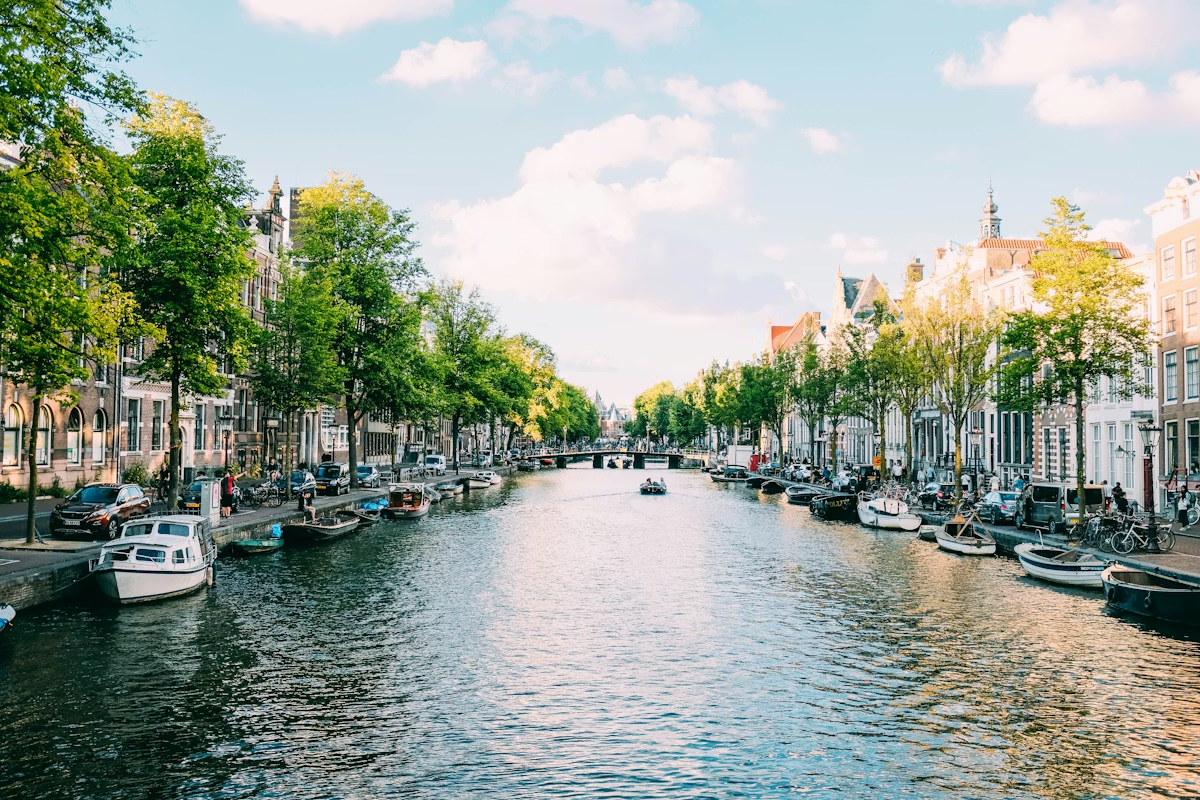
Photo by Adrien Olichon on Unsplash
The second honest point: Amsterdam is expensive by European standards. A hotel in the city center in peak season costs €150–€300/night for mid-range. A museum-heavy day with entrance fees runs €35–€50. A restaurant dinner with wine: €35–€60 per person. Budget carefully or book well in advance.
Top Things to Do in Amsterdam
Rijksmuseum
The Netherlands’ premier art and history museum — Rembrandt’s Night Watch, Vermeer’s The Milkmaid, and an unmatched collection of Dutch Golden Age painting. Entry: €22.50. Book online; timed entry prevents queuing. Allow 3–4 hours for a comprehensive visit. The museum’s Gothic atrium is free to enter and worth seeing even if you skip the galleries.
Van Gogh Museum
The world’s largest Van Gogh collection, with 200 paintings and 500 drawings covering his complete career. Entry: €22. Book online 2–4 weeks in advance — this is the most-visited museum in the Netherlands and sells out weeks ahead in peak season. The chronological presentation of Van Gogh’s evolving technique is genuinely illuminating.
Anne Frank House
The hiding place of the Frank family during Nazi occupation, preserved largely as it was in 1942–1944 and deeply affecting. Entry: €16, children €9. Timed entry tickets must be booked online — often 4–6 weeks in advance during peak season. An essential Amsterdam travel guide stop that requires no superlatives.
The Canal Ring (Grachtengordel)
Amsterdam’s 17th-century canal ring — four concentric semicircular canals (Herengracht, Keizersgracht, Prinsengracht, Singel) lined with the tall, narrow merchant houses that define the city’s silhouette — is the most visually distinctive urban landscape in Northern Europe. The best way to experience it in any Amsterdam travel guide: rent a bicycle and cycle the Prinsengracht in the early morning before tourist crowds arrive, or take an evening canal boat tour (€15–€20 per person, 1 hour).
Vondelpark
Amsterdam’s central park — 47 hectares of lawns, paths, rose gardens, and a permanent open-air theatre. Free entry, always busy on sunny days with locals. The most pleasant outdoor space in the city for a picnic lunch between museum visits.
Jordaan Neighborhood
The most atmospheric neighborhood in Amsterdam — 17th-century canal houses converted to independent boutiques, art galleries, specialist food shops, and the best local restaurants in the city. The Saturday Noordermarkt (organic and antique market, 9 AM–4 PM) draws locals rather than tourists. Walk without a map for at least an hour — getting slightly lost is the correct approach to the Jordaan.
Best Neighborhoods to Stay
Jordaan — Best for Atmosphere
Narrow canals, crooked houses, independent shops — the most photographed Amsterdam neighborhood outside the main tourist circuit. Mid-range hotels: €100–€180/night. Best for visitors who want to feel like residents rather than tourists.
De Pijp — Best for Food and Local Life
South of the city center, De Pijp is Amsterdam’s most multicultural and culinarily diverse neighborhood. The Albert Cuyp Market (Monday–Saturday) is the largest outdoor market in the Netherlands. Budget and mid-range accommodation: €70–€140/night. Strong restaurant scene — Indonesian, Surinamese, Turkish, and Dutch all well-represented.
Museum Quarter — Best for Museum Access
Adjacent to the Rijksmuseum, Van Gogh Museum, and Stedelijk (modern art), the Museum Quarter is the most convenient base for a museum-heavy Amsterdam travel guide itinerary. Mid-range: €110–€200/night.
Amsterdam Food Guide
Dutch cuisine doesn’t have the global reputation of French or Italian cooking, but Amsterdam’s food scene has improved dramatically and the local specialties are worth seeking out.
Essential eating:
- Stroopwafels: Thin waffle cookies with caramel filling — buy fresh from market stalls (€1–€2), not packaged supermarket versions
- Herring (Haring): Raw salted herring served with onions and pickles from fish stalls. €3.50–€5. The correct technique: tilt head back and lower by the tail. Non-negotiable Amsterdam travel guide experience
- Bitterballen: Deep-fried beef ragout croquettes — the default Dutch bar snack. €6–€10 for a plate at any brown café (bruine kroeg)
- Indonesian Rijsttafel: Amsterdam’s colonial heritage produced one of the world’s best Indonesian restaurant scenes. A rijsttafel (rice table) with 15–20 dishes: €25–€40 per person
- Cheese: Gouda and Edam are produced in the Netherlands — buy from specialty cheese shops (Reypenaer on Singel is the best), not tourist shops on Damrak
Best neighborhoods for food: De Pijp for diversity and value, Jordaan for independent restaurants, Spiegelkwartier for upscale Dutch cuisine.
Cycling in Amsterdam
Every Amsterdam travel guide must address cycling — it is genuinely the best way to navigate the city. Amsterdam has 767 km of dedicated cycle paths and 900,000 bikes for 800,000 residents. Renting a bicycle (€14–€20/day from shops like MacBike or Black Bikes) unlocks the city entirely.
Cycling rules for visitors:
- Stay in the cycle lane (fietspad) — marked in red — at all times
- Signal turns with your arm
- Lock your bike to a rack or pole with the provided lock — bike theft is endemic
- Pedestrians in cycle lanes are the most common source of accidents — be alert
Getting To and Around Amsterdam
Airport Transfer
Schiphol Airport (AMS) is directly connected to Amsterdam Centraal Station by Intercity Direct train (20 minutes, €5.70). Trains run every 10 minutes. Taxi to city center: €45–€55.
OV-chipkaart and Public Transport
Amsterdam’s trams (GVB), metro, buses, and ferries all use the OV-chipkaart stored-value card (€7.50 deposit). Single tram journey: €3.20. 24-hour GVB pass: €9. For a 3–5 day visit, the bicycle beats the tram for most journeys.
Day Trips
Keukenhof Gardens (April–May only): The world’s largest flower garden — 7 million tulip bulbs in bloom. Entry: €23.50. 30 minutes by bus from Schiphol. Book online — sells out during peak tulip season.
Zaanse Schans (30 min by train + bus): A living open-air museum of 18th-century Dutch windmills, wooden houses, and traditional crafts. Free to enter; individual attractions charge separately.
Haarlem (20 min by train, €4.50): A smaller, less crowded Dutch canal city with excellent museums and the same Golden Age architecture as Amsterdam without the tourist pressure.
Daily Budget Breakdown
| Category | Budget | Comfortable |
|---|---|---|
| Accommodation | €70 (hostel/budget hotel) | €160 (mid-range hotel) |
| Food | €25 | €60 |
| Transport | €14 (bike rental) | €14 (bike rental) |
| Attractions | €15 | €45 |
| Daily Total | ~€124 | ~€279 |
Final Verdict: Amsterdam Travel Guide 2026
Amsterdam rewards visitors who move beyond the center — the Jordaan and De Pijp deliver the canal house atmosphere and Dutch food culture without the tourist saturation of Damrak. Book the Anne Frank House and Van Gogh Museum online before leaving home; rent a bicycle on arrival; spend at least one evening in a brown café with bitterballen and local beer. This Amsterdam travel guide covers the framework — the city’s canal light at dusk does the rest.