
Barcelona requires more planning than most European cities — not because it’s difficult, but because it’s so dense with things worth doing that an unplanned visit almost inevitably misses what matters most. This Barcelona travel guide starts with the Gaudí architecture that defines the city’s global identity, moves through the neighborhood-level experiences (Gothic Quarter, El Born, Gràcia) that constitute daily Barcelona life, covers the beaches and food culture that make the city genuinely pleasurable to inhabit, and provides the practical logistics — transport, booking, cost — that separate a smooth Barcelona trip from a frustrating one. Whether this is your first or fifth visit, this Barcelona travel guide has something useful.
At a Glance
| Country | Spain (Catalonia) |
| Currency | Euro (€) — ~€0.92 per $1 USD |
| Language | Catalan and Spanish; English widely spoken |
| Best time to visit | May–June, September–October |
| Avoid | July–August (peak crowds, 35°C, 30–40% price premium) |
| Daily budget (frugal) | €60–€90/day |
| Daily budget (comfortable) | €120–€200/day |
| Visa | Schengen visa-free for US, UK, and most Western nationalities (90 days) |
| Airport | Barcelona El Prat (BCN) — 30 min from city center |
| Getting around | Metro (T-Casual 10-trip card: €12.15), walking |
Understanding Barcelona: Gaudí, Neighborhoods, and the Sea
Every Barcelona travel guide must address the city’s dual identity: an internationally famous architectural showcase and a genuinely liveable Mediterranean city where locals eat late, walk everywhere, and maintain a quality of urban life that northern European capitals struggle to replicate. The challenge is that Barcelona’s tourism volume (30+ million visitors annually to a city of 1.6 million) has created friction — crowded Gaudí sites, tourist-trap restaurants in the Gothic Quarter, and accommodation prices that strain mid-range budgets. This Barcelona travel guide navigates both realities.
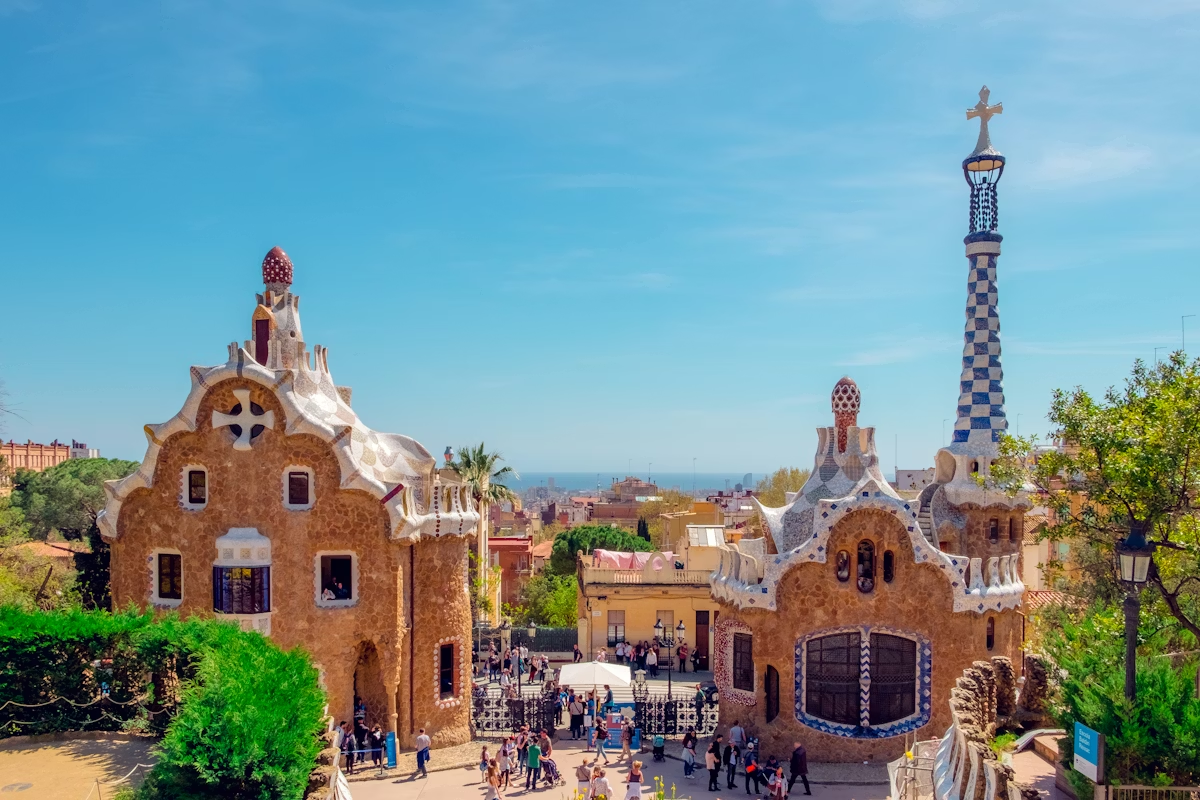
Photo by Florian Wehde on Unsplash
Top Things to Do in Barcelona
Sagrada Família — Non-Negotiable
Antoni Gaudí’s unfinished basilica has been under construction since 1882 and remains the most visited paid monument in Spain. The building is extraordinary in every direction — the Nativity Façade (Gaudí’s original design), the Glory Façade (still under construction), and the interior forest of branching columns and kaleidoscopic light through stained glass are genuinely unlike anything else in architecture. Entry: €26–€30 (basic); €36–€40 with tower access. Book online 2–4 weeks in advance — on-site tickets are usually unavailable. Go at opening time (9 AM) for the best morning light through the east windows.
Park Güell
Gaudí’s mosaic-covered hillside park overlooking Barcelona — the famous dragon staircase, the hypostyle room, and the serpentine bench with city panoramas. Entry to the Monumental Zone (the famous areas): €10. The surrounding park paths are free and less crowded. Book in advance; timed entry keeps crowds manageable. 20-minute metro + walk from city center.
Gothic Quarter (Barri Gòtic)
Barcelona’s medieval city center — stone lanes, Roman ruins visible through glass floors, the Cathedral of Barcelona (free entry in the mornings; €7 for tower access), and the Plaça Reial. A genuinely atmospheric neighborhood at any hour. At night, the bars and restaurants of Carrer Escudellers and Carrer dels Banys Nous fill with locals. The best approach: get lost without a map for at least an hour.
El Born District
Adjacent to the Gothic Quarter but with a completely different character — Barcelona’s most sophisticated neighborhood for food, design, and independent culture. The Santa Maria del Mar basilica (free) is one of the finest examples of Catalan Gothic architecture in existence. The Picasso Museum (€14; free on Thursday evenings) houses the world’s largest Picasso collection from his formative years. El Born Market (former iron market, now a cultural center over preserved ruins) is free to enter.
La Barceloneta and the Beaches
Barcelona’s 4 km of city beaches are a genuine asset — clean sand, water quality that has improved dramatically since the 1992 Olympics, and lifeguard coverage through summer. La Barceloneta (the main beach) is the most crowded; Nova Icaria and Bogatell beaches north of the Olympic Port are slightly quieter. Beach access is free; sun lounger rental runs €10–€15/pair.
La Boqueria Market
Barcelona’s famous covered market on La Rambla — visually spectacular, with displays of fresh fish, Iberian ham, tropical fruits, and prepared foods. For actual shopping, go early morning (8–10 AM before tour groups arrive) and buy from the interior stalls, not the tourist-facing ones at the entrance. The prepared food stalls (jamón, oysters, fresh juices) at the entrance charge significant tourist premiums.
Barcelona Food Guide
Catalan cuisine is one of Europe’s great food traditions, and Barcelona is where it’s executed at its best.
Essential dishes and where to find them:
- Pan con tomate (Pa amb tomàquet): The quintessential Catalan staple — toasted bread rubbed with fresh tomato, olive oil, and salt. Comes with everything; often complimentary at restaurants. €1.50–€3 at tapas bars
- Patatas bravas: Fried potato cubes with two sauces (spicy brava and aioli). €4–€8 at any tapas bar — quality varies enormously
- Jamón Ibérico: Spain’s cured ham — the bellota (acorn-fed) grade is extraordinary. €8–€18 per plate; worth ordering once at a decent bar
- Paella: Officially a Valencian dish but widely available — avoid tourist-trap La Rambla restaurants. Authentic paella with seafood at a proper restaurant: €18–€25/person
- Croquetas: Creamy béchamel-filled fried croquettes (jamón or bacallà / salt cod). €6–€10 for 4 at a good bar
- Crema catalana: Spain’s version of crème brûlée, made with lemon and cinnamon. €5–€8 at traditional restaurants
Best budget eating:
- Lunch menu (Menú del día) at local restaurants: €12–€16 for starter, main, dessert, wine, and coffee — the best-value eating format in Spain
- Mercado de Santa Caterina (less touristy alternative to La Boqueria): Fresh produce and a food court at local prices
- El Born and Gràcia neighborhood restaurants: Tapas bars serving locals run €15–€25/person for a full meal with wine
Best Neighborhoods to Stay in Barcelona
Eixample — Best Overall Base
The 19th-century grid neighborhood surrounding the city center — the Sagrada Família is here, the best mid-range hotels are concentrated along Gran Via and Passeig de Gràcia, and the metro connects everywhere in 10–15 minutes. Mid-range hotels: €90–€180/night. The left side of Eixample (Esquerra de l’Eixample) has more local bars and lower prices than the right (Dreta).
Gothic Quarter / El Born — Best for Atmosphere
Maximum atmosphere, walking distance to beaches, Gothic Quarter, and Born district. Accommodation tends toward boutique hotels and apartments. More noise at night. Mid-range: €100–€200/night.
Gràcia — Best for Local Experience
A distinct village-within-the-city feel north of Eixample — independent shops, local restaurants, and a young creative population. Less central but excellent metro connectivity. Budget-friendly apartments available for longer stays.
Getting Around Barcelona
Metro
Barcelona’s Metro (8 lines) covers the entire city efficiently. The T-Casual 10-trip card (€12.15) is the standard purchase — works on metro, bus, and tram. Single journey: €2.40. The metro operates from approximately 5 AM to midnight Sunday–Thursday, and 24 hours Friday–Saturday.
Airport Transfer
The Aerobus runs from T1 and T2 to Plaça Catalunya (city center) every 5 minutes: €6.75 one-way, 35 minutes. The RENFE Cercanías (commuter train) from T2: €4.80, 25 minutes. Taxi from airport: €30–€40 to city center (metered, no surcharge).
Walking
Barcelona’s neighborhoods reward walking — the Gothic Quarter requires it. The Eixample grid is flat and logical. Most major sights are within 1–2 metro stops of each other in the central zone.
Practical Tips for This Barcelona Travel Guide
Book Gaudí sites in advance: Sagrada Família and Park Güell both have timed entry and sell out weeks in advance during peak season. This is the single most important practical advice in any Barcelona travel guide.
La Rambla: Barcelona’s most famous boulevard is the most tourist-saturated street in Spain — pickpocketing is endemic, restaurants are overpriced, and the experience is anticlimactic. Walk it once, end at the Boqueria, and move on.
Dinner timing: Barcelona eats late — lunch is 2–4 PM, dinner is 9–11 PM. Restaurants before 8:30 PM are empty or tourist-filled. Eating at local time means better atmosphere and often better service.
Beach safety: Keep valuables in a sealed bag or hotel safe when at the beach — pickpocketing and theft from unattended bags is common.
Daily Budget Breakdown
| Category | Budget | Comfortable |
|---|---|---|
| Accommodation | €60 (hostel/budget hotel) | €150 (mid-range hotel) |
| Food (3 meals + menú del día) | €25 | €60 |
| Transport | €5 (T-Casual card) | €10 |
| Attractions | €10 | €35 |
| Daily Total | ~€100 | ~€255 |
Final Verdict: Barcelona Travel Guide 2026
Barcelona rewards visitors who approach it with both ambition and patience — book the Gaudí sites well in advance, eat at local hours, and spend at least one evening getting genuinely lost in the Gothic Quarter or El Born. The city at its best is one of the finest urban experiences in Europe: good architecture, good food, good weather, and a Mediterranean ease that is impossible to replicate in northern cities. This Barcelona travel guide is the framework; the city itself delivers the rest.