
Seville is the capital of Andalusia and the birthplace of flamenco, the city where the Spanish stereotypes that get exported worldwide — flamenco, tapas, bullfighting plazas, orange-tree courtyards, and Moorish palace architecture — were largely formed and remain most authentically practiced. Unlike Barcelona’s Gaudí-driven tourism or Madrid’s capital-city density, Seville moves at the pace of a mid-sized Andalusian city that happens to contain a UNESCO World Heritage royal palace, Europe’s largest Gothic cathedral, and a flamenco tradition still performed in small, unglamorous neighborhood bars rather than tourist theaters alone. Summers here are famously brutal — Seville regularly posts Europe’s hottest temperatures — but spring and autumn deliver some of the most pleasant city weather on the continent. This Seville travel guide covers the Alcázar, the cathedral and Giralda tower, the flamenco scene, the tapas bar circuit, day trips into Andalusia, and a full budget breakdown for 2026.
At a Glance
| Country | Spain |
| Currency | Euro (EUR) |
| Language | Spanish (Andalusian dialect); English common in tourist areas |
| Best time | March–May and late September–November (mild, 18–25°C) |
| Avoid | July–August (regularly 38–44°C, oppressive heat) |
| Daily budget (frugal) | $50–$75/day |
| Daily budget (comfortable) | $110–$200/day |
| Visa | Schengen visa-free for 90 days for US, UK, Canadian, and Australian passport holders |
| Getting there | Seville Airport (SVQ) — connections from major European hubs; or AVE high-speed train from Madrid (2.5 hrs) or Barcelona (5.5 hrs) |
| Getting around | Walking, Seville Metro, TUSSAM buses, bike share (SEVici) |
The Real Alcázar of Seville
The Real Alcázar is the centerpiece of any Seville travel guide and arguably the single best Mudéjar palace complex in Spain — a royal residence built primarily under Pedro I in the 14th century by Moorish craftsmen working for a Christian king, producing an architecture that blends Islamic geometric and calligraphic decoration with Gothic and later Renaissance additions. It remains an active royal residence today — the oldest royal palace still in use in Europe.
The palace’s interior courtyards, particularly the Patio de las Doncellas with its sunken garden and reflecting pools, and the Salón de Embajadores with its gilded wooden dome, represent the high point of Mudéjar craftsmanship outside Granada’s Alhambra. The surrounding gardens — terraced, fountained, and shaded by centuries-old trees — cover several hectares and reward a slow walk separate from the palace interior visit.
Practical notes for any Seville travel guide visit: Entry €19.50 ($21), book online 1–2 weeks ahead in high season as same-day tickets frequently sell out. Game of Thrones fans will recognize several courtyards used as the Water Gardens of Dorne.
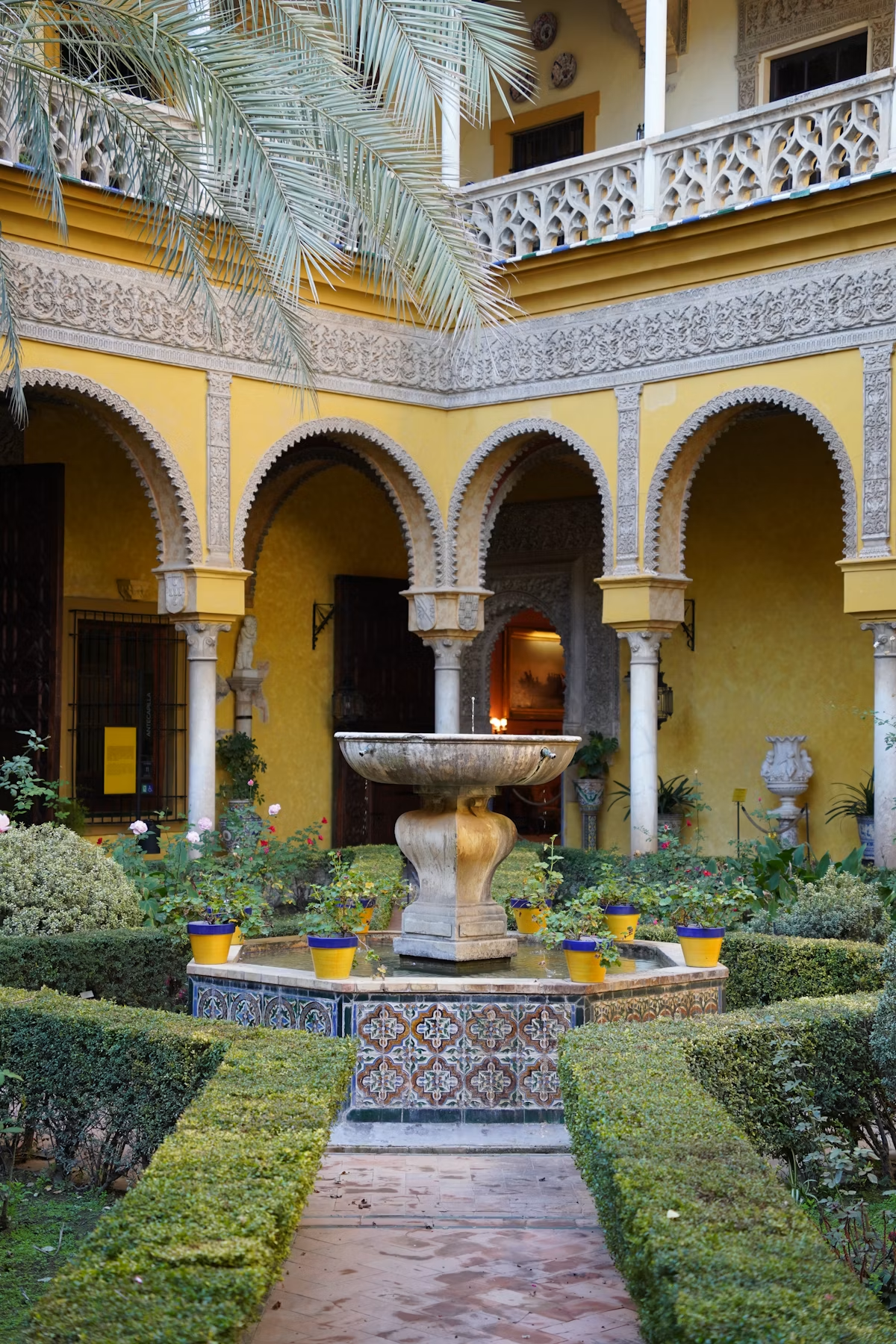
Photo by Shpëtim Ujkani on Unsplash
Seville Cathedral and the Giralda
Seville Cathedral is the largest Gothic cathedral in the world by volume, built between 1401 and 1506 on the site of a former mosque — a scale and ambition meant to declare, after the Reconquista, “let us build a church so beautiful and so grand that those who see it finished will think we were mad.” The cathedral holds the tomb of Christopher Columbus (one of several disputed resting places, supported by DNA testing in 2006) and an enormous gilded altarpiece, the largest in the world, depicting 45 scenes from the life of Christ.
The Giralda — the cathedral’s bell tower — was originally the minaret of the Almohad-era mosque, preserved when the rest of the structure was demolished for the new cathedral. Visitors climb a series of ramps (built for mounted riders, not stairs, in the original Moorish design) to a viewing platform with panoramic views over the entire city, including the Alcázar gardens, the Triana neighborhood across the river, and the Plaza de España.
Practical notes: Combined cathedral and Giralda entry €13 ($14); the Giralda climb is the single best viewpoint in any Seville travel guide itinerary.
Flamenco in Seville
Flamenco emerged from Andalusia’s Roma, Moorish, and Sephardic Jewish communities, and Seville — alongside Jerez and Cádiz — remains one of the art form’s three historic centers. The genuine version, called flamenco puro or cante jondo, is raw, intensely emotional, and performed without the polished choreography seen in tourist-oriented tablao shows.
For a serious Seville travel guide flamenco experience, seek out a peña flamenca — small member-run clubs in working-class neighborhoods like Triana that host informal performances for a local audience, usually free or low-cost but requiring some advance research or a local recommendation to find. For visitors wanting a structured introduction, La Casa del Flamenco and Museo del Baile Flamenco offer intimate, high-quality tablao shows in restored historic buildings for €20–€35 ($22–$38).
Tapas Bars and Seville Food Culture
Seville is widely credited as the birthplace of tapas culture, and the city’s bar density reflects it — a single street in the Santa Cruz or Triana neighborhoods can hold a dozen tapas bars, each with a specialty dish and a regular crowd of standing locals.
- Salmorejo: A cold, creamy tomato-and-bread soup similar to gazpacho but thicker and richer, garnished with diced jamón and hard-boiled egg — the definitive hot-weather Seville dish. €4–€6 ($4.30–$6.50)
- Jamón Ibérico: Acorn-fed Iberian ham, thinly sliced and served simply with bread — a Seville travel guide essential best sampled at a dedicated jamonería rather than a generic tourist restaurant. €8–€20 ($8.60–$22) per plate depending on grade
- Espinacas con Garbanzos: Spinach and chickpeas stewed with cumin and a splash of vinegar — a Moorish-influenced classic that appears on nearly every traditional tapas menu. €4–€6 ($4.30–$6.50)
- Carrillada: Slow-braised pork cheek in a rich wine reduction — a hearty, classic Andalusian tapa found at neighborhood bars across the city. €5–€8 ($5.40–$8.60)
- Rebujito: Seville’s signature drink — manzanilla sherry mixed with Sprite or 7-Up over ice, light and dangerously easy to drink in the summer heat. €3–€5 ($3.20–$5.40)
Plaza de España and María Luisa Park
Built for the 1929 Ibero-American Exposition, the Plaza de España is a vast semicircular building complex with a moat, ornamental bridges, and a continuous band of painted ceramic tile alcoves representing each Spanish province — one of the most photographed structures in Spain and a frequent film location (Star Wars: Attack of the Clones and Lawrence of Arabia among them). Free to visit, adjoining the shaded paths and fountains of María Luisa Park.
Day Trips from Seville
Córdoba (45 minutes by AVE high-speed train)
Home to the Mezquita-Catedral — a former Great Mosque converted into a cathedral, with a forest of striped horseshoe arches that remains one of the most singular interiors in Europe. Train fare: €15–€30 ($16–$32) one-way.
Ronda (1.5–2 hours by car or train)
A dramatic mountain town split by a 120-meter gorge, crossed by the Puente Nuevo bridge — one of the most photographed towns in Andalusia and an easy full-day trip.
Cádiz (1.5 hours by train)
Spain’s oldest continuously inhabited city, a compact peninsula town with Atlantic beaches, a historic core, and a culture distinct from inland Andalusia. Train fare: €15–€20 ($16–$22).
Where to Stay
Budget (€30–€55/night)
Hostels and budget guesthouses near Santa Cruz or Triana — the standard Seville travel guide accommodation tier for backpackers and short-stay visitors.
Mid-Range (€80–€160/night)
Boutique hotels in restored historic buildings with interior courtyards, common in the Santa Cruz and Alameda neighborhoods.
Upscale (€200–€450+/night)
Luxury hotels including converted palaces near the cathedral and Alcázar, several with rooftop pools facing the Giralda.
Getting Around Seville
Walking: The historic center — Santa Cruz, the cathedral, and the Alcázar — is fully walkable and best explored on foot, with most major sights within a 20-minute radius.
SEVici bike share: Seville has one of Europe’s most extensive bike lane networks; the SEVici bike-share system covers the entire city for low daily or weekly rates.
Seville Metro and TUSSAM buses: Useful for reaching outlying neighborhoods or the airport; single fares around €1.35 ($1.45).
Daily Budget Breakdown
| Category | Frugal | Comfortable |
|---|---|---|
| Accommodation | €25 | €110 |
| Food | €18 | €50 |
| Transport | €4 | €12 |
| Activities / entry fees | €8 | €25 |
| Daily Total | ~€55 / $59 | ~€197 / $213 |
Final Verdict: Seville Travel Guide 2026
Seville rewards visitors who come for the layered history rather than a single landmark — the Alcázar’s Mudéjar courtyards, the cathedral’s scale, and the lived-in flamenco tradition all point to the same underlying fact: this is a city where Moorish, Christian, and modern Andalusian culture were never fully separated, only repeatedly built on top of each other. The ideal Seville travel guide itinerary runs three to four days: a full day for the Alcázar and cathedral, an evening built around tapas-bar hopping in Triana or Santa Cruz, a flamenco performance at a peña or quality tablao, and at least one day trip to Córdoba or Ronda. Visitors planning around the brutal summer heat should shift their trip to spring or autumn whenever the itinerary allows — Seville in April is one of the most pleasant cities in Europe; Seville in August is one of the most punishing.