
Granada sits at the foot of the Sierra Nevada in Andalusia, the last stronghold of Moorish Spain and home to the Alhambra — the single most-visited monument in the country and, by most measures, the best-preserved medieval Islamic palace complex in Europe. Unlike Seville’s broader Andalusian sprawl or Córdoba’s single-monument focus, Granada compresses a UNESCO palace, a labyrinthine Moorish quarter, a free-tapas bar culture found almost nowhere else in Spain, and ski slopes 45 minutes away into one mid-sized city. The Reconquista ended here in 1492, and the centuries of Nasrid rule that preceded it left a layered, still-visible imprint that makes Granada feel distinct from anywhere else on the Iberian Peninsula. This Granada travel guide covers the Alhambra, the Albaicín quarter, the city’s famous free-tapas tradition, flamenco in Sacromonte, day trips into the Sierra Nevada, and a full budget breakdown for 2026.
At a Glance
| Country | Spain |
| Currency | Euro (EUR) |
| Language | Spanish (Andalusian dialect); English common in tourist areas |
| Best time | March–May and September–November (mild, 15–24°C) |
| Avoid | July–August (35°C+ heat in the city, though the Sierra Nevada stays cooler) |
| Daily budget (frugal) | $45–$70/day |
| Daily budget (comfortable) | $100–$190/day |
| Visa | Schengen visa-free for 90 days for US, UK, Canadian, and Australian passport holders |
| Getting there | Federico García Lorca Granada Airport (GRX) — limited direct routes; or AVE high-speed train from Madrid (3.5 hrs) or Seville (3 hrs) |
| Getting around | Walking, local buses, taxi for the Alhambra hill and Sacromonte |
The Alhambra
The Alhambra is the reason most visitors build an entire trip around Granada — a fortified palace and garden complex built primarily by the Nasrid dynasty between the 13th and 15th centuries, expanded later by Christian monarchs after the 1492 conquest. The complex divides into several distinct sections: the Alcazaba (the oldest military fortress core), the Nasrid Palaces (the ornate royal residences, including the famous Patio de los Leones with its twelve marble lions), and the Generalife gardens, with their terraced fountains and cypress hedges.
Practical notes for any Granada travel guide visit: Tickets are capped daily and routinely sell out 1–3 weeks ahead in high season — book directly through the official Alhambra ticketing site as early as possible. General admission €19.50 ($21); a separate, timed-entry slot is required for the Nasrid Palaces specifically, so check the ticket type carefully before purchasing.
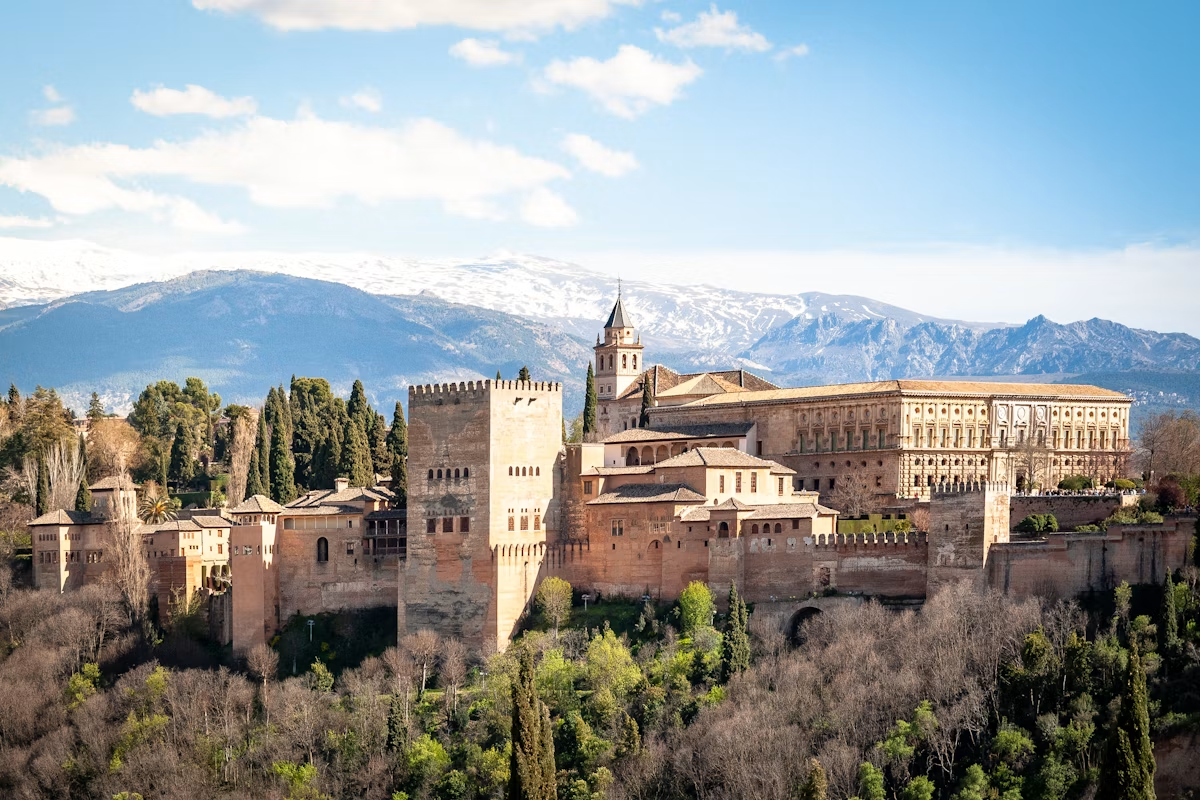
Photo by Dimitry B on Unsplash
The Albaicín: Granada’s Moorish Quarter
The Albaicín is Granada’s old Moorish neighborhood, a UNESCO World Heritage Site in its own right, climbing the hill opposite the Alhambra in a maze of whitewashed houses, narrow cobbled lanes, and hidden carmenes (traditional walled gardens). Much of its street layout has remained essentially unchanged since the medieval period, and it remains the best place in any Granada travel guide itinerary to get genuinely, harmlessly lost.
The essential stop is the Mirador de San Nicolás, a small plaza near the top of the Albaicín that delivers the single best panoramic view of the Alhambra with the Sierra Nevada’s snow-capped peaks behind it — particularly dramatic at sunset, when the palace walls turn gold-pink against the mountains.
Granada’s Free Tapas Tradition
Granada holds onto a tradition that has largely disappeared elsewhere in Spain: order a drink at most traditional bars and a free tapa arrives with it, no separate charge. This isn’t a gimmick for tourists — it’s a long-standing local custom, strongest in the Calle Navas and Campo del Príncipe areas, where bartenders typically let the next round determine the next free dish, building toward a varied, near-free dinner over several drinks.
- Habas con Jamón: Broad beans stewed with cured ham — a classic free-tapa staple across the city’s traditional bars
- Tortilla del Sacromonte: A rich Granada-specific omelet variant made with lamb brains and sweetbreads, a holdover from gypsy quarter cooking traditions — less common now but still findable at older establishments
- Berenjenas con Miel: Fried eggplant drizzled with cane honey — a Moorish-influenced sweet-savory dish distinctive to Granada’s tapas scene. €4–€6 ($4.30–$6.50) when ordered as a paid plate
- Migas: Fried breadcrumbs with garlic, peppers, and chorizo — a humble, filling tapa found at neighborhood bars throughout the Albaicín and Realejo
- Pistou-style Salmorejo: The same cold tomato soup found across Andalusia, served slightly differently in Granada with a heavier garlic note. €4–€6 ($4.30–$6.50)
Flamenco in Sacromonte
The Sacromonte neighborhood, a hillside district of cave dwellings carved into the rock above the Albaicín, is one of flamenco’s most historically significant settings — home to a Roma community that helped shape the zambra, a Sacromonte-specific flamenco style distinct from the more commonly performed Seville or Jerez variants. Several cave venues (cuevas) host intimate zambra performances for €25–€35 ($27–$38), combining live performance with the unusual acoustics of an actual cave setting carved into the hillside.
Day Trips from Granada
Sierra Nevada (45 minutes by car or bus)
Mainland Spain’s highest mountain range and southern Europe’s southernmost ski resort — skiable from late November through April, with hiking trails open through the Sierra Nevada National Park in summer. A rare case where a major ski resort and a Mediterranean-climate city sit within an hour of each other.
Alpujarras Villages (1–1.5 hours by car)
A string of whitewashed Berber-style villages — Capileira, Bubión, and Pampaneira — scattered across the southern slopes of the Sierra Nevada, known for handwoven textiles, jamón production, and hiking trails along centuries-old irrigation channels.
Córdoba (2.5 hours by train)
Home to the Mezquita-Catedral, easily combined with a Granada travel guide itinerary as a long day trip or one-night stopover en route to or from Seville.
Where to Stay
Budget (€25–€50/night)
Hostels and budget guesthouses in the Realejo or lower Albaicín, the standard entry point for backpackers visiting on a tight schedule.
Mid-Range (€70–€140/night)
Boutique hotels in restored Albaicín carmenes or city-center buildings, often with Alhambra-facing terraces — a defining feature of Granada’s mid-range hotel market.
Upscale (€180–€400+/night)
Luxury hotels including the Parador de Granada, located inside the Alhambra complex itself — one of the most distinctive high-end stays in any Granada travel guide.
Getting Around Granada
Walking: The historic center, Albaicín, and Realejo are compact and walkable, though the Albaicín’s steep hills and cobbled lanes make sturdy shoes essential.
Local buses: Granada’s minibus routes (lines C30, C32, C35) are specifically designed for the narrow Albaicín and Alhambra-hill streets that standard buses can’t navigate.
Taxi: The most practical option for reaching Sacromonte at night or hauling luggage uphill to Albaicín accommodations.
Daily Budget Breakdown
| Category | Frugal | Comfortable |
|---|---|---|
| Accommodation | €22 | €95 |
| Food | €15 | €45 |
| Transport | €4 | €10 |
| Activities / entry fees | €8 | €22 |
| Daily Total | ~€49 / $53 | ~€172 / $186 |
Final Verdict: Granada Travel Guide 2026
Granada rewards a slower visit than most day-trippers give it — the Alhambra alone deserves a half-day minimum, and the Albaicín’s free-tapas bar circuit is genuinely one of the best low-cost food experiences in Spain, not a tourist trap dressed up as one. The ideal Granada travel guide itinerary runs two to three days: one full day for the Alhambra and Generalife, an evening tapas crawl through Calle Navas or Campo del Príncipe, a Sacromonte zambra performance, and a half-day in the Albaicín ending at the Mirador de San Nicolás for sunset. Visitors combining Granada with Seville or Córdoba should anchor a broader Andalusia trip around Granada specifically for the Sierra Nevada access that neither of the other two cities can offer.