
Tallinn pairs one of Europe’s best-preserved medieval old towns with a digital-first, strikingly modern capital wrapped around it — a contrast that makes Estonia’s capital feel simultaneously like a step back into the 14th century and a glimpse of Europe’s most wired small nation. Sitting just across the Gulf of Finland from Helsinki, Tallinn has become an easy add-on for Baltic and Nordic itineraries alike, while standing entirely on its own as a multi-day destination. This Tallinn travel guide covers the old town, hilltop viewpoints, food, day trips, and a full budget breakdown for 2026.
At a Glance
| Country | Estonia |
| Currency | Euro (EUR) |
| Language | Estonian; English and Russian widely spoken |
| Best time | May–September (mild weather, long daylight hours) |
| Avoid | December–February for outdoor sightseeing (short daylight, freezing temperatures) unless visiting for Christmas markets |
| Daily budget (frugal) | $45–$65/day |
| Daily budget (comfortable) | $85–$170/day |
| Visa | Schengen Area — visa-free for 90 days for US, UK, Canadian, and most other passport holders |
| Getting there | Tallinn Airport (TLL), 15 minutes from the city center by tram or taxi |
| Getting around | Walking, trams, ferries to Helsinki |
The Old Town
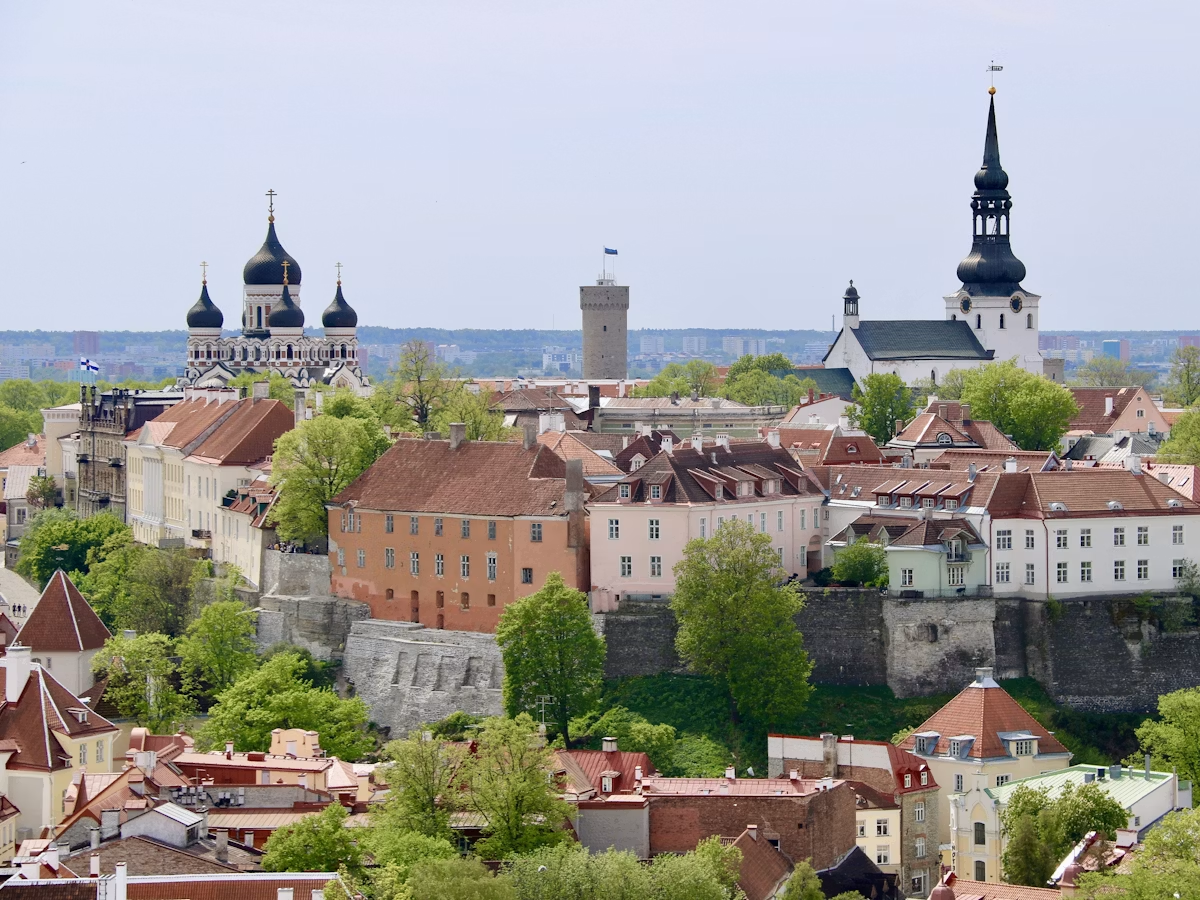
Tallinn’s old town is a UNESCO World Heritage Site split between the Upper Town (Toompea), historically home to nobility and government, and the Lower Town, where merchants and guilds built the narrow cobblestone streets and Gothic church spires that define most postcard images of the city. Town Hall Square sits at the Lower Town’s center, ringed by medieval merchant houses now converted into restaurants and shops, and remains the natural starting point for any Tallinn travel guide walking route.
The city’s defensive walls and towers — among the most complete in Northern Europe — can still be partially walked, with several preserved towers open seasonally for a rooftop view back over the red-tiled old town.
Toompea Hill and Viewpoints
Toompea Hill, the Upper Town, holds Estonia’s parliament building, the onion-domed Alexander Nevsky Cathedral, and several of the city’s best free viewpoints over the Lower Town’s spires and the Gulf of Finland beyond. Kohtuotsa and Patkuli viewing platforms are the two most popular stops, both reachable on foot in under ten minutes from Toompea’s main square and busiest at sunset.
Food in Tallinn
Estonian cuisine blends Nordic, German, and Russian influences, and Tallinn’s old town leans heavily into medieval-tavern theming alongside a genuinely strong modern Nordic dining scene just outside the walls.
- Medieval-themed taverns: Restaurants like Olde Hansa lean fully into candlelit, costumed medieval dining — a tourist-oriented but enjoyable experience unique to Tallinn’s old town. €15–€30
- Verivorst (blood sausage): A traditional Estonian dish, especially common around Christmas markets, typically served with sauerkraut and lingonberry jam
- Kalev chocolate and marzipan: Estonia’s signature confectionery brand has roots in Tallinn going back to the 19th century, with a dedicated marzipan museum-shop in the old town
- Telliskivi Creative City: A converted industrial district outside the old town walls with food halls, craft breweries, and the city’s best concentration of modern restaurants
- Baltic herring and smoked fish: A staple across all three Baltic states, sold fresh at the Balti Jaam market near the train station
Day Trips from Tallinn
Helsinki (2 hours by ferry)
A genuinely practical day trip — frequent ferries cross the Gulf of Finland in around two hours, making a same-day round trip to Finland’s capital entirely feasible.
Lahemaa National Park (1 hour by car)
Estonia’s largest national park, combining coastal bogs, forest hiking trails, and several preserved manor estates within an hour’s drive of the city.
Tartu (2 hours by car or bus)
Estonia’s second city and intellectual capital, home to the country’s oldest university and a noticeably more laid-back, student-driven atmosphere than Tallinn.
Where to Stay
Budget ($30–$50/night)
Hostels and budget hotels just outside the old town walls, an easy walk from the main sights.
Mid-Range ($65–$110/night)
Boutique hotels inside the old town itself, often in converted merchant houses — the standard Tallinn travel guide accommodation tier.
Upscale ($140–$280+/night)
Design hotels and historic-building conversions in the Upper Town or along the waterfront, several with old-town or sea views.
Getting Around Tallinn
Walking: The old town is compact and entirely walkable, with most sights reachable within a 15-minute walk of Town Hall Square.
Trams and buses: A modern, efficient network connects the old town to Telliskivi, the airport, and outlying neighborhoods — single tickets or day passes are both inexpensive.
Ferries: Tallinn’s port serves frequent ferries to Helsinki and Stockholm, making the city a practical Baltic and Nordic travel hub beyond its own sights.
Daily Budget Breakdown
| Category | Frugal | Comfortable |
|---|---|---|
| Accommodation | €28 | €100 |
| Food | €18 | €45 |
| Transport | €4 | €15 |
| Activities (towers, museums, tours) | €8 | €25 |
| Daily Total | ~€58 / $63 | ~€185 / $200 |
Final Verdict: Tallinn Travel Guide 2026
Tallinn works well as both a standalone three-to-four-day trip and a Baltic or Nordic add-on, thanks to its compact, walkable old town and genuinely easy ferry connections to Helsinki and Stockholm. The ideal Tallinn travel guide itinerary spends two days on the old town and Toompea Hill’s viewpoints, a half-day in Telliskivi for modern food and shopping, and a final day on either a Helsinki ferry trip or a drive out to Lahemaa National Park. Visitors planning a winter trip should weigh the short daylight hours against the appeal of Tallinn’s well-regarded Christmas market, one of the most highly rated in Europe.