
Cusco served as the capital of the Inca Empire for centuries before Spanish colonization layered baroque churches and colonnaded plazas directly on top of Inca stonework, leaving a historic center where massive, perfectly fitted Inca walls support colonial buildings above them. Sitting at roughly 3,400 meters elevation in the Peruvian Andes, Cusco functions as the essential gateway to Machu Picchu and the Sacred Valley, but rewards travelers who treat it as a destination in its own right rather than a one-night layover. This Cusco travel guide covers the historic center, altitude acclimatization, the Sacred Valley, food, and a full budget breakdown for 2026.
At a Glance
| Country | Peru |
| Currency | Peruvian Sol (PEN) — ~3.7 PEN per $1 USD |
| Language | Spanish, Quechua; English common in tourist areas |
| Best time | May–September (dry season, though peak tourist crowds) |
| Avoid | December–March (rainy season, occasional Inca Trail closures) |
| Daily budget (frugal) | $30–$50/day |
| Daily budget (comfortable) | $70–$160/day |
| Visa | Visa-free for 90–180 days for US, UK, Canadian, EU, and most other passport holders |
| Getting there | Alejandro Velasco Astete Airport (CUZ), 10 minutes from the historic center |
| Getting around | Walking, taxis, colectivos for the Sacred Valley |
The Historic Center
Plaza de Armas anchors Cusco’s historic center, framed by the Cusco Cathedral and the Church of the Society of Jesus, both built directly over demolished Inca structures using stones salvaged from the original buildings. A short walk away, the Qorikancha temple complex — once the Inca Empire’s most important religious site — shows the contrast most clearly: smooth, mortarless Inca masonry forming the foundation for a colonial church built on top after the Spanish conquest.
San Blas, the artisan neighborhood climbing the hillside above the center, offers steep cobblestone streets, workshops, and some of the city’s best independent cafés and viewpoints — a frequent recommendation in any Cusco travel guide for travelers wanting a quieter base than the plaza itself.
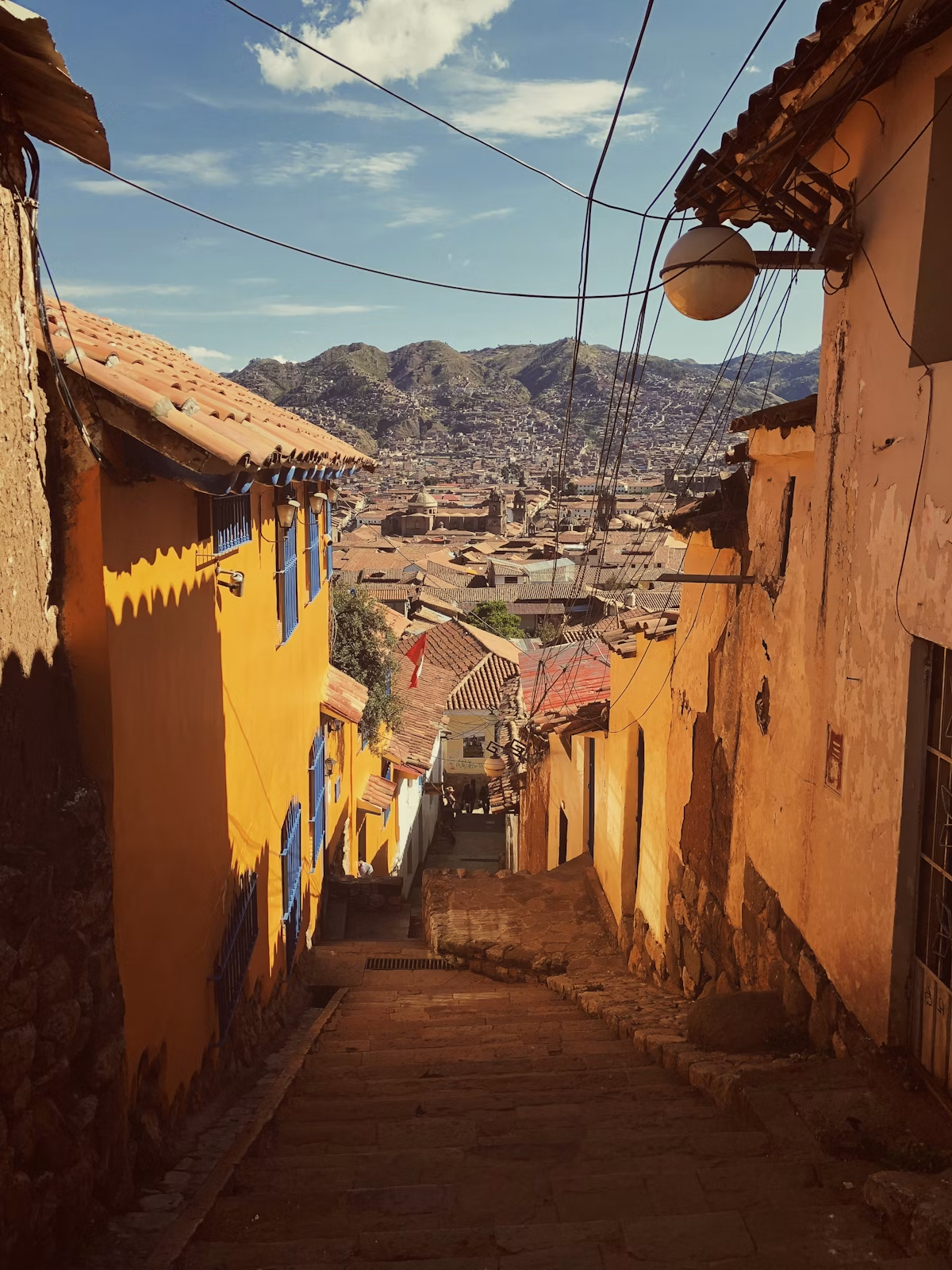
Photo by Joe Green on Unsplash
Altitude Acclimatization
Cusco’s elevation catches many travelers off guard, and altitude sickness — headaches, fatigue, shortness of breath — is common in the first 24–48 hours. Most guides and locals recommend spending at least one full day in Cusco before attempting any strenuous hiking, drinking coca leaf tea (sold and offered nearly everywhere), staying well hydrated, and avoiding alcohol on the first night. Travelers with more serious symptoms or pre-existing conditions should consider acetazolamide (Diamox), available at Peruvian pharmacies, after consulting a doctor before the trip.
Food in Cusco
Cusco sits at the heart of Peru’s celebrated culinary scene, blending Andean staples with the country’s broader reputation for inventive, ingredient-driven cooking.
- Cuy (guinea pig): A traditional Andean specialty, usually roasted whole — a notable but optional experience for adventurous eaters. 35–60 PEN ($9–$16)
- Alpaca steak: Lean and mild, served grilled at many mid-range restaurants around the historic center
- Chicha morena and pisco sours: Peru’s purple-corn drink and its signature cocktail are both widely available, from street stalls to upscale bars around San Blas
- San Pedro Market: A sprawling local market near the historic center selling fresh produce, juices, and cheap prepared meals alongside tourist souvenirs
- Cuy and cordero anticuchos: Skewered, marinated meats grilled street-side, a cheap and filling option throughout the historic center in the evenings
The Sacred Valley
Pisac (45 minutes by car)
Home to one of the Sacred Valley’s most impressive Inca agricultural terrace complexes, plus a lively traditional market on Sundays, Tuesdays, and Thursdays.
Ollantaytambo (1.5 hours by car)
A living Inca town where the original grid layout and irrigation channels remain in daily use, anchored by a dramatic terraced fortress — also the standard departure point for the train to Machu Picchu.
Moray and Maras Salt Mines (1 hour by car)
Circular Inca agricultural terraces at Moray paired with thousands of small, still-operating salt pans at Maras, usually combined into a single half-day trip.
Getting to Machu Picchu
Most Cusco travel guide itineraries route through Ollantaytambo, where a scenic train (roughly 1.5–2 hours) connects to Aguas Calientes, the town below Machu Picchu itself. Entry tickets and train seats should be booked well in advance during peak season (May–September), since both sell out weeks ahead.
Getting Around Cusco
Walking: The historic center and San Blas are walkable, though steep streets and altitude make for slower going than at sea level.
Taxis: Cheap and useful for reaching the airport or outlying neighborhoods — agree on a fare before departure, since most aren’t metered.
Colectivos: Shared vans connect Cusco to Sacred Valley towns like Pisac and Urubamba at a fraction of private tour prices.
Daily Budget Breakdown
| Category | Frugal | Comfortable |
|---|---|---|
| Accommodation | 50 PEN | 280 PEN |
| Food | 35 PEN | 100 PEN |
| Transport | 15 PEN | 50 PEN |
| Activities (sites, tours) | 25 PEN | 120 PEN |
| Daily Total | ~125 PEN / $34 | ~550 PEN / $150 |
Final Verdict: Cusco Travel Guide 2026
Cusco deserves at least three to four days on its own merits, well before factoring in Machu Picchu or the Sacred Valley — the historic center’s layered Inca-and-colonial architecture rewards slow exploration once altitude acclimatization is out of the way. The ideal Cusco travel guide plan spends the first day resting and adjusting, a second day on the historic center and San Blas, and the remaining days split between the Sacred Valley and the Machu Picchu trip itself. Travelers should book Machu Picchu entry tickets and train seats months ahead for visits during the May–September dry season, when availability disappears fastest.