
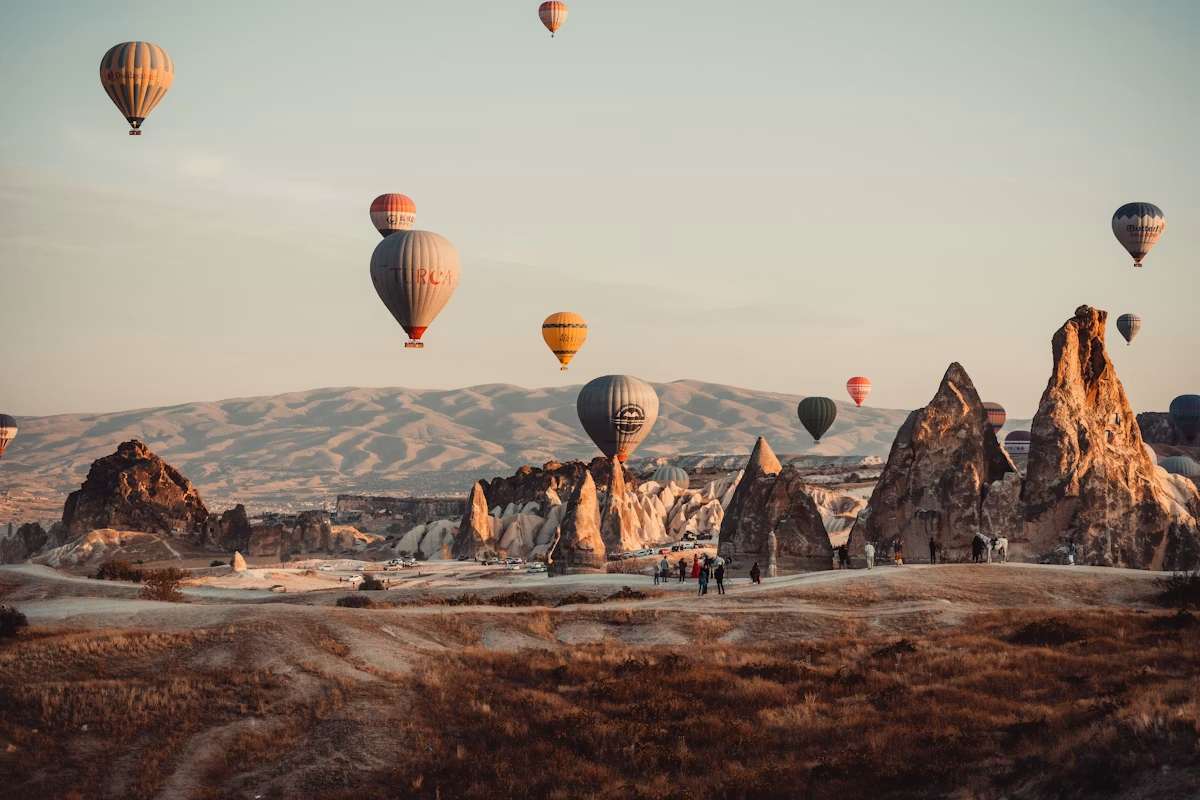
Cappadocia travel guide readers usually picture a single sunrise photo of hot air balloons drifting over rock formations, then arrive and find an entire region carved with cave dwellings, underground cities, and valleys eroded into cone-shaped “fairy chimneys” found nowhere else on earth. Cappadocia, a volcanic plateau in central Turkey, has been continuously inhabited inside its soft rock formations for over a thousand years, with entire churches, monasteries, and whole underground cities hollowed out of the stone by early Christian communities. This Cappadocia travel guide covers the hot air balloon experience, fairy chimney valleys, cave hotels, underground cities, food, and a full budget breakdown for 2026.
At a Glance
| Country | Turkey |
| Currency | Turkish Lira (TRY) |
| Language | Turkish; English common at tourist businesses |
| Best time | April–June and September–October (mild weather, clear balloon-flying conditions) |
| Avoid | Mid-July–August (intense heat) and high-wind days (frequent balloon cancellations) |
| Daily budget (frugal) | $30–$45/day |
| Daily budget (comfortable) | $55–$150/day |
| Visa | E-visa required for most Western nationalities, arranged online in advance |
| Getting there | Nevsehir or Kayseri airports have domestic flights from Istanbul (1 hour) |
| Getting around | Rental cars or scooters, organized day tours, walking within Goreme |
Hot Air Balloons Over Cappadocia
The sunrise hot air balloon flight is Cappadocia’s signature experience, lifting dozens of balloons simultaneously over the Goreme valley’s fairy chimneys for sweeping views found on almost every travel list of must-see sights worldwide. Flights depend heavily on wind conditions and are frequently cancelled or rescheduled, so travelers planning a Cappadocia trip around a balloon ride should build in at least two mornings as a buffer.
Even for those who skip the flight, simply watching the balloons rise from a valley viewpoint at dawn remains one of the region’s most memorable free activities.
Fairy Chimney Valleys and Cave Hotels
Cappadocia’s distinctive cone-shaped rock formations, known as fairy chimneys, fill valleys like Love Valley, Pigeon Valley, and Devrent Valley, many walkable along marked hiking trails between the towns of Goreme and Uchisar. Centuries of erosion carved the soft volcanic tuff into these shapes, and locals later hollowed many of them into homes, dovecotes, and storage spaces still visible today.
The region’s cave hotels, carved directly into the rock and often furnished with modern amenities behind centuries-old stone walls, have become a destination in themselves, with Goreme and Uchisar holding the highest concentration of options.
Underground Cities and Day Trips
Derinkuyu and Kaymakli Underground Cities (30–45 minutes by car)
Multi-level subterranean cities carved as refuges from invasion, with ventilation shafts, stables, and chapels still visible dozens of meters below the surface.
Goreme Open-Air Museum (10 minutes by car)
A cluster of rock-cut Byzantine churches and monasteries with preserved frescoes, among the most important early Christian sites in the region.
Ihlara Valley (1 hour by car)
A dramatic river gorge lined with rock-cut churches, offering a quieter hiking alternative to the busier valleys around Goreme.
Food in Cappadocia
Cappadocia’s food scene leans on slow-cooked clay-pot dishes and the region’s growing reputation for boutique wine production from local volcanic-soil vineyards.
- Testi kebab: Meat and vegetables slow-cooked in a sealed clay pot, often cracked open tableside as a small spectacle. 250–400 TRY
- Manti: Small Turkish dumplings served with garlic yogurt and a paprika-butter sauce, found throughout central Anatolia
- Cappadocian wine: Local wineries around Urgup produce wine from grapes grown in the region’s volcanic soil, with several offering tastings
- Gozleme: A thin folded flatbread filled with cheese, spinach, or potato, commonly sold at roadside stands near the valleys
- Turkish breakfast spreads: Many cave hotels serve elaborate breakfast spreads with local cheeses, olives, and honey
Where to Stay
Budget ($20–$35/night)
Simple cave-style guesthouses or budget hotels in Goreme or Urgup.
Mid-Range ($45–$90/night)
Boutique cave hotels with terraces overlooking the valleys — the standard Cappadocia travel guide accommodation tier.
Upscale ($120–$300+/night)
High-end cave hotels with private balloon-view terraces, often in Uchisar or Goreme.
Getting Around Cappadocia
Rental cars and scooters: The most flexible way to reach the scattered valleys, underground cities, and viewpoints across the region.
Organized day tours: A common alternative for travelers without a rental, typically split into “Red Tour” and “Green Tour” itineraries covering different sites.
Walking: Several fairy chimney valleys connect by marked hiking trails directly between Goreme and Uchisar.
Daily Budget Breakdown
| Category | Frugal | Comfortable |
|---|---|---|
| Accommodation | 600 TRY | 2,200 TRY |
| Food | 400 TRY | 1,000 TRY |
| Balloon flight / activities | 300 TRY | 1,800 TRY |
| Transport | 200 TRY | 600 TRY |
| Daily Total | ~1,500 TRY / $44 | ~5,600 TRY / $165 |
Final Verdict: Cappadocia Travel Guide 2026
Cappadocia rewards three full days, since the balloon flight alone often needs a flexible buffer day and the valleys, underground cities, and open-air museum each deserve unhurried time. The ideal Cappadocia travel guide itinerary books the balloon flight for the first available morning, spends a day hiking between Goreme’s valleys and visiting the open-air museum, and dedicates a final day to an underground city and a wine-tasting stop near Urgup. Travelers should avoid scheduling a tight connecting flight on the morning of a planned balloon ride, since wind-related cancellations and rescheduling are common throughout the season.