
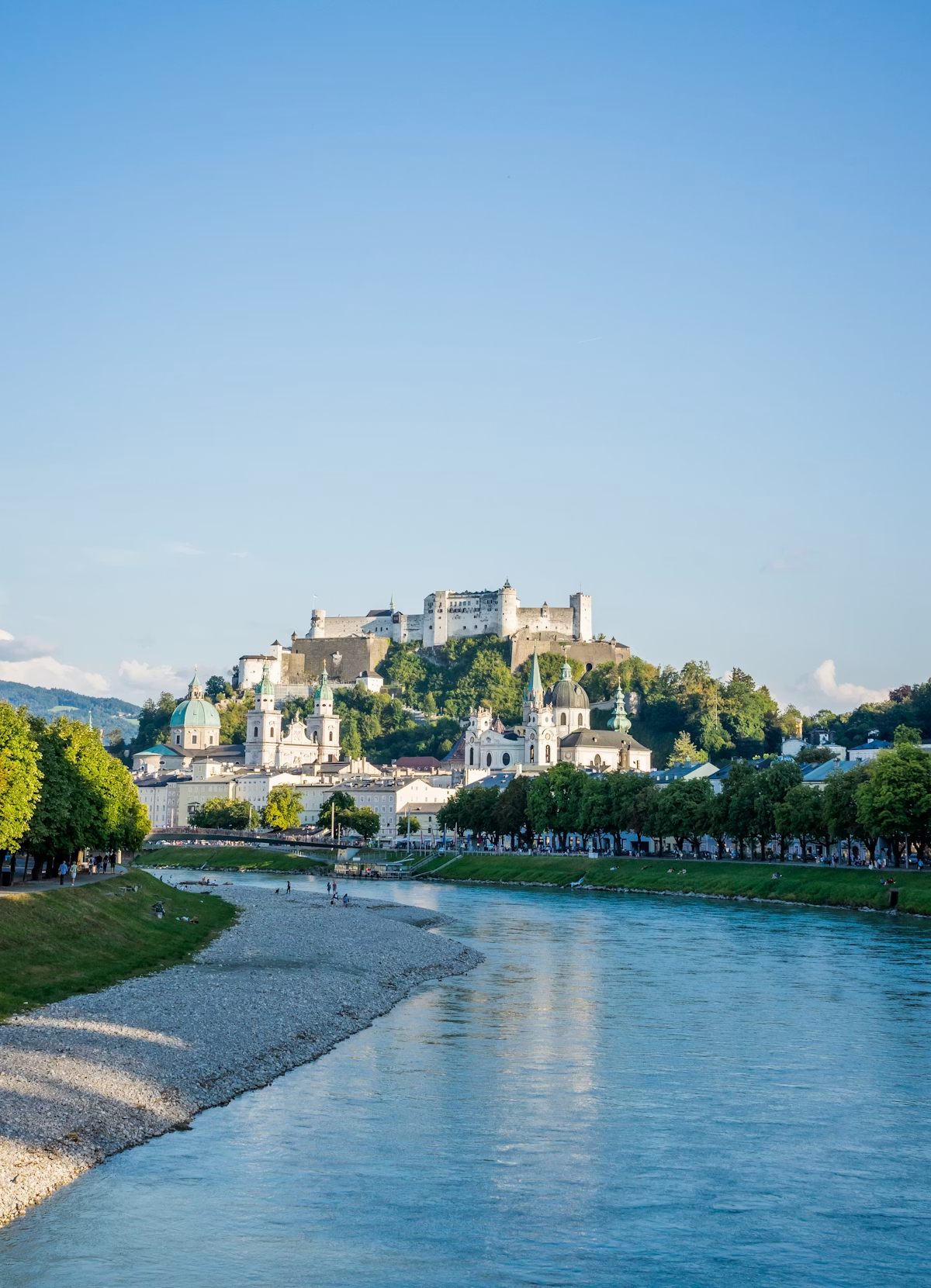
Salzburg travel guide readers usually arrive thinking of Mozart’s birthplace and “The Sound of Music,” then discover a compact baroque old town wedged between the Salzach River and a fortress-topped hill, with the Alps rising visibly at the edge of every street. Salzburg, Austria’s fourth-largest city, packs an entire UNESCO-listed historic center, a 900-year-old hilltop fortress, and some of the country’s most scenic mountain and lake day trips into an area small enough to explore almost entirely on foot. This Salzburg travel guide covers the old town, the fortress and palaces, day trips into the Alps, food, and a full budget breakdown for 2026.
At a Glance
| Country | Austria |
| Currency | Euro (EUR) |
| Language | German; English widely spoken in tourist areas |
| Best time | May–June and September (mild weather, fewer crowds than peak summer) |
| Avoid | August (Salzburg Festival crowds and peak hotel prices) |
| Daily budget (frugal) | $45–$65/day |
| Daily budget (comfortable) | $75–$170/day |
| Visa | Visa-free for 90 days for US, UK, Canadian, and most non-EU passport holders under Schengen rules |
| Getting there | Salzburg Airport has direct flights from major European hubs; well connected by train from Munich and Vienna |
| Getting around | Walking the old town, city buses, funicular to the fortress |
The Baroque Old Town
Salzburg’s Altstadt sits wedged between the Salzach River and the Mönchsberg cliff, its narrow lanes lined with baroque facades, wrought-iron guild signs, and the cathedral square where the Salzburg Festival stages outdoor performances each summer. Getreidegasse, the old town’s main shopping street, holds Mozart’s birthplace behind one of its most photographed historic shopfronts, now a small museum tracing the composer’s early life.
Across the river, the Mirabell Gardens offer the classic postcard view back toward the fortress and old town, framed by the same geometric flowerbeds featured in “The Sound of Music.”
Hohensalzburg Fortress and Palaces
Hohensalzburg Fortress towers over the old town from a forested hill, reachable by funicular or a steep walking path, and ranks among the largest fully preserved medieval castles in Europe. Its courtyards, state rooms, and watchtower views over the city and surrounding Alps make it the single most visited sight in Salzburg.
Hellbrunn Palace, just south of the center, draws visitors for its 17th-century trick fountains, designed to surprise unsuspecting guests with hidden water jets triggered from a control room — a quirky counterpoint to the city’s more formal baroque architecture.
Day Trips from Salzburg
Hallstatt and the Salzkammergut Lakes (1.5 hours by car or train and bus)
A postcard-perfect lakeside village in the Austrian Alps, often visited as a long day trip despite the crowds it now draws.
Berchtesgaden and the Eagle’s Nest (1 hour by car or bus, just across the German border)
Hitler’s former mountain retreat and the nearby Königssee lake, both reachable in a single half-day or full-day excursion.
Werfen and Eisriesenwelt Ice Cave (1 hour by train and bus)
The world’s largest ice cave, set inside a mountain above the town of Werfen, reachable by cable car and a guided walking tour.
Food in Salzburg
Salzburg’s food scene blends Austrian and Bavarian influences, with a strong tradition of pastries tied directly to the city’s most famous composer.
- Salzburger Nockerl: A soufflé-like dessert shaped to resemble the hills around the city, a signature Salzburg specialty. €12–€18
- Mozartkugel: A round chocolate-marzipan-pistachio confection sold throughout the old town, named after the city’s favorite son
- Wiener Schnitzel: A breaded veal or pork cutlet found on nearly every traditional menu
- Kasspatzln: A Alpine cheese-and-noodle dish similar to Bavarian Käsespätzle, common in mountain-region restaurants
- Café culture: Traditional Viennese-style coffeehouses serving melange coffee alongside cakes, a relaxed way to pass an afternoon
Where to Stay
Budget (€35–€60/night)
Hostels and budget guesthouses on the new town side of the river, a short walk from the old town.
Mid-Range (€80–€150/night)
Hotels within or just outside the old town walls — the standard Salzburg travel guide accommodation tier.
Upscale (€200–€450+/night)
Historic luxury hotels near the cathedral square or with fortress views.
Getting Around Salzburg
Walking: The old town is fully walkable and the most pleasant way to see the main sights.
City buses: Cover the new town, Mirabell Gardens, and Hellbrunn Palace efficiently.
Funicular and trains: The funicular reaches Hohensalzburg Fortress directly, while regional trains and buses serve day trips like Hallstatt and Berchtesgaden.
Daily Budget Breakdown
| Category | Frugal | Comfortable |
|---|---|---|
| Accommodation | €35 | €110 |
| Food | €20 | €45 |
| Transport | €8 | €25 |
| Activities (fortress, palaces, museums) | €12 | €40 |
| Daily Total | ~€75 / $81 | ~€220 / $239 |
Final Verdict: Salzburg Travel Guide 2026
Salzburg rewards two to three days, since the old town and fortress fill a full day on their own and at least one Alpine day trip deserves a dedicated outing. The ideal Salzburg travel guide itinerary spends a day exploring Getreidegasse, the cathedral square, and Mirabell Gardens, a second day at Hohensalzburg Fortress and Hellbrunn Palace, and a third day on a day trip to Hallstatt or Berchtesgaden for travelers with extra time. Anyone visiting during the Salzburg Festival in August should book accommodation well in advance, since prices and demand both rise sharply during the festival weeks.