
Malta travel guide readers usually expect a small Mediterranean beach destination and instead find one of Europe’s most historically layered countries, a trio of islands where ancient megalithic temples predate Stonehenge, a capital city entirely classified as a UNESCO World Heritage site, and bright blue lagoons rival anything in Greece or Croatia. Malta, the smallest EU member state, sits at the center of the Mediterranean roughly 90 kilometers south of Sicily, making it reachable by short flights from most European airports. This Malta travel guide covers Valletta, the ancient temples, Gozo and the Blue Lagoon, food, and a full budget breakdown for 2026.
At a Glance
| Country | Malta |
| Currency | Euro (EUR) |
| Language | Maltese and English (both official); English is widely spoken everywhere |
| Best time | April–June and September–October (warm, uncrowded, pleasant for sightseeing) |
| Avoid | July–August peak crowds and heat; November–February for limited beach activity |
| Daily budget (frugal) | $55–$75/day |
| Daily budget (comfortable) | $90–$210/day |
| Visa | Visa-free for most Western nationalities for up to 90 days under Schengen rules |
| Getting there | Malta International Airport (MLA) has direct flights from dozens of European cities |
| Getting around | Buses, ferries to Gozo and Comino, rental car or taxis for more flexibility |
Valletta and the Ancient Temples
Malta travel guide itineraries almost always begin in Valletta, Europe’s smallest national capital, where Baroque palaces, baroque churches, and Knights of St John fortifications line streets barely wide enough for two cars to pass. The Grand Master’s Palace, the Upper Barrakka Gardens with its saluting battery cannon, and the MUZA national art museum pack considerable cultural content into a grid of streets covering only one square kilometer.
Beyond the capital, the Neolithic temples of Ħaġar Qim and Mnajdra, built between 3600 and 2500 BCE, rank among the oldest freestanding stone structures on earth and sit within easy drive of each other on the southern coast.
Gozo, Comino, and the Blue Lagoon
The ferry crossing from Malta to Gozo takes 25 minutes and lands on a quieter island where the pace slows noticeably — the hilltop Citadella in Victoria, the Ggantija temples (older than the Malta mainland ones), and the rugged Dwejra coastline with its Azure Window site all sit within a short drive of the ferry port.
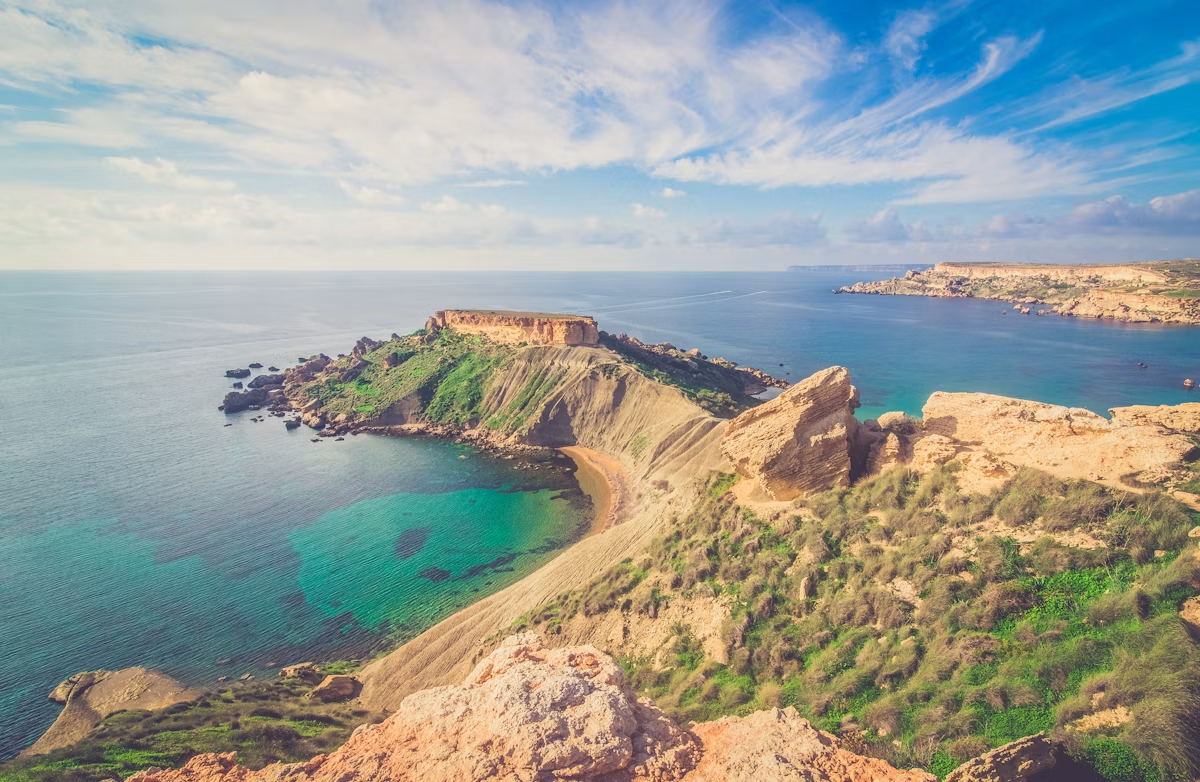
Comino, a nearly uninhabited island between Malta and Gozo, holds the Blue Lagoon, a turquoise-water anchorage that draws day-trip boats throughout summer and empties almost entirely once the last boat leaves in the late afternoon.
Day Trips and Side Excursions
Gozo Island (25 minutes by ferry from Ċirkewwa)
A slower-paced island with Neolithic temples, a medieval citadel, and coastal scenery distinct from the main island.
Blue Lagoon, Comino (45 minutes by day-trip boat)
A crystal-clear turquoise lagoon best experienced early morning before day-trip crowds arrive.
Mdina, the Silent City (30 minutes by bus from Valletta)
A walled medieval hilltop town that served as Malta’s original capital, with narrow car-free streets and sweeping coastal views.
Food in Malta
Maltese food blends Italian, North African, and British influences alongside the island’s own culinary traditions.
- Pastizzi: Flaky ricotta or mushy-pea filled pastry parcels, a ubiquitous Maltese snack sold at village bakeries. €0.50–€1 each
- Braġjoli: Beef olives stuffed with breadcrumbs, egg, and herbs in a tomato sauce, a traditional Maltese home-cooking dish
- Fresh fish: Sea bass, swordfish, and lampuki (dolphinfish) caught locally, served grilled at harbor restaurants across both islands
- Maltese bread (ħobż): Dense, chewy sourdough loaves often paired with bigilla (black bean paste) or tomato paste and olive oil
- Kinnie: A distinctly bitter orange and aromatic herb soft drink unique to Malta, sold alongside wine and local beers
Where to Stay
Budget (€30–€55/night)
Hostels and budget guesthouses in Valletta and Sliema.
Mid-Range (€70–€140/night)
Boutique hotels in Valletta or sea-view hotels in St. Julian’s — the standard Malta travel guide accommodation tier.
Upscale (€180–€450+/night)
Converted Baroque palaces in Valletta and five-star resorts in the Mellieħa Bay area.
Getting Around Malta
Buses: Malta’s bus network covers most sights on the main island, with Valletta as the central hub; slow but cheap.
Ferry: The Gozo Channel Company runs regular car and passenger ferries to Gozo from Ċirkewwa in the north of Malta.
Rental car or taxi: Useful for reaching the southern temples, Mdina, and outlying coastal areas more quickly than the bus network allows.
Daily Budget Breakdown
| Category | Frugal | Comfortable |
|---|---|---|
| Accommodation | €40 | €110 |
| Food | €20 | €50 |
| Transport (buses and ferries) | €8 | €25 |
| Activities and entry fees | €10 | €30 |
| Daily Total | ~€78 / $84 | ~€215 / $231 |
Final Verdict: Malta Travel Guide 2026
Malta rewards five to seven days, since splitting time between the main island, Gozo, and a Blue Lagoon day trip accounts for at least three separate days before even beginning to explore Valletta thoroughly. The ideal Malta travel guide itinerary spends two days in and around Valletta including a Mdina day trip, a third day at the southern megalithic temples, a fourth day on Gozo for the Citadella and Dwejra, and a fifth day at the Blue Lagoon. Travelers should book Blue Lagoon boat trips in advance during July and August, as the most popular departure times sell out, and consider arriving at the lagoon by the first morning boat to beat the midday crowds.