
Bhutan travel guide readers usually expect a bureaucratic, overpriced mystery and instead find the world’s last Himalayan Buddhist kingdom, a country that measures national success by Gross National Happiness, limits tourist numbers through a daily sustainable development fee, and requires all foreign visitors to book through a licensed Bhutanese tour operator. Bhutan, landlocked between India and China in the eastern Himalayas, protects over 70 percent of its land under forest cover and has remained carbon-negative by policy since its founding. This Bhutan travel guide covers Tiger’s Nest monastery, the dzong fortresses, trekking, food, and a full budget breakdown for 2026.
At a Glance
| Country | Bhutan |
| Currency | Bhutanese Ngultrum (BTN); Indian Rupee (INR) also accepted |
| Language | Dzongkha; English widely spoken in tourism and education |
| Best time | March–May and September–November (clear skies, comfortable temperatures, best mountain views) |
| Avoid | June–August (monsoon season with heavy rain and trail closures) |
| Daily budget (all-in) | $200+ (mandatory Sustainable Development Fee of $100/day for most nationalities, plus tour and accommodation costs) |
| Visa | Bhutan visa required; only obtainable through a licensed Bhutanese tour operator in advance |
| Getting there | Paro International Airport via Delhi, Mumbai, Bangkok, Singapore, or Kolkata with Druk Air or Bhutan Airlines |
| Getting around | Tour-operator-arranged transport; all travel within Bhutan done through licensed guides |
Tiger’s Nest and the Paro Valley
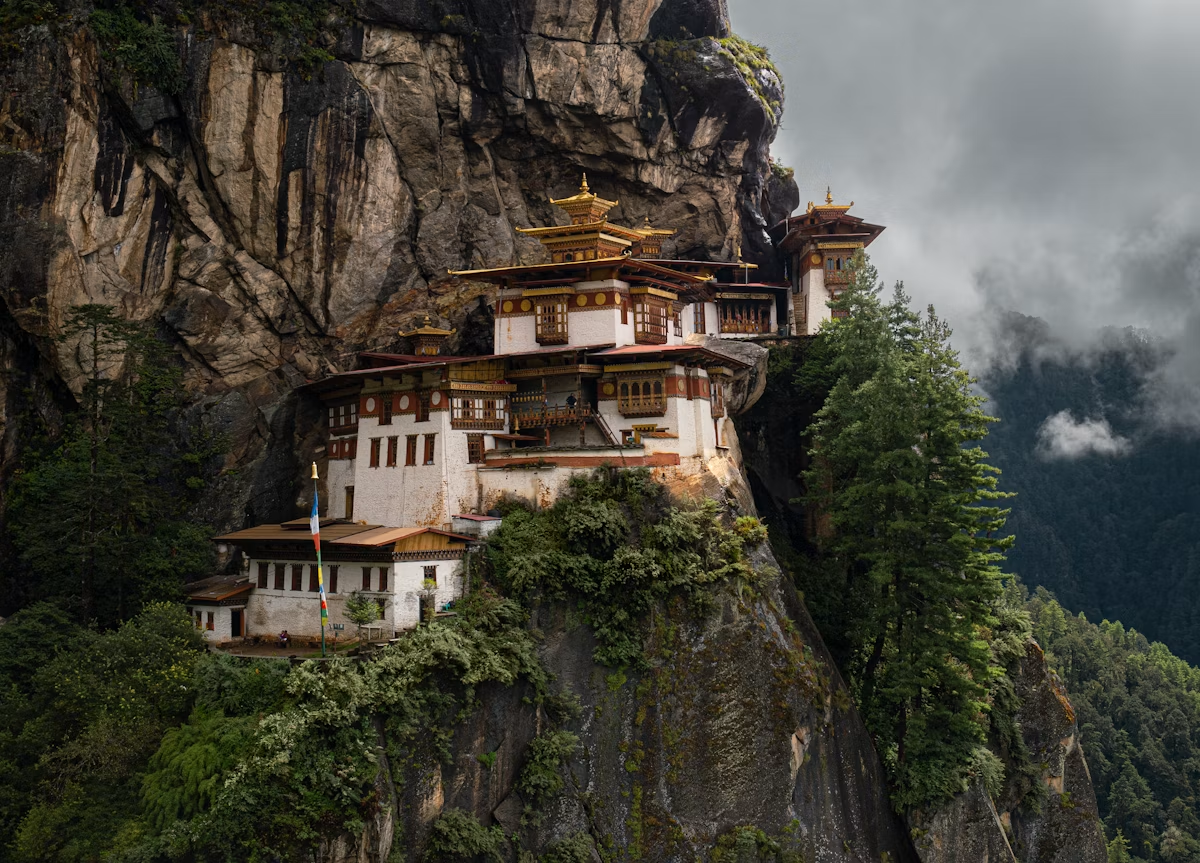
Bhutan travel guide itineraries almost universally begin and end in Paro, the only city in Bhutan with an international airport, and the starting point for the hike to Taktsang Monastery, universally known as Tiger’s Nest. The monastery, built on a sheer cliff face at 3,120 meters, takes two to three hours to reach on foot and is considered one of the most sacred Buddhist sites in the Himalayan world.
The Paro valley holds several additional sites within easy reach of town, including the National Museum of Bhutan, Rinpung Dzong beside the river, and a series of smaller monasteries and temples dotting the hillsides above the valley floor.
Dzong Fortresses and the Punakha Valley
Bhutan’s dzongs — fortress-monasteries that served historically as administrative and religious centers — remain the country’s most distinctive architectural feature and are still in active use. Punakha Dzong, built at the confluence of two rivers in 1637 and ringed by jacaranda trees in bloom during spring, is widely considered the most beautiful dzong in the country.
The drive between Thimphu and Punakha crosses the Dochula Pass at 3,100 meters, where 108 chortens (memorial stupas) stand against Himalayan peaks on clear days, making it one of the most photographed viewpoints in the country.
Day Trips and Side Excursions
Dochula Pass (1 hour drive from Thimphu)
A high mountain pass with 108 memorial stupas and panoramic Himalayan views on clear days.
Punakha Valley (2 hours from Thimphu)
Home to Punakha Dzong and several suspension bridges, with easy half-day hikes along the river.
Haa Valley (2.5 hours from Paro)
A less-visited valley with traditional Bhutanese villages, accessible on the standard tour circuit.
Food in Bhutan
Bhutanese food revolves heavily around chili peppers, used not as a seasoning but as a main vegetable, and dairy products from the country’s highland yaks and cattle.
- Ema datshi: A thick stew of green or dried chili peppers with soft melted yak cheese, Bhutan’s national dish. Served at virtually every meal
- Phaksha paa: Pork slow-cooked with dried red chilies and radishes, a common meat dish across the country
- Red rice: A nutty, slightly chewy Bhutanese variety of rice with more nutritional content than white rice, the staple grain at every meal
- Jasha maroo: A spiced minced chicken dish cooked with ginger, garlic, and onion, one of the milder options for visitors unused to Bhutanese spice levels
- Butter tea (suja): Salty yak-butter tea, the traditional daily beverage of Bhutanese highlands
Where to Stay
Budget / Guesthouse (from $80/night)
Small family-run guesthouses in Paro and Thimphu; most are included in tour packages.
Mid-Range ($150–$300/night)
Comfortable lodges and heritage hotels near major sites — the standard Bhutan travel guide accommodation tier.
Upscale ($600–$2,500+/night)
Amankora, Six Senses, and COMO Uma Paro offer ultra-luxury lodge experiences across the country’s main valleys.
Getting Around Bhutan
Tour vehicle: All movement within Bhutan for foreign visitors is arranged through a licensed tour operator and included in the tour package cost.
Hiking: The Tiger’s Nest hike and several other trails require walking under your own power, with a horse available for the first section of the Tiger’s Nest route for those who prefer it.
Domestic flights: Bhutan Airlines and Druk Air operate limited domestic routes between Paro and Bumthang for travelers heading further east.
Daily Budget Breakdown
| Category | Cost |
|---|---|
| Sustainable Development Fee (mandatory) | $100/day |
| Licensed tour guide and transport (tour package) | $80–$120/day |
| Accommodation (mid-range, often included in tour) | $80–$150/night |
| Meals (often included in tour packages) | $30–$60/day |
| Estimated All-In Daily Total | $250–$450+/day |
Final Verdict: Bhutan Travel Guide 2026
Bhutan rewards five to seven days, since the mandatory tour structure means a short trip still requires significant planning and upfront cost, and the country’s main valleys — Paro, Thimphu, Punakha, and Bumthang — each deserve at least a full day without rushing. The ideal Bhutan travel guide itinerary spends a day and a half in Paro including the Tiger’s Nest hike, two days in Thimphu and the Dochula Pass, and a full day in Punakha before returning to Paro for the flight out. Travelers should book at least three to four months in advance, since visa approval through a licensed tour operator takes time and popular spring and autumn slots fill early with trekking groups and festival visitors.