
Wadi Rum travel guide readers usually expect a detour from Petra and instead find one of the most otherworldly landscapes on earth, a protected desert valley in southern Jordan where sandstone mountains rise in towering rust-red columns from a sand floor that turns violet at dusk and black-orange at dawn. Wadi Rum, designated a UNESCO World Heritage site in 2011 for both its natural scenery and its ancient rock carvings, has served as the filming location for films meant to portray Mars, and its silence and scale attract travelers specifically seeking to sleep under one of the world’s darkest and most star-filled night skies. This Wadi Rum travel guide covers jeep tours, Bedouin camps, stargazing, rock climbing, and a full budget breakdown for 2026.
At a Glance
| Country | Jordan |
| Currency | Jordanian Dinar (JOD); $1 ≈ 0.71 JOD |
| Language | Arabic; English spoken widely in tourism |
| Best time | March–May and September–November (comfortable temperatures; summer exceeds 40°C) |
| Avoid | July–August midday heat; January–February for cold nights |
| Daily budget (basic camp) | $80–$130/day (includes camp, jeep tour, meals) |
| Daily budget (luxury dome) | $250–$500+/day |
| Visa | Jordan Pass includes visa fee + Wadi Rum entry (strongly recommended for tourists combining Petra + Wadi Rum) |
| Getting there | 4–5 hours by car from Amman, 1 hour from Petra (Wadi Musa). Buses to Wadi Rum village, then camp pickup |
| Getting around | Organized jeep tours from local operators; walking, camel rides, and rock climbing with guides |
Jeep Tours and the Desert Landscape
Wadi Rum travel guide itineraries center on half-day and full-day jeep tours, the primary way to access the valley’s most significant geological formations and ancient sites, since most require a 4WD vehicle to reach across soft sand. The standard tour circuit includes Lawrence’s Spring, the natural arch at Burdah Rock, and the sand dunes at Um Sabatah, with longer routes extending to the Anfashieh inscriptions and the Seven Pillars of Wisdom ridge made famous by T.E. Lawrence’s memoir.
The color of Wadi Rum shifts dramatically throughout the day, from pale gold in the morning to deep rust-red at midday to violet and pink as the sun drops behind the sandstone massifs, making an overnight stay with a full sunset and sunrise experience worth considerably more than a day trip in from Petra.
Bedouin Camps and Stargazing
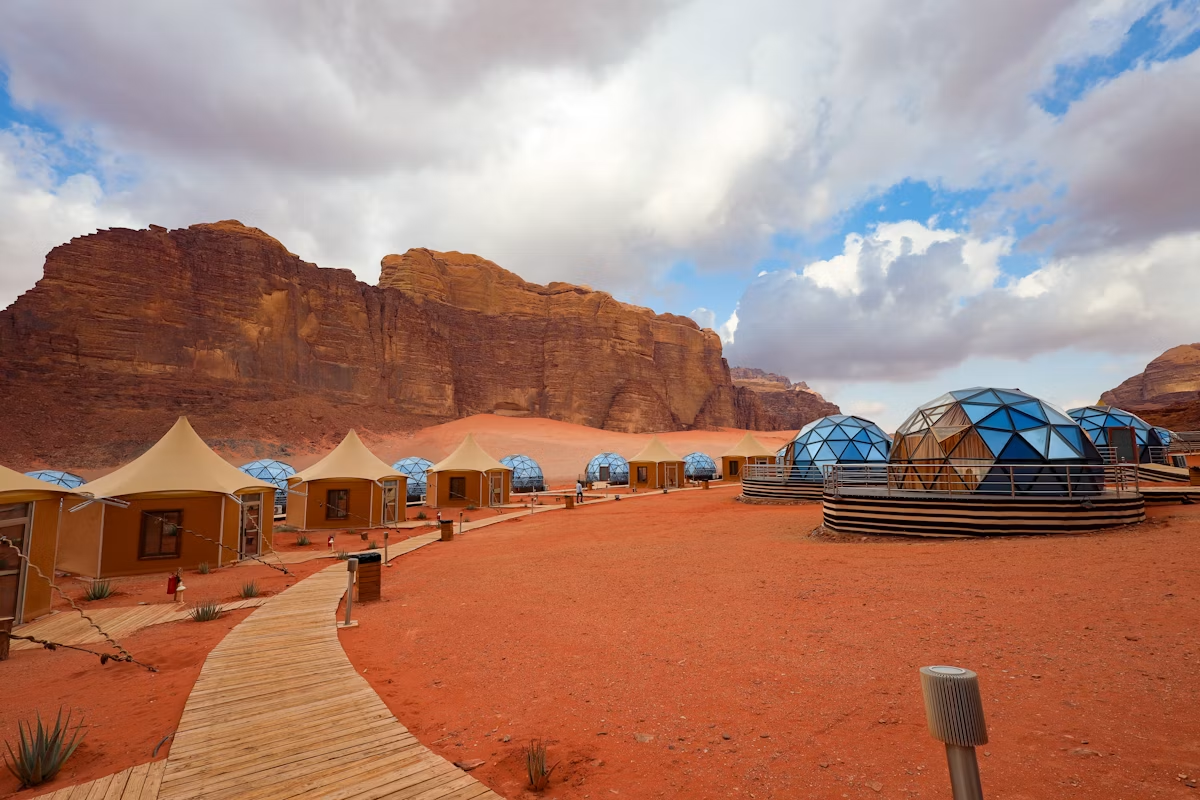
The desert camp industry in Wadi Rum ranges from basic Bedouin tents with shared facilities for $50–$80 per person including dinner and breakfast to luxury transparent bubble tents and geodesic domes with en-suite bathrooms and climate control for $300–$600+ per night. Most travelers camp one or two nights, since the differences between camps are significant and the star-viewing experience — with no light pollution for hundreds of kilometers in most directions — is exceptional regardless of camp category.
Camps provide dinner and breakfast by default, typically a Bedouin zarb (slow-cooked meat and vegetables buried in a sand oven) in the evening and flatbreads with tea in the morning.
Day Trips and Side Excursions
Petra (1–1.5 hours by car from Wadi Rum)
Jordan’s most famous archaeological site, the Nabataean rose-red city, is the most natural day-trip partner. Most visitors combine both into a Jordan itinerary of three to five days.
Aqaba (1 hour by car)
Jordan’s only coastal city on the Red Sea, with snorkeling, diving, and beach options. A practical overnight before or after a Wadi Rum stay for travelers flying in or out of Aqaba Airport.
Camel Trek (half-day or full-day from camp)
A slower, quieter way to experience the desert between the jeep-accessible highlights.
Food in Wadi Rum
Wadi Rum is a remote desert protected area, so food options are almost entirely confined to what camps provide.
- Zarb: Slow-cooked lamb or chicken with rice and vegetables sealed in a metal container buried in hot coals underground — Wadi Rum’s signature meal, served by most camps as dinner
- Flatbread and tea: A traditional Bedouin morning offering, typically served with olive oil, labneh (strained yogurt), and local honey
- Bedouin tea (shay): Heavily sweetened black tea with sage or cardamom, offered throughout the day at every camp and after jeep-tour stops
- Dates and local snacks: Most Wadi Rum camp operators offer dates and fresh fruit as afternoon arrivals settle in
Note: there is no independent restaurant in the Wadi Rum valley interior. Supplies can be purchased at the village near the main visitor center, but camp food packages cover most traveler needs.
Where to Stay
Budget (from $60/person/night)
Basic Bedouin tents with shared toilets, shared dinner and breakfast included; sufficient for the star-viewing experience.
Mid-Range ($120–$200/night)
Private tents or small stone cabins with en-suite facilities and more comfortable beds — the standard Wadi Rum travel guide camp tier.
Upscale ($280–$600+/night)
Transparent bubble domes, luxury geodesic tents, and sky suites with panoramic desert views and private stargazing setups.
Getting Around Wadi Rum
Jeep tours: The primary transport within the protected area; organized by camp operators or the Wadi Rum visitor center. Half-day tours run 2–3 hours, full-day tours 6–8 hours.
Camel treks: A popular alternative for shorter distances between formations, arranged through camp operators.
Walking and scrambling: Many rock features can be reached on foot within a few hundred meters of jeep tracks, and some climbing routes require guided technical ascents.
Daily Budget Breakdown
| Category | Basic | Comfortable | Luxury |
|---|---|---|---|
| Camp (incl. dinner + breakfast) | $65 | $140 | $350 |
| Jeep tour (half-day) | $35 | $60 | $60 |
| Entry fee (Jordan Pass) | included | included | included |
| Extras (camel, tea) | $10 | $20 | $30 |
| Daily Total | ~$110 | ~$220 | ~$440+ |
Final Verdict: Wadi Rum Travel Guide 2026
Wadi Rum rewards one to two nights, since the sunset, the overnight stargazing, and the sunrise together justify the stay more than any additional day tour does, and the core jeep-tour circuit can be covered in a full day. The ideal Wadi Rum travel guide itinerary arrives in the late afternoon to catch the sunset colors on the sandstone, sleeps one night in a desert camp to experience the dark-sky stargazing, and completes a half-day jeep tour the following morning before continuing to Aqaba or returning to Petra. Travelers should pre-book camp accommodation two to four weeks in advance during March through May and September through October, since popular mid-range and luxury camps fill quickly in peak season.