
Bangkok is one of Southeast Asia’s most visited cities — and one of the most disorienting to navigate for first-time visitors. The city sprawls across both banks of the Chao Phraya River, with no single obvious center. Neighborhoods vary wildly in price, atmosphere, and proximity to the things most tourists come to see. Choosing the right base makes the difference between a smooth, enjoyable trip and hours lost in traffic. This guide breaks down the best areas to stay in Bangkok for every type of traveler.
At a Glance
| Country | Thailand |
| Currency | Thai Baht (THB) — ~35 THB per $1 USD |
| Language | Thai; English widely spoken in tourist areas |
| Best time to visit | November–February (cool, dry season) |
| Avoid | April (hottest month), September–October (heavy rain) |
| Airport | Suvarnabhumi (BKK) — main international gateway |
| City transport | BTS Skytrain, MRT Subway, river boats, Grab |
| Visa | 60-day visa exemption for most Western nationalities |
Why Neighborhood Choice Matters in Bangkok
Bangkok’s traffic is legendary — and not in a good way. A journey that looks like 5 km on a map can take 45 minutes by taxi during rush hour. Staying near a BTS Skytrain or MRT station is the single most important factor in choosing accommodation. Without it, you’ll spend a significant portion of your trip sitting in gridlock.
The good news: Bangkok has excellent elevated rail coverage across its most tourist-friendly neighborhoods. Stick to areas along the BTS Sukhumvit, BTS Silom, or MRT lines and you’ll have the entire city within 30–40 minutes at all times.
Best Areas to Stay in Bangkok — By Neighborhood
1. Sukhumvit — Best Overall for First-Time Visitors
Price range: ฿800–฿5,000/night ($22–$140 USD) BTS stations: Nana, Asok, Phrom Phong, Thong Lo, Ekkamai Best for: First-timers, mid-range travelers, nightlife, food
Sukhumvit is Bangkok’s most internationally oriented neighborhood and one of the best areas to stay in Bangkok for visitors arriving for the first time. The BTS Sukhumvit line runs the full length of the area, meaning you can reach almost anywhere in the city with one or two stops. The neighborhood is dense with hotels at every price point, international restaurants, rooftop bars, shopping malls (Terminal 21, EmQuartier, Emporium), and 24-hour convenience stores.
Lower Sukhumvit (Soi 1–21): More touristy, higher concentration of budget and mid-range hotels, backpacker bars, and street food. Nana and Asok stations are the most convenient.
Mid Sukhumvit (Soi 21–49): Quieter, more upscale, popular with expats and business travelers. Phrom Phong station gives direct access to the Emporium and EmQuartier malls.
Upper Sukhumvit (Thong Lo, Ekkamai): Bangkok’s trendiest neighborhood. Boutique hotels, high-end restaurants, independent coffee shops. A slightly longer ride from the main tourist sites but worth it for the atmosphere.
Pros:
- Unbeatable BTS connectivity
- Every type of accommodation available
- Huge variety of food — Thai, Japanese, Korean, Western, street food all within walking distance
- Grab (ride-hailing) pickups are fast and reliable here
Cons:
- Far from historic sites (Grand Palace, Wat Pho) — expect 30–40 min each way
- Lower Sukhumvit can feel hectic and overtouristy
- Prices slightly higher than other areas for equivalent quality
2. Silom & Sathorn — Best for Business and Upscale Stays
Price range: ฿1,200–฿8,000/night ($34–$220 USD) BTS stations: Sala Daeng, Chong Nonsi, Saint Louis MRT stations: Silom, Lumphini Best for: Business travelers, luxury stays, couples
Silom is Bangkok’s financial district by day and one of its most vibrant entertainment zones by night. The area along Silom Road houses Bangkok’s highest concentration of five-star hotels — the Mandarin Oriental (just across the river), Capella, Rosewood, and Banyan Tree are all within a short ride. The BTS and MRT both serve this area, and the Chao Phraya river express boats stop at Sathorn Pier, giving direct access to the riverside temples.
Why it works for tourists: Sathorn Pier is the most convenient jumping-off point for Wat Pho, Wat Arun, and the Grand Palace — a 10-minute river boat ride rather than a 40-minute taxi in traffic.
Pros:
- Fastest access to Bangkok’s major riverside temples and attractions
- Some of Bangkok’s best fine dining and rooftop bars (Sky Bar at Lebua is here)
- Less chaotic than Sukhumvit
- Strong BTS and MRT coverage
Cons:
- Business district feel — quieter on weekends
- Fewer budget options compared to Sukhumvit or Khaosan
- Limited street food scene
3. Khaosan Road Area (Banglamphu) — Best for Budget Travelers
Price range: ฿300–฿1,500/night ($8–$42 USD) Transport: No BTS/MRT — rely on taxis, tuk-tuks, or river boats Best for: Backpackers, solo travelers, short stays
Khaosan Road is Bangkok’s most famous backpacker street — a chaotic, neon-lit strip of hostels, street food vendors, travel agencies, and bars that never fully closes. Accommodation here is the cheapest in central Bangkok, and the area is walking distance from the Grand Palace, Wat Pho, and Wat Saket.
The major downside is transport. Khaosan sits in the old city, away from the BTS and MRT lines. Getting to Sukhumvit or Silom requires a taxi or tuk-tuk, which means navigating Bangkok’s traffic. For sightseeing around the historic district it’s ideal; for exploring the rest of the city it’s less convenient.
Pros:
- Cheapest accommodation in central Bangkok
- Walking distance to Grand Palace, Wat Pho, Wat Saket
- Strong traveler community — easy to meet other tourists
- River boat access from Phra Athit Pier
Cons:
- No BTS or MRT access
- Noisy until 2–3 AM on busy nights
- Heavy tourist trap atmosphere on the main strip
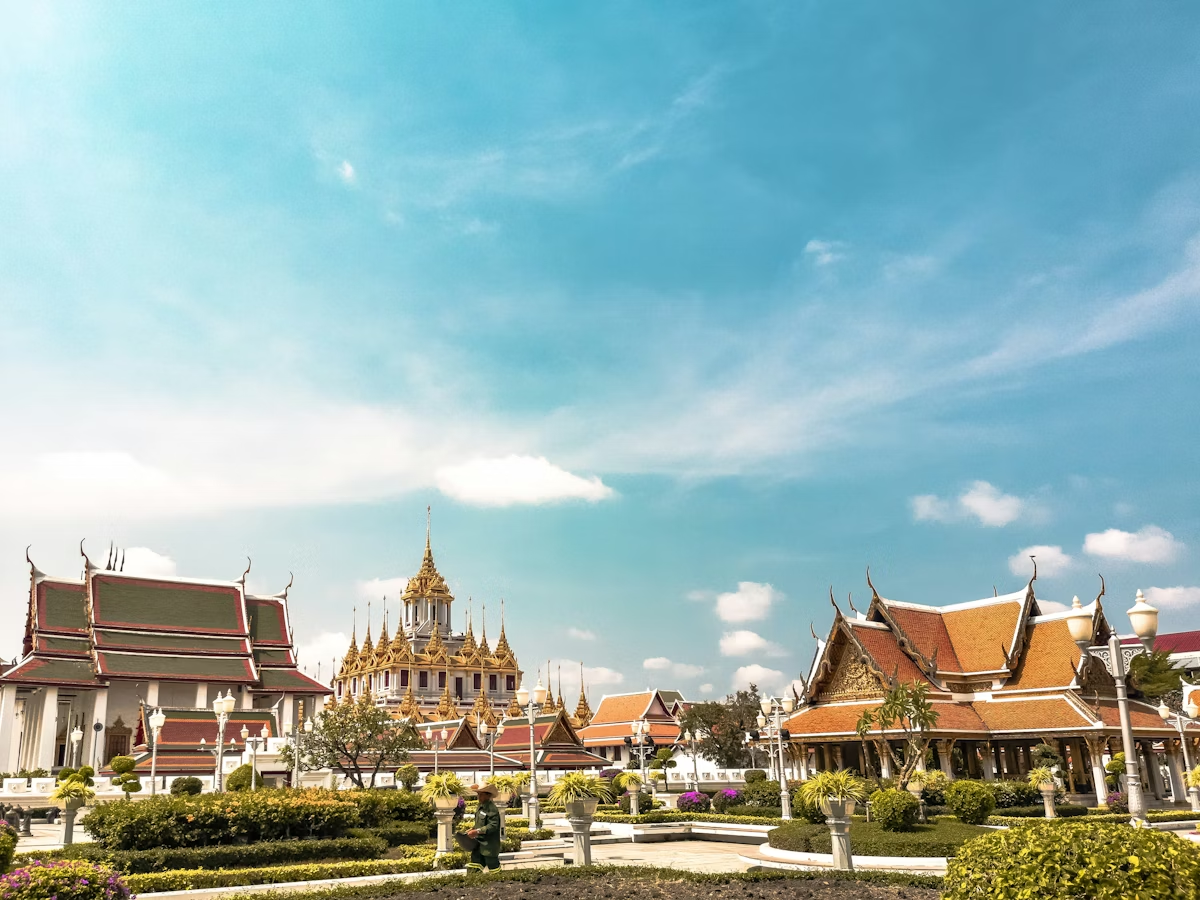
이미지 표시 Photo by Redd Francisco on Unspla
4. Riverside (Charoen Krung) — Best for Atmosphere and Boutique Hotels
Price range: ฿1,500–฿10,000/night ($42–$280 USD) Transport: River boats, MRT (Hua Lamphong), taxi Best for: Couples, repeat visitors, boutique hotel seekers
The Chao Phraya riverside has undergone significant transformation over the past five years. The Charoen Krung neighborhood — Bangkok’s oldest district — is now home to a cluster of boutique hotels, art galleries, independent restaurants, and creative spaces inside repurposed heritage buildings. The ICONSIAM mall on the opposite bank and the Mandarin Oriental (one of Asia’s most historic hotels) anchor the area’s upscale end.
For travelers who’ve already done the standard Bangkok itinerary and want a more atmospheric, less generic experience, the riverside is the most interesting place and among the best areas to stay in Bangkok right now.
Pros:
- Most atmospheric neighborhood in Bangkok — genuine local character
- River boat access is fast and scenic
- Some of Bangkok’s best boutique hotels at reasonable prices
- Walking distance to Chinatown (Yaowarat) — Bangkok’s best street food strip
Cons:
- Further from BTS — taxi or river boat required for most journeys
- Fewer convenience stores and facilities than Sukhumvit
- Can feel isolated at night
Practical Tips for Getting Around Bangkok
BTS Skytrain and MRT Subway
Bangkok’s elevated rail network is the fastest and most reliable way to move around the city. A single BTS journey costs ฿17–฿59 ($0.50–$1.70) depending on distance. Buy a Rabbit Card (BTS stored-value card, ฿50 deposit) at any BTS station — it works across all BTS lines and is accepted on some buses.
The MRT Blue Line covers areas the BTS doesn’t, including Chatuchak Market, Chinatown, and Lumphini Park. A separate stored-value card is required for the MRT.
Both lines operate from approximately 06:00 to midnight daily.
Grab (Ride-Hailing)
Grab is the dominant ride-hailing app in Bangkok and is significantly more reliable than street taxis for tourists. Fares are fixed upfront, drivers are rated, and the app works in English. Download it before arrival. For trips outside BTS coverage (Khaosan Road, riverside neighborhoods), Grab is the practical solution.
River Boats
The Chao Phraya Express Boat is one of Bangkok’s most underused transport options. The orange-flag boats run between Nonthaburi in the north and Sathorn Pier in the south, stopping at all major riverside attractions. A single journey costs ฿15–฿40. It’s significantly faster than road transport during peak hours and gives views of the riverside temples that no other transport option can match.
SIM Cards and Payment
Pick up a tourist SIM at Suvarnabhumi Airport arrivals hall. AIS and DTAC both offer 30-day unlimited data packages for ฿299–฿399 (~$8–$11). Credit and debit cards are accepted at hotels, malls, and chain restaurants. Street food, markets, and smaller local restaurants are cash-only — keep ฿500–฿1,000 on hand at all times.
Neighborhood Comparison Table
| Area | Best For | Budget/Night | BTS/MRT Access | Historic Sites |
|---|---|---|---|---|
| Sukhumvit | First-timers, all-round | ฿800–฿5,000 | Excellent | 30–40 min |
| Silom/Sathorn | Luxury, business | ฿1,200–฿8,000 | Excellent | 15 min (boat) |
| Khaosan/Banglamphu | Budget, backpackers | ฿300–฿1,500 | None | Walking distance |
| Riverside/Charoen Krung | Atmosphere, boutique | ฿1,500–฿10,000 | Limited | 10 min (boat) |
Final Verdict: Best Areas to Stay in Bangkok
For most first-time visitors, Sukhumvit is the safest and most practical choice — the BTS connectivity alone justifies it. Travelers prioritizing access to temples and historic sites should consider Silom/Sathorn for the river boat connection, or Khaosan if budget is the primary concern.
Return visitors and travelers looking for something beyond the standard tourist circuit will find the Riverside/Charoen Krung area the most rewarding — it captures a side of Bangkok that the Sukhumvit corridor simply doesn’t offer. These are truly the best areas to stay in Bangkok depending on your travel style, and understanding the differences before you book makes every day of your trip more efficient.