
Tokyo has a reputation as one of Asia’s most expensive cities — and for flights, dining, and attractions, that reputation is partly earned. But accommodation is a different story. Tokyo’s budget hotel scene is one of the best-developed in the world, ranging from immaculate capsule hotels and well-designed hostels to clean business hotels that consistently outperform their price point. Knowing where to look and which neighborhoods to prioritize makes finding the best budget hotels in Tokyo entirely achievable for most travelers.
At a Glance
| Country | Japan |
| Currency | Japanese Yen (JPY) — ~150 JPY per $1 USD |
| Language | Japanese; English signage in tourist areas |
| Best time to visit | March–May (cherry blossom), Oct–Nov (autumn foliage) |
| Airports | Narita (NRT) and Haneda (HND) |
| City transport | JR trains, Tokyo Metro, buses — world-class system |
| Budget hotel range | ¥3,000–¥8,000/night ($20–$55 USD) |
| Visa | Visa-free for most Western and East Asian nationalities |
What to Expect from Tokyo Budget Accommodation
Budget in Tokyo means something different than budget in Southeast Asia. A ¥5,000/night ($33) room in Tokyo will be spotlessly clean, have a private or shared bathroom that meets Japanese cleanliness standards, reliable Wi-Fi, and likely a vending machine floor. The trade-off is usually room size — Tokyo budget hotels are small, sometimes very small. Capsule hotels are the extreme end of this, but even standard budget business hotels average 10–14 sqm per room.
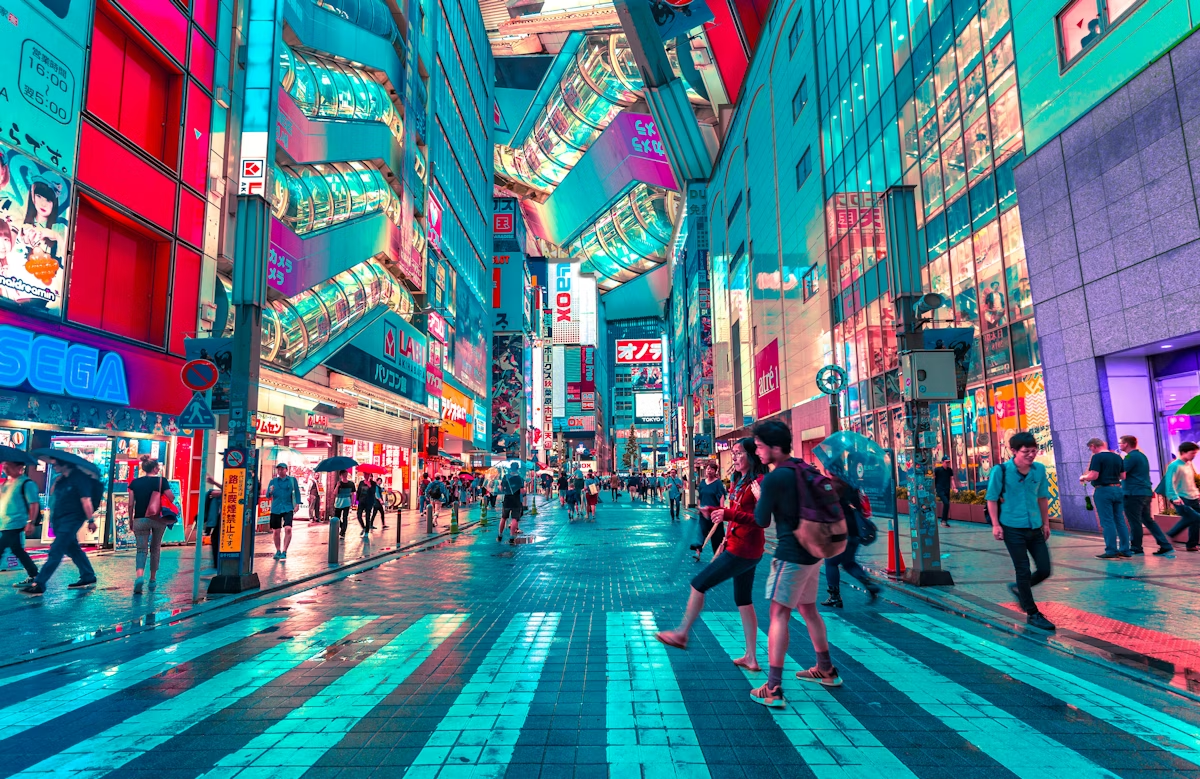
Photo by Jezael Melgoza on Unsplash
For most travelers, this is a reasonable trade — you’re in Tokyo to be out in the city, not sitting in your room. A well-located budget hotel near a major train station covers all the bases.
Best Neighborhoods for Budget Hotels in Tokyo
Shinjuku — Best Overall for Budget Stays
Shinjuku Station is the world’s busiest train station, connecting virtually every line in the city. Staying here means no journey in Tokyo takes longer than 30–40 minutes. The area around East Shinjuku (Kabukicho side) has the highest concentration of budget business hotels and capsule hotels in the city, while West Shinjuku houses more upscale options. Budget business hotels here typically run ¥4,000–¥7,000/night ($27–$47).
Top picks in this area:
- Keio Presso Inn Shinjuku — clean, reliable, well-located
- Dormy Inn Shinjuku — slightly above budget but includes communal onsen bath; excellent value
- 9h (Nine Hours) Shinjuku — best capsule hotel in the area; designed for modern travelers
Asakusa — Best for Budget + Culture
Asakusa is Tokyo’s most traditional neighborhood — Senso-ji Temple, rickshaws, kimono rental shops, and old-school izakayas define the area. It’s also one of the best neighborhoods for budget accommodation, with a long-established guesthouse and hostel scene catering to international travelers. The Asakusa and Asakusa-bashi areas have some of Tokyo’s best-value private rooms for ¥3,500–¥6,000/night.
Top picks in this area:
- Khaosan Tokyo Samurai — well-run hostel, strong social atmosphere, private rooms available
- Richmond Hotel Asakusa — reliable business hotel, excellent Senso-ji proximity
- BnA Alter Museum — art hotel concept with affordable rooms; genuinely unique
Akihabara & Ueno — Best for Transport Connections
The corridor between Akihabara and Ueno sits on the JR Yamanote Line and gives fast access to Tokyo Station, Shinjuku, Shibuya, and both airports (Narita via Keisei Skyliner from Ueno, Haneda via Keikyu from nearby stations). Budget business hotels here tend to be slightly cheaper than Shinjuku equivalents.
Top picks in this area:
- APA Hotel Akihabara-Ekimae — APA is Japan’s most reliable budget business hotel chain; clean, no surprises
- Smile Hotel Ueno — well-priced, good breakfast option, easy airport access
- Grids Tokyo Ueno Hostel — best hostel in the area, excellent common spaces
Types of Budget Accommodation in Tokyo
Capsule Hotels
The original Japanese space-saving solution. A private sleeping pod (roughly 2m x 1m x 1.2m) with a curtain or hard shell door, internal lighting, and a power outlet. Bathrooms and showers are communal. Prices: ¥3,000–¥5,000/night ($20–$33). Modern capsule hotels (9h, First Cabin) have elevated the format significantly — think pod hotels rather than coffin-in-a-wall.
Best for: Solo travelers, short stays, travelers arriving late who just need somewhere clean to sleep.
Budget Business Hotels
Japan’s budget business hotel chains (APA, Toyoko Inn, Dormy Inn, Super Hotel) represent some of the best value accommodation in the world. Rooms are small (10–14 sqm) but immaculate. Most include vending machines, laundry facilities, and basic breakfast. Wi-Fi is universally fast and free. Prices: ¥4,500–¥8,000/night ($30–$53).
Best for: Couples, travelers wanting a private room, anyone prioritizing cleanliness and reliability.
Hostels
Tokyo’s hostel scene has improved dramatically over the past decade. Modern hostels in Asakusa, Shinjuku, and Shibuya now offer well-designed private rooms alongside dormitory beds, with strong common areas and knowledgeable staff. Dormitory beds run ¥2,500–¥4,000/night ($17–$27); private rooms ¥5,000–¥9,000 ($33–$60).
Best for: Solo travelers, social atmosphere, flexible check-in/out policies.
How to Book the Best Budget Hotels in Tokyo
Book Early for Peak Seasons
Tokyo’s cherry blossom season (late March – early April) and Golden Week (late April – early May) see accommodation prices double or triple across all categories. For these periods, book 2–3 months in advance. The rest of the year, 2–4 weeks ahead is generally sufficient.
Use These Booking Platforms
- Booking.com — widest selection, free cancellation options widely available
- Jalan / Rakuten Travel — Japanese platforms with exclusive local deals (use Google Translate)
- Hostelworld — best for hostels specifically
What to Look for in Reviews
For Tokyo budget hotels, prioritize reviews mentioning: cleanliness (non-negotiable), proximity to train station (aim for under 5 minutes walk), and check-in flexibility (many Tokyo hotels have strict 3 PM check-in; important if arriving early by Shinkansen or plane).
Practical Tips for Getting to and Around Tokyo
From Narita Airport (NRT)
- Narita Express (N’EX): ¥3,070 to Shinjuku (~90 min). Most convenient for central Tokyo.
- Keisei Skyliner: ¥2,520 to Ueno (~41 min). Fastest option for east-side neighborhoods.
- Limousine Bus: ¥3,200 to major hotels. Convenient with heavy luggage; slower in traffic.
From Haneda Airport (HND)
- Keikyu Line: ¥300–¥650 to central Tokyo (30–40 min). Cheapest and fastest option.
- Tokyo Monorail: ¥500 to Hamamatsucho (~18 min), then JR connection.
Getting Around the City
Buy a Suica or Pasmo IC card at any airport station — it works on all trains, subways, and buses in Tokyo, and can be used for convenience store purchases too. Top it up with cash. A single subway journey costs ¥170–¥320 depending on distance. The 24-hour and 72-hour metro passes (¥600 / ¥1,500) are worth it if you’re moving around frequently.
Payment
Japan remains largely cash-dependent outside major tourist zones. 7-Eleven, Lawson, and FamilyMart ATMs reliably accept foreign Visa and Mastercard. Always carry ¥5,000–¥10,000 in cash for local restaurants, temples, and smaller shops.
Budget Accommodation Comparison
| Type | Price/Night | Privacy | Best For |
|---|---|---|---|
| Capsule hotel | ¥3,000–¥5,000 | Shared bath | Solo, short stays |
| Budget business hotel | ¥4,500–¥8,000 | Private room | Couples, reliability |
| Hostel dorm | ¥2,500–¥4,000 | Shared room | Budget solo travelers |
| Hostel private | ¥5,000–¥9,000 | Private room | Solo + social scene |
Final Verdict: Best Budget Hotels in Tokyo
For most first-time visitors, a budget business hotel in Shinjuku (APA, Toyoko Inn, or Dormy Inn) delivers the best combination of location, cleanliness, and value. Solo travelers comfortable with compact spaces should try a modern capsule hotel for at least one night — it’s a genuinely unique experience. The best budget hotels in Tokyo consistently outperform equivalent price points in other major cities, making Tokyo far more accessible than its reputation suggests.