
Buenos Aires is South America’s most European city — wide Haussmann-inspired boulevards, café culture that rivals Paris, a steak and wine tradition that makes every meal an event, and a tango heritage that gives the city’s evenings a different rhythm from any other metropolis in the Americas. The Buenos Aires digital nomad scene has grown significantly since Argentina’s economic volatility made USD and EUR earners extraordinarily wealthy by local purchasing power. A monthly budget of $800–$1,200 provides a quality of life in Buenos Aires that costs three times as much in comparable cities. This Buenos Aires digital nomad guide covers the neighborhoods, co-working spaces, costs, visa options, and practical details you need for 2026.
At a Glance
| Country | Argentina |
| Currency | Argentine Peso (ARS) — ~1,000 ARS per $1 USD (official rate; exchange rate fluctuates significantly) |
| Language | Spanish (Rioplatense dialect); English spoken in Palermo and co-working areas |
| Climate | Temperate — hot summers (Dec–Feb), mild winters (Jun–Aug) |
| Monthly budget (comfortable) | $800–$1,400/month |
| Monthly budget (frugal) | $600–$800/month |
| Visa | 90-day tourist visa on arrival for US, EU, UK, and most Western nationalities |
| Airport | Ezeiza International (EZE) — 35 km from Palermo |
| Co-working cost | $60–$120/month |
Why Buenos Aires Digital Nomad Life Works in 2026
The Buenos Aires digital nomad case is built primarily on purchasing power. Argentina’s currency situation has made the city remarkably affordable for anyone earning in USD, EUR, or GBP. A furnished apartment in Palermo costs $400–$700/month. A full dinner at a top-tier parrilla (steakhouse) with wine runs $20–$30. A monthly gym membership: $15–$25. A specialty coffee: $1.50–$2.50. For remote workers earning international rates, Buenos Aires offers a quality of urban life — food, culture, nightlife, architecture — that is essentially unmatched at this price point in the world.
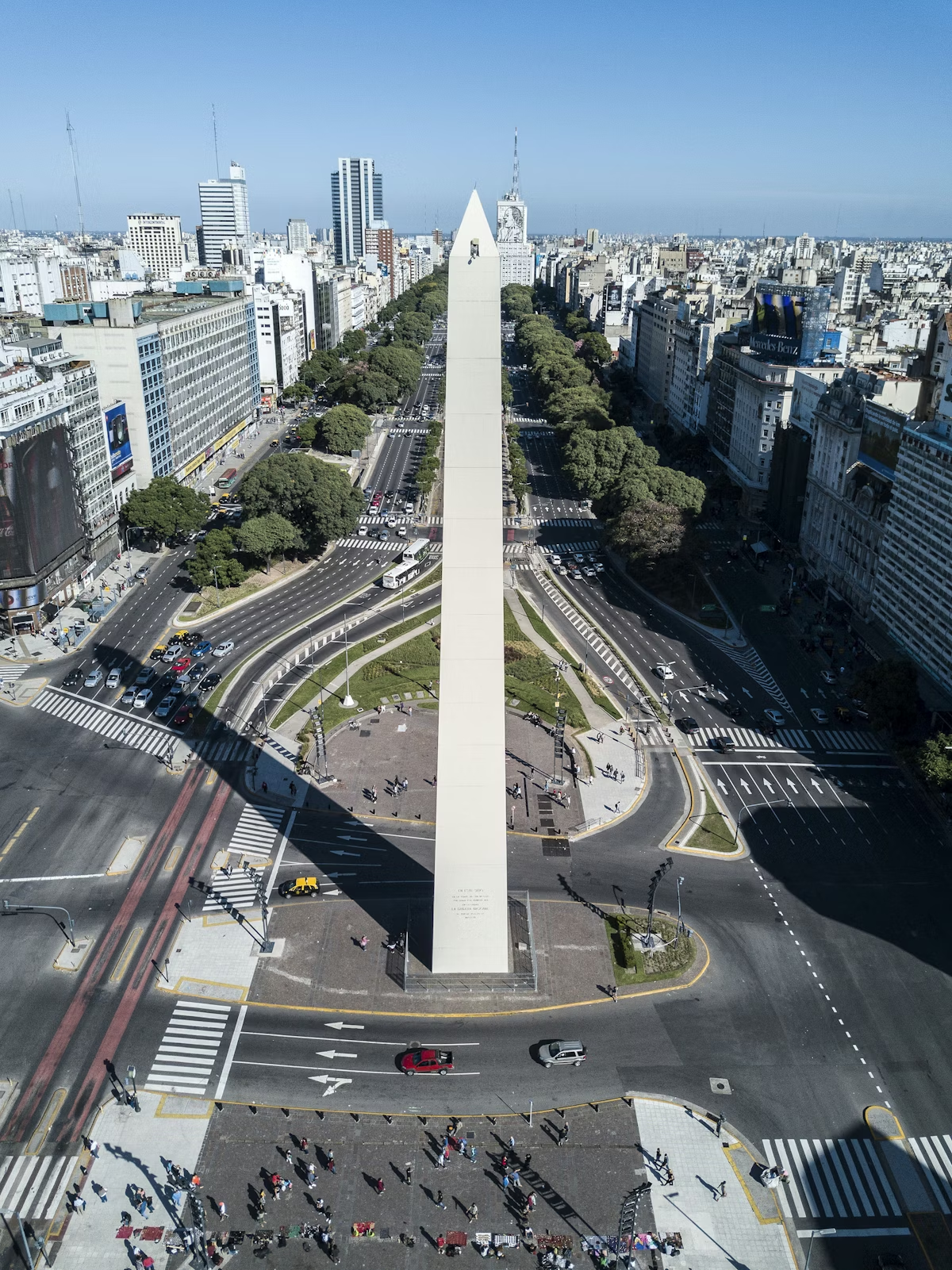
Photo by Thiago Rodrigues on Unsplash
Beyond the economics, Buenos Aires is genuinely liveable. The city has excellent public transport, world-class museums (MALBA for Latin American art, Museo Nacional de Bellas Artes for free), a restaurant scene that ranks among the best in Latin America, and a café culture — the legendary Buenos Aires confiterias — that makes remote working from beautiful 100-year-old spaces a daily possibility rather than a weekend treat.
What’s Changed in 2026
- Argentina launched a formal Digital Nomad Visa in late 2024, offering 6-month to 1-year residency for remote workers earning $2,500+/month
- The exchange rate has stabilized somewhat since 2023–2024’s peak volatility, but still significantly favors USD/EUR earners
- Palermo’s co-working scene has expanded to 20+ dedicated spaces
- Fiber internet has become standard in most Palermo and Recoleta residential buildings
Best Neighborhoods for Buenos Aires Digital Nomads
Palermo — The Buenos Aires Digital Nomad Capital
Palermo is where the Buenos Aires digital nomad community concentrates. The neighborhood — divided into Palermo Soho (boutiques, restaurants, independent cafés), Palermo Hollywood (media companies, bars, co-working spaces), and Palermo Chico (upscale residential) — offers the most walkable, café-dense environment in the city. The three main parks (Bosques de Palermo, Rosedal, Japanese Garden) provide green space that few Latin American neighborhoods match.
Monthly furnished apartment rentals in Palermo: $400–$700 for a well-located one-bedroom.
- Best for: First-time Buenos Aires digital nomad arrivals, café culture, maximum co-working access
- Key transport: Subte Line D (Palermo and Scalabrini Ortiz stations), numerous buses
Recoleta — Best for Upscale Living
Adjacent to Palermo, Recoleta is Buenos Aires’ most prestigious neighborhood — French-influenced architecture, the famous Recoleta Cemetery (where Eva Perón is buried), luxury boutiques, and the National Museum of Fine Arts (free). Slightly more expensive than Palermo but with a quieter, more refined character.
- Rent (1BR furnished): $500–$900/month
- Best for: Longer stays, premium lifestyle, culture access
San Telmo — Best for Culture and Atmosphere
Buenos Aires’ oldest neighborhood — cobblestone streets, antique dealers, milonga (tango dance halls), and the Sunday San Telmo Market. Cheaper than Palermo, more authentic in character. Less co-working infrastructure than Palermo but improving rapidly.
- Rent (1BR furnished): $300–$550/month
- Best for: Budget Buenos Aires digital nomad stays, tango culture, arts scene
Villa Crespo — Best Budget Alternative to Palermo
Directly adjacent to Palermo but 20–30% cheaper across all categories — local restaurants, neighborhood bakeries (panaderías), and genuine residential character alongside the cafés and co-working spaces that have followed the Buenos Aires digital nomad community’s expansion.
- Rent (1BR furnished): $350–$600/month
- Best for: Budget-conscious nomads wanting Palermo proximity
Best Co-Working Spaces in Buenos Aires
AreatreBA (Palermo and multiple locations)
Argentina’s largest co-working chain, AreatreBA offers multiple Buenos Aires locations with professional environments, reliable fiber (200+ Mbps), meeting rooms, and a members network that spans the local tech and startup ecosystem.
- Price: ARS 80,000–120,000/month (~$80–$120 USD) hot desk
- Best for: Full-time Buenos Aires digital nomad workers, professional networking
Regus / IWG (Multiple Locations)
International co-working standard with locations in Palermo, Microcentro, and Puerto Madero. Professional environment, 24/7 access, meeting rooms, and virtual office options.
- Price: $90–$150/month
- Best for: Corporate remote workers, international business meetings
Café-Working Culture
Buenos Aires has a world-class café-as-office culture — the traditional confiterias (Café Tortoni, Bar El Federal, Gran Café Tortoni) and modern specialty coffee shops throughout Palermo and Recoleta actively welcome laptop workers. The Buenos Aires digital nomad community uses this infrastructure extensively for flexible work arrangements.
- Price: Cost of coffee (ARS 1,500–3,000 / $1.50–$3)
Monthly Cost of Living (2026)
| Category | Budget | Mid-Range | Comfortable |
|---|---|---|---|
| Rent (1BR furnished) | $380 | $550 | $800 |
| Co-working | $0 (cafés) | $90 | $120 |
| Food & groceries | $150 | $280 | $450 |
| Transport (Subte + bus) | $20 | $40 | $70 |
| Health insurance | $40 | $80 | $150 |
| Activities / misc | $60 | $130 | $250 |
| Total (USD) | ~$650 | ~$1,170 | ~$1,840 |
Buenos Aires Food Scene
Buenos Aires food culture is built around three pillars: beef, pasta, and pastry. Any Buenos Aires digital nomad resident who engages properly with the food scene finds the daily experience extraordinary.
Essential eating for every Buenos Aires digital nomad:
- Asado / Parrilla: Argentine grilled beef — bife de chorizo (sirloin), entraña (skirt steak), vacío (flank) — at a traditional parrilla. A proper parrilla dinner with wine: $20–$35 per person at mid-range. This is the defining Buenos Aires food experience
- Empanadas: Baked or fried pastry filled with beef, chicken, ham and cheese, or spinach. ARS 500–800 each ($0.50–$0.80) from bakeries. Buenos Aires digital nomad residents eat these constantly
- Medialunas: Argentine croissants — sweeter and softer than French versions. The morning pastry at any confiteria. ARS 300–500 ($0.30–$0.50) each
- Milanesa: Breaded veal or chicken cutlet — Argentina’s comfort food. €8–€12 at any parrilla or local restaurant
- Dulce de leche: Caramelized milk spread — on everything. The national flavor
Best neighborhoods for food: Las Cañitas (upscale Palermo sub-neighborhood) for international cuisine, San Telmo for traditional parrillas, Villa Crespo for local neighborhood eating.
Visa Options for Buenos Aires Digital Nomads
90-Day Tourist Visa
Most Western nationalities enter Argentina visa-free for 90 days. Extensions of 90 days are available at the Dirección Nacional de Migraciones. The standard “visa run” to Montevideo, Uruguay (1-hour ferry, $35–$50 return) resets the 90-day clock.
Argentina Digital Nomad Visa (2026)
Argentina launched a formal digital nomad visa framework in late 2024:
- Duration: 6 months initial, renewable for up to 1 year
- Income requirement: $2,500 USD/month minimum
- Application: At Argentine consulates abroad or via online portal
- Benefits: Legal work authorization for foreign clients, path to temporary residency
For stays under 90 days, the tourist visa remains the most practical route for most Buenos Aires digital nomad visitors.
Practical Tips
Currency Exchange
Argentina’s exchange rate situation is complex. The official bank rate and the “blue dollar” (informal market rate) have historically diverged significantly. USD cash typically exchanges at a premium — exchange at official cambios (exchange houses) or through apps like Wise or Western Union for competitive rates. Always verify current conditions through nomad community forums before arrival, as the rate landscape changes frequently.
Getting Around Buenos Aires
The Subte (metro) covers the city center and Palermo on 6 lines. Single journey: ARS 750 ($0.75). Buses (colectivos) fill the gaps with 140+ routes — require a SUBE card (ARS 300 deposit). Cabify and Uber both operate in Buenos Aires for ride-hailing: city-wide journeys typically $2–$6.
From Ezeiza Airport
Ezeiza (EZE) is 35 km from Palermo. Manuel Tienda León airport bus: ~$10 to Palermo. Taxi: $25–$35 via official taxi desk inside arrivals. Uber operates from the airport — match your driver at the designated Uber pickup area.
Internet and SIM
Personal (telecom company) and Claro are the best Buenos Aires providers. Tourist SIM with 15GB data: ARS 3,000–5,000 ($3–$5) for 30 days. Fixed fiber in apartments runs $15–$25/month for 100–300 Mbps — almost always included in furnished apartment pricing.
Final Verdict: Buenos Aires Digital Nomad Life in 2026
Buenos Aires offers the best steak, the best café culture, and the best purchasing power for USD/EUR earners of any major city in Latin America. The Buenos Aires digital nomad community is established, welcoming, and large enough to provide immediate social and professional infrastructure. The exchange rate advantage makes quality of life genuinely extraordinary — world-class food, beautiful neighborhoods, rich cultural programming — at prices that would barely cover basic living in New York or London. For remote workers open to South America, Buenos Aires digital nomad life in 2026 is the strongest case the continent makes.