
Japan travel guide readers arrive prepared for efficiency and find a country that has turned precision into an art form applied simultaneously to bullet train punctuality (the average Shinkansen delay over a full year is under a minute), to the art of tying a bow on a department store gift, to the 400-year-old tradition of growing a single chrysanthemum on a single stem to a single perfect bloom, and to the process of making a bowl of ramen at a 6-seat counter that has been refining the same recipe since 1961. Japan is an archipelago of 6,852 islands, 126 million people, and a cultural depth so distinct from anywhere else that even travelers who have visited twenty countries find it genuinely disorienting in the most rewarding sense. This Japan travel guide covers Tokyo, Kyoto, Osaka, Hiroshima, Hakone and Mount Fuji, Nara, the Japan Rail Pass decision, cherry blossom and autumn foliage timing, accommodation from capsule hotels to ryokan, and a full 2026 budget breakdown.
At a Glance
| Country | Japan |
| Currency | Japanese Yen (¥/JPY); $1 USD ≈ ¥155 (2026) |
| Language | Japanese; English signage at major transit hubs and tourist sites |
| Best time | March–April (cherry blossom) or October–November (autumn foliage) |
| Avoid | August (extreme heat and humidity; 35°C+); Golden Week (late April–early May; maximum domestic travel crowds) |
| Daily budget | ¥6,000–¥10,000 ($39–$65) hostel + convenience store meals |
| Mid-range | ¥20,000–¥40,000/day ($130–$260) |
| Visa | Visa-free for US, EU, UK, Canadian, Australian citizens (90 days) |
| Getting there | Tokyo Narita (NRT) or Haneda (HND); Osaka Kansai (KIX) for western Japan |
| Getting around | JR Pass (multi-day Shinkansen pass) or IC card (Suica/Pasmo); domestic flights for Hokkaido and Kyushu |
Tokyo: The World’s Greatest City
This Japan travel guide begins in Tokyo — a city that has been described as the world’s greatest, most overwhelming, most organised, and most delicious city simultaneously, and where all four descriptions are defensible without contradiction.
Shibuya and Shinjuku — Japan travel guide essentials: The two commercial centres — Shibuya’s scramble crossing (150,000 pedestrians per hour at peak; best observed from the Starbucks window or the new Shibuya Sky observation deck at ¥2,000), and Shinjuku’s contradictions of department store basements (the best food halls in the city), the neon of Kabukicho, and the preserved wood-and-tile silence of Golden Gai (200 bars seating 6–10 people each). Both are essential Tokyo; neither is the whole picture.
Asakusa and Senso-ji — Japan travel guide must-see: The oldest neighbourhood and oldest temple in Tokyo (founded 645 CE) — Kaminarimon Gate’s 670kg lantern, the Nakamise approach lined with traditional craft stalls, and the temple itself operating at 6am when the resident monks perform morning rituals without a tourist in sight. The Sumida River walks, the Tokyo Skytree observation tower (¥2,100 to the first deck; ¥3,100 to the top; the tallest structure in Japan at 634 metres), and the rickshaw district of Yanaka round out the eastern historical quarter.
Akihabara and Harajuku: The two pop culture poles — Akihabara’s electric town of anime, manga, retro games, and AKB48’s theatre; Harajuku’s Takeshita Street youth fashion, the adjacent Omotesando luxury retail boulevard (Japan’s answer to the Champs-Élysées), and Meiji Jingu shrine’s forested 70-hectare grounds directly behind the fashion district.
Tsukiji and food Tokyo: The outer market of the former wholesale fish market (the inner market relocated to Toyosu in 2018) still operates the freshest sushi breakfast in the world — six seats, counter-only, 6am queues, ¥3,000–¥5,000 per omakase set. The Toyosu tuna auction (lottery registration required; free; 5:45am start) remains the most extraordinary food spectacle on earth.
Kyoto: Temples, Geisha, and the Ancient Capital
No Japan travel guide is complete without Kyoto — the imperial capital for 1,100 years (794–1869), the city that contains more UNESCO World Heritage Sites than any other in Japan (17), and the place where traditional Japanese culture has been most consciously preserved.
Arashiyama: The bamboo grove (free; best before 7am), Tenryu-ji Zen garden (¥500; the finest garden in Kyoto), the Togetsukyo bridge, the monkey park above the river (¥550 + monkey food cost), and the Sagano Scenic Railway (¥880 one way) through maple and cedar forest combine into the most complete half-day in Kyoto for landscape and temple content.
Fushimi Inari: The 10,000-torii gate mountain shrine dedicated to the fox deity of rice and commerce — the vermilion tunnels of gates climbing Mt Inari for 2 hours to the summit are the most reproduced image in Japan after Mount Fuji. Free; open 24 hours; genuinely extraordinary at dawn or late afternoon when the light turns the gates amber.
Gion and the Geisha District: Hanamikoya (the geisha quarter) centred on Hanami-koji street — machiya teahouses, ochaya (entertainment houses), and the statistical chance of seeing a maiko (apprentice geisha) walking to an appointment increases significantly at dawn and dusk. The Gion Matsuri festival (entire month of July; the Yamaboko Junko parade on July 17 and July 24) is the most famous festival in Japan.
Nijo Castle — Japan travel guide highlight: The Edo-period fortified palace of the Tokugawa shogunate in Kyoto (1603) — the nightingale floors (engineered to squeak under any weight as a security measure), the Ninomaru Palace paintings, and the formal gardens are the highlights. Entry ¥1,300; the least crowded major Kyoto attraction relative to its quality.
Osaka: Street Food, Nightlife, and Dotonbori
This Japan travel guide recommends Osaka as the most immediately enjoyable city in Japan for first-time visitors — a place with a reputation for directness, friendliness, and eating that is so embedded in local identity that Osakans greet each other with “Moukarimaaka?” (“Are you making money?”) rather than “How are you?”.
Dotonbori — Japan travel guide food district: The canal entertainment district — the Glico Running Man neon sign (the most photographed spot in Osaka), takoyaki (octopus ball) stalls, okonomiyaki restaurants, and the concentrated street food density that gave rise to the phrase kuidaore (“eat until you drop”), the local philosophy of spending all available money on food before anything else.
Osaka Castle: A 1583 Toyotomi-era castle rebuilt in concrete in 1931 with a modern elevator (the authenticity compromise that allows the panoramic view; entry ¥600) — the surrounding Nishinomaru Garden (¥200) peaks during cherry blossom with the castle towers behind the blossoms.
Kuromon Ichiba Market: The 580-stall covered market running since 1902 — “Osaka’s Kitchen” for professional chefs and the best morning food market in the Kansai region. Fresh uni, grilled wagyu skewers, and Kobe beef croquettes at street prices.
Hiroshima and Miyajima
Every Japan travel guide addresses Hiroshima with the gravity it deserves — the site of the first atomic bomb (August 6, 1945) is also one of the most thoughtfully maintained peace memorials in the world, and the city rebuilt around it has become a modern, forward-facing place that treats memory and continuation simultaneously.
Peace Memorial Park and Museum: The A-Bomb Dome (the only surviving structure near the hypocentre; UNESCO World Heritage; free to view externally), the Peace Memorial Museum (¥200; one of the most powerful historical museums in Asia; allow 2 hours), and the Children’s Peace Monument (inspired by Sadako Sasaki’s thousand paper cranes) form the core memorial circuit. The museum reopened in 2019 after a major renovation that added testimony from survivors (hibakusha).
Miyajima Island (30 min by ferry from Hiroshima): The “floating” torii gate of Itsukushima Shrine — a 16-metre vermilion gate standing in the tidal flats, surrounded by seawater at high tide and walkable at low tide. The Mount Misen hike (535 metres; 90 minutes up by trail or 15 minutes by ropeway at ¥1,000) provides aerial views of the Seto Inland Sea islands. The tame deer that roam the island eat anything from map brochures to shopping bags.
Hakone and Mount Fuji
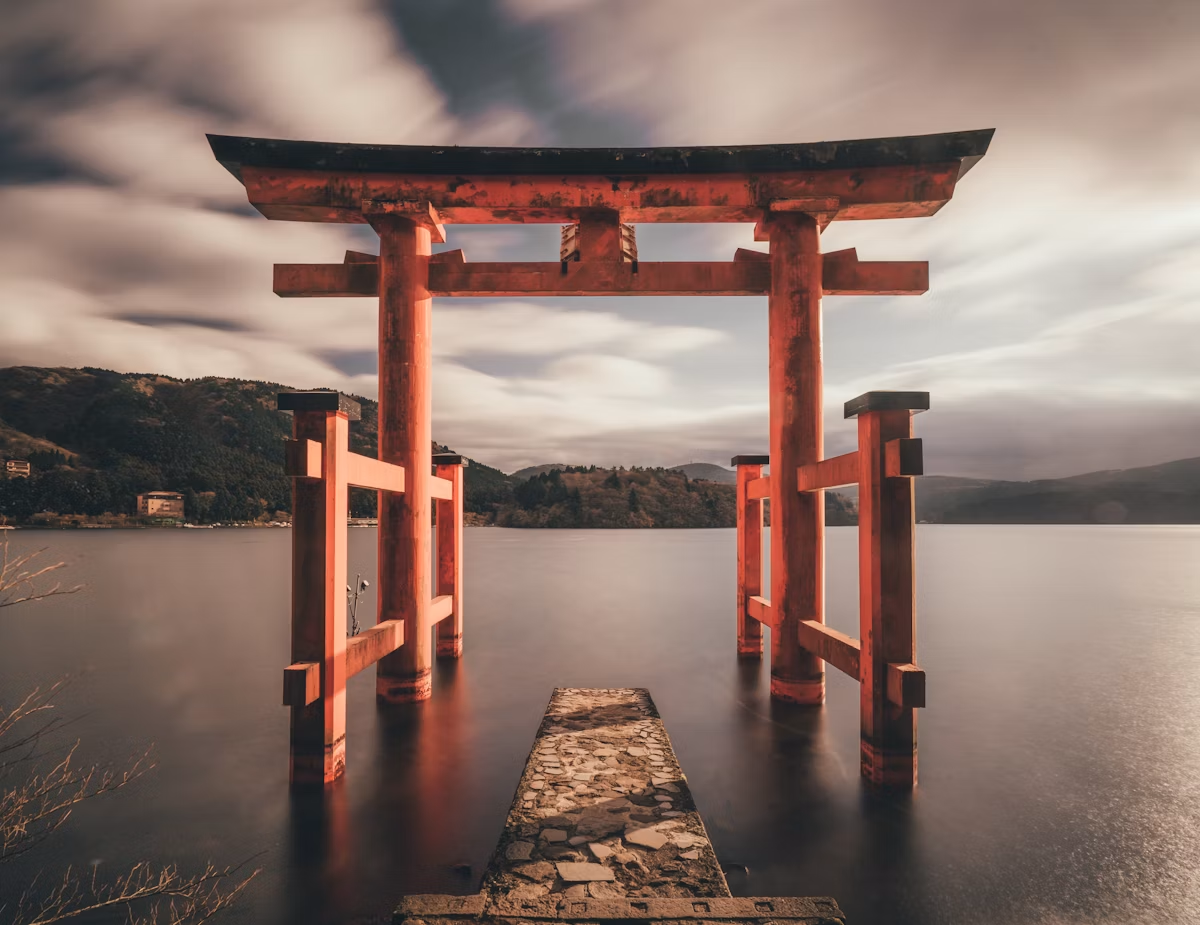
This Japan travel guide recommends Hakone as the practical base for Mount Fuji views — a volcanic hot spring (onsen) resort town in Kanagawa Prefecture, 90 minutes from Tokyo by the Romancecar express (¥1,000 supplement), where the Hakone Open-Air Museum (¥1,600; 20 outdoor sculptures in a mountain forest), the ropeway over Owakudani volcanic valley, and Lake Ashi with its Fuji-framed torii are all within a day’s circuit.
Mount Fuji climbing season — Japan travel guide tip: The official climbing season runs early July to early September (the four Yoshida, Subashiri, Gotemba, and Fujinomiya trails all open simultaneously). The Yoshida Trail from the 5th Station (bus from Fuji-Subashiri or Kawaguchiko; ¥3,000 Shizuoka conservation fee now required) is the most popular — 5–8 hours to summit; descent 3–5 hours. The “bullet climb” (ascending overnight to watch sunrise from the summit at 3,776 metres) is the most crowded experience on the mountain; weekdays in July are significantly less congested than weekends in August.
Fuji Five Lakes (Fujigoko): The five lakes north of Mount Fuji — Kawaguchiko, Yamanakako, Saiko, Shojiko, and Motosuko — each provide the classic Fuji-over-water reflection photographs at specific points. Kawaguchiko is the most accessible (direct Fujikyuko train from Shinjuku; ¥1,540 one way).
Nara: Deer, Daibutsu, and Day Trips
Every Japan travel guide includes Nara — Japan’s first permanent capital (710–784 CE), now a quiet city 45 minutes from Kyoto by train containing the country’s largest bronze Buddha and approximately 1,200 tame sika deer (considered messengers of the gods) that roam freely through Nara Park.
Todai-ji: A UNESCO World Heritage temple housing the Naibutsu — a 15-metre seated bronze Buddha cast in 749 CE, the largest bronze statue in the world at time of casting. The Great Buddha Hall (Daibutsuden) is itself the largest wooden structure in the world. Entry ¥800. The deer gather at the hall entrance for shika senbei (deer crackers; ¥200 per bag); they bow when presented with crackers, having learned the association with food over generations.
Kasuga Grand Shrine: A Shinto shrine founded in 768 CE, approached through forest hung with 3,000 bronze lanterns lit twice annually (February and August; the Mantoro ceremony). Entry to the main precinct free; inner sanctum ¥500.
Cherry Blossom and Autumn Foliage Timing
The two peak seasons in this Japan travel guide require advance planning of 3–6 months for accommodation and flight bookings.
Cherry blossom (sakura): Late March to mid-April in most of Japan (Okinawa in late January; Hokkaido in late April–early May). The Japan Meteorological Corporation releases annual forecasts from late January. Peak bloom (mankai) lasts 7–10 days; the week of falling petals (hanafubuki; “flower blizzard”) is many visitors’ favourite moment. Best locations: Maruyama Park (Kyoto), Shinjuku Gyoen (Tokyo; ¥500 entry), Hirosaki Castle (Aomori; northernmost major viewing), and the philosopher’s path canal in Kyoto (Higashiyama).
Autumn foliage — koyo in this Japan travel guide: Mid-October to late November, moving south from Hokkaido. Kyoto’s temple gardens (Tofuku-ji, Eikan-do, Arashiyama) are the most celebrated; Nikko’s cryptomeria avenues and lacquered shrine buildings backed by maples are the most dramatically photographed outside Kyoto.
Food in Japan
The Japan travel guide food section is a book in itself — but these are the essential categories:
- Ramen (Japan travel guide essential): Four major styles (Sapporo miso, Tokyo shoyu, Hakata tonkotsu, Kyoto tori paitan) and hundreds of regional variants; the difference between a ¥900 bowl at Ichiran (the solo booth chain) and a ¥1,500 bowl at a three-hour queue artisan shop is real and noticeable.
- Sushi: Conveyor belt (kaiten-zushi) from ¥110 per plate; standing counter omakase from ¥3,000; Ginza omakase counter from ¥30,000. All three versions are worth experiencing.
- Yakitori: Skewered chicken over bincho charcoal — the Yurakucho railway arch stalls between Tokyo and Yurakucho stations are the most atmospheric setting, ¥100–¥300 per skewer.
- Wagyu beef: Japan’s premium marbled beef (A5 grade Kobe, Matsusaka, or Omi) — teppanyaki or shabu-shabu from ¥8,000–¥30,000 per person; the 100g wagyu steak at a Kyoto butcher counter costs ¥3,000–¥5,000 and is the best value entry point.
- Convenience store food: Lawson, 7-Eleven, and FamilyMart in Japan are legitimate food destinations — egg salad sandwiches, fresh onigiri, instant ramen (prepared in-store), and steamed buns at ¥150–¥600 per item. Breakfast here is not a compromise.
Where to Stay
Budget (¥3,000–¥7,000/night)
Capsule hotels (private sleep pods; shared bathroom; excellent in Tokyo and Osaka for ¥3,500–¥5,000) and hostels in Asakusa, Shinjuku, Kyoto Station area, and Osaka’s Namba. The capsule hotel experience — sleeping in a pod the size of a generous coffin, surrounded by vending machines, a communal bath, and a locker room of fellow travelers — is worth trying once.
Mid-Range (¥12,000–¥30,000/night)
The standard Japan travel guide accommodation tier: business hotels (Dormy Inn, Sotetsu Fresa Inn, APA Hotel) with compact, immaculate rooms; or traditional ryokan in Hakone, Kyoto, or Kinosaki Onsen with tatami floors, futon bedding, yukata robes, kaiseki dinner, and communal hot spring bath.
Luxury (¥60,000–¥300,000+/night)
For travelers using this Japan travel guide to experience the country at its most exceptional: Aman Tokyo (Otemachi Tower; ¥100,000+), Hoshinoya Kyoto (accessible only by boat; ¥80,000+ including dinner), and Beniya Mukayu (Kanazawa ryokan; ¥120,000+ all-inclusive kaiseki).
JR Pass vs. IC Card: The 2026 Decision
The most practical question in any Japan travel guide concerns rail passes — the 7-day JR Pass now costs ¥50,000 ($320). A round trip Tokyo–Kyoto by Nozomi Shinkansen costs ¥27,000. The Pass breaks even only if the itinerary adds: Osaka (¥14,000 from Kyoto), Hiroshima (¥18,000 from Osaka), and Hakone or Nikko. Tokyo-only travelers: use the IC card exclusively (¥20–¥250 per journey; no surcharge). Multi-city travelers covering the classic route: the Pass saves money and eliminates all ticketing friction.
IC card (Suica or Pasmo) — Japan travel guide daily tool: Load at any station machine or via Apple/Google Pay; tap in, tap out; accepted at convenience stores, vending machines, and many restaurants. Load ¥3,000–¥5,000 for a 3-day Tokyo stay.
Getting Around Japan
Shinkansen — Japan travel guide transport backbone: The bullet train network connecting Tokyo to Kyoto (2 hrs 15 min; Nozomi express), Osaka (2 hrs 30 min), Hiroshima (4 hrs), and Fukuoka (5 hrs) at speeds up to 320 km/h. The most efficient way to cover Japan’s main island (Honshu); not covered by JR Pass for Nozomi trains (use Hikari or Kodama instead with the Pass).
Domestic flights: ANA and JAL connect Tokyo to Hokkaido (Sapporo; 1.5 hrs; ¥8,000–¥20,000), Okinawa (2.5 hrs), and Kyushu (Fukuoka; 1.5 hrs). Cheaper than Shinkansen for distances over 700 km; book 6+ weeks ahead for the lowest fares.
Local transit: Every city has a subway system; Tokyo’s is the most extensive (236 stations); Kyoto relies more on buses (¥230 per journey; day pass ¥700). The IC card covers all.
Daily Budget Breakdown
The figures in this Japan travel guide reflect 2026 costs from a Tokyo or Kyoto base.
| Category | Budget | Mid-Range | Luxury |
|---|---|---|---|
| Accommodation | ¥5,000 | ¥20,000 | ¥100,000 |
| Meals | ¥2,000 | ¥7,000 | ¥30,000 |
| Transport | ¥1,000 | ¥3,000 | ¥5,000 |
| Attractions | ¥500 | ¥3,000 | ¥10,000 |
| Daily Total | ¥8,500 (~$55) | ¥33,000 (~$213) | ¥145,000 (~$935) |
Final Verdict: Japan Travel Guide 2026
The ideal Japan travel guide itinerary runs 14–21 days: Tokyo (5 nights) → Hakone or Nikko (1–2 nights) → Kyoto (4 nights) → Nara (day trip from Kyoto) → Osaka (2 nights) → Hiroshima and Miyajima (1–2 nights) → back to Tokyo or fly from Osaka. Shorter trips of 10 days should choose either the Tokyo-Kyoto-Osaka corridor or a slower Tokyo-and-surroundings itinerary — attempting all of Japan in under 10 days produces a Japan travel guide itinerary of bullet trains and hotels rather than of the country itself. Book accommodation for cherry blossom and autumn foliage 3–6 months ahead; the best ryokan in Hakone and Kyoto sell out a full year in advance for peak sakura weekends. The IC card is non-negotiable; buy a Suica at Haneda or Narita on arrival before leaving the arrivals hall.