
Singapore travel guide readers arrive expecting an expensive, sterile city-state and instead find the most efficient combination of world-class food, seamless infrastructure, and compressed natural wonder on earth — a place where a Michelin-starred hawker stall serves chicken rice for $2.50, where the airport has a waterfall inside a glass dome, and where orchid gardens, cloud forests, and a vertical supertree grove coexist with the highest concentration of shopping malls in Southeast Asia. Singapore is 733 square kilometers — smaller than London or New York — yet packs more cuisines, more languages, more architectural styles, and more competing cultural neighborhoods into that space than cities ten times its size. This Singapore travel guide covers Marina Bay Sands, the hawker centre circuit, Gardens by the Bay, Chinatown, Little India, Kampong Glam, Sentosa, and a full 2026 budget breakdown for every tier of traveler.
At a Glance
| Country | Republic of Singapore |
| Currency | Singapore Dollar (SGD); $1 USD ≈ SGD 1.35 |
| Language | English (official); Mandarin, Malay, Tamil also official |
| Best time | February–April (driest months; festivals; manageable heat) |
| Avoid | November–January (northeast monsoon; heaviest rainfall) |
| Daily budget | SGD 80–120 ($60–$90) staying in hostels and eating at hawker centres |
| Mid-range | SGD 250–400 ($185–$300) |
| Visa | Visa-free for US, EU, UK, Canadian, Australian citizens (30–90 days depending on nationality) |
| Getting there | Changi Airport (SIN) — consistently rated world’s best airport; MRT to city center in 30 minutes (SGD 2.50) |
| Getting around | MRT (subway); EZ-Link or Singapore Tourist Pass for unlimited rides |
Marina Bay and the Modern Skyline
This Singapore travel guide begins at Marina Bay — the land reclamation project completed in 2008 that gave the city its defining skyline and its most photographed building.
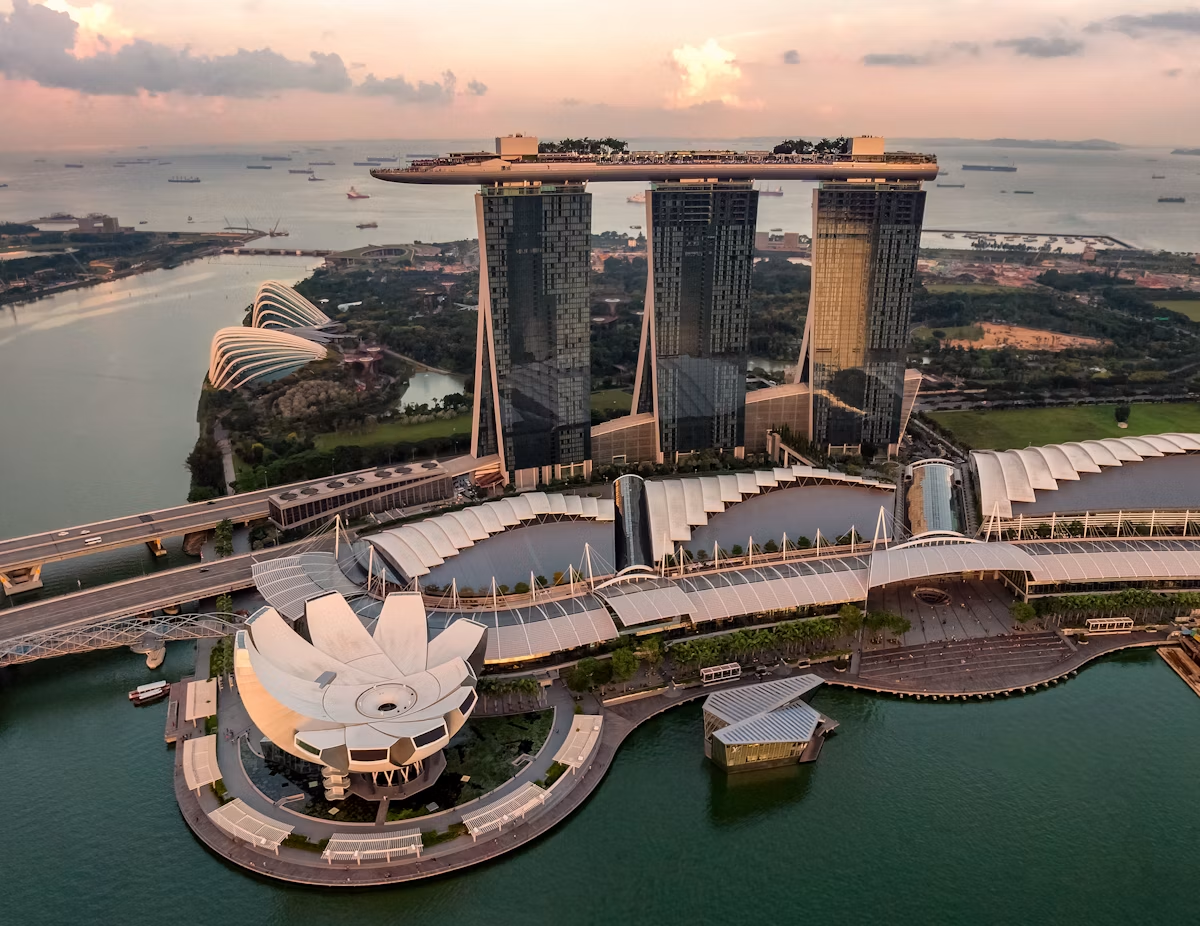
Marina Bay Sands: The three-tower, ship-topped resort designed by Moshe Safdie hosts a rooftop infinity pool (hotel guests only; 57th floor), the SkyPark Observation Deck (public access SGD 32; sunset views of the bay and business district), two Michelin-starred restaurants at roof level, and an art-science museum shaped like a lotus hand below. The reflecting pond on the Marina Promenade provides the classic full-width photograph of the three towers.
Gardens by the Bay: 101 hectares of reclaimed land directly adjacent to Marina Bay, containing the Cloud Forest (a 58-meter indoor mountain wrapped in 35,000 tropical plants inside a cool misty dome; SGD 28 combined ticket with Flower Dome), the Flower Dome (the world’s largest glass greenhouse; maintained at 23°C with rotating seasonal displays), and the Supertree Grove — 18 vertical garden towers between 25 and 50 meters tall, connected by an OCBC Skyway walkway (SGD 14). The nightly Garden Rhapsody light and sound show (7:45pm and 8:45pm) is free from the ground.
Helix Bridge and Merlion Park: The double-helix pedestrian bridge connects Marina Bay Sands to the Arts Precinct; the Merlion statue (the half-lion, half-fish symbol of Singapore) at the bay mouth is free to visit and provides the view of the CBD skyline across the water.
Hawker Centres: Singapore’s Greatest Institution
No Singapore travel guide is complete without a detailed account of the hawker centre — the government-built open-air food court that functions as the city’s communal dining room, the equal opportunity leveler where a software engineer and a construction worker queue together for the same plate of char kway teow.
Singapore has 114 hawker centres housing approximately 6,000 stalls. The government’s 2016 bid to list hawker culture as UNESCO Intangible Cultural Heritage succeeded in 2020. Two stalls — Hill Street Tai Hwa Pork Noodle and Hawker Chan (soya sauce chicken) — hold Michelin stars; both charge under SGD 8 for their signature dish.
Maxwell Food Centre (Chinatown): The most famous hawker centre for visitors — Tian Tian Hainanese Chicken Rice, the stall that Anthony Bourdain called “the best chicken rice I’ve ever had,” operates here at stall 10 (SGD 5–6 per plate; queue 11am–2pm daily).
Lau Pa Sat (Raffles Quarter): A Victorian octagonal cast-iron market (1894) converted to hawker use — the most atmospheric physical space in the hawker centre circuit, and the Satay Street extension outside (evenings only) serves charcoal-grilled satay by the stick for SGD 0.80 each.
Old Airport Road Food Centre (Geylang): The largest hawker centre in Singapore — 180 stalls; less touristed than Maxwell; favored by locals for oyster omelette, carrot cake, and laksa.
Chinatown Complex Food Centre: A Singapore travel guide favourite — four floors of stalls including the cheapest traditional food in the city; the rooftop hawker section is frequented by elderly Chinese residents who have eaten the same stall’s food for forty years.
Neighborhoods: Chinatown, Little India, Kampong Glam
This Singapore travel guide recommends spending one half-day in each of Singapore’s three preserved ethnic enclaves — they remain culturally distinct despite their 15-minute MRT proximity to each other.
Chinatown
The original settlement of Hokkien and Cantonese immigrants (1820s–1900s) — a grid of conserved shophouses now housing temples, traditional medicine halls, and contemporary restaurants. The Sri Mariamman Temple (oldest Hindu temple in Singapore, 1827; free entry with respectful dress) sits incongruously in the middle of a Chinese neighborhood — a relic of the original mixed settlement before colonial zoning. The Buddha Tooth Relic Temple (2007; free entry) houses a tooth relic of the historical Buddha in a four-story Tang dynasty-style pagoda.
Little India
The Serangoon Road corridor — a street of garland sellers, spice merchants, gold jewelers, and sari shops that operates at a sensory intensity absent from most of Singapore. The Sri Veeramakaliamman Temple (1881) and the Tekka Centre wet market (6am–2pm; best for fresh tropical produce and banana leaf rice) are the anchors. The entire neighborhood smells of jasmine garlands and frying dough from street stalls starting before dawn.
Kampong Glam
The Malay-Arab quarter built around the Sultan Mosque (1928 gold dome; free to enter outside prayer times; modest dress required) — now the city’s creative fashion and independent café district. Haji Lane, a narrow alley of murals and boutiques, is the most photographed street in Singapore after the Marina Bay Sands; Arab Street hosts fabric merchants, hookah cafés, and Syrian restaurants.
Day Trips and Excursions
This Singapore travel guide recommends at least one excursion outside the main urban grid.
Sentosa Island
A 5-square-kilometer resort island connected to the mainland by cable car, monorail, and a 700-meter pedestrian bridge. Universal Studios Singapore (SGD 84; full day), S.E.A. Aquarium (SGD 41), cable car over the harbor (SGD 35 return), and three public beaches (free). Resorts World Sentosa and the Shangri-La Rasa Sentosa represent the upscale accommodation tier; budget travelers visit as a day trip.
Pulau Ubin
A 10-minute bumboat ride (SGD 4 each way) from Changi Village to Singapore’s last kampung (village) island — unpaved roads, wild boar, monitor lizards, mangrove kayaking, and a Chek Jawa wetlands boardwalk. Bicycle rental SGD 5–10/day. A complete contrast to mainland Singapore; the island has no ATMs and limited electricity.
Johor Bahru, Malaysia (1 hr by bus)
A technically separate country but practically a day trip from Singapore — cross the Causeway by bus (SGD 2–3) or train (Johor Bahru Sentral) for Malaysian ringgit prices, local food markets, and outlet shopping. Duty-free alcohol is a common practical reason for the crossing.
Food Beyond Hawker Centres
Every Singapore travel guide highlights the hawker culture, but the city’s restaurant scene extends far beyond it into one of the most diverse fine dining environments in Asia.
- Chilli crab: Singapore’s most internationally famous dish — whole mud crabs in a tangy, semi-thick tomato-chilli gravy, eaten with mantou fried buns for sauce mopping. Jumbo Seafood, No Signboard, and Long Beach are the established names; SGD 80–120 per kg of crab.
- Laksa: A coconut milk-based curry noodle soup — the Peranakan Chinese-Malay fusion dish that defines Singapore’s culinary heritage. Katong Laksa (East Coast) and 328 Katong Laksa are the most celebrated; SGD 5–7 per bowl.
- Roti prata: Indian-origin flaky flatbread cooked on a griddle, eaten with curry dipping sauce — the standard Singapore breakfast at mamak (Indian-Muslim) coffee shops from 6am. SGD 1.50–3 per piece.
- Kaya toast and soft-boiled eggs: Every Singapore travel guide highlights this traditional Hainanese breakfast — thick toast with coconut jam and butter, dipped into soft-boiled eggs mixed with dark soy sauce and white pepper. Ya Kun Kaya Toast (chain) and Killiney Kopitiam (oldest kopi shop) serve the defining versions; SGD 4–6 for the full set.
Where to Stay
Budget (SGD 30–70/night)
Hostels concentrated in Chinatown, Little India, and Kampong Glam. Betel Box (Joo Chiat), The Hive Hostel (Lavender), and Footprints Hostel (Little India) are consistently well-reviewed for both dorms (SGD 28–35) and private rooms (SGD 60–80).
Mid-Range (SGD 150–300/night)
The standard Singapore travel guide accommodation tier: boutique hotels in the Tanjong Pagar (CBD) and Bugis/Beach Road area. Hotel Yan, The Sultan, and New Majestic Hotel in Chinatown offer conserved shophouse architecture at competitive rates.
Luxury (SGD 600–2,000+/night)
For travelers using this Singapore travel guide to experience the city at its most refined: Marina Bay Sands (from SGD 800; infinity pool access included), Capella Singapore on Sentosa (from SGD 900), and Raffles Singapore (restored colonial hotel from 1887; from SGD 1,200; birthplace of the Singapore Sling cocktail).
Getting Around
The MRT covers any Singapore travel guide route efficiently — and this Singapore travel guide starts every logistics section with it — 130 stations across 6 lines, running 5:30am to midnight daily, air-conditioned throughout, with signage in four languages.
EZ-Link / NETS FlashPay: The tap-in/tap-out IC card for MRT, LRT, and buses — load at any station; minimum SGD 10. A standard cross-city journey costs SGD 1.20–2.50.
Singapore Tourist Pass: SGD 22/day (3-day pass SGD 30) for unlimited MRT and bus rides — worth buying for visitors making 4+ transit journeys per day.
Taxis / Grab: Singapore has one of the highest cab standards in Asia — metered, air-conditioned, English-speaking. Grab (the regional Uber equivalent) is cheaper; most central journeys SGD 8–15.
Walking: The covered walkway system connecting MRT stations to malls and office buildings means that the city center can be navigated in air-conditioned comfort even in 33°C heat — an underrated feature in any Singapore travel guide.
Daily Budget Breakdown
The figures in this Singapore travel guide reflect 2026 hostel and mid-range hotel pricing.
| Category | Budget | Mid-Range | Luxury |
|---|---|---|---|
| Accommodation | SGD 55 | SGD 200 | SGD 900 |
| Meals | SGD 20 | SGD 60 | SGD 200 |
| Transport (MRT) | SGD 10 | SGD 15 | SGD 30 |
| Attractions | SGD 10 | SGD 60 | SGD 120 |
| Daily Total | SGD 95 (~$70) | SGD 335 (~$248) | SGD 1,250 (~$926) |
Final Verdict: Singapore Travel Guide 2026
Singapore travel guide itineraries work best over 3–5 days — long enough to cover the cultural neighborhoods, hawker centres, and Gardens by the Bay without the exhaustion of fitting a 15-stop checklist into 48 hours. The city rewards walkers who deviate from the MRT-to-attraction circuit: the most interesting Singapore is found at 7am in a kopitiam over kaya toast, in a Geylang food stall at midnight, or in a Joo Chiat Peranakan terrace that serves the same grandmother’s recipes since 1956. Budget travelers will find this Singapore travel guide’s recommendations significantly more affordable than the city’s reputation suggests — eating exclusively at hawker centres cuts daily food cost to SGD 15–20, and the MRT network eliminates taxis almost entirely.