
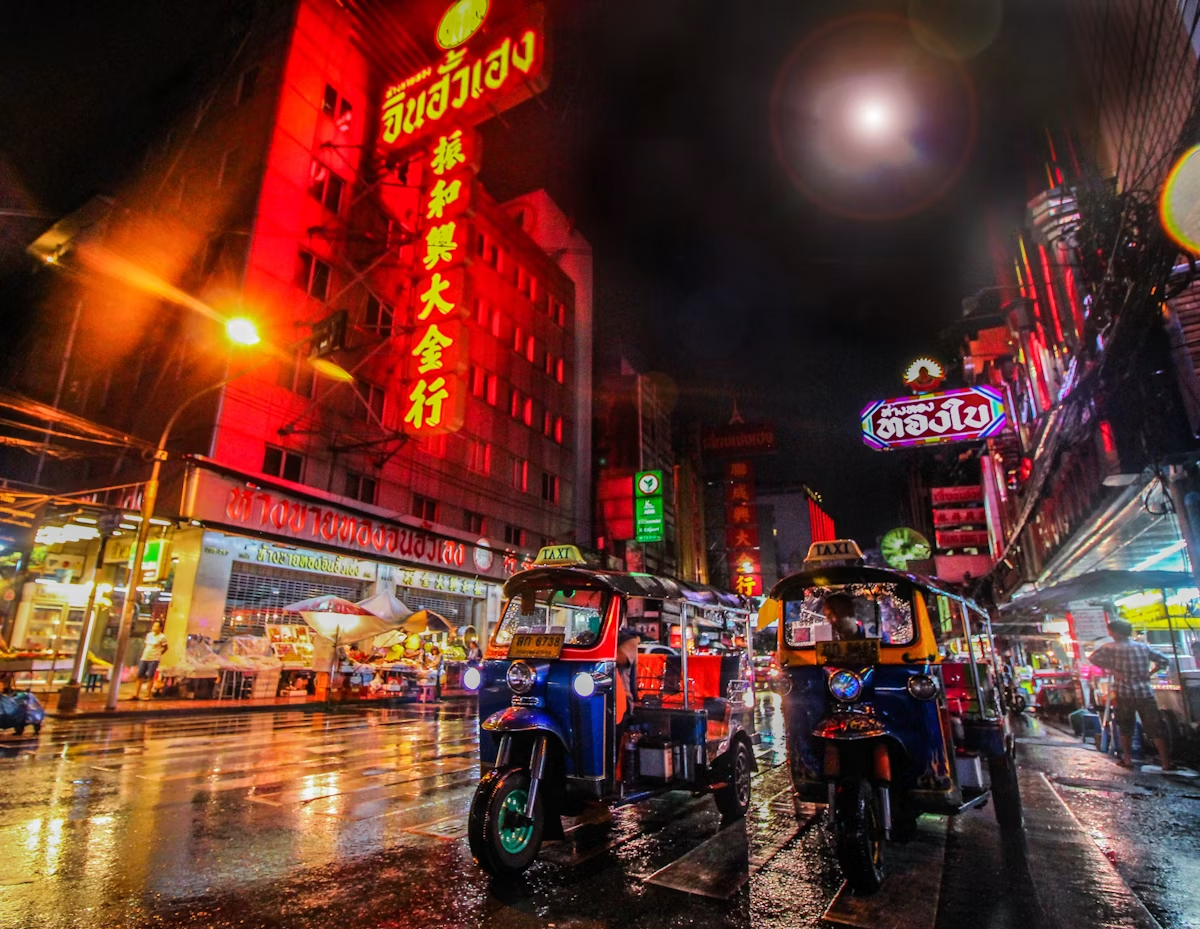
Thailand travel guide readers encounter a country that has spent 60 years hosting international visitors and has become extraordinarily good at it — a place where a $3 pad thai from a street cart with a Michelin Bib Gourmand rating tastes better than most restaurant versions anywhere, where a tuk-tuk driver navigating Bangkok gridlock will recommend his cousin’s guesthouse in Chiang Mai with complete sincerity, and where 40,000 Buddhist temples range from gold-spired royal monuments to jungle ruins reclaimed by strangler fig roots over seven centuries of abandonment. Thailand is Southeast Asia’s most visited country (39 million arrivals per year before the pandemic; recovering strongly), offering one of the continent’s best infrastructure-to-cost ratios — excellent domestic flights, reliable overnight trains, a night bus network connecting every major destination, and accommodation quality from $5 dorms to $800 overwater villas. This Thailand travel guide covers Bangkok, Chiang Mai, Phuket, Koh Samui, Koh Lanta, Pai, Ayutthaya, Sukhothai, the full island and beach circuit, transport logistics, and a complete 2026 budget breakdown.
At a Glance
| Country | Kingdom of Thailand |
| Currency | Thai Baht (THB); $1 USD ≈ THB 35 |
| Language | Thai; English in tourist areas |
| Best time | November–February (cool season; dry throughout most of the country) |
| Avoid | May–October (southwest monsoon; Gulf islands can be accessed October–April instead) |
| Daily budget | THB 800–1,500 ($23–$43) hostel + street food |
| Mid-range | THB 3,000–6,000/day ($85–$170) |
| Visa | Visa Exemption for US, EU, UK, Australian citizens: 60 days (extended to 60 days in 2024) |
| Getting there | Suvarnabhumi Airport (BKK) or Don Mueang Airport (DMK) in Bangkok |
| Getting around | Domestic flights (cheap); overnight trains; VIP buses; longtail boats and ferries for islands |
Bangkok: Temples, Markets, and Street Food
This Thailand travel guide begins in Bangkok — a city of 10 million people where the infrastructure of a global financial centre and the ritual life of Theravada Buddhism occupy the same square kilometre, and where the world’s greatest street food scene has been documented, awarded, and studied without becoming any less extraordinary.
Wat Pho (Temple of the Reclining Buddha): The first temple stop in any Thailand travel guide — the oldest and largest temple complex in Bangkok — the 46-metre gilded reclining Buddha (the largest in Thailand) fills an entire building, its feet inlaid with 108 mother-of-pearl panels depicting the auspicious characteristics of the Buddha. Entry ฿200; the complex also contains Thailand’s first public university and the founding school of traditional Thai massage. Open daily 8am–6:30pm.
Grand Palace and Wat Phra Kaew: The former royal residence (1782) and its attached Temple of the Emerald Buddha — the most sacred site in Thailand, housing a 66-centimetre jadeite Buddha image clothed by the King of Thailand three times annually for each season. Entry ฿500 (includes Vimanmek Mansion); modest dress required (free sarongs available at entrance if needed). The most visited tourist site in Thailand and the most essential stop on any Bangkok day.
Chatuchak Weekend Market: A Thailand travel guide essential — 15,000 stalls across 35 acres operating Saturday and Sunday — clothing, antiques, live animals (the legal section), ceramics, street food, vintage electronics, and hand-woven textiles from every region of Thailand. The most overwhelming shopping experience in Southeast Asia; arrive at 9am before the 200,000 daily visitors peak at noon. BTS Mo Chit or MRT Chatuchak Park.
Khao San Road and surroundings: The backpacker nerve centre of Southeast Asia — not worth staying on (overpriced for what it is) but worth visiting for one evening to understand why it has occupied its position since the 1980s. The surrounding streets of Banglamphu (Rambuttri Road, Phra Athit Road) are significantly better for eating and drinking, with night markets, riverfront bars, and the express boat pier for temple-hopping.
Floating markets: Damnoen Saduak (2 hours from Bangkok; heavily touristed) and Amphawa (weekend market; 90 minutes from Bangkok; more authentic) are the most visited. This Thailand travel guide recommends Amphawa for the Friday–Sunday evening market along the canal, firefly boat tours at dusk, and riverside seafood restaurants.
Chiang Mai: Temples, Mountains, and Elephants
No Thailand travel guide is complete without Chiang Mai — the cultural capital of northern Thailand and the destination that has drawn digital nomads, yoga retreats, cooking schools, elephant sanctuaries, and serious trekking in roughly equal measure since the 1990s.
Old City temples: Chiang Mai’s historic moated square contains 30 temples, of which Wat Chedi Luang (a 15th-century ruined chedi 82 metres tall before an earthquake took its top in 1545; entry ฿40), Wat Phra Singh (the city’s most revered temple; entry ฿20), and Wat Chiang Man (the oldest temple in Chiang Mai, 1296; free) are the core. The temples operate early-morning merit-making ceremonies (6–7am) when monks receive food offerings from locals — the most photogenic and culturally genuine time to visit.
Doi Inthanon National Park: Thailand’s highest peak (2,565 metres) is a 90-minute drive from Chiang Mai — the summit ridge supports cloud forest, orchids, over 390 bird species, and the twin Royal Pagodas built by the King and Queen. Entry ฿300; the Ang Ka Nature Trail (500 metres; boardwalk through moss forest) is the best short walk in northern Thailand.
Ethical elephant sanctuaries: Every Thailand travel guide addresses the elephant tourism industry in Thailand ranges from genuinely ethical half-day bathing and feeding programmes to venues that still offer elephant riding (which causes spinal injury and requires training methods incompatible with animal welfare). This Thailand travel guide recommends Elephant Nature Park (founded 1996; the first and most rigorous rescue sanctuary; ฿2,500 for a day visit) and Elephant Hills (luxury glamping with day programmes; ฿5,000+).
Pai: A small market town 3 hours north of Chiang Mai (762 bends of mountain road) in a valley surrounded by hot springs, waterfalls, and rice paddies — a backpacker haven that has retained its character better than most. The Pai Canyon at sunset, the Lod Cave system (navigated by bamboo raft; ฿60), and the Mae Yen waterfall (1-hour hike) are the main draws outside town.
The Ancient Cities: Ayutthaya and Sukhothai
This Thailand travel guide recommends at least one day in the ancient capitals — the archaeological evidence of Thai civilisation before Bangkok existed.
Ayutthaya — A Thailand travel guide day trip essential (80 km north of Bangkok; 1.5 hrs by train; ฿20): The former capital of the Kingdom of Ayutthaya (1350–1767) — a UNESCO World Heritage Site of headless Buddha statues, brick prang towers, and moat-encircled ruins spread across an island in the Chao Phraya River. The Buddha head entwined in banyan tree roots at Wat Mahathat is the most reproduced image from the site. A bicycle (฿50/day) covers the main ruins in 4–5 hours. Same-day return from Bangkok; overnight to combine with Lopburi (the monkey temple city, 1 hour further north).
Sukhothai (430 km north of Bangkok; 7 hrs by bus or domestic flight): The first capital of a unified Thai kingdom (1238–1438) — a more intact and less visited historical park than Ayutthaya, with 193 ruins across three zones in a forested landscape that is genuinely serene at dawn. The central zone entry ฿220; bicycle rental ฿30/day.
The Islands and Beaches
Every Thailand travel guide must address the island circuit — the most logistically complex part of planning a Thai trip because the monsoon patterns differ between the Gulf of Thailand (east) and Andaman Sea (west) coasts.
Gulf of Thailand islands (best November–April):
- Koh Samui: The largest Gulf island — a developed resort destination with an international airport, full luxury hotel infrastructure, and the most accessible beaches in Thailand (Chaweng, Lamai). Best for first-time visitors who want beach comfort with easy transport.
- Koh Phangan: Famous for the Full Moon Party (15,000 people monthly at Hat Rin; now managed with wristbands; ฿100 entry) but beyond the party offering some of the finest snorkelling and quietest beaches in the Gulf at the north end of the island.
- Koh Tao: The dive capital of the Gulf — the cheapest place in the world to get a PADI Open Water certification (฿9,000–฿11,000 all-inclusive; 4 days); strong currents and whale sharks at Chumphon Pinnacle for advanced divers.
Andaman Sea islands (best November–April; avoid May–October):
- Phuket: Thailand’s largest island and most developed beach destination — Patong for nightlife, Kata/Karon for families, Kamala for mid-range calm. The interior Phuket Old Town (Sino-Portuguese shophouses; street art; local food) is the most interesting neighbourhood on the island.
- Koh Lanta: A quieter, more local-feeling alternative to Phuket — long beaches on the west coast, minimal nightlife, excellent snorkelling day trips to the Koh Ha and Koh Rok marine parks.
- Krabi and Railay Beach: A limestone karst peninsula accessible only by longtail boat (no road) — four beaches, the largest rock-climbing destination in Thailand, and the Phra Nang Cave shrine. Ao Nang is the mainland base; longtail to Railay is ฿100 (10 minutes).
Food in Thailand
Every Thailand travel guide starts with the same truth: Thai food is one of the world’s great cuisines, and the best versions of it are almost always at street level.
- Pad thai: The dish every Thailand travel guide starts with — stir-fried rice noodles with egg, tofu or shrimp, bean sprouts, and tamarind sauce — invented during a WWII nationalist campaign to reduce rice consumption; now the most internationally recognized Thai dish. The definitive version (Thip Samai, Bangkok’s most famous pad thai stall, operating since 1966) wraps the noodles in a thin egg omelette; ฿60–฿120.
- Som tam: Green papaya salad — shredded unripe papaya pounded in a mortar with fish sauce, lime, palm sugar, dried shrimp, peanuts, and Thai chillies. Northeastern (Isaan) in origin; available everywhere; the degree of spice is adjustable on order.
- Khao man gai: Poached chicken over rice cooked in the chicken broth, served with a ginger-garlic dipping sauce and a bowl of clear stock — the Thai version of Hainanese chicken rice, eaten primarily for breakfast and lunch. ฿50–฿80 at any khao man gai specialist.
- Massaman curry: The Thai curry with the most complex spice profile — influenced by Persian and Indian traders, containing cardamom, cinnamon, cloves, and star anise alongside galangal and lemongrass. Rich, mild, and the most approachable Thai curry for spice-averse visitors.
- Mango sticky rice (khao niao mamuang): Sweet glutinous rice cooked in coconut milk, served warm beside sliced ripe Thai mango — available April–June during mango season at peak quality; ฿60–฿100 at street stalls and markets.
Where to Stay
Budget (฿300–฿800/night)
Guesthouses and hostels throughout the backpacker circuit — Khao San Road (Bangkok), Nimman Road area (Chiang Mai), Kata Beach (Phuket), and Haad Rin (Koh Phangan). Dorms from ฿250 (about $7); private guesthouse rooms from ฿400–฿700 with fan.
Mid-Range (฿2,000–฿5,000/night)
The standard Thailand travel guide accommodation tier: boutique hotels in Old City Chiang Mai, design hotels in Bangkok’s Silom or Sukhumvit districts, and beachfront bungalow resorts on Koh Lanta and Koh Samui. Air conditioning, pool access, and breakfast typically included.
Luxury (฿10,000–฿50,000+/night)
For travelers using this Thailand travel guide to experience the country at its most refined: Mandarin Oriental Bangkok (the oldest hotel in the country; from ฿18,000), Amanpuri Phuket (private beach; from ฿40,000), and Keemala Phuket (treetop pool villas; from ฿30,000).
Getting Around Thailand
The transport network is any Thailand travel guide’s most practically useful section — Thailand has invested heavily in domestic connectivity, and long distances can be covered cheaply and comfortably.
Domestic flights: The fastest option in any Thailand travel guide — AirAsia, Nok Air, and Thai Lion Air connect Bangkok with Chiang Mai (1 hr; ฿700–฿2,000), Phuket (1.5 hrs; ฿800–฿2,500), and Koh Samui (1 hr; ฿1,200–฿3,000). Booking 3–6 weeks ahead on AirAsia typically produces the lowest fares.
Overnight trains: The State Railway of Thailand’s overnight sleepers (Bangkok to Chiang Mai: 13 hrs; ฿1,200–฿1,600 second class sleeper; Bangkok to Surat Thani for Gulf islands: 9 hrs; ฿1,100) are comfortable, punctual, and the most atmospheric way to cover distance. Book at hubs or online at 12go.asia.
VIP buses: The budget backbone of any Thailand travel guide itinerary — private operators running air-conditioned coaches with reclining seats between all major destinations — Bangkok to Chiang Mai (8 hrs; ฿650–฿800), Bangkok to Krabi (12 hrs; ฿700–฿900). Cheaper than trains but less reliable on schedule.
BTS and MRT (Bangkok): The Skytrain (BTS) and subway (MRT) cover central Bangkok with minimal overlap — a Rabbit Card (BTS) and stored-value MRT card handle all journeys. Fares ฿16–฿59 depending on distance. The Airport Rail Link connects Suvarnabhumi to central Bangkok in 30 minutes (฿45).
Daily Budget Breakdown
The figures in this Thailand travel guide reflect 2026 costs across the main destinations.
| Category | Budget | Mid-Range | Luxury |
|---|---|---|---|
| Accommodation | ฿600 | ฿3,500 | ฿20,000 |
| Meals (3×) | ฿400 | ฿1,200 | ฿4,000 |
| Transport | ฿300 | ฿800 | ฿2,000 |
| Activities | ฿200 | ฿800 | ฿3,000 |
| Daily Total | ฿1,500 (~$43) | ฿6,300 (~$180) | ฿29,000 (~$830) |
Final Verdict: Thailand Travel Guide 2026
The ideal Thailand travel guide itinerary runs 3–4 weeks to cover Bangkok, the north (Chiang Mai and Pai), the ancient cities (Ayutthaya or Sukhothai), and at least two islands without feeling rushed. Shorter trips should commit to one region — either Bangkok plus north, or Bangkok plus south — rather than compressing all zones into 10 days. This Thailand travel guide recommends November or December as the optimal arrival month: the cool season has just started, every region is dry simultaneously (a rare window), the water is clear throughout the Andaman and Gulf coasts, and Chiang Mai’s smoky season (February–April) is still months away. The 60-day visa exemption introduced in 2024 makes Thailand more accessible than ever for longer stays without requiring a visa run or extension.