
Penang sits in the gap between Chiang Mai and Bali on most digital nomad lists — which is precisely why it’s worth taking seriously. Malaysia’s most culturally layered island offers fast internet, a monthly budget well under $1,000, a UNESCO-listed historic city with genuinely extraordinary street food, and a cost-of-living profile that makes it one of Southeast Asia’s best-value bases for remote workers. The Penang digital nomad scene has grown quietly without becoming oversaturated, which means affordable rents, real local community, and none of the nomad-bubble feeling that can make Canggu or Chiang Mai feel repetitive. This guide covers everything you need.
At a Glance
| Country | Malaysia |
| Currency | Malaysian Ringgit (MYR) — ~4.70 MYR per $1 USD |
| Language | Malay, English, Mandarin, Tamil — English widely spoken |
| Best time to visit | December–February (northeast monsoon misses Penang) |
| Monthly budget (comfortable) | $900–$1,500/month |
| Monthly budget (frugal) | $650–$900/month |
| Visa | 90-day tourist visa for most Western nationalities; Malaysia MM2H for longer stays |
| Airport | Penang International (PEN) — 20 min from George Town |
| Co-working cost | $50–$120/month |
Why Penang Digital Nomad Life Is Underrated
The Penang digital nomad case begins with one fact that surprises almost everyone: Malaysia has some of the fastest and most affordable internet in Southeast Asia. Average fixed-line speeds exceed 100 Mbps in George Town apartments, and Maxis/Celcom/Digi mobile data packages deliver consistent 4G/5G coverage across the island. For remote workers whose income depends on connectivity, Penang routinely outperforms Bali and matches Chiang Mai on internet reliability.
Then there’s the food. Penang is routinely ranked among the top five food destinations in the world — not just in Asia. The concentration of Malay, Chinese (Hokkien, Cantonese, Hakka), Indian (Tamil, North Indian), and Peranakan (Straits Chinese) culinary traditions in a single island produces a street food diversity that no other city in the region matches. A meal at a hawker center costs MYR 5–12 ($1.05–$2.55). Three meals a day at street food level: $5–$8. The food alone makes Penang digital nomad life extraordinary.
What’s Changed in 2026
- Malaysia’s DE Rantau (Digital Economy Nomad Pass) is now more accessible, offering a 12-month renewable visa for remote workers earning $24,000+ annually
- George Town’s co-working space count has grown to 15+ dedicated spaces — from near-zero in 2019
- Direct flight connections from South Korea, Japan, and Australia have expanded
Best Areas to Stay in Penang for Digital Nomads
George Town — The Heart of Penang Digital Nomad Life
George Town is where virtually every Penang digital nomad arrives and most stay. The UNESCO World Heritage core — a dense grid of 19th-century shophouses, Chinese clan temples, colonial administrative buildings, and street art installations — is one of the most liveable historic city centers in Southeast Asia. The best co-working spaces, cafés, and the majority of the nomad community are located here.
Two sub-neighborhoods within George Town:
Heritage Zone (Chowrasta/Armenian Street area): The most atmospheric part of the city. Walking-distance access to all major street food, the famous Clan Jetties, and the core street art circuit. Rents run MYR 1,200–2,200/month ($255–$470) for furnished rooms or small apartments.
Chulia Street / Little India corridor: Slightly more budget-oriented, with the highest density of budget guesthouses and good local restaurants. Popular with shorter-stay nomads.
Gurney Drive / Pulau Tikus — Best for Comfort and Modern Living
North of George Town, Gurney Drive is Penang’s upscale residential and dining corridor — high-rise condominiums, international supermarkets, and Gurney Plaza mall. Penang digital nomad residents who want modern amenities (gym, pool, parking) at lower cost than equivalent Bangkok or KL apartments tend to gravitate here.
- Rent (1BR condo): MYR 1,500–2,800/month ($320–$595)
- Best for: Longer stays, modern accommodation, families
Batu Ferringhi — Best for Beach Access
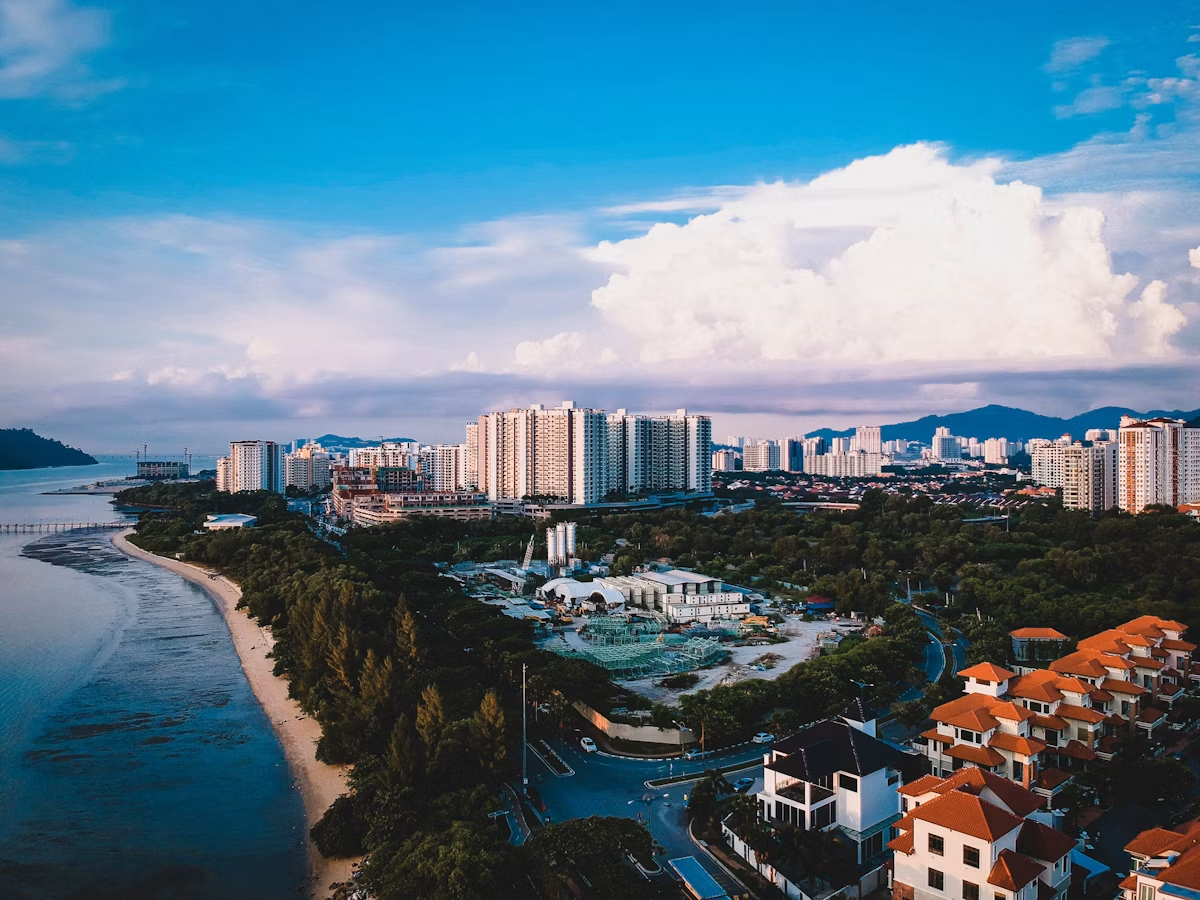
Penang’s northern beach strip is primarily a tourist resort zone, but longer-term rentals at condominiums near the beach offer good value for nomads who prioritize beach access over city convenience.
- Rent (1BR): MYR 1,200–2,000/month ($255–$425)
- Best for: Surfers, beach lifestyle, those working independently without needing co-working spaces
Best Co-Working Spaces in Penang
WORQ George Town
WORQ is Malaysia’s largest co-working chain and the George Town location is the Penang digital nomad community’s primary gathering point. Modern facilities, reliable 300 Mbps fiber, meeting rooms, and a professional atmosphere make it the default choice for arrivals.
- Price: MYR 350/month (~$75), MYR 50/day
- Wi-Fi: 300 Mbps
- Best for: Full-time remote workers, professional environment
The Garage @ Penang (Georgetown)
A community-focused co-working space in the heritage zone with a strong local startup and creative community. More social atmosphere than WORQ, with regular events and a café on-site.
- Price: MYR 280/month (~$60)
- Best for: Creative workers, networking with local entrepreneurs
Komune George Town
Part of the Komune regional co-working chain, this George Town location offers flexible memberships and a quiet, focused work environment in a renovated heritage shophouse.
- Price: MYR 380/month (~$80), day passes available
- Best for: Those wanting a quieter workspace in a heritage building setting
Monthly Cost of Living in Penang (2026)
| Category | Budget | Mid-Range | Comfortable |
|---|---|---|---|
| Rent (room or 1BR) | MYR 700 ($150) | MYR 1,500 ($320) | MYR 2,500 ($530) |
| Co-working | MYR 0 (cafés) | MYR 300 ($65) | MYR 450 ($95) |
| Food (hawkers + cafés) | MYR 600 ($128) | MYR 1,000 ($213) | MYR 1,600 ($340) |
| Transport | MYR 100 ($21) | MYR 200 ($43) | MYR 350 ($75) |
| Health insurance | MYR 200 ($43) | MYR 400 ($85) | MYR 700 ($150) |
| Activities / misc | MYR 200 ($43) | MYR 400 ($85) | MYR 700 ($150) |
| Total (USD) | ~$385 | ~$811 | ~$1,340 |
Visa Options for Penang Digital Nomads
90-Day Tourist Visa
Citizens of the US, UK, EU, Canada, Australia, and most Western countries enter Malaysia visa-free for 90 days. No extension is readily available in-country — most Penang digital nomad residents do a short border run to Thailand (Hat Yai, a 4-hour bus ride) or fly to Singapore for a quick reset.
Malaysia DE Rantau Nomad Pass
Launched in 2022 and improved in 2024, the DE Rantau pass is Malaysia’s dedicated digital nomad visa:
- Duration: 12 months, renewable once (total 24 months)
- Income requirement: $24,000 USD/year minimum (employed) or $60,000 USD/year (freelancer)
- Cost: ~$500 USD processing fee
- Benefits: Multiple-entry, right to work remotely for overseas clients, dependent passes available
- Application: Via Malaysia Digital Economy Corporation (MDEC) portal
Malaysia My Second Home (MM2H)
The MM2H program offers longer-term residency (5–10 year renewable) for those with higher financial means (liquid assets of ~$350,000 required). Primarily relevant for retirees and high-net-worth individuals rather than standard nomads.
Penang’s Food Scene — A Nomad Highlight
No Penang digital nomad guide is complete without covering the food in depth, because it’s genuinely life-changing.
Must-eat dishes in Penang:
- Char Kway Teow — stir-fried flat rice noodles with prawns, cockles, egg, and bean sprouts; best at Lorong Selamat (MYR 7–12)
- Assam Laksa — sour, spicy tamarind fish soup with rice noodles; Penang’s most distinctive dish (MYR 5–8)
- Hokkien Mee (Prawn Noodles) — rich prawn and pork broth over yellow noodles (MYR 6–10)
- Nasi Kandar — Penang’s Indian-Muslim rice dish with rotating curry ladles; 24-hour options available (MYR 8–15)
- Cendol — shaved ice dessert with coconut milk, pandan jelly, and palm sugar; MYR 3–5
The hawker centers at Gurney Drive, New Lane (Lorong Baru), and Chowrasta Market run from dawn to late at night. Eating here three times a day is not a compromise — it’s one of the best food experiences available at any price point anywhere in Asia.
Practical Tips for Arriving Nomads
Getting to Penang
By air: Penang International Airport (PEN) has direct connections from Kuala Lumpur (45 min, from $15 on AirAsia), Singapore (1 hour), Bangkok, and several Chinese cities. From KL, the ETS (Electric Train Service) train runs to Butterworth (mainland Penang) in 4 hours for ~$15 — the ferry to George Town adds 10 minutes.
By bus: Express buses from KL Sentral to Penang Sentral (Butterworth) run overnight for MYR 35–55 ($7–$12). Popular budget option.
Getting Around Penang
Penang’s public transport is improving but still limited. Grab is the most practical option for most journeys (MYR 8–20 / $2–$4 for most city trips). Rapid Penang buses cover the main routes cheaply (MYR 1.40–4 / $0.30–$0.85). A motorbike rental (MYR 30–50/day, $6–$11) is the most flexible option for exploring the island.
SIM Cards and Internet
Maxis, Celcom, and Digi all offer tourist SIMs with 30-day unlimited data packages for MYR 50–80 ($10–$17). For apartment stays, Unifi (TM) fiber plans start at MYR 99/month ($21) for 100 Mbps — among the most affordable fiber rates in Southeast Asia.
Final Verdict: Penang Digital Nomad Life in 2026
Penang’s combination of fast internet, extraordinary food, UNESCO heritage setting, and budget well under $1,000/month makes it one of the most underrated bases in Southeast Asia. The DE Rantau visa adds legal structure for longer stays, and the lack of nomad oversaturation means rents and café prices haven’t been inflated by remote worker demand. For nomads looking beyond the Bali-Chiang Mai circuit, Penang digital nomad living offers genuine value and a cultural depth that neither can match.