
Marrakech does not ease you in gently. The city arrives at full volume — motorbikes threading through donkey carts in alleyways barely a meter wide, the smell of cumin and leather dye mixing in the air, the call to prayer echoing over a skyline of minarets and palm trees. For first-time visitors, the sensory intensity can feel overwhelming in the first hours and intoxicating by the second day. This Marrakech travel guide covers everything you need to navigate the city confidently: the medina, the souks, riads, day trips, and the practical logistics that most guides leave out.
At a Glance
| Country | Morocco |
| Currency | Moroccan Dirham (MAD) — ~10 MAD per $1 USD |
| Language | Darija (Moroccan Arabic), French; English in tourist areas |
| Best time to visit | March–May, September–November |
| Avoid | June–August (extreme heat, 40°C+) |
| Daily budget (frugal) | $35–$55/day |
| Daily budget (comfortable) | $70–$120/day |
| Visa | Visa-free for 90 days for US, EU, UK, and most Western nationalities |
| Airport | Marrakech Menara (RAK) — 6 km from the medina |
| Time zone | GMT+1 (Morocco does not observe DST) |
Understanding Marrakech: Old and New City
Marrakech divides clearly into two worlds: the medina (old walled city) and the Ville Nouvelle (new city, also called Guéliz). Most tourists stay in the medina, and for good reason — the riads, souks, historic monuments, and the famous Djemaa el-Fna square are all here. Guéliz is where modern Marrakech operates: banks, international restaurants, the train station, and the best Western-style accommodation.
The medina’s layout is intentionally disorienting — it was designed to confuse invaders, and it works equally well on tourists. Getting lost in the souks is both inevitable and enjoyable. The key is knowing a few orientation landmarks: Djemaa el-Fna square, the Koutoubia Mosque (always visible from a distance as the tallest structure in the medina), and the main souk arteries (Souk Semmarine for carpets and leather, Souk el-Attarine for spices).
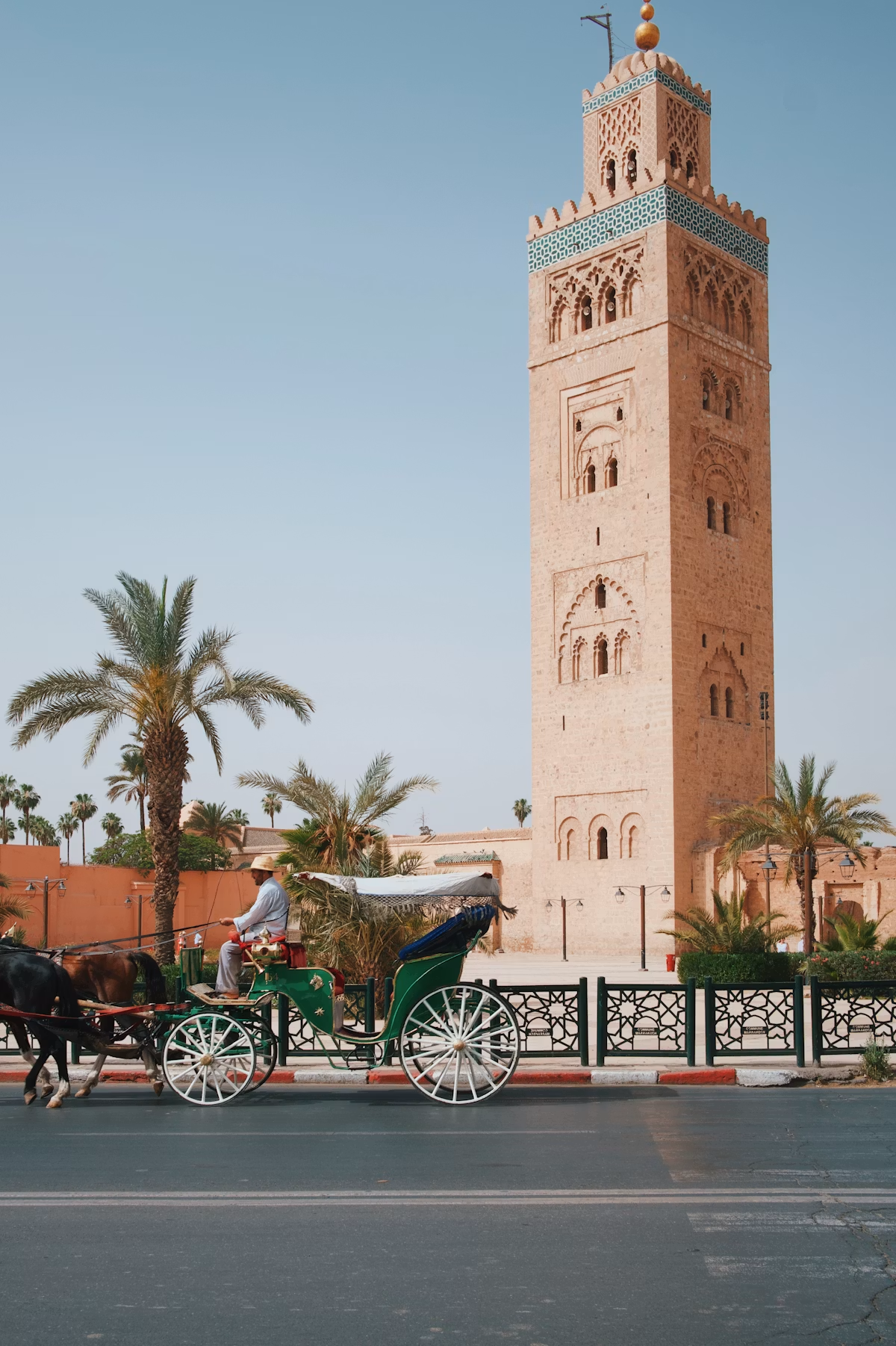
Photo by Rumman Amin on Unsplash
Top Things to Do in Marrakech
Djemaa el-Fna Square — The Heartbeat of Marrakech
Djemaa el-Fna is a UNESCO Intangible Cultural Heritage site and the most famous public square in Africa. During the day it hosts orange juice vendors (freshly squeezed, MAD 4), snake charmers, henna artists, and storytellers. As the sun sets, the square transforms — food stalls assemble within minutes, smoke rises from dozens of grills, and the noise level climbs to something genuinely spectacular.
Practical tips:
- The orange juice stalls on the north side of the square charge MAD 4–5 for a fresh glass; if they ask for MAD 20, walk away
- Food stalls in the evening are tourist-priced; eat one meal there for the experience, then find a side-street restaurant for regular meals
- The rooftop terraces overlooking the square (Café de France, Café Arabe) offer the best views but charge accordingly for drinks
The Souks — A Half-Day at Minimum
The souks sprawl north of Djemaa el-Fna in a dense network of covered alleyways organized roughly by trade. Leatherwork, spices, lanterns, carpets, metalwork, and ceramics each have their zones.
Negotiating in the souks:
- Initial asking prices are 3–5x the actual value. Offer 30–40% of the asking price and work up from there
- Walking away usually results in a lower price being called after you
- For significant purchases (carpets, leather goods), expect the process to take 30–60 minutes including mint tea
Best souk areas:
- Souk Semmarine: Main tourist souk entry; leather, carpets, clothing
- Souk el-Attarine: Spice souk; buy ras el-hanout and argan oil here
- Souk des Teinturiers (Dyers’ Souk): Wool being dyed in traditional colors — one of the most photogenic spots in the city
Bahia Palace
A 19th-century palace built by a grand vizier, Bahia (meaning “brilliance”) is the best-preserved example of Moroccan palatial architecture in Marrakech. The intricately carved cedar ceilings, zellij tilework, and courtyard gardens give a clear sense of the city’s aristocratic history. Entry: MAD 70 (~$7). Allow 1.5–2 hours.
Jardin Majorelle & Yves Saint Laurent Museum
The Jardin Majorelle — a botanical garden and villa painted in a striking cobalt blue — was purchased by Yves Saint Laurent and Pierre Bergé in 1980 and is now one of Morocco’s most visited sites. The adjacent YSL Museum covers the designer’s relationship with Morocco and his influence on the fashion world. Entry to the garden: MAD 150 (~$15). Museum: MAD 100 (~$10). Book tickets online to avoid queues.
Saadian Tombs
Discovered in 1917 behind a sealed wall, the Saadian Tombs house the royal mausoleum of the 16th-century Saadian dynasty. The interior chamber — carved stucco, gilded cedar, Italian marble columns — is among the finest examples of Moroccan craftsmanship in the country. Entry: MAD 70. Go early (before 9am) to avoid the worst crowds.
Hammam — The Essential Marrakech Experience
A traditional Moroccan hammam (steam bath with exfoliation and massage) is the single experience most travelers say they wish they’d done sooner. There are two categories:
Traditional local hammams (MAD 15–30): Used by locals, basic facilities, staff speak no English, extraordinary experience. Ask your riad for the nearest hammam and how to communicate with the staff.
Tourist hammams (MAD 200–400): Spa-standard facilities, English-speaking staff, more comfortable. Hammam de la Rose and Hammam Dar el-Bacha are the most recommended.
Where to Stay: Riads vs Hotels
Riads — The Authentic Marrakech Experience
A riad is a traditional Moroccan house built around a central courtyard — the word means “garden” in Arabic. Most of the medina’s accommodation is converted riads, ranging from budget guesthouses (MAD 300–500/night, $30–$50) to luxury boutique properties (MAD 2,000–5,000/night, $200–$500).
Staying in a riad puts you inside the medina’s labyrinth, within walking distance of everything, in accommodation that is genuinely distinct from international hotel standards. The trade-offs: narrow alleyways make taxi access difficult (you’ll often walk 5–10 minutes from the nearest street), and some riads are challenging to find on first arrival. Always confirm GPS coordinates with your riad before arrival, not just an address.
Riad characteristics by price:
- Budget (MAD 300–600): Small rooms, shared or en-suite bathrooms, rooftop terrace, basic breakfast
- Mid-range (MAD 800–1,500): Private rooms, pool, air conditioning, more attentive staff
- Luxury (MAD 2,000+): Plunge pools, spa services, private butler, exceptional design
Ville Nouvelle Hotels (Guéliz)
For travelers who prefer international hotel standards and easier transport access, Guéliz has the full range of international chains (Ibis, Novotel, Marriott) at prices that reflect the absence of medina atmosphere premium. Useful as a base if you plan to rent a car for day trips.
Best Day Trips from Marrakech
Atlas Mountains and Berber Villages (1 day)
The High Atlas Mountains begin 60 km southeast of Marrakech. The village of Imlil (1.5 hours by car) is the most popular base for Atlas day trips — traditional Berber villages, mule trails, and views of North Africa’s highest peak (Jbel Toubkal, 4,167m). Half-day guided tours from Marrakech start at MAD 350–500 ($35–$50) per person.
Essaouira (2.5 hours by CTM bus, MAD 80)
A whitewashed coastal fishing town with a fortified medina, strong Atlantic winds (popular with kite surfers), and a relaxed atmosphere that feels worlds away from Marrakech’s intensity. CTM buses run daily. The ramparts, the fishing port, and the excellent seafood restaurants on the port make a full day trip comfortable.
Ouarzazate and the Draa Valley (3 hours by car)
Through the High Atlas via the Tizi n’Tichka pass (2,260m), Ouarzazate is the gateway to Morocco’s southern kasbah country. The Aït Benhaddou (UNESCO World Heritage Site, used as a filming location for Game of Thrones and Gladiator) is 30 km further. Best done as an overnight trip rather than a day trip.
Practical Tips for First-Time Visitors
Getting from the Airport
Marrakech Menara Airport (RAK) is 6 km from the medina. Petit taxi (small red taxi): MAD 100–150 ($10–$15) by meter to the medina. Insist on the meter or agree on a price before getting in. Airport bus (Line 19): MAD 30 ($3) to Djemaa el-Fna, runs every 30 minutes.
Getting Around Marrakech
On foot: The medina is best explored on foot — the streets are too narrow for cars in most areas.
Petit taxis (red): Fixed fare for up to 3 passengers within the city. Always insist on the meter (“compteur, s’il vous plaît”). Most journeys within the city: MAD 20–50 ($2–$5).
Caleches (horse-drawn carriages): Traditional transport for tourist routes. Agree on a price before boarding — MAD 100–150 ($10–$15) for a 30-minute circuit is reasonable.
Bolt/Careem: Both apps work in Marrakech and offer more transparent pricing than street taxis.
Safety
Marrakech is a safe city for tourists and the medina is heavily patrolled. The primary concerns are:
- “Unofficial guides”: Men who offer to help you find your way and then demand payment. Politely but firmly decline help you didn’t ask for.
- Carpet shop detours: Being led “just to look” at a cousin’s shop. This is a sales tactic; you can always say no and leave.
- Solo female travelers: Marrakech is visited by millions of solo female travelers annually. Standard awareness — confident walking posture, ignoring persistent attention, staying in well-trafficked areas at night — applies here as in any major city.
Currency and Payment
Morocco is predominantly cash-based. ATMs (Banque Populaire, Attijariwafa) dispense MAD reliably and accept foreign Visa and Mastercard with a small fee. Exchange cash at bank branches or official exchange offices — avoid street money changers. Mid-range and upscale riads and restaurants accept cards; street food, market vendors, and local transport are cash-only.
Daily Budget Summary
| Category | Budget | Comfortable |
|---|---|---|
| Accommodation | MAD 350 ($35) | MAD 1,000 ($100) |
| Food (3 meals) | MAD 100 ($10) | MAD 300 ($30) |
| Activities | MAD 100 ($10) | MAD 250 ($25) |
| Transport | MAD 50 ($5) | MAD 100 ($10) |
| Daily Total | ~$60 | ~$165 |
Final Verdict: Marrakech Travel Guide 2026
Marrakech rewards travelers who approach it with patience and curiosity. The city’s intensity — the noise, the navigation challenges, the persistent salesmanship — is real, but it’s also the source of its energy. The combination of extraordinary craftsmanship, extraordinary food (tagine, harira, bastilla), architectural beauty, and a sensory intensity that no other city quite replicates makes Marrakech one of the world’s essential travel experiences. This Marrakech travel guide is your starting point; the city itself will do the rest.