
Valparaíso climbs 45 steep hills above one of the Pacific’s busiest natural harbors, a UNESCO World Heritage port city built almost entirely on slopes too steep for cars, which is why the city developed its iconic ascensores (funiculars) instead. Once Chile’s most important port before the Panama Canal redirected global shipping routes around it, Valparaíso reinvented itself as a bohemian arts capital — its hillside neighborhoods are covered in some of the densest, highest-quality street art anywhere in South America, painted across a chaotic, color-blocked tangle of corrugated-metal houses that has made the city a magnet for photographers and creatives. This Valparaiso travel guide covers the historic hills, street art, the funiculars, food, day trips, and a full budget breakdown for 2026.
At a Glance
| Country | Chile |
| Currency | Chilean Peso (CLP) — ~950 CLP per $1 USD |
| Language | Spanish |
| Best time | September–November and March–May (mild, fewer crowds than summer) |
| Avoid | June–August (cold, rainy Southern Hemisphere winter) |
| Daily budget (frugal) | $30–$50/day |
| Daily budget (comfortable) | $70–$150/day |
| Visa | Visa-free for 90 days for US, UK, Canadian, EU, and most other passport holders |
| Getting there | Arturo Merino Benítez Airport (SCL) in Santiago, then a 1.5–2 hour bus or transfer |
| Getting around | Walking, funiculars (ascensores), colectivo shared taxis, local buses |
The Hills of Valparaíso
Valparaíso’s defining feature is its terrain — a city built directly into a near-vertical amphitheater of hills (cerros) overlooking the bay, with no real flat ground beyond the small commercial core (El Plan) at sea level. Each hill has its own character, and working through several of them on foot is the central activity for any Valparaiso travel guide visit.
Cerro Concepción and Cerro Alegre are the most visited and best-preserved, lined with 19th-century European-style mansions built by the British and German merchants who once ran the port’s shipping trade — now home to the highest concentration of boutique hotels, galleries, and cafés in the city.
Cerro Bellavista holds the largest concentration of large-scale street murals, including works tied to the Museo a Cielo Abierto (Open Sky Museum), an outdoor collection of murals painted by significant Chilean artists directly onto the hillside’s retaining walls and staircases.
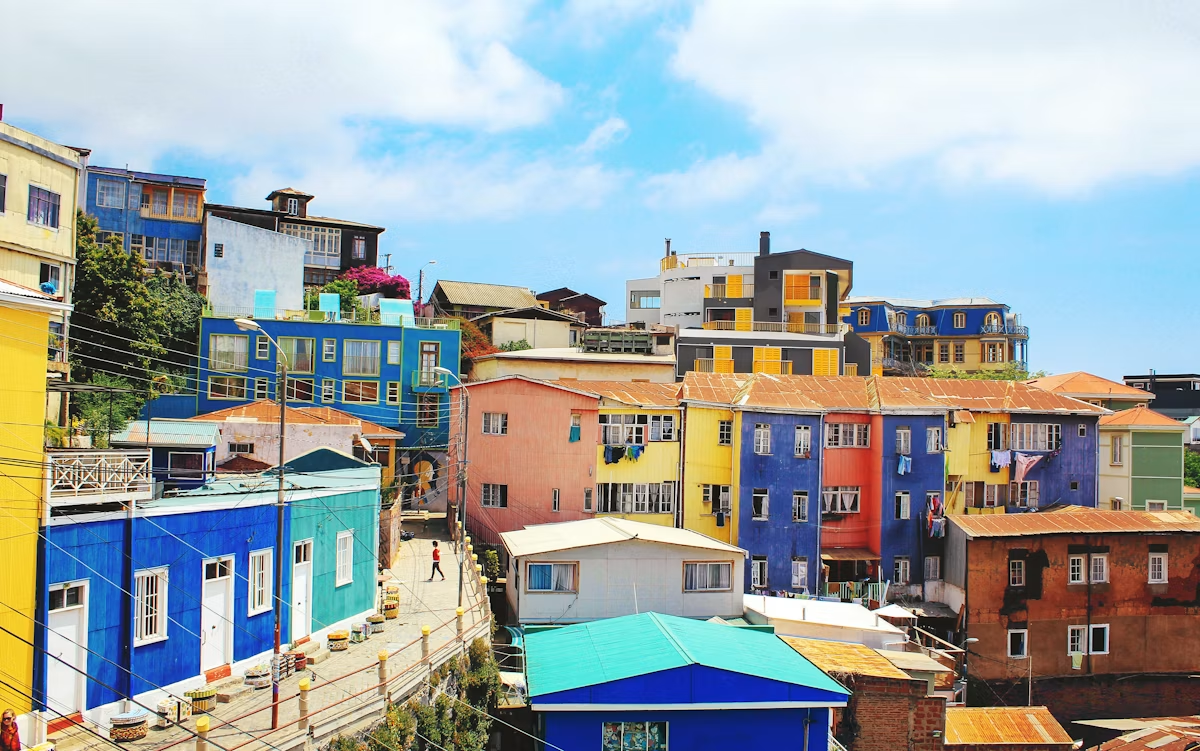
Photo by Loïc Mermilliod on Unsplash
Street Art and the Ascensores
Valparaíso’s street art isn’t confined to a single gallery district — it covers entire hillsides, staircases, and the corrugated-metal facades that define the city’s architecture, much of it produced by internationally recognized Chilean muralists rather than amateur taggers. Walking tours focused specifically on the street art scene run $15–$25 and are widely considered worth booking for the historical and artistic context a self-guided wander misses.
The ascensores — wooden funicular elevators built between the 1880s and 1910s to move residents and cargo up the steepest slopes — remain functional on roughly half of the original routes, with Ascensor Concepción (the oldest, from 1883) and Ascensor Reina Victoria among the most scenic and tourist-friendly. Rides cost 300–500 CLP ($0.30–$0.55) and double as a practical way to skip a genuinely brutal climb.
Food in Valparaíso
Valparaíso’s port-city history shows up directly in its food — heavy on fresh seafood, with European immigrant influence layered on top of traditional Chilean coastal cooking.
- Chorrillana: A massive shared plate of fries topped with grilled beef, onions, and fried eggs — originally a port-worker dish, now a Valparaíso specialty found at bars across the city. 8,000–14,000 CLP ($8.40–$14.70)
- Mariscal: A cold seafood medley (typically clams, mussels, and shrimp) served in a citrus-and-onion broth — a defining dish of any Valparaiso travel guide food itinerary given the city’s relationship with the Pacific. 9,000–15,000 CLP ($9.50–$15.80)
- Empanadas de Mariscos: Seafood-stuffed empanadas, a coastal variant of Chile’s national snack food
- Completo: Chile’s loaded hot dog, piled with avocado, tomato, mayonnaise, and sauerkraut — a cheap, ubiquitous street food
- Chilean wine: The nearby Casablanca Valley produces some of Chile’s best cool-climate whites, widely poured at Valparaíso’s restaurants and wine bars
Day Trips from Valparaíso
Viña del Mar (15–20 minutes)
Valparaíso’s wealthier, more modern beach-resort neighbor, easily reached by metro or bus — a contrast in atmosphere worth seeing alongside Valparaíso’s bohemian chaos.
Casablanca Valley (45 minutes by car)
One of Chile’s premier cool-climate wine regions, known particularly for Sauvignon Blanc and Pinot Noir — wineries here run tours and tastings aimed squarely at day-trippers from Valparaíso and Santiago.
Santiago (1.5–2 hours by bus)
Chile’s capital, easily combined as a one-night addition for travelers flying in or out of SCL, with frequent and inexpensive bus connections running throughout the day.
Where to Stay
Budget ($15–$30/night)
Hostels concentrated in Cerro Concepción and Cerro Alegre, often in converted historic houses — the standard entry point for backpackers drawn by the street art scene.
Mid-Range ($45–$90/night)
Boutique hotels in restored 19th-century mansions on Cerro Alegre, many with bay views — the defining accommodation tier for a Valparaiso travel guide visit.
Upscale ($120–$250+/night)
Design hotels and larger upscale properties, generally clustered closer to the harbor or in Viña del Mar for travelers wanting beach access alongside Valparaíso’s hillside character.
Getting Around Valparaíso
Walking: Essential and unavoidable given the terrain — comfortable shoes are non-negotiable, and routes should be planned around which hills to tackle each day.
Ascensores: The funiculars remain the most iconic and practical way to handle elevation changes between the port level and the upper hills.
Colectivos: Shared taxis running fixed routes up specific hills — faster and only marginally more expensive than waiting for buses, and a common local solution to the city’s vertical geography.
Daily Budget Breakdown
| Category | Frugal | Comfortable |
|---|---|---|
| Accommodation | 18,000 CLP | 75,000 CLP |
| Food | 12,000 CLP | 35,000 CLP |
| Transport | 3,000 CLP | 10,000 CLP |
| Activities / tours | 5,000 CLP | 18,000 CLP |
| Daily Total | ~38,000 CLP / $40 | ~138,000 CLP / $145 |
Final Verdict: Valparaiso Travel Guide 2026
Valparaíso rewards travelers willing to climb — the city’s best moments are almost all found partway up a hill, whether that’s a mural-covered staircase, a bay-view café terrace, or a funicular platform with the harbor spread out below. The ideal Valparaiso travel guide itinerary runs two to three days: one full day working through Cerro Concepción and Cerro Alegre on foot, a half-day dedicated street art walking tour through Cerro Bellavista, and a final day split between a Casablanca Valley wine trip and an evening in neighboring Viña del Mar. Visitors should pack for variable coastal weather even outside the rainy winter months, since fog and wind off the Pacific can shift conditions quickly regardless of season.