
Tirana has spent the last decade transforming from one of Europe’s least-visited capitals into one of its most talked-about budget bases for remote workers — a city of colorful Italian-influenced architecture, a fast-growing café and coworking scene, and living costs that undercut nearly every other capital on the continent. Albania’s visa-free entry for a long list of nationalities, paired with fiber internet that frequently outperforms what’s available in Western Europe, has turned Tirana into a default stop on the Balkan nomad circuit rather than a curiosity. This Tirana digital nomad guide covers coworking spaces, neighborhoods, cost of living, visa rules, SIM cards, and a full monthly budget breakdown for 2026.
At a Glance
| Country | Albania |
| Currency | Albanian Lek (ALL) — ~95 ALL per $1 USD |
| Language | Albanian; English widely spoken among younger residents |
| Best time | April–June and September–October (mild, before/after peak summer heat) |
| Avoid | July–August (35°C+ heat, limited air conditioning in older buildings) |
| Monthly budget (frugal) | $900–$1,300/month |
| Monthly budget (comfortable) | $1,800–$2,800/month |
| Visa | Visa-free for 90 days for US, UK, Canadian, EU, and many other passport holders; longer stays require a residence permit application |
| Getting there | Tirana International Airport (TIA), 17 km from the city center, 30-minute taxi or shuttle |
| Internet | Fiber connections widely available, 100–500 Mbps common in newer apartments |
Why Tirana for Remote Work
Albania has quietly built one of the fastest fixed-line internet infrastructures in the Balkans, a side effect of late but aggressive fiber rollout — most new-build apartments in central Tirana now ship with gigabit-capable connections as standard. Combined with rent that runs a third to half of what comparable Western European capitals charge, Tirana has become a place where a modest remote salary stretches considerably further without sacrificing café culture, walkability, or a genuine night-out scene in the Blloku district.
The catch any Tirana digital nomad guide should flag upfront: Albania’s 90-day visa-free window is not automatically extendable for most nationalities, and longer stays require navigating a residence permit process that’s improved in recent years but still involves paperwork, translated documents, and patience.
Coworking Spaces and Cafés
Tirana’s coworking scene is smaller than Lisbon’s or Tbilisi’s but has grown steadily, concentrated mainly around the Blloku and city-center areas where the highest density of cafés, restaurants, and young professionals overlaps.
- Dedicated coworking spaces: Several hot-desk and private-office operators have opened in the past few years, typically running $120–$220/month for a dedicated desk — considerably cheaper than equivalent spaces in Western Europe
- Café culture: Tirana’s café density rivals cities twice its size, and most central cafés tolerate laptop work for the price of a coffee, particularly outside the morning rush — a common low-cost alternative to a formal coworking membership
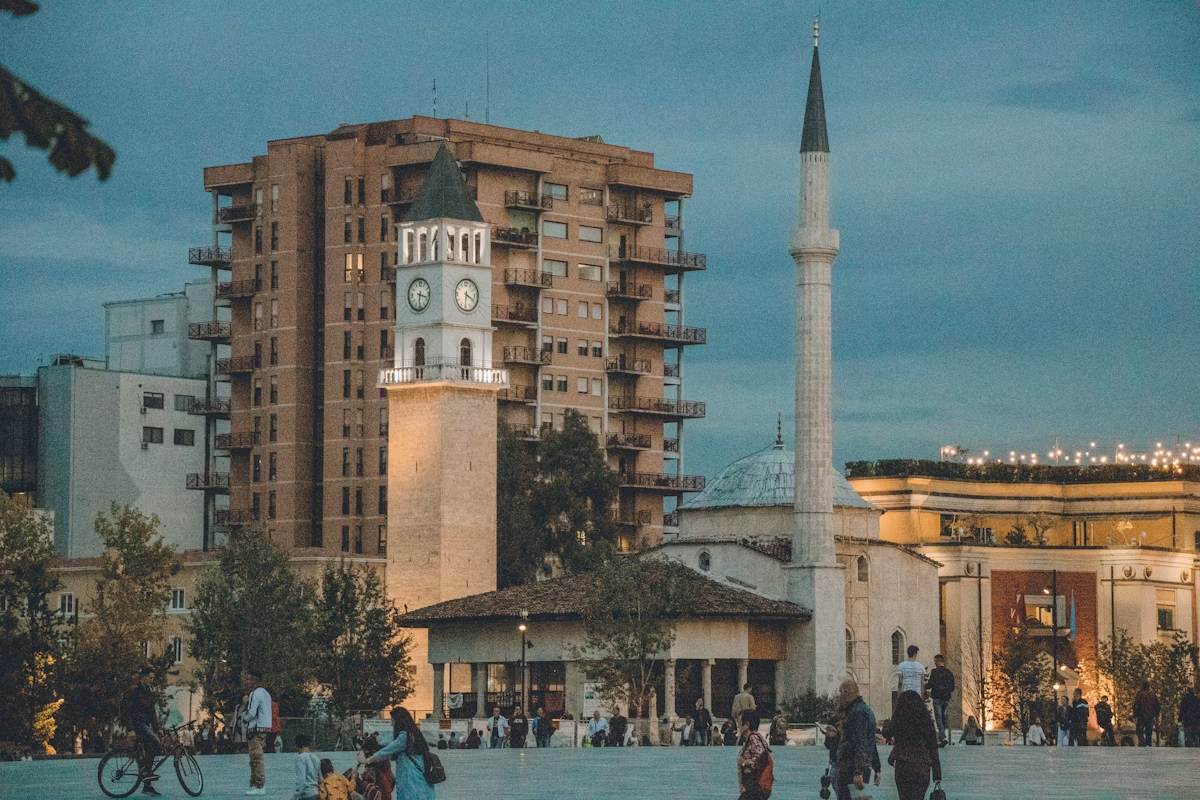
- Reliable Wi-Fi corridors: Blloku and the area around Skanderbeg Square have the most consistent café Wi-Fi, given the concentration of newer buildings with fiber already wired in
Best Neighborhoods for Nomads
Blloku
The former Communist-era elite quarter, now Tirana’s trendiest district — dense with bars, restaurants, and boutique cafés, and the default first choice for any Tirana digital nomad guide reader prioritizing nightlife and walkability over quiet.
Center (near Skanderbeg Square)
Closer to the National Museum and main government buildings, with slightly lower rents than Blloku and easy walking access to most of the city’s coworking spots and the central produce market.
Don Bosko / Selita
Quieter, more residential southern districts offering noticeably cheaper rent for nomads willing to trade a 15–20 minute walk or short taxi ride for meaningfully lower monthly costs.
Visa and Residence Permit Rules
Most Western passport holders enter Albania visa-free for up to 90 days within a 180-day period, no advance application required. For stays beyond that window, Albania offers a residence permit process aimed partly at remote workers, requiring proof of income, health insurance, and a registered address — processing has historically taken weeks to a few months, so any Tirana digital nomad guide reader planning a long-term stay should start the application well before the 90-day visa-free period expires.
SIM Cards and Connectivity
Albania’s three main carriers — Vodafone Albania, One Telecommunications, and ALBtelecom — all offer prepaid tourist SIMs available at the airport or city kiosks for roughly 1,000–2,000 ALL ($10–$21) with several GB of data, activated immediately with a passport. Home fiber connections in newer apartments commonly deliver 100–500 Mbps for $15–$25/month, making a backup mobile hotspot more of a convenience than a necessity for most remote workers.
Food and Cost of Living
Albanian cuisine blends Mediterranean, Ottoman, and Italian influences, and Tirana’s restaurant scene has expanded rapidly to match its growing expat population.
- Tavë Kosi: Baked lamb and rice in a tangy yogurt sauce — Albania’s most iconic dish, found at nearly every traditional restaurant. 400–700 ALL ($4.20–$7.40)
- Byrek: Flaky phyllo pastry filled with spinach, cheese, or meat — a ubiquitous breakfast or snack food sold from bakeries citywide. 50–150 ALL ($0.55–$1.60)
- Qofte: Grilled meatballs, often served with yogurt and flatbread — a casual lunch staple
- Italian-influenced café food: A holdover from decades of Italian television and cultural influence; espresso culture runs deep, with a strong cup costing 100–150 ALL ($1.05–$1.60)
- Fresh produce markets: The Pazari i Ri (New Bazaar) offers cheap, high-quality local produce — a major lever for keeping a frugal monthly grocery budget low
Getting Around Tirana
Walking: The center, Blloku, and most nomad-relevant neighborhoods are walkable, though sidewalks can be uneven outside the main tourist core.
Taxis and ride apps: Cheap by European standards — a cross-town ride typically runs 300–500 ALL ($3.20–$5.30); local ride-hailing apps are widely used.
Buses: A citywide bus network covers most neighborhoods at low cost, though routes and schedules are less digitized than in larger Western capitals.
Monthly Budget Breakdown
| Category | Frugal | Comfortable |
|---|---|---|
| Accommodation (studio/1BR) | $400 | $900 |
| Food | $250 | $500 |
| Coworking / café work | $50 | $180 |
| Transport | $30 | $80 |
| Entertainment / misc | $170 | $340 |
| Monthly Total | ~$900 | ~$2,000 |
Final Verdict: Tirana Digital Nomad Guide 2026
Tirana works best for nomads who want genuinely low costs without retreating to a small town — it delivers capital-city infrastructure, a real nightlife scene, and fast internet at a fraction of Western European rents. The ideal approach for any Tirana digital nomad guide reader is to spend the first two weeks in Blloku to get oriented, then decide whether to stay central for convenience or shift toward Don Bosko or Selita for materially cheaper rent once the city’s layout feels familiar. The 90-day visa-free window is generous for a trial run, but anyone planning to stay longer should start the residence permit paperwork well in advance rather than waiting until the deadline approaches.