
Bangkok is one of the most functional cities in the world for remote workers — a metropolis of eleven million people that somehow manages to be affordable, efficient, connected, and genuinely interesting all at once. The city has a coworking infrastructure that rivals Bali or Chiang Mai, a food scene of extraordinary quality at every price point, and a transport network that has improved dramatically since the expansion of the BTS Skytrain and MRT systems. Thailand’s long-term resident visa program has made multi-year stays legally straightforward. The Bangkok digital nomad community has existed for over a decade and has developed a mature ecosystem of coworking spaces, café-working venues, and expat social networks that makes integration easier than almost any other major Asian city. This Bangkok digital nomad guide covers the best neighborhoods, coworking spaces, visa options, food, and practical logistics to live and work in Thailand’s capital in 2026.
At a Glance
| Country | Thailand |
| Currency | Thai Baht (THB) — ~35 THB per $1 USD |
| Language | Thai; English widely spoken in coworking, tourist, and business areas |
| Best time | November–February (cool, dry season, 24–32°C) |
| Avoid | April–June (hottest months, 35–40°C+); October (wettest month) |
| Monthly budget (comfortable) | $1,000–$1,800/month |
| Monthly budget (frugal) | $700–$1,100/month |
| Visa | 60-day tourist visa (extendable to 90 days); Thailand LTR Visa for long-term stays |
| Internet | 100–300 Mbps widely available in coworking spaces and modern apartments |
Why Bangkok Digital Nomad Life Works in 2026
The Bangkok digital nomad case rests on a combination of factors that no single other Southeast Asian city matches. Cost of living is significantly lower than Singapore or Tokyo. The food quality — from street-level to Michelin-starred — is exceptional. The BTS/MRT network connects the city’s key districts with an efficiency that reduces the transit friction that afflicts car-dependent capitals. And Bangkok’s sheer urban density means that whatever you need — specialist equipment, healthcare, visa services, a particular cuisine — exists within reach.
Internet: Bangkok’s average broadband speeds are among the highest in Southeast Asia. Fiber internet in modern condominiums: THB 400–700/month ($11.43–$20.00). Mobile data: THB 299–599/month ($8.54–$17.11) for unlimited 4G/5G. Coworking spaces and modern cafés deliver 100–300 Mbps consistently.
Cost: A comfortable Bangkok digital nomad lifestyle — furnished condo in a well-connected neighborhood, daily eating at local restaurants supplemented by occasional fine dining, coworking membership — costs $1,000–$1,800/month. This delivers a material standard of living that is genuinely difficult to replicate at this price elsewhere in a city of Bangkok’s scale and quality.
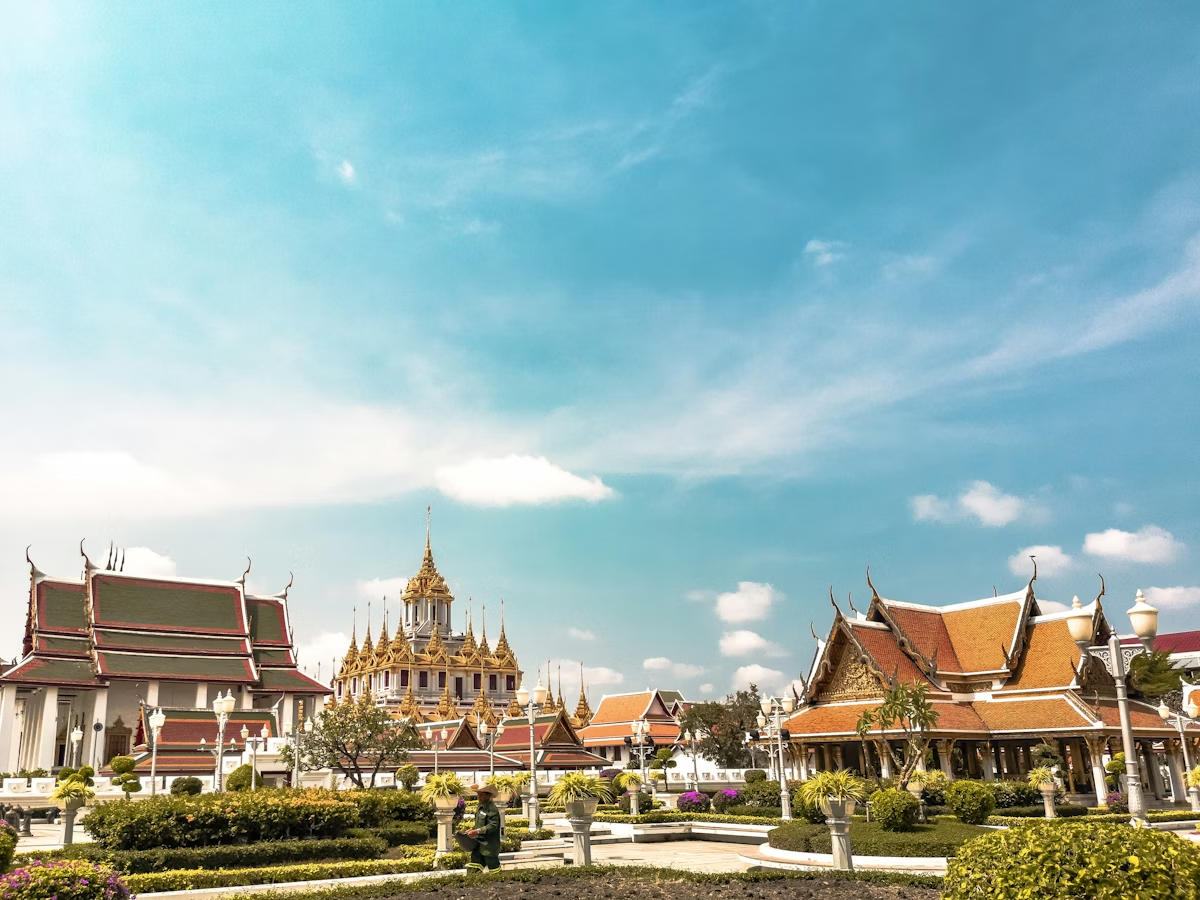
Photo by Alejandro Cartagena on Unsplash
Best Neighborhoods for Bangkok Digital Nomads
Silom / Sathorn — The Business Core
Bangkok’s central business district — a dense corridor of office towers, international hotels, excellent restaurants, and one of the city’s most developed coworking ecosystems. BTS Sala Daeng and MRT Silom provide two-line access. Lumphini Park (Bangkok’s largest, 57 hectares) is within walking distance — the best morning run option in central Bangkok.
- Furnished 1BR condo: THB 18,000–35,000/month ($514–$1,000)
- Best for: Bangkok digital nomad residents who prioritize business district access and coworking density
Ekkamai / Thonglor — The Lifestyle Hub
The most fashionable residential neighborhood in Bangkok — Japanese restaurants, specialty coffee shops, independent boutiques, and the highest concentration of rooftop bars in the city. Strong café-working culture; less dominated by corporate coworking than Silom. The BTS Ekkamai and Thonglor stations serve the area.
- Furnished 1BR condo: THB 22,000–45,000/month ($629–$1,286)
- Best for: Bangkok digital nomad residents seeking lifestyle quality, Japanese food, and café culture
Ari — The Underrated Local District
Quieter than Ekkamai, more residential, with a strong community of independent cafés, local restaurants, and boutique shops clustered around the BTS Ari station. Accommodation is mid-range by Bangkok standards; the neighborhood character is genuinely livable in a way that more tourist-facing areas are not.
- Furnished 1BR condo: THB 16,000–28,000/month ($457–$800)
- Best for: Long-stay Bangkok digital nomad residents, café workers, those wanting authentic neighborhood character
Phrom Phong / Asok — Mid-Sukhumvit
The heart of the Sukhumvit expat corridor — the Emporium and EmQuartier malls, Terminal 21, Benchasiri Park, and a high density of international restaurants and supermarkets (Emporium Supermarket, Tops Market). Two BTS stations provide excellent connectivity.
- Furnished 1BR condo: THB 20,000–40,000/month ($571–$1,143)
- Best for: Bangkok digital nomad residents needing expat amenities, international supermarkets, strong English-speaking service environment
Best Coworking Spaces in Bangkok
Hubba-TO (Ekkamai)
One of Bangkok’s most established independent coworking spaces — a design-forward environment with reliable high-speed fiber, private offices, hot desks, meeting rooms, and an active community of tech workers and creatives. The Bangkok digital nomad community rates Hubba-TO highly for its atmosphere and community programming.
- Price: THB 3,500–7,000/month ($100–$200) hot desk; day passes available
- Best for: Creative professionals, startup workers, community-seeking Bangkok digital nomad residents
Glowfish (Sathorn)
A premium coworking brand with multiple Bangkok locations — professional-grade facilities, private offices, meeting rooms, and a business address service that suits digital nomads who need Thai legal presence for client purposes.
- Price: THB 5,000–10,000/month ($143–$286) hot desk
- Best for: Business-focused Bangkok digital nomad residents, client-facing remote workers
CAMP (Mac Café, multiple locations)
A local phenomenon — CAMP is a chain of café-style coworking spaces run by McDonald’s Thailand, operating 24 hours at many locations. Free WiFi (fast, reliable), unlimited coffee orders at low prices, and the convenience of round-the-clock operation. Not a formal coworking space but used daily by a significant portion of Bangkok’s Bangkok digital nomad working population.
- Price: Coffee from THB 80 ($2.29) — no minimum spend policy
- Best for: Casual working sessions, late-night work, budget Bangkok digital nomad residents
AIS D.C. (multiple locations)
High-speed fiber coworking operated by AIS (Thailand’s largest telecom carrier) — guaranteed 1 Gbps connections, clean workstations, and affordable day passes. Good for data-intensive work sessions.
- Price: THB 99–299/day ($2.83–$8.54); monthly options available
- Best for: Video editors, developers, any Bangkok digital nomad with high bandwidth requirements
Thailand Visa Options for Bangkok Digital Nomads
Tourist Visa (TR)
Standard entry for most Western passport holders — 60 days on arrival (or via pre-obtained visa), extendable once at any Bangkok immigration office for 30 more days (total 90 days). Extension fee: THB 1,900 ($54). After 90 days, a border run to a neighboring country resets the clock, though this approach is less sustainable for permanent residency.
Thailand Long-Term Resident (LTR) Visa
Thailand’s dedicated remote worker and professional visa — the strongest legal framework for Bangkok digital nomad residents who want multi-year stays without border run dependency:
- Duration: 10 years (multiple entry), renewable
- Key categories: “Work-from-Thailand Professional” (remote workers earning $80,000+/year from foreign employers), “Wealthy Global Citizen,” “Highly Skilled Professional”
- Benefits: 90-day reporting waiver (replaced by annual reporting), work permit permission included for the Work-from-Thailand category, family member extensions
- Application: ltr.boi.go.th — fully online; approval takes 20–30 business days
For Bangkok digital nomad residents planning stays longer than a standard tourist visa cycle, the LTR visa represents the most legally solid path available in 2026.
Bangkok Food: Essential Eating for Digital Nomads
Bangkok’s food culture is one of the most diverse and price-stratified in the world — street stalls serving dishes for THB 50–80 ($1.43–$2.29) operate alongside some of the finest restaurants in Asia. The Bangkok digital nomad food strategy is to eat primarily at the street-level and market tier, where quality is high and competition keeps prices reasonable.
Essential Bangkok dishes:
- Pad Thai: Stir-fried rice noodles with egg, tofu or shrimp, bean sprouts, crushed peanuts, and lime — Bangkok’s most exported dish, and genuinely excellent from quality street stalls. THB 60–100 ($1.71–$2.86)
- Khao Man Gai: Poached chicken over fragrant ginger rice with dark soy sauce, cucumber, and broth — the Thai equivalent of Hainanese chicken rice. One of the best quick lunches in Bangkok. THB 50–80 ($1.43–$2.29)
- Tom Yum Goong: Spiced shrimp soup with lemongrass, galangal, kaffir lime, and fish sauce — properly sour, properly hot. THB 80–180 ($2.29–$5.14) depending on setting
- Som Tam: Green papaya salad with fish sauce, lime, chili, and peanuts — the flavor cornerstone of Thai food. THB 50–80 ($1.43–$2.29) at market stalls
- Khao Niao Mamuang: Mango sticky rice — sweet glutinous rice with fresh mango and coconut milk. The best seasonal dessert in Southeast Asia (best quality March–June, mango season). THB 60–100 ($1.71–$2.86)
Best eating areas for Bangkok digital nomad residents:
- Or Tor Kor Market (Chatuchak): Premium fresh market with prepared food stalls — the highest quality market food in Bangkok
- Talad Rot Fai (Train Night Market, Ekkamai): Weekend night market with street food, retro goods, and outdoor bars
- Victory Monument: Working-class lunch district — boat noodle restaurants, Thai-Chinese shophouse food, genuinely local prices
Day Trips from Bangkok
Ayutthaya (1.5 hrs by train)
The former capital of the Kingdom of Siam — a UNESCO World Heritage Site of ruined temples, headless Buddha statues, and 14th–17th century palace complexes spread across an island at the confluence of three rivers. Entry: THB 50–220 ($1.43–$6.29) per site. Train from Hua Lamphong or Bang Sue: THB 15–45 ($0.43–$1.29). The best historical day trip from Bangkok by a significant margin.
Kanchanaburi (2 hrs by bus or train)
The River Kwai Bridge and the Death Railway — the WWII-era infrastructure built by Allied POWs under the Japanese occupation. The Kanchanaburi War Cemetery, the JEATH War Museum, and the Death Railway Museum provide context. The surrounding landscape (waterfalls, national park) makes a two-day trip more rewarding than a day trip.
Amphawa Floating Market (1.5 hrs by bus)
A weekend floating market on the Mae Klong River — smaller and less tourist-saturated than the more famous Damnoen Saduak, with seafood grilled on wooden boats and the firefly-watching boat trips in the evening. Best reached by private car or minivan from Bangkok’s Southern Bus Terminal.
Getting Around Bangkok
BTS Skytrain: The above-ground rail network covering the Sukhumvit corridor (Ekkamai, Thonglor, Asok, Phrom Phong, Silom) — the fastest and most reliable way to move through the Bangkok digital nomad heartland. Single fare: THB 17–59 ($0.49–$1.69). Rabbit Card (stored value) provides seamless multi-line payment.
MRT: Underground metro network that intersects with the BTS at several key transfer stations (Asok/Sukhumvit, Silom/Sala Daeng, Hua Lamphong). Extends to areas the BTS doesn’t serve, including Chinatown, the riverside, and the airport rail link at Suvarnabhumi.
Grab (ride-hailing): The dominant app across Southeast Asia — reliable, metered pricing, safer than street taxis. Essential for Bangkok digital nomad residents reaching areas outside the rail network. GrabBike (motorcycle taxi) for short distances in traffic.
Boat: The Chao Phraya Express Boat is the fastest river crossing option and also a genuine commuter route — running from Nonthaburi in the north to Wat Rajsingkorn in the south. Tickets: THB 15 ($0.43) flat fare for orange-flag boats.
Airport: Suvarnabhumi Airport (BKK) — Airport Rail Link to Phaya Thai station: THB 45 ($1.29), 30 minutes. Don Mueang Airport (DMK, low-cost airlines) — van or taxi: THB 200–350 ($5.71–$10.00).
Monthly Cost of Living
| Category | Budget | Comfortable |
|---|---|---|
| Rent (1BR furnished) | $500 | $900 |
| Coworking | $0 (cafés) | $150 |
| Food & groceries | $200 | $400 |
| Transport (BTS + Grab) | $45 | $90 |
| Health insurance | $40 | $100 |
| Activities / misc | $80 | $200 |
| Total (USD) | ~$865 | ~$1,840 |
Final Verdict: Bangkok Digital Nomad Life in 2026
Bangkok rewards the Bangkok digital nomad who takes the time to learn the city’s neighborhood logic, transit network, and food geography. The learning curve is steeper than Chiang Mai or Bali — Bangkok is a real city of real scale, not a nomad resort — but the return on that investment is proportionally higher. World-class healthcare at a fraction of Western prices, food that is genuinely among the best on the planet at any budget, an emerging coworking scene that is increasingly matching the quality of East Asian capitals, and a visa pathway (the LTR) that finally provides long-term legal clarity. For digital nomads who have aged out of the standard Southeast Asia circuit and want the full urban experience without the Western capital price tag, Bangkok in 2026 remains the benchmark.