
Cape Town is the most visually spectacular city on any digital nomad list — full stop. Table Mountain rising 1,086 metres directly behind the city, the Atlantic and False Bay coastlines on either side, and a city center that somehow manages to be cosmopolitan, affordable, and genuinely beautiful simultaneously. The Cape Town digital nomad scene has grown steadily since the pandemic, driven by a weak rand, fast fiber internet, and a lifestyle that combines serious remote work infrastructure with surfing, hiking, and wine country within 30 minutes of any office chair. This guide covers everything you need to plan a Cape Town remote work base in 2026.
At a Glance
| Country | South Africa |
| Currency | South African Rand (ZAR) — ~18.5 ZAR per $1 USD |
| Language | English (one of 12 official languages, primary business language) |
| Best time | November–March (summer, dry, best weather) |
| Avoid | June–August (cold, wet, Cape Doctor wind season) |
| Monthly budget (comfortable) | $1,200–$2,000/month |
| Monthly budget (frugal) | $800–$1,200/month |
| Visa | 90-day visitor’s permit on arrival for US, EU, UK, and most Western nationalities |
| Airport | Cape Town International (CPT) — 20 min from city center |
| Co-working cost | $80–$150/month |
Why Cape Town Leads Africa for Remote Workers
The Cape Town digital nomad case is built on a currency advantage that makes the city dramatically affordable for USD or EUR earners. With the rand trading at 18–19 per dollar, a furnished apartment in a desirable neighborhood costs $500–$900/month, a restaurant dinner with wine runs $12–$20, and a monthly co-working membership sits at $80–$120. The purchasing power for a remote worker earning in a hard currency is extraordinary.
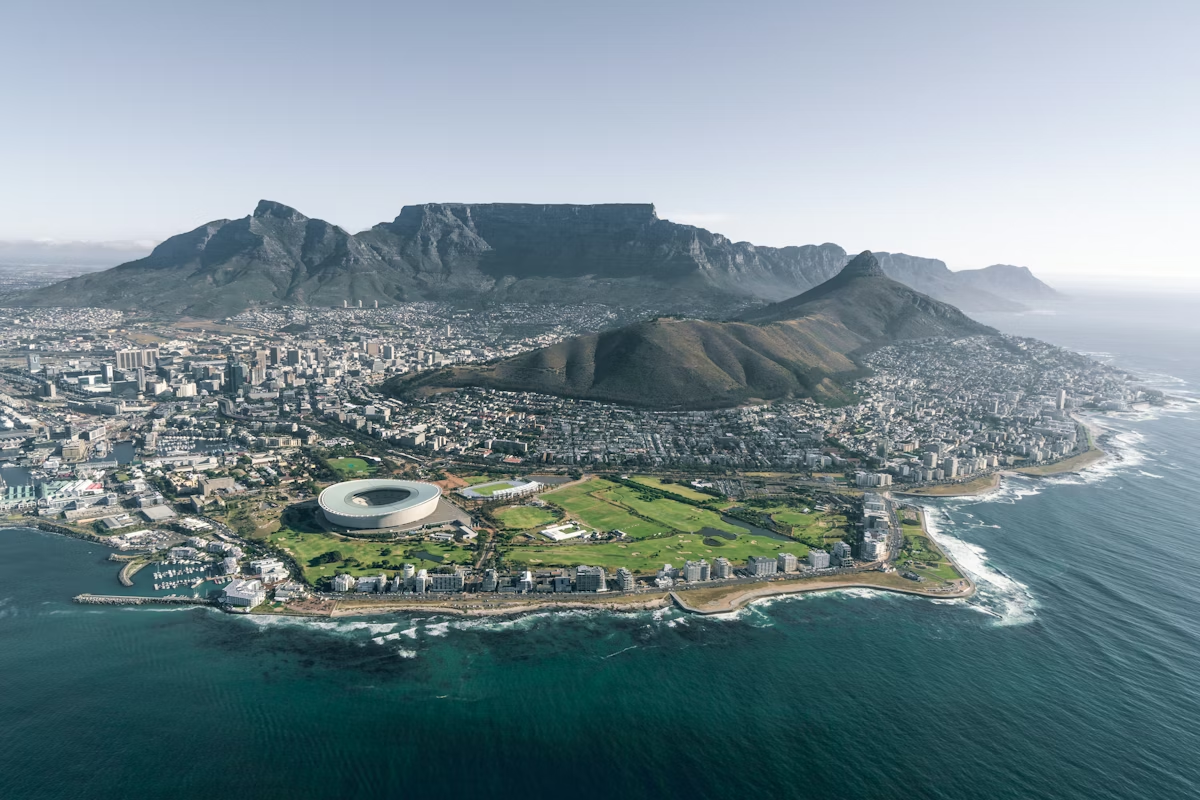
Photo by Christoph Scholz on Unsplash
Beyond the economics, Cape Town offers a quality of outdoor life unmatched by any other nomad destination. Table Mountain National Park is 10 minutes from the city center. Surf breaks at Muizenberg and Long Beach are 30 minutes by car. The Cape Winelands (Stellenbosch, Franschhoek) are 45 minutes away. For remote workers who want serious adventure access alongside their co-working pass, Cape Town delivers.
What’s Changed in 2026
- South Africa’s Digital Nomad Visa was formalized in 2024, offering 3-year residency for remote workers earning $35,000+ annually
- Load shedding (rolling electricity outages) has decreased significantly — most co-working spaces and modern apartments have backup power systems
- Sea Point and Green Point have emerged as the primary Cape Town digital nomad neighborhoods, displacing the City Bowl for longer-term stays
Best Neighborhoods for Cape Town Digital Nomads
Sea Point — Best Overall for Nomads
Sea Point is the Cape Town digital nomad neighborhood that most long-term remote workers settle in. A dense residential strip along the Atlantic Seaboard, it offers the best combination of walkability (the Sea Point promenade runs 3.5 km along the ocean), café density, grocery access, and reasonable rents. Furnished apartment rentals run ZAR 12,000–22,000/month ($650–$1,190).
The neighborhood runs from the Waterfront in the north to Bantry Bay in the south — everything from budget cafés and local restaurants to proper co-working spaces is accessible on foot or by short e-scooter/Uber ride.
- Best for: First-time Cape Town nomads, those wanting walkability and ocean proximity
- Rent (1BR furnished): ZAR 12,000–20,000/month ($650–$1,080)
Green Point — Best for Work-Life Balance
Adjacent to Sea Point and a short walk from the Cape Town Stadium and the Green Point Urban Park, Green Point is quieter and slightly more upscale than Sea Point while offering the same Atlantic access. The neighborhood has seen significant new co-working space development since 2023.
- Best for: Longer stays, those wanting a slightly quieter base, fitness-focused nomads (near the park running circuit)
- Rent (1BR furnished): ZAR 14,000–24,000/month ($757–$1,297)
De Waterkant — Best for Social Scene
Cape Town’s LGBTQ+ neighborhood and one of its most historically preserved — cobblestone streets, Cape Dutch architecture, and the highest concentration of bars and restaurants per block in the city. More expensive than Sea Point but exceptional for short stays.
- Rent (1BR furnished): ZAR 18,000–28,000/month ($973–$1,514)
- Best for: Short stays (1–2 months), social atmosphere, food and nightlife access
Woodstock / Observatory — Best for Budget
East of the City Bowl, Woodstock is Cape Town’s creative industry district — galleries, design studios, and a growing number of co-working spaces occupy the neighborhood’s brick industrial buildings. Significantly cheaper than the Atlantic Seaboard, with strong café infrastructure. Some areas require awareness of safety — stick to the main strips.
- Rent (1BR furnished): ZAR 8,000–14,000/month ($432–$757)
- Best for: Budget Cape Town digital nomad stays, creative sector workers
Best Co-Working Spaces in Cape Town
Workshop17 (Multiple Locations)
South Africa’s most established co-working brand, Workshop17 operates multiple Cape Town locations including the V&A Waterfront (most prestigious) and Kloof Street. Professional atmosphere, strong fiber (300+ Mbps), meeting rooms, and a community of local tech workers and international remote workers.
- Price: ZAR 2,200–2,800/month (~$120–$150) hot desk
- Best for: Full-time Cape Town digital nomad workers, professional environment, networking
The Workspace (Sea Point and Green Point)
A well-regarded independent Cape Town chain with Sea Point and Green Point locations that put members within walking distance of the ocean. Strong fiber, 24/7 access on monthly plans, and a community that skews toward international remote workers.
- Price: ZAR 1,800–2,500/month (~$97–$135)
- Best for: Sea Point and Green Point residents wanting a nearby workspace
Lemon Drop (City Bowl)
A café-co-working hybrid in the City Bowl with excellent coffee, fast Wi-Fi, and flexible workspace. Popular with Cape Town digital nomad day-workers who prefer café atmosphere over formal co-working. No membership required — buy coffee and work.
- Price: Cost of coffee (~ZAR 45–65 / $2.40–$3.50)
- Best for: Short-session workers, those not needing daily dedicated desk
Monthly Cost of Living Breakdown (2026)
| Category | Budget | Mid-Range | Comfortable |
|---|---|---|---|
| Rent (1BR furnished) | ZAR 10,000 ($540) | ZAR 16,000 ($865) | ZAR 24,000 ($1,297) |
| Co-working | ZAR 0 (cafés) | ZAR 2,000 ($108) | ZAR 2,800 ($151) |
| Food & groceries | ZAR 4,000 ($216) | ZAR 7,000 ($378) | ZAR 12,000 ($649) |
| Transport (Uber) | ZAR 1,500 ($81) | ZAR 2,500 ($135) | ZAR 4,000 ($216) |
| Health insurance | ZAR 1,500 ($81) | ZAR 2,500 ($135) | ZAR 4,000 ($216) |
| Activities / misc | ZAR 1,500 ($81) | ZAR 3,000 ($162) | ZAR 5,000 ($270) |
| Total (USD) | ~$999 | ~$1,783 | ~$2,799 |
South Africa Digital Nomad Visa (2026)
South Africa formalized its digital nomad visa pathway in 2024. The Remote Work Visa allows stays of up to 3 years for qualifying remote workers.
Requirements
- Proof of employment: Employment contract or client invoices showing remote work
- Income threshold: Minimum $35,000 USD annual income
- Health insurance: Valid international coverage in South Africa
- Criminal background check: Home country certificate (apostille required)
- Application: Via South African consulate in home country
Standard Visitor Permit (90 Days)
Most Western nationalities enter visa-free for 90 days. No extension is available in-country — you must exit and re-enter. The standard Lesotho or Mozambique border run is not officially supported as a visa reset strategy; the Remote Work Visa is the compliant route for stays beyond 90 days.
Safety in Cape Town — The Honest Picture
Cape Town requires the same informed awareness as any major city with significant inequality. The neighborhoods most popular with the Cape Town digital nomad community — Sea Point, Green Point, De Waterkant, the V&A Waterfront area — are genuinely safe for daily life. The city center CBD requires more awareness, particularly at night.
Practical habits used by long-term Cape Town residents:
- Use Uber or Bolt rather than street taxis at all times
- Don’t display laptops, cameras, or phones conspicuously on the street
- Avoid hiking alone on Table Mountain — go with a group or a guide
- Join Cape Town nomad WhatsApp groups for current neighborhood safety updates
- Carry only what you need — avoid displaying expensive equipment unnecessarily
Load shedding (scheduled power outages) has dramatically reduced since 2024. Most apartments and co-working spaces in Sea Point and Green Point now have backup power (inverters or generators), so this is less of a daily planning issue than it was in 2022–2023.
Practical Tips for Arriving Nomads
Getting from the Airport
Cape Town International Airport (CPT) is 20 km from the city center. Uber is the most reliable option ($12–$18 to Sea Point). The MyCiTi bus (City Express route) runs to the CBD for ZAR 67 ($3.62) but requires a MyConnect card (ZAR 35 deposit at the airport kiosk). No standard metered taxis are recommended.
Getting Around Cape Town
Cape Town is primarily a car city — public transport exists but is limited outside the CBD and Atlantic Seaboard. Uber and Bolt are the standard transport solutions for most Cape Town digital nomad residents. MyCiTi buses cover the main coastal corridor from Blouberg to Hout Bay. Car rental from $250–$400/month gives complete freedom but requires driving on the left.
SIM Cards and Internet
Vodacom and MTN both offer tourist SIMs with 10–30GB data packages from ZAR 150–250 ($8–$13.50). Fixed fiber internet in apartments: ZAR 500–900/month ($27–$49) for 100–1,000 Mbps (Vumatel/Frogfoot FTTH is widely available in Sea Point and Green Point).
Final Verdict: Cape Town Digital Nomad Life in 2026
Cape Town delivers an extraordinary combination of natural beauty, lifestyle quality, and USD/EUR purchasing power that no other major city can match. The digital nomad visa formalizes long-term stays, the co-working infrastructure is solid, and the daily experience — mountain hikes before work, wine country on weekends, ocean swims between calls — is genuinely exceptional. For remote workers willing to engage with the city on its own terms, the Cape Town digital nomad life in 2026 is one of the world’s best.