
Budapest is the strongest argument for budget travel in Europe. Hungary’s capital delivers grand architecture, a world-famous thermal bath culture, an explosive nightlife scene, and food that punches well above its price point — all at a cost that makes neighboring Vienna or Prague feel expensive. Budapest budget travel at $40–$50 per day is genuinely comfortable: good accommodation, three meals, transport, and attractions included. This guide covers everything you need to do Budapest properly without breaking your budget.
At a Glance
| Country | Hungary |
| Currency | Hungarian Forint (HUF) — ~370 HUF per $1 USD |
| Language | Hungarian; English widely spoken in tourist areas |
| Best time to visit | April–June, September–October |
| Avoid | July–August (hot, crowded, peak prices) |
| Daily budget (frugal) | $30–$45/day |
| Daily budget (comfortable) | $50–$80/day |
| Visa | Schengen visa-free for US, UK, and most Western nationalities (90 days) |
| Airport | Budapest Ferenc Liszt International (BUD) — 30 min from center |
| Currency tip | Always pay in HUF, never in EUR — terrible conversion rates on offers |
Why Budapest Is Europe’s Best Budget Capital
Budapest budget travel works because Hungary never joined the Eurozone. While neighboring Slovakia and Austria use the Euro, Budapest operates in forints — and the gap between quality and cost remains striking. A craft beer at a ruin bar costs 800–1,200 HUF ($2.15–$3.25). A hearty goulash at a local étterem: 2,500–3,500 HUF ($6.75–$9.50). A night in a well-rated hostel: 4,500–7,000 HUF ($12–$19). A day pass for the thermal baths: 6,900–8,500 HUF ($18.65–$23).
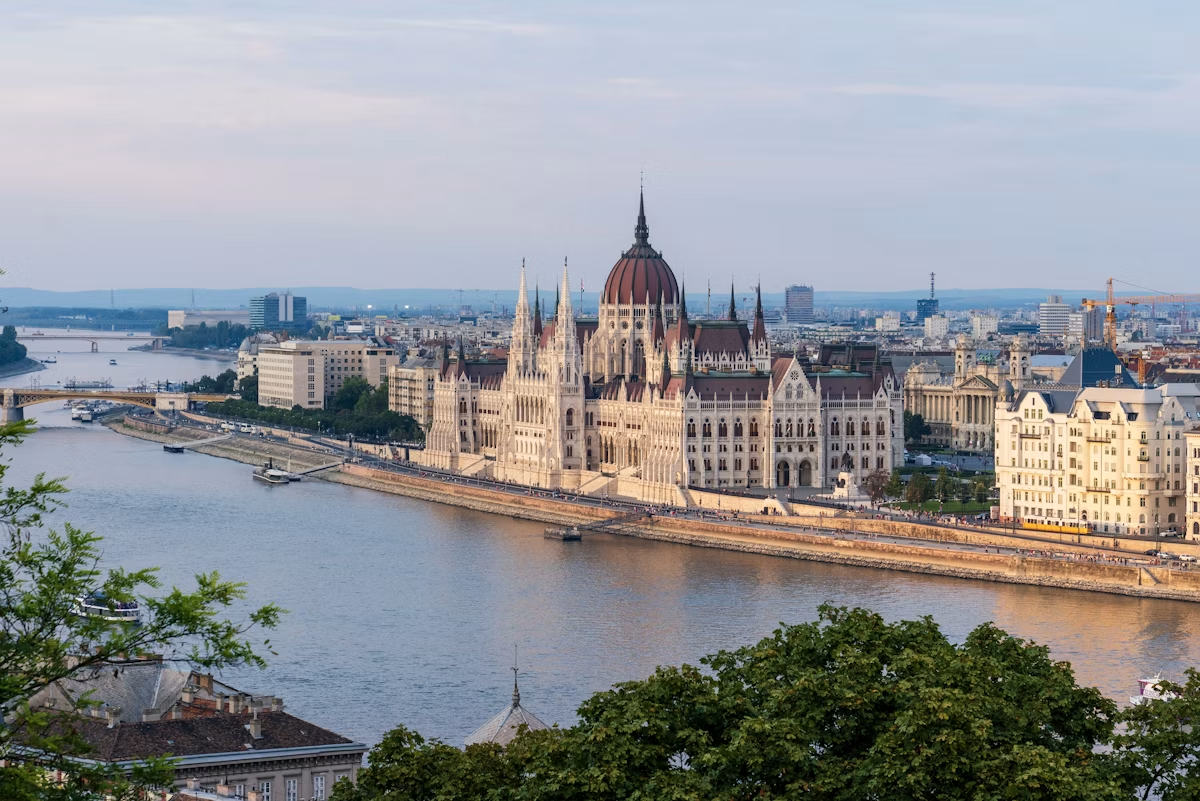
Photo by Ervin Lukacs on Unsplash
The city also divides cleanly into two halves along the Danube — Buda (hilly, historic, residential) and Pest (flat, commercial, nightlife-heavy) — connected by nine bridges including the famous Chain Bridge. Most budget accommodation concentrates in Pest, where the ruin bar district, the central market, and the main tourist sights are all walkable.
Top Things to Do in Budapest (Many Are Free)
Thermal Baths — The Essential Budapest Experience
Budapest sits on a network of 118 natural thermal springs, and bathing culture has defined city life for over 150 years. There are more than 15 operational bath complexes; three are worth prioritizing for first-time visitors.
Széchenyi Baths (Pest): The city’s largest and most famous outdoor thermal complex. Art Nouveau architecture, multiple outdoor pools (34°C), indoor pools, steam rooms, and saunas. Day ticket: 6,900–9,900 HUF ($18.65–$26.75) depending on day and season. Book online to guarantee entry.
Gellért Baths (Buda): The most architecturally spectacular bath complex in Budapest — a neoclassical temple of bathing with original mosaic tiles, vaulted ceilings, and a wave pool. Day ticket: 7,900–9,900 HUF ($21.35–$26.75).
Rudas Baths (Buda): The oldest active bath in Budapest, built during Ottoman rule in 1566. A magnificent original octagonal pool under a domed skylight. The Friday and Saturday night sessions (9 PM–4 AM) are popular with younger visitors.
Hungarian Parliament Building
The Parliament is the third-largest parliament building in the world and one of Europe’s most striking neo-Gothic structures. Guided tours run in English and include the Hungarian Crown Jewels. Entry: 9,000 HUF ($24.30) for EU citizens, reduced rates with student ID. Book online — queues are significant without pre-booking.
Fishermen’s Bastion and Buda Castle
The Fishermen’s Bastion on the Buda side offers the most photographed view in Budapest: the Parliament and Chain Bridge framed by neo-Romanesque turrets. Entry to the bastion itself is free during certain hours (check seasonally — fees apply at peak times). The adjacent Matthias Church charges 3,000–4,000 HUF for entry.
Buda Castle complex, a UNESCO World Heritage Site above the city, houses the Hungarian National Gallery (permanent collection free) and offers panoramic views at no charge from the castle grounds.
Ruin Bars — Budapest’s Signature Nightlife
The ruin bar scene began in the 2000s when entrepreneurs opened bars in the derelict Jewish Quarter buildings scheduled for demolition. The bars stayed, the neighborhood revived, and Budapest became internationally famous for this style of nightlife.
Szimpla Kert is the original and most famous — multiple floors, eclectic décor, regular film screenings, and a Sunday farmer’s market. Entry is free most nights. Drinks: 800–1,500 HUF ($2.15–$4.05).
Instant-Fogas is the largest ruin bar complex, occupying two connected buildings with seven dance floors.
The ruin bar district clusters around Kazinczy Street and Király Street in the 7th district — walkable from most Pest accommodation.
Great Market Hall (Vásárcsarnok)
Budapest’s largest covered market, built in 1897. The ground floor sells fresh produce, Hungarian salami, paprika, and pickles at prices significantly lower than tourist shops. The upper floor has food stalls serving langos (deep-fried bread with sour cream and cheese, 1,200–1,500 HUF) and traditional Hungarian dishes. Entry is free.
Where to Stay on a Budget
Hostels (Best Value in Pest)
Budapest’s hostel scene is well-developed and concentrated in the 5th, 6th, and 7th districts of Pest — walkable to the ruin bars, Central Market Hall, and Deák Ferenc Square (the main transit hub).
Dormitory beds run 4,500–7,000 HUF/night ($12–$19). Private rooms in well-rated hostels: 12,000–18,000 HUF ($32.45–$48.65). Look for hostels with included breakfast — it shifts the value equation significantly.
Top-rated budget neighborhoods:
- 7th District (Jewish Quarter): Best for nightlife access, ruin bar proximity
- 5th District (Inner City): Most central, closest to Parliament and Chain Bridge
- 6th District (Andrássy út): Near the Opera House and the luxury shopping boulevard
Budget Hotels and Apartments
Furnished apartment rentals via booking platforms run 15,000–25,000 HUF/night ($40.55–$67.60) for a private studio — excellent value for couples or longer stays. Budapest has a large stock of apartments in pre-war buildings with high ceilings and original features at prices that reflect the HUF exchange rate advantage.
Budapest Budget Food Guide
Eating Cheaply Like a Local
Budapest’s local food culture revolves around hearty, filling meals at low prices. The key is eating at étterem (restaurants) rather than tourist-facing establishments near the main sights.
Essential dishes and costs:
- Goulash (Gulyás): Hungary’s national dish — beef, paprika, and vegetables in a rich broth. 2,500–3,500 HUF ($6.75–$9.50) at a local restaurant
- Lángos: Deep-fried flatbread topped with sour cream, cheese, and garlic. 1,000–1,500 HUF ($2.70–$4.05) at market stalls
- Kürtőskalács (Chimney Cake): Sweet pastry cooked on a spit, dusted with cinnamon sugar. 800–1,200 HUF ($2.15–$3.25)
- Pörkölt: Paprika-braised meat stew served with egg noodles (nokedli). 2,800–4,000 HUF ($7.55–$10.80)
- Dobos torte: Hungary’s famous layered chocolate and caramel cake. 800–1,200 HUF at a cukrászda (pastry shop)
Best budget eating areas:
- Gozsdu Udvar (Gozsdu Passage): A covered courtyard in the 7th district with 20+ restaurants and bars; prices lower than equivalent venues near Parliament
- Hold Street Market (Hold utcai Piac): Renovated covered market with excellent food stalls and sit-down restaurants
- Kazinczy Street area: Dense concentration of restaurants at all price points
Getting Around Budapest on a Budget
Public Transport
Budapest’s metro, tram, and bus network is comprehensive and cheap. A single ticket: 450 HUF ($1.22). A 24-hour travel pass: 2,500 HUF ($6.75). A 72-hour pass: 5,500 HUF ($14.86). The pass is worth buying from day one if you’re making more than 3 journeys per day.
Key routes:
- Metro Line 1 (M1): The oldest underground railway in mainland Europe; runs the length of Andrássy út from Vörösmarty tér to the City Park (Városliget)
- Metro Line 2 (M2): East-west line connecting Keleti (Eastern) train station to the city center
- Tram 2: The most scenic tram route in Budapest — runs along the Pest riverbank with Parliament views
Getting from the Airport
The 100E airport bus runs directly from the airport to Deák Ferenc Square (main city hub) for 1,200 HUF ($3.24) — the best value airport transfer. Journey time: 35–50 minutes. No registration or pre-purchase needed. Taxis are fixed-rate (8,000–10,000 HUF / $21.60–$27.05) but offer no time advantage over the bus during non-rush hours.
Day Trips from Budapest
Szentendre (40 min by HÉV suburban train, 970 HUF): A picturesque Danube Bend town with Serbian Orthodox churches, galleries, and a pedestrian historic center. Excellent marzipan museum. Day trip cost: under $5 excluding food.
Eger (2 hours by train, ~3,500 HUF): A beautifully preserved Baroque city famous for its castle (1,200 HUF entry), Turkish minaret, and the Eger wine region (Egri Bikavér / Bull’s Blood wine). The Valley of Beautiful Women (Szépasszony-völgy) has dozens of wine cellars selling local varieties from 500 HUF per glass.
Visegrád + Esztergom (by Mahart ferry or bus): Two historic towns along the Danube Bend. Visegrád’s citadel offers panoramic river views (1,200 HUF entry). Esztergom houses Hungary’s largest cathedral (free entry to the basilica).
Budapest Daily Budget Breakdown
| Category | Budget | Comfortable |
|---|---|---|
| Accommodation | 6,000 HUF ($16.20) | 18,000 HUF ($48.65) |
| Food (3 meals) | 4,500 HUF ($12.15) | 12,000 HUF ($32.45) |
| Transport | 2,500 HUF ($6.75) | 2,500 HUF ($6.75) |
| Attractions | 3,000 HUF ($8.10) | 8,000 HUF ($21.60) |
| Total | ~$43 | ~$109 |
Final Verdict: Budapest Budget Travel in 2026
Budapest offers the most complete European city experience at the lowest price point on the continent. The combination of thermal baths, ruin bar nightlife, grand Habsburg architecture, and a food scene built around value-for-money makes Budapest budget travel one of the genuinely unmissable experiences in international travel. Arrive without high expectations and leave having revised everything you thought you knew about what Europe costs.