
Tangier occupies a position no other Moroccan city shares: a port at the narrowest point of the Strait of Gibraltar, close enough to see Spain across the water on a clear day, and a city that spent decades as an International Zone drawing writers, spies, and exiles drawn to its in-between status. After a major government-led renovation push over the past decade, Tangier’s medina and seafront have been restored into one of Morocco’s most walkable and increasingly polished old cities, while still carrying the layered, cosmopolitan history that made it famous. This Tangier travel guide covers the medina, kasbah, day trips to Spain, food, and a full budget breakdown for 2026.
At a Glance
| Country | Morocco |
| Currency | Moroccan Dirham (MAD) — ~10 MAD per $1 USD |
| Language | Arabic, Berber, French, Spanish; English common in tourist areas |
| Best time | April–June and September–October (mild weather, fewer crowds) |
| Avoid | Mid-summer for ferry crossings (highest passenger volume to/from Spain) |
| Daily budget (frugal) | $25–$40/day |
| Daily budget (comfortable) | $55–$120/day |
| Visa | Visa-free for 90 days for US, UK, Canadian, EU, and most other passport holders |
| Getting there | Ibn Battouta Airport (TNG), or a 1-hour ferry from Tarifa, Spain |
| Getting around | Walking within the medina, petit taxis for the new town |
The Medina and Kasbah
Tangier’s medina sits compactly between the port and the kasbah, its whitewashed walls and blue accents giving it a visual kinship with Chefchaouen, though laid out with noticeably wider streets and gentler slopes that make it easier to navigate without a guide. The Petit Socco, a small plaza at the medina’s heart, has functioned as a social and commercial hub since the city’s international-zone era, ringed by cafés that once hosted writers like Paul Bowles and William Burroughs.
The kasbah, perched at the medina’s highest point, holds the old Sultan’s palace — now a museum — along with the city’s best free panoramic views over the strait toward Spain, especially striking near sunset.
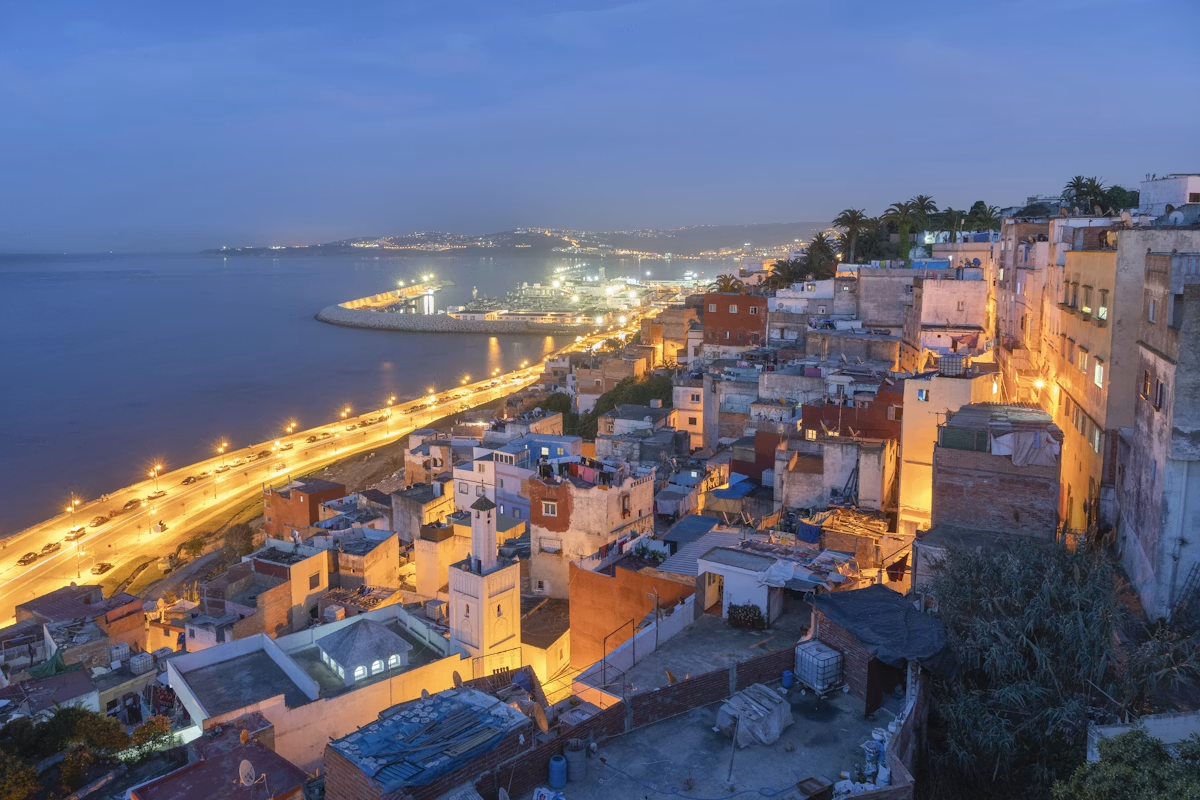
Photo by Raúl Cacho Oses on Unsplash
Strait Views and the Seafront
Tangier’s recently renovated seafront promenade (Avenue Mohammed VI) stretches along the bay with a wide pedestrian boulevard, restored beach, and a clear line of sight across the Strait of Gibraltar to the Spanish coast on clear days — a view available in no other Moroccan city. Cap Spartel, a short drive west of the city, marks the point where the Atlantic and Mediterranean meet and offers a quieter, wind-swept alternative viewpoint with a historic lighthouse.
Food in Tangier
Tangier’s food scene reflects its port-city, cross-cultural history, blending standard Moroccan staples with noticeably more seafood and Spanish-influenced dishes than inland cities.
- Grilled sardines and fresh catch: Sold at the port and along the seafront, reflecting Tangier’s identity as a working fishing harbor as much as a tourist city. 30–60 MAD ($3–$6)
- Bissara: A thick fava bean soup popular as a cheap, filling breakfast across northern Morocco
- Café culture: Tangier’s historic cafés, several dating to the International Zone era, remain a core part of daily life and a pleasant, inexpensive way to people-watch
- Tagine and couscous: Standard Moroccan staples available throughout the medina, generally slightly cheaper than in Marrakech or Fez
- Spanish-influenced tapas bars: A legacy of the city’s historic ties to Spain, found mostly in the new town near the seafront
Day Trips from Tangier
Tarifa, Spain (1 hour by ferry)
A genuinely practical international day trip — frequent ferries cross the strait in about an hour, making a same-day visit to mainland Europe entirely feasible from Tangier.
Chefchaouen (1.5–2 hours by car)
Morocco’s famous blue city sits within easy day-trip or onward-travel range of Tangier, through scenic Rif Mountain foothills.
Asilah (45 minutes by car)
A smaller, quieter whitewashed coastal town known for its murals and relaxed Atlantic beach, popular as a half-day or overnight escape from Tangier.
Where to Stay
Budget ($15–$28/night)
Riads and guesthouses inside the medina, often with rooftop terraces facing the port or kasbah.
Mid-Range ($40–$85/night)
Boutique riads near the kasbah or hotels along the renovated seafront — the standard Tangier travel guide accommodation tier.
Upscale ($110–$250+/night)
Seafront hotels and historic-building conversions with strait views, several within walking distance of the medina.
Getting Around Tangier
Walking: The medina and kasbah are compact and walkable, with most sights reachable within a 15-minute walk of the Petit Socco.
Petit taxis: Inexpensive for reaching the new town, port, or seafront promenade beyond medina walking distance.
Ferries and trains: Tangier’s port connects to Spain in about an hour, and a high-speed rail line (Al Boraq) connects to Rabat and Casablanca in roughly 2 hours.
Daily Budget Breakdown
| Category | Frugal | Comfortable |
|---|---|---|
| Accommodation | $13 | $50 |
| Food | $7 | $22 |
| Transport | $2 | $10 |
| Activities (museums, day trips) | $4 | $20 |
| Daily Total | ~$26 | ~$102 |
Final Verdict: Tangier Travel Guide 2026
Tangier’s combination of a walkable, recently restored medina, genuine strait-side views of Europe, and a one-hour ferry to Spain makes it an unusually flexible base — equally workable as a Morocco entry point, a standalone two-to-three-day stop, or a bridge between Moroccan and Spanish itineraries. The ideal Tangier travel guide plan spends one day on the medina and kasbah, a half-day along the seafront and Cap Spartel, and an optional extra day for either the Tarifa ferry crossing or a side trip to Chefchaouen. Visitors connecting onward to Spain should book ferry tickets a day or two ahead during peak summer months, when crossings run at higher capacity but can still sell out.