
Faroe Islands travel guide readers usually expect a remote, hard-to-reach footnote on the way to Iceland, then arrive and find eighteen volcanic islands strung across the North Atlantic, with grass-roofed villages perched on cliff edges and waterfalls that drop directly into the sea. The Faroe Islands, an autonomous territory of Denmark roughly halfway between Iceland and Norway, pack a startling amount of dramatic coastal scenery into a land area smaller than many single countries’ national parks. This Faroe Islands travel guide covers the cliffside villages, waterfalls and hiking trails, food, and a full budget breakdown for 2026.
At a Glance
| Country | Faroe Islands (Kingdom of Denmark) |
| Currency | Faroese Króna / Danish Krone (DKK) |
| Language | Faroese; Danish and English widely spoken |
| Best time | June–August (mildest weather, longest daylight hours) |
| Avoid | October–February (frequent storms, short daylight, many trails closed) |
| Daily budget (frugal) | $70–$95/day |
| Daily budget (comfortable) | $110–$260/day |
| Visa | Visa-free for most Western nationalities for up to 90 days; not part of the EU or Schengen area |
| Getting there | Vágar Airport has direct flights from Copenhagen, Reykjavik, and several other European cities |
| Getting around | Rental car, inter-island tunnels and ferries, limited public buses |
Cliffside Villages
Gásadalur, long isolated until a tunnel connected it to the rest of Vágar Island in 2004, holds the single most photographed view in the Faroes — a cluster of grass-roofed houses overlooking the Múlafossur waterfall as it drops straight off a cliff into the ocean. Saksun, set around a tidal lagoon ringed by steep green hillsides, offers a similarly dramatic but quieter alternative, with a turf-roofed church and farmhouse museum at its center.
Tórshavn, the capital, holds the islands’ oldest neighborhood, Tinganes, a peninsula of red-painted wooden buildings that has functioned as the seat of Faroese government for centuries.
Waterfalls and Hiking Trails
Beyond Múlafossur, the islands hold dozens of named waterfalls, many visible directly from the ring roads that loop around each island without requiring a hike at all. For those willing to walk, the trail to Lake Sørvágsvatn delivers one of the most surreal optical illusions in Faroese landscape photography, where the lake appears to hover hundreds of meters above the ocean from the right angle.
The hike up Slættaratindur, the islands’ highest peak, and the boat trip beneath the towering Drangarnir sea stacks both rank among the most popular outdoor excursions for visitors with a full day to spare.
Day Trips and Side Excursions
Mykines Island (1 hour by ferry or short flight)
A remote island known for its puffin colonies, reachable only by limited ferry service and best visited as an overnight or long day trip in summer.
Vestmanna Bird Cliffs (45 minutes by car plus a boat tour)
Towering sea cliffs home to thousands of nesting seabirds, explored by boat tours that pass directly beneath the rock faces.
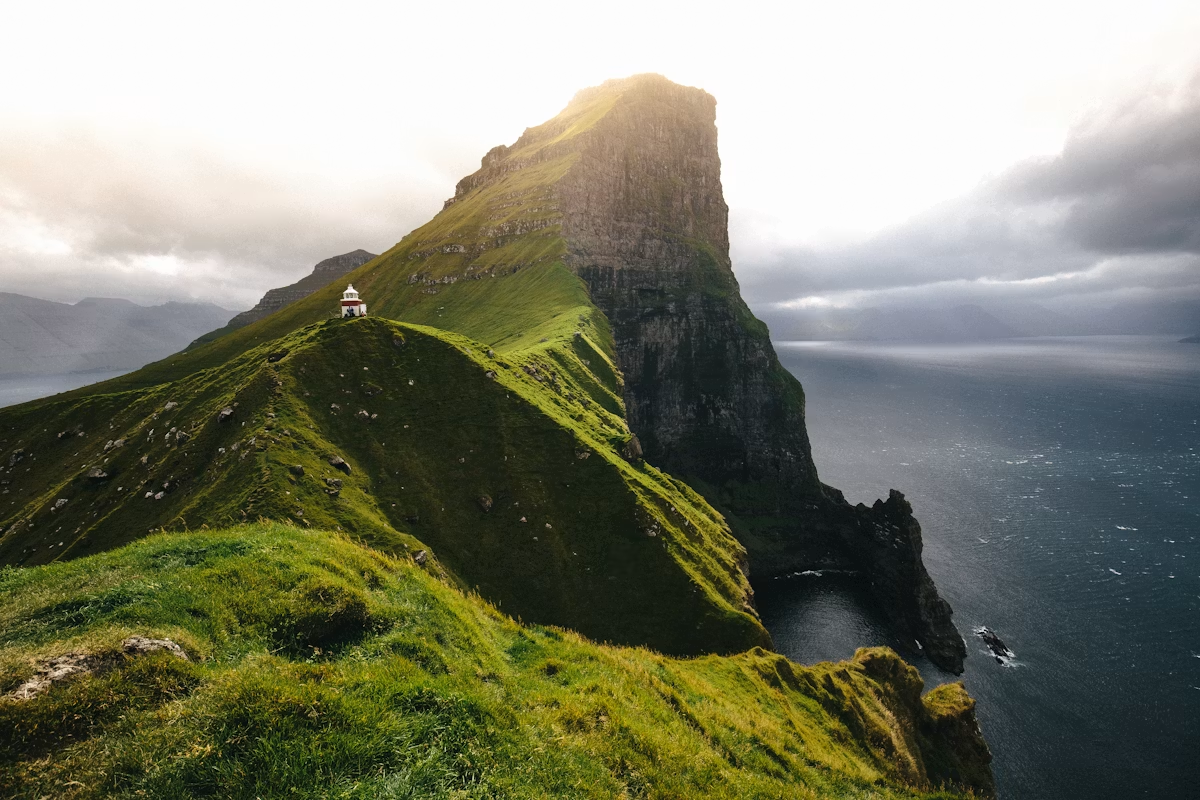
Kalsoy Island and the Kallur Lighthouse (1.5 hours by car and ferry)
A narrow island reached by ferry, with a hiking trail leading to a lighthouse perched on a dramatic ridge.
Food in the Faroe Islands
Food in the Faroe Islands leans heavily on seafood and lamb, shaped by centuries of isolation and a climate unsuited to most crop farming.
- Ræst fish: Wind-dried, fermented fish, a traditional Faroese preservation method and an acquired-taste local specialty. 150–250 DKK
- Lamb dishes: Faroese lamb, raised on the islands’ steep grassy slopes, appears on most traditional restaurant menus
- Fresh langoustine and cod: Caught locally and served at restaurants in Tórshavn, often simply prepared
- Skerpikjøt: Wind-dried mutton, aged for months in a hjallur drying shed, another traditional preserved dish
- Rhubarb desserts: One of few crops that grows reliably in the Faroese climate, used in jams and cakes
Where to Stay
Budget (400–700 DKK/night)
Guesthouses and a small number of hostels, mostly concentrated in Tórshavn.
Mid-Range (900–1,600 DKK/night)
Hotels in Tórshavn or near Vágar Airport — the standard Faroe Islands travel guide accommodation tier.
Upscale (2,000–4,500+ DKK/night)
Design-forward hotels in Tórshavn with harbor views, the islands’ closest equivalent to luxury accommodation.
Getting Around the Faroe Islands
Rental car: The most practical way to reach Gásadalur, Saksun, and most ring-road waterfalls, aided by an extensive network of undersea tunnels connecting the main islands.
Ferries: Required for Mykines and Kalsoy, with limited daily departures that should be checked well in advance.
Buses: A limited public bus network connects Tórshavn to nearby towns, though a rental car covers far more ground.
Daily Budget Breakdown
| Category | Frugal | Comfortable |
|---|---|---|
| Accommodation | 500 DKK | 1,400 DKK |
| Food | 300 DKK | 700 DKK |
| Rental car and fuel | 250 DKK | 500 DKK |
| Activities and boat tours | 100 DKK | 500 DKK |
| Daily Total | ~1,150 DKK / $166 | ~3,100 DKK / $448 |
Final Verdict: Faroe Islands Travel Guide 2026
The Faroe Islands reward four to five days, since a rental car and the islands’ tunnel network make it possible to cover several dramatic viewpoints a day, but a Mykines puffin excursion or a Kalsoy hike each need a dedicated day with flexible weather. The ideal Faroe Islands travel guide itinerary spends a day around Tórshavn and Tinganes, a second day driving to Gásadalur and Saksun, a third day on the Vestmanna bird cliffs boat tour, and a fourth or fifth day on a weather-dependent excursion to Mykines or Kalsoy. Travelers should build in extra flexible days regardless of season, since fog and wind regularly disrupt both inter-island ferries and the short flight to Vágar.