
Interlaken travel guide readers usually expect a quiet stopover between two famous lakes, then arrive and find a full-blown adventure-sports hub sitting directly beneath the Jungfrau massif, with paragliders launching overhead and turquoise glacial lakes stretching out on either side of town. Interlaken, wedged between Lake Thun and Lake Brienz in the Bernese Oberland, earned its name from its position “between the lakes” and now serves as the base for some of Switzerland’s most dramatic mountain excursions. This Interlaken travel guide covers the Jungfrau region, the surrounding alpine lakes, adventure sports, food, and a full budget breakdown for 2026.
At a Glance
| Country | Switzerland |
| Currency | Swiss Franc (CHF) |
| Language | German (Swiss German); English widely spoken in tourist areas |
| Best time | June–September (clear mountain views, full cable car and trail access) |
| Avoid | November (shoulder season with frequent fog and limited high-altitude access) |
| Daily budget (frugal) | $70–$95/day |
| Daily budget (comfortable) | $120–$280/day |
| Visa | Visa-free for 90 days for US, UK, Canadian, and most non-EU passport holders under Schengen rules |
| Getting there | Zurich or Geneva Airport, then a direct train to Interlaken (2–2.5 hours) |
| Getting around | Trains and cable cars into the mountains, walking within town, boats on Lake Thun and Lake Brienz |
The Jungfrau Region
Interlaken’s main draw is its direct rail access to the Jungfraujoch, marketed as the “Top of Europe,” where a cogwheel train climbs through a tunnel bored into the mountain to a station at over 3,400 meters with views across the Aletsch Glacier. Closer to town, Harder Kulm offers a quicker funicular ride to a viewpoint directly above Interlaken, with both lakes visible at once on a clear day.
The valley towns of Grindelwald, Wengen, and Lauterbrunnen, all reachable by train in under an hour, each serve as launch points for hiking trails that run directly beneath the Eiger, Mönch, and Jungfrau peaks.
Lake Thun, Lake Brienz, and Adventure Sports
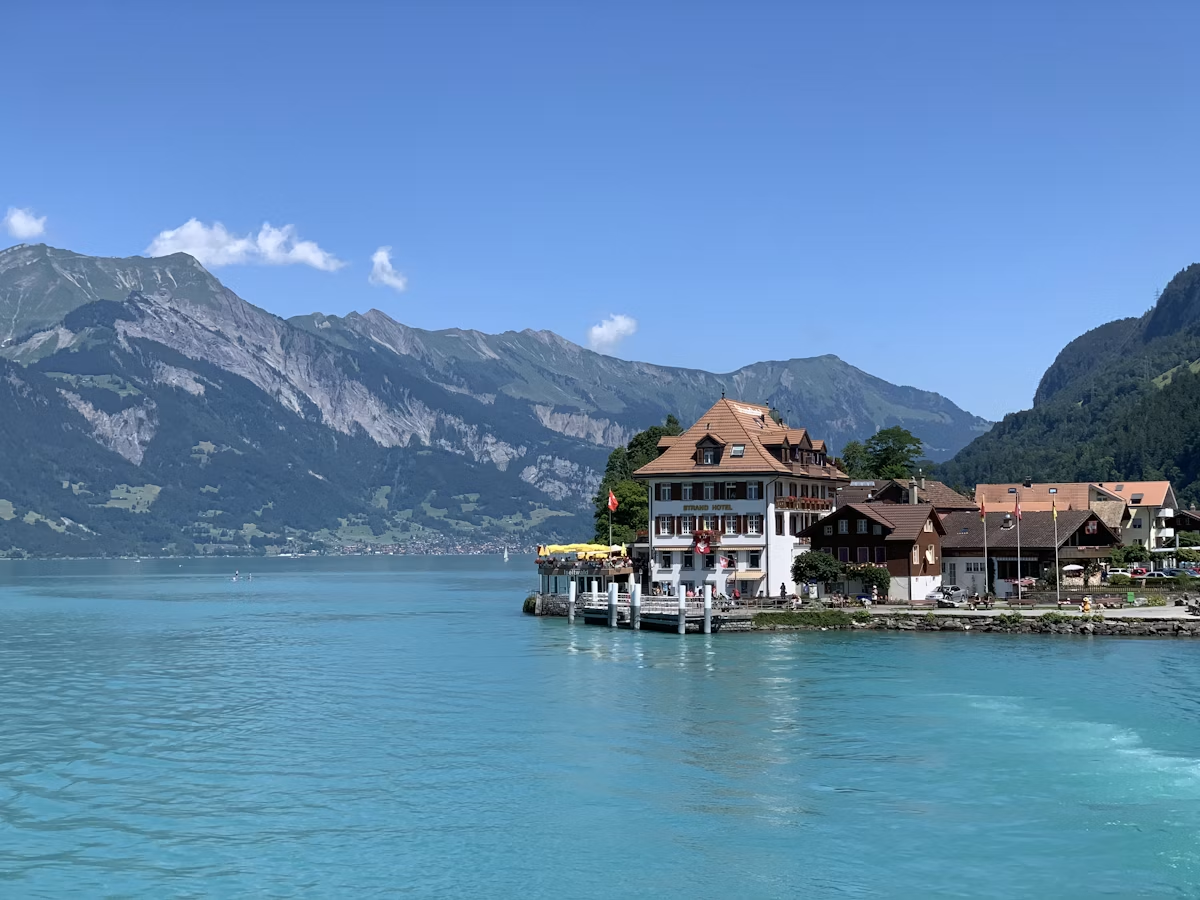
Lake Brienz’s strikingly turquoise water, fed by glacial meltwater, contrasts with Lake Thun’s deeper blue on the opposite side of town, and scenic boat cruises run on both throughout the summer season. Interlaken has also built a reputation as one of Europe’s top spots for paragliding, with tandem flights launching from Harder Kulm or nearby slopes landing directly in the town’s central park.
Canyoning, river rafting on the Lütschine, and skydiving operators round out an adventure-sports lineup dense enough to rival Queenstown’s, all bookable directly from shopfronts along Interlaken’s main street.
Day Trips and Side Excursions
Lauterbrunnen Valley (20 minutes by train)
A dramatic valley lined with waterfalls, including Staubbach Falls, and the base for cable cars up to Mürren and the Schilthorn.
Jungfraujoch (2.5 hours round trip by train)
Europe’s highest railway station, with an ice palace and a viewing platform looking out over the Aletsch Glacier.
Trümmelbach Falls (25 minutes by train and bus)
A series of glacier-fed waterfalls running inside the mountain, reachable by elevator and walking tunnels.
Food in Interlaken
Interlaken’s food scene blends Swiss-German alpine staples with the international crowd drawn by its adventure-sports reputation.
- Cheese fondue: A communal pot of melted cheese served with bread, a staple at mountain restaurants and chalets. 25–35 CHF
- Rösti: A pan-fried shredded-potato dish, often topped with cheese, egg, or bacon as a hearty mountain meal
- Älplermagronen: An alpine macaroni dish with cheese, cream, and potatoes, traditionally topped with stewed apples
- Swiss chocolate: Sold throughout town, with several shops offering locally made chocolate as souvenirs
- Raclette: Melted cheese scraped tableside over potatoes and pickles, common at winter and shoulder-season restaurants
Where to Stay
Budget (CHF 35–60/night)
Hostels and budget guesthouses in central Interlaken, popular with the adventure-sports crowd.
Mid-Range (CHF 120–220/night)
Hotels with lake or mountain views near the town center — the standard Interlaken travel guide accommodation tier.
Upscale (CHF 300–600+/night)
Historic lakeside hotels and chalet-style resorts with direct Jungfrau views.
Getting Around Interlaken
Trains: The main way to reach Grindelwald, Lauterbrunnen, Wengen, and the Jungfraujoch from Interlaken’s two stations.
Funiculars and cable cars: Connect Interlaken and surrounding valleys to viewpoints like Harder Kulm and the Schilthorn.
Boats: Scenic ferries cross Lake Thun and Lake Brienz, doubling as transport between lakeside villages.
Daily Budget Breakdown
| Category | Frugal | Comfortable |
|---|---|---|
| Accommodation | CHF 50 | CHF 180 |
| Food | CHF 30 | CHF 70 |
| Transport and train passes | CHF 20 | CHF 80 |
| Activities | CHF 15 | CHF 100 |
| Daily Total | ~CHF 115 / $130 | ~CHF 430 / $487 |
Final Verdict: Interlaken Travel Guide 2026
Interlaken rewards three to four days, since the Jungfraujoch alone takes most of a day and the surrounding valleys of Grindelwald, Lauterbrunnen, and Wengen each deserve separate time for hiking or cable car rides. The ideal Interlaken travel guide itinerary spends a first day settling in around the lakes and Harder Kulm, a second day at the Jungfraujoch, a third day hiking around Lauterbrunnen and Trümmelbach Falls, and a fourth day on paragliding or another adventure activity. Travelers should check Jungfraujoch weather forecasts before booking, since cloud cover at the summit can make an expensive train ride far less rewarding.