
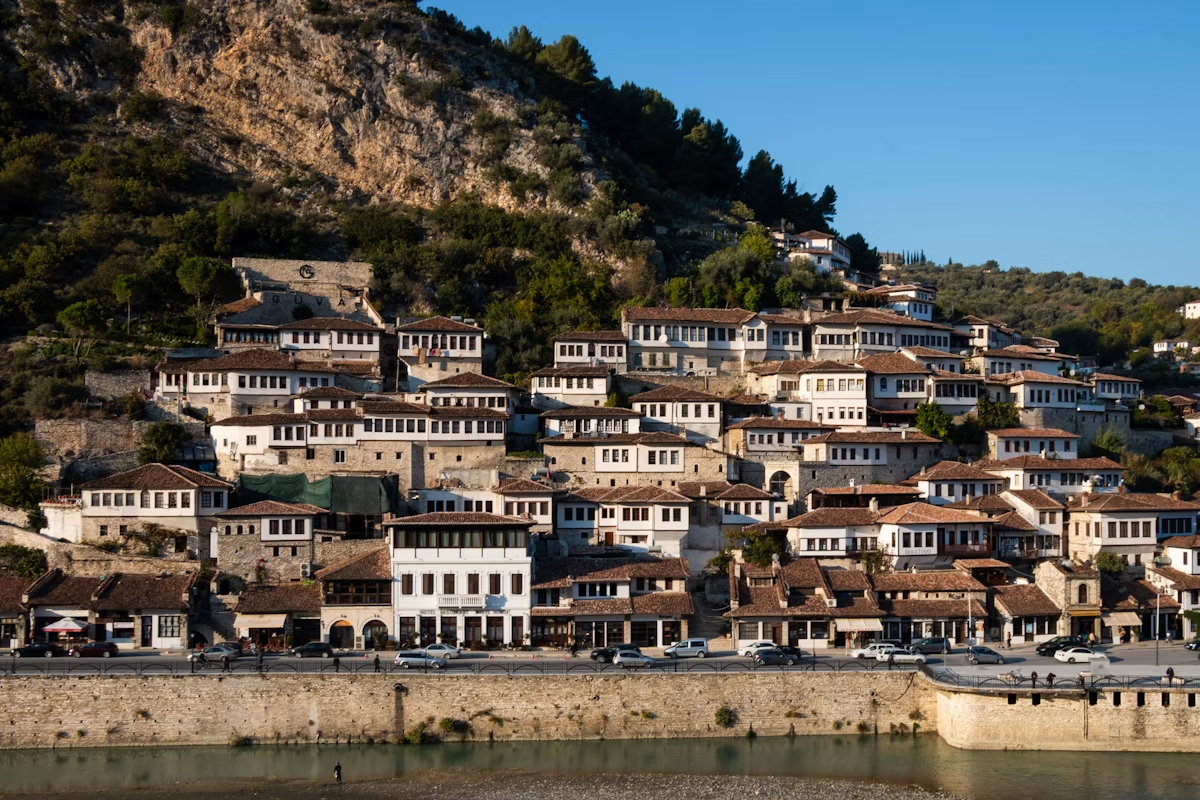
Gjirokaster travel guide readers usually discover this UNESCO-listed stone town as a stopover between Tirana and the Albanian Riviera, then end up staying an extra night once they see the silver-roofed Ottoman houses cascading down the hillside beneath a hilltop fortress. Gjirokaster, nicknamed the “Stone City” for the slate roofs and stone-walled houses that climb its steep streets, holds one of the best-preserved Ottoman-era old towns in the Balkans, with a working bazaar, a cliff-top castle, and far fewer tourists than comparable towns in Croatia or Montenegro. This Gjirokaster travel guide covers the castle, the old bazaar, the stone old town, food, and a full budget breakdown for 2026.
At a Glance
| Country | Albania |
| Currency | Albanian Lek (ALL) |
| Language | Albanian; English and Italian common in tourist areas |
| Best time | May–June and September (mild weather, fewer crowds) |
| Avoid | July–August midday (intense heat on the unshaded stone streets) |
| Daily budget (frugal) | $20–$30/day |
| Daily budget (comfortable) | $35–$80/day |
| Visa | Visa-free for 90 days for US, UK, Canadian, and most EU passport holders |
| Getting there | No airport in town; most travelers arrive by bus or rented car from Tirana (3.5 hours) or Saranda (1 hour) |
| Getting around | Walking the old town, taxis for the castle hill, day-trip cars |
Gjirokaster Castle
Gjirokaster Castle, one of the largest fortresses in the Balkans, looms directly over the old town from a steep hilltop, its stone ramparts and towers visible from nearly every street below. Inside, a former Cold War-era tunnel system and a small weapons museum sit alongside a captured American fighter jet, a Cold War relic left behind from a 1957 incident that has become an unlikely photo stop for visitors climbing the fortress walls.
The views from the castle’s upper ramparts stretch across the entire stone old town and the Drino Valley beyond, making the climb up from the bazaar worth the effort regardless of interest in the museum exhibits themselves.
The Ottoman Bazaar and Stone Old Town
The Old Bazaar, a cobblestone street lined with stone-roofed shops below the castle, has functioned as Gjirokaster’s commercial heart since the Ottoman period and still sells local wool socks, copperware, and raki rather than the mass-produced souvenirs common in busier Balkan old towns. A 17th-century clock tower marks the bazaar’s upper edge, its stone form one of the most photographed details in the entire old town.
The wider old town spreads across the hillside in a dense maze of stone kulla houses — fortified Ottoman-era family homes with overhanging upper floors — connected by steep, uneven stone lanes that reward slow, aimless wandering more than any single sight.
Day Trips from Gjirokaster
Blue Eye Spring (30 minutes by car)
A deep, vividly blue natural spring set in a forested gorge, one of the most popular short trips from town.
Antigonea Archaeological Park (20 minutes by car)
The ruins of an ancient Hellenistic city on a hilltop overlooking the Drino Valley, with far fewer visitors than Albania’s better-known archaeological sites.
Saranda and the Albanian Riviera (1 hour by car)
A scenic mountain drive down to the coast, often combined with a Gjirokaster stopover en route to the beaches further south.
Food in Gjirokaster
Gjirokaster’s cuisine reflects its mountain setting, with dairy, slow-cooked meats, and preserved vegetables featuring heavily on local menus.
- Qifqi: Small fried rice balls flavored with mint and egg, a dish said to have originated in Gjirokaster specifically. 200–300 ALL
- Gjirokaster cheese: A tangy, salty local cheese sold at the bazaar and served at nearly every traditional restaurant
- Tavë kosi: Baked lamb and rice in a tangy yogurt sauce, a staple across southern Albania
- Raki: A strong, homemade fruit brandy offered as a welcome drink at most local restaurants
- Stone-house restaurants: Several old kulla houses in the old town have been converted into restaurants serving multi-course traditional menus
Where to Stay
Budget ($12–$20/night)
Guesthouses in restored stone houses within the old town, an easy walk from the bazaar.
Mid-Range ($25–$45/night)
Boutique hotels in converted Ottoman-era kulla houses — the standard Gjirokaster travel guide accommodation tier.
Upscale ($60–$120+/night)
A handful of higher-end heritage properties with castle or valley views.
Getting Around Gjirokaster
Walking: The old town and bazaar are steep but fully walkable, with sturdy shoes recommended for the uneven stone streets.
Taxis: Useful for the climb up to the castle or for reaching the new town below if staying outside the historic center.
Day-trip cars or tours: The easiest way to reach Blue Eye Spring or Antigonea without a rental car.
Daily Budget Breakdown
| Category | Frugal | Comfortable |
|---|---|---|
| Accommodation | 1,500 ALL | 4,500 ALL |
| Food | 1,200 ALL | 3,000 ALL |
| Transport | 300 ALL | 1,500 ALL |
| Activities (castle, day trips) | 500 ALL | 2,500 ALL |
| Daily Total | ~3,500 ALL / $35 | ~11,500 ALL / $115 |
Final Verdict: Gjirokaster Travel Guide 2026
Gjirokaster deserves a full two days rather than the quick stopover most Riviera-bound travelers plan, since the castle, bazaar, and stone old town each reward unhurried exploration on foot. The ideal Gjirokaster travel guide itinerary spends one day at the castle and wandering the old town’s stone lanes, and a second day on a half-day trip to Blue Eye Spring or Antigonea before continuing toward the coast. Travelers driving themselves should note that the old town’s stone streets are largely closed to cars, so parking near the bazaar entrance and walking in is the simplest approach.