
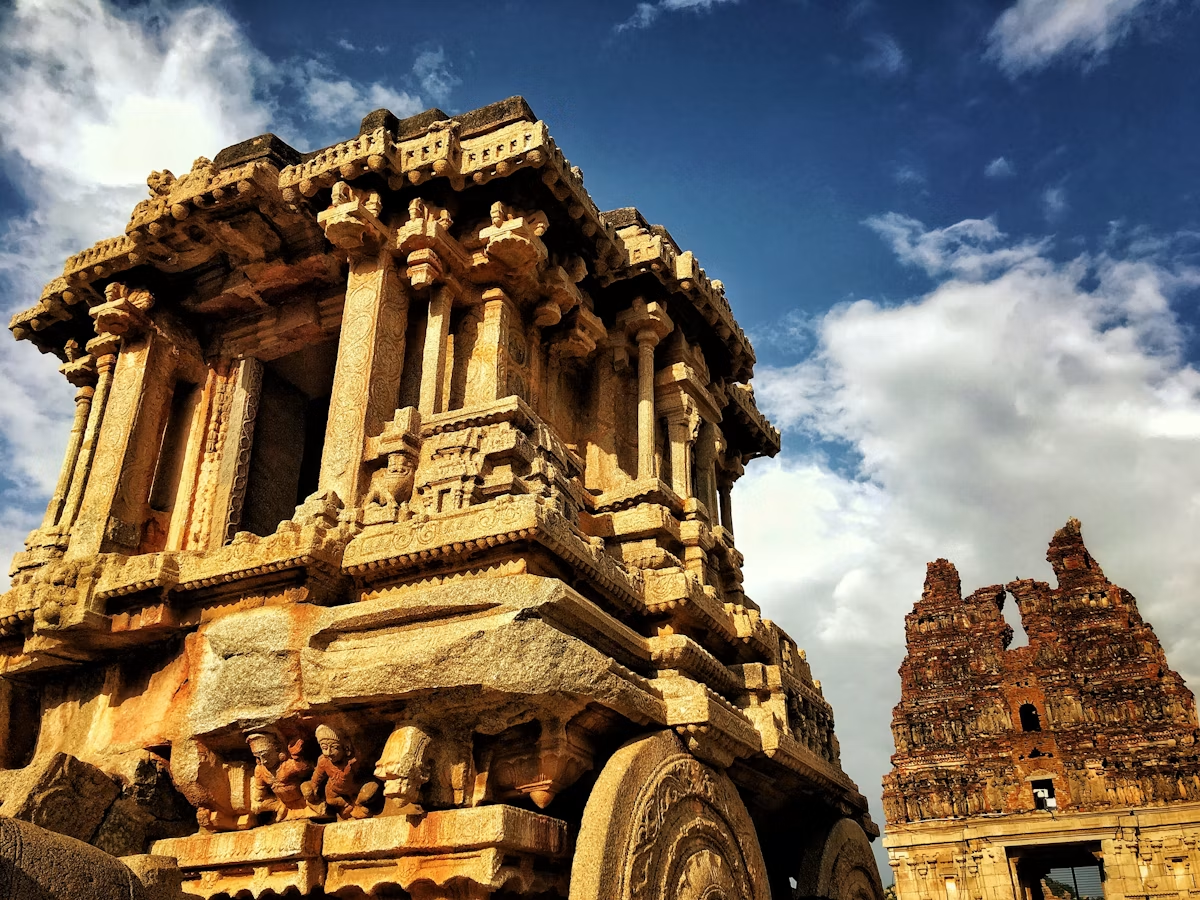
Hampi travel guide readers usually arrive expecting a single temple complex and leave having explored a UNESCO World Heritage site spread across 26 square kilometers of boulder-strewn landscape, the sprawling ruins of what was once one of the richest cities on earth. Hampi, the former capital of the 14th-to-16th-century Vijayanagara Empire, scatters hundreds of temples, palace foundations, and a stone chariot across a surreal terrain of giant granite boulders and banana plantations along the Tungabhadra River. This Hampi travel guide covers the Vijayanagara ruins, the boulder landscape, temples, food, and a full budget breakdown for 2026.
At a Glance
| Country | India |
| Currency | Indian Rupee (INR) |
| Language | Kannada, Hindi; English common at tourist businesses |
| Best time | November–February (cooler, comfortable for ruin-hopping) |
| Avoid | April–June (extreme heat across the exposed boulder terrain) |
| Daily budget (frugal) | $12–$20/day |
| Daily budget (comfortable) | $25–$70/day |
| Visa | E-visa required for most nationalities, arranged in advance |
| Getting there | Nearest airport is Hubli (3 hours) or Bellary (1.5 hours); most travelers arrive by overnight train or bus from Goa or Bangalore |
| Getting around | Rented scooters, bicycles, auto-rickshaws between the ruin clusters |
The Vijayanagara Ruins
The Vijayanagara Empire’s ruins spread across two main zones — the Sacred Center along the river, dense with temples, and the Royal Center further south, holding the remains of palaces, elephant stables, and the empire’s administrative core. The Virupaksha Temple, still an active place of worship after more than 600 years, anchors the Sacred Center with a towering gopuram visible from across the boulder valley.
The Vittala Temple complex, home to Hampi’s famous stone chariot and a set of musical pillars that once rang with different tones when struck, sits at the far end of the Sacred Center and is usually reached by a scenic riverside walk or bicycle ride from the main bazaar.
The Boulder Landscape
What sets Hampi apart from any other ruin site in India is the terrain itself — enormous, weathered granite boulders piled across the valley in formations that look almost deliberately stacked, framing the temple ruins in every direction. Climbing to a viewpoint like Matanga Hill or Hemakuta Hill at sunrise or sunset rewards visitors with views over the entire boulder field and river valley, widely considered the single best experience in Hampi.
The Royal Center’s stepped tank and elephant stables, built from precisely cut stone blocks, sit in striking contrast to the rough natural boulders surrounding them, a juxtaposition that defines much of Hampi’s visual character.
Day Trips and Activities Around Hampi
Coracle rides on the Tungabhadra River
Traditional round woven-basket boats ferry visitors across the river to Hampi Island, connecting the ruins to a quieter, more rural side of the valley.
Anegundi Village (across the river)
A small, far less touristy village among the same boulder terrain, with its own scattered ruins and a more relaxed pace than the main Hampi bazaar.
Hampi Island guesthouses and rice paddies
The river’s far bank offers a calmer base for travelers who prefer staying away from the main bazaar’s tourist density.
Food in Hampi
Hampi’s food scene leans toward simple South Indian vegetarian fare, partly shaped by the religious significance of the Virupaksha Temple area, where meat and alcohol are officially restricted.
- Thali plates: A full vegetarian set meal with rice, dal, and rotating vegetable curries, the standard meal at most local restaurants. 100–200 INR
- Banana plantation produce: Hampi sits amid extensive banana farms, and fresh banana-based juices and snacks are sold throughout the bazaar
- Rooftop cafés: A cluster of cafés near the bazaar serve travelers’ fare with direct views of the temple gopuram or boulder hills
- Filter coffee: South Indian-style coffee served strong and milky, available at most guesthouses and cafés
- Hampi Island restaurants: Slightly more relaxed riverside dining options on the quieter side of the Tungabhadra
Where to Stay
Budget ($6–$12/night)
Guesthouses in the main bazaar or across the river on Hampi Island.
Mid-Range ($15–$30/night)
Boutique guesthouses with boulder or river views — the standard Hampi travel guide accommodation tier.
Upscale ($40–$90+/night)
A small number of resort-style properties set further from the ruins amid the surrounding countryside.
Getting Around Hampi
Bicycles: A popular way to cover the spread-out ruins at a relaxed pace, widely available for rent in the bazaar.
Scooters: The most efficient way to reach both the Sacred Center and the more distant Royal Center in a single day.
Auto-rickshaws: Useful for travelers who prefer not to drive themselves between the major ruin clusters.
Daily Budget Breakdown
| Category | Frugal | Comfortable |
|---|---|---|
| Accommodation | 400 INR | 2,000 INR |
| Food | 350 INR | 1,200 INR |
| Transport (bike/scooter rental) | 150 INR | 500 INR |
| Activities (entry fees, coracle rides) | 100 INR | 800 INR |
| Daily Total | ~1,000 INR / $12 | ~4,500 INR / $54 |
Final Verdict: Hampi Travel Guide 2026
Hampi rewards a minimum of two full days, since the ruins are spread across a far larger area than most visitors expect and the boulder-hill sunset viewpoints deserve a dedicated evening each. The ideal Hampi travel guide itinerary spends one day in the Sacred Center around Virupaksha and Vittala temples, a second day exploring the Royal Center and a sunrise or sunset hill climb, and an optional half-day across the river on quieter Hampi Island. Travelers visiting between April and June should plan ruin-hopping for early morning, since the exposed boulder terrain offers almost no shade once the midday heat sets in.