
Istanbul travel guide readers usually expect a single culture and instead find the world’s only city straddling two continents — a 15-million-person metropolis where Europe and Asia meet across the Bosphorus Strait, where a 6th-century Byzantine cathedral was converted into a mosque in 1453, reconverted to a museum in 1934, and converted back to a functioning mosque in 2020, all while remaining one of the most visited buildings in the world. Istanbul has served as the capital of the Roman, Byzantine, and Ottoman empires in succession and accumulated 2,500 years of layered monuments in a geography of seven hills above the water. This Istanbul travel guide covers Sultanahmet, the Bosphorus, the Grand Bazaar, Beyoğlu, food, and a full budget breakdown for 2026.
At a Glance
| Country | Turkey (Türkiye) |
| Currency | Turkish Lira (TRY); $1 USD ≈ TRY 33 (check current rate; significant inflation in recent years) |
| Language | Turkish; English widely spoken in tourist areas |
| Best time | April–June and September–October (mild temperatures, lower humidity, fewer peak crowds) |
| Avoid | July–August (extreme heat and crowds); Ramadan schedule awareness for restaurant hours |
| Daily budget (budget) | $35–$60/day |
| Daily budget (mid-range) | $100–$200/day |
| Visa | e-Visa required in advance for most nationalities (US, UK, most EU); $50 USD; valid 90 days, multiple entries |
| Getting there | Istanbul Airport (IST) is the main hub — one of the world’s busiest airports, with direct flights from virtually every major city; Sabiha Gökçen Airport (SAW) serves low-cost carriers on the Asian side |
| Getting around | Istanbulkart transit card covers metro, tram, ferry, and funicular; taxi/ride-hailing (BiTaksi, Uber) widely available |
Sultanahmet: Hagia Sophia and the Blue Mosque
Istanbul travel guide itineraries begin in Sultanahmet, the historic peninsula that formed the core of both Byzantine Constantinople and Ottoman Istanbul, and where the density of world-significant monuments within walking distance of each other is unmatched anywhere in Europe or Asia.
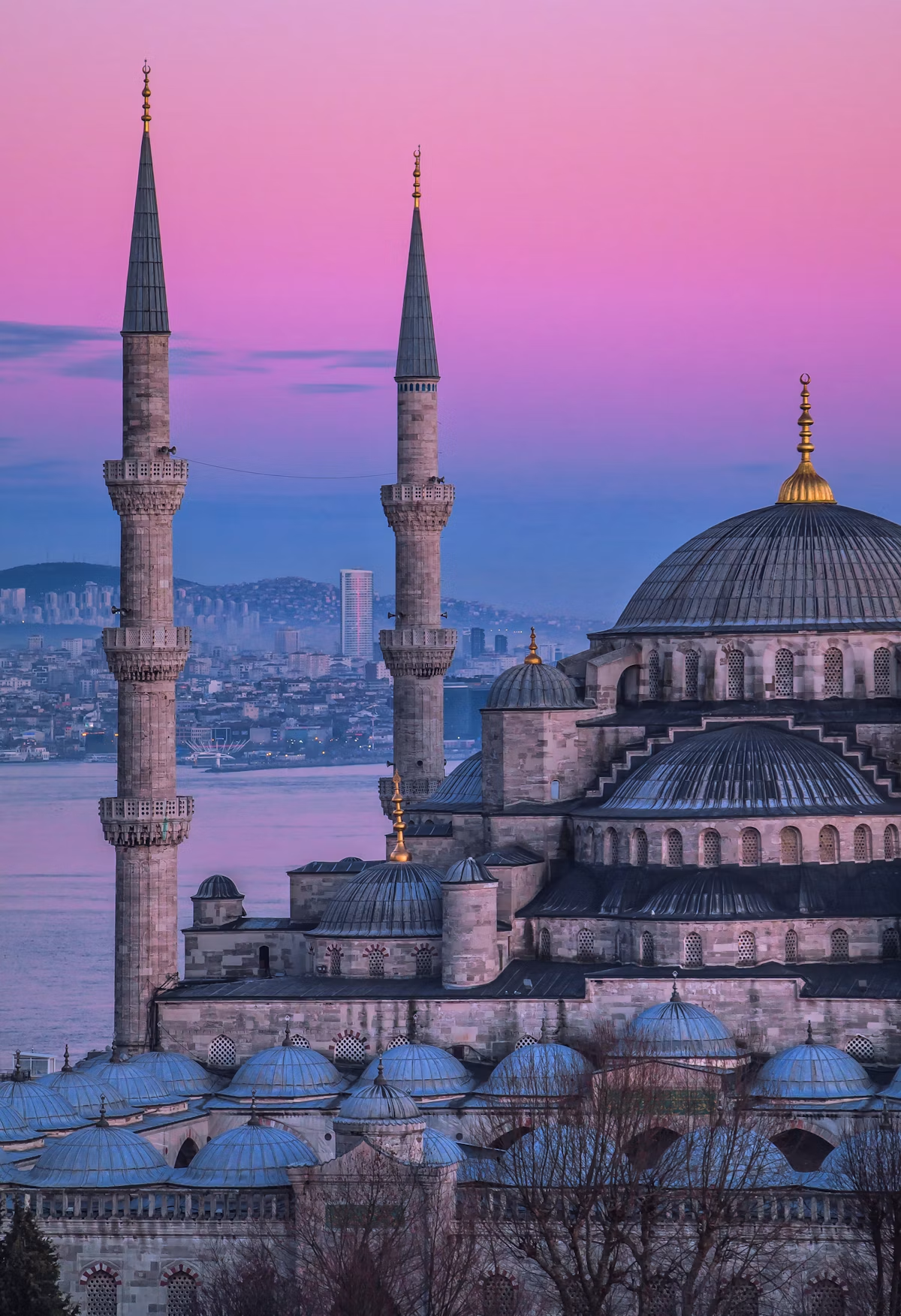
As any Istanbul travel guide will tell you, Hagia Sophia (Ayasofya) — built in 537 AD under Emperor Justinian I as the world’s largest cathedral for nearly 1,000 years — is now open for worship as a mosque, with non-Muslim visitors permitted outside of the five daily prayer times. Entry is free, though the interior is now partially carpeted and some mosaics are veiled during prayer hours. Directly across Sultanahmet Square, the Sultan Ahmed Mosque (Blue Mosque, 1616) is the only mosque in Istanbul with six minarets and remains in active daily use; visitors are welcome outside prayer times.
The Topkapi Palace complex, the administrative center of the Ottoman Empire for 400 years, contains the Imperial Treasury (including the 86-carat Spoonmaker’s Diamond and the Topkapi Dagger), the Harem (a separate ticketed section), and gardens with direct views over the Bosphorus junction where the strait meets the Sea of Marmara.
The Bosphorus, Beyoğlu, and the Asian Side
No Istanbul travel guide is complete without covering the Bosphorus Strait, which divides Istanbul between Europe and Asia and connects the Black Sea to the Sea of Marmara, is crossed by two suspension bridges and a 14-kilometer undersea tunnel (the Marmaray), but the city’s most iconic crossing remains the public ferry — a 25-minute journey for TRY 30 that offers better views of the skyline than any boat tour. The Galata Tower (1348) on the Galata hill in Beyoğlu provides the panoramic overview of the strait and both continents that most visitors seek.
Beyoğlu — one of the neighborhoods every Istanbul travel guide marks as essential — is the 19th-century European district north of the Golden Horn, is centered on İstiklal Avenue — a 1.4-kilometer pedestrian street lined with Art Nouveau buildings, European consulates, and thousands of shops and cafes connecting Taksim Square to the Galata Tower. The Balık Pazarı (Fish Market), Çiçek Pasajı (Flower Passage), and Karaköy waterfront are the most atmospheric quarters of the district.
Day Trips and Side Excursions
This Istanbul travel guide recommends at least one full day trip beyond the historic peninsula — each excursion adds a completely different dimension to the city.
Princes’ Islands (Adalar, 45–90 minutes by ferry from Eminönü)
Nine car-free islands in the Sea of Marmara reachable by ferry, with horse-drawn carriages and bicycles as the only transport. Büyükada (Great Island) has fin-de-siècle wooden mansions and a hilltop monastery; best visited May–September.
Çanakkale and Gallipoli (4 hours by bus)
The World War I Gallipoli battlefield and the Anzac cemeteries, plus the ancient ruins of Troy (Truva), accessible as a long day trip or overnight from Istanbul.
Edirne (2.5 hours by bus)
The former Ottoman capital, with the Selimiye Mosque (1575) that Mimar Sinan considered his masterpiece — more architecturally significant than the Blue Mosque but far less visited. Free entry.
Cappadocia (1.5 hours by flight or 10+ hours by overnight bus)
Turkey’s fairy-chimney landscape with hot air balloon flights is typically combined with an Istanbul trip on a longer Turkey itinerary.
Food in Istanbul
Every Istanbul travel guide devotes significant space to food, and for good reason — Turkish cuisine is one of the world’s great culinary traditions, and Istanbul is its most complex expression — a city where a simple fish sandwich on a floating grill beside the Galata Bridge costs the same as anywhere in Asia, and where a full meyhane (tavern) spread of meze runs for hours.
- Döner kebab: Vertically stacked rotating meat (lamb, chicken, or veal) shaved into a flatbread or over rice with yogurt — the fast food of Istanbul, available at every street corner from TRY 50–100
- Balık ekmek: A simple grilled mackerel sandwich sold from boats moored under the Galata Bridge at Eminönü — one of Istanbul’s most enduring street-food traditions, TRY 80–100
- Meze: A spread of small cold and hot dishes — hummus, babaganoush, ezme (spicy tomato spread), cacık (yogurt with cucumber), octopus, and stuffed peppers — served at meyhane taverns as a communal opening to a meal
- Lahmacun: Thin crispy flatbread topped with minced lamb, tomato, onion, and herbs, rolled with fresh parsley and lemon juice — known informally as “Turkish pizza”; ¥20–30 per piece at bakeries
- Simit: Istanbul’s omnipresent sesame-crusted bread ring, sold from pushcarts at dawn throughout the city; TRY 10–15; the city’s unofficial breakfast food
Where to Stay
Budget (from $25–$50/night)
Hostels and guesthouses — the entry point for any Istanbul travel guide budget tier — are concentrated in Sultanahmet and Beyoğlu. Several restored Ottoman-era buildings offer character at budget prices.
Mid-Range ($80–$200/night)
Boutique hotels in Sultanahmet with Bosphorus or Blue Mosque views, and design hotels in Karaköy and Beyoğlu — the standard Istanbul travel guide accommodation tier.
Upscale ($350–$1,500+/night)
For travelers using this Istanbul travel guide to plan a special occasion, the Four Seasons Istanbul at Sultanahmet (in a restored 19th-century prison), Çırağan Palace Kempinski (an Ottoman palace on the Bosphorus), and the Six Senses Kocataş Mansions represent the city’s most storied luxury properties.
Getting Around Istanbul
Transport is one of the most practical concerns any Istanbul travel guide must address — the city is vast, spanning two continents, and the options vary widely in cost and convenience.
Istanbulkart: A rechargeable transit card covering the metro, tram (T1 line serves Sultanahmet directly), Metrobus, Bosphorus ferries, and funicular; TRY 70 for the card plus load value. Essential for any stay of more than one day.
Ferry: The most scenic and often most practical way to cross the Bosphorus or travel along the Golden Horn; schedule via the İDO and Şehir Hatları apps.
Taxi / BiTaksi: Metered yellow taxis are available everywhere; the BiTaksi app shows metered fares in advance. Uber also operates in Istanbul under a local partner. Negotiate firmly or insist on the meter.
Metro: Expanding rapidly; the M1/M2/M11 lines connect the airport, Taksim Square, and key neighborhoods on the European side.
Daily Budget Breakdown
Costs in this Istanbul travel guide reflect mid-2026 prices; the Turkish lira fluctuates significantly, so verify exchange rates before travel.
| Category | Budget | Mid-Range | Luxury |
|---|---|---|---|
| Accommodation | $30 | $130 | $600 |
| Meals | $15 | $40 | $100 |
| Transport (Istanbulkart) | $8 | $15 | $30 |
| Entry fees (museums, palaces) | $15 | $25 | $40 |
| Daily Total | ~$68 | ~$210 | ~$770+ |
Final Verdict: Istanbul Travel Guide 2026
Istanbul rewards four to six days — two days for Sultanahmet (Hagia Sophia, Blue Mosque, Topkapi, Grand Bazaar, Spice Bazaar), one full day for Beyoğlu and the Galata area, one day for a Bosphorus cruise and the Asian side, and a remaining day for the Princes’ Islands or deeper neighborhood exploration in Balat, Karaköy, or Çukurcuma. The ideal Istanbul travel guide itinerary bases in Sultanahmet for monument proximity, shifts to Beyoğlu for the final nights for nightlife and restaurant access, and uses the ferry rather than taxis to move between districts wherever possible. Travelers should be aware that the Turkish lira has experienced sustained inflation — checking current exchange rates at the time of booking is essential for accurate budget planning.